Published: July 28, 2026 | Author: Karl Huang, Xinjiang Attractions (field notes contributed by guest writer Fiona Gallagher)
I teach home economics at a secondary school in Dublin, which means I have spent twenty-two years convincing teenagers that dough is not scary. My sister Roisin and I spent most of October 2025 in Xinjiang, and between us we sat through three separate cooking lessons: one in a Kashgar courtyard house, one at a Turpan homestay surrounded by grape trellises, and one slightly chaotic session in Urumqi that involved four other tourists and a very patient instructor named Gulnar. This guide covers what a Uyghur cooking class actually costs, how to book one without speaking Mandarin or Uyghur, what you will realistically learn, and, because I have now tested everything back in my own kitchen in Drumcondra, which dishes survive the journey home and which ones simply do not.
Nothing here is sponsored. We paid for every class ourselves, and I have no connection to any of the hosts mentioned. Prices are what we paid in October 2025 and may have shifted since.
Quick reference: Uyghur cooking class basics
| Question | Short answer |
|---|---|
| Typical price | 100 to 200 RMB per person for 2.5 to 4 hours |
| Where to find classes | Kashgar Old City guesthouses, Turpan homestays, Urumqi hostels |
| How to book | Ask your guesthouse directly, usually one day ahead |
| Language | Mostly demonstration based; translation apps fill the gaps |
| Dishes usually taught | Polo (pilaf), laghman noodles, samsa, sometimes naan |
| Group size | 2 to 8 people; private sessions often cost the same as two seats |
| Easiest dish to repeat at home | Polo, by a wide margin |
| Hardest | Hand-pulled laghman; expect months of practice |
Our three classes, honestly reviewed
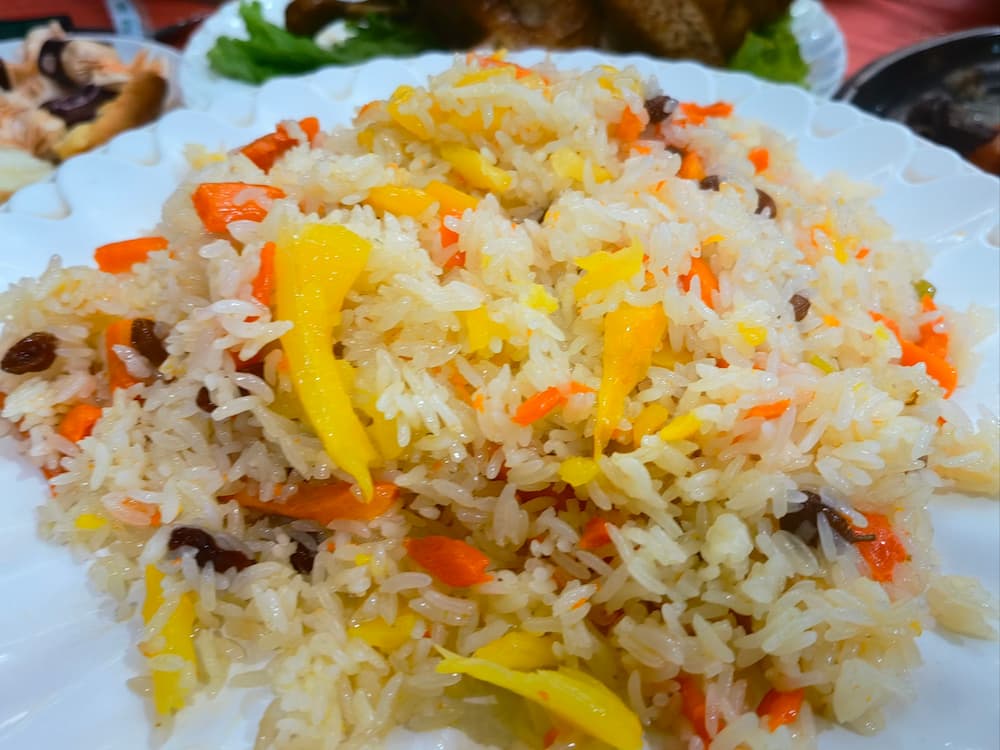
The Kashgar class was the best of the three. Our guesthouse owner in the Old City walked us two lanes over to his aunt’s house, where a woman named Patime ran lessons from her own kitchen for 150 RMB each. There was no menu card and no apron with a logo. She decided that morning we would make polo and samsa because her neighbour had slaughtered a sheep the day before and the meat was good. We sat on floor cushions, chopped yellow carrots into matchsticks with a knife that had clearly outlived several governments, and learned that the rice is never stirred once the water goes in. Three hours later we ate what we had made, with her mother and two of her children, and Roisin got mildly teary about it on the walk back.
Turpan was gentler and more of a family afternoon than a formal lesson. Our homestay host, a retired schoolteacher, charged us 100 RMB each to join his wife making naan and a simple tomato laghman sauce. The highlight was the tonur, the clay oven in the yard. She let me stamp the dough rounds with the chekich, the nail-studded bread stamp, and mine came out looking like a toddler had done it. Hers looked like architecture. If you want the full story on the bread itself, we wrote a separate guide to Uyghur naan after that trip.
The Urumqi session, booked through a hostel near the bazaar for 180 RMB, was the most polished and the least personal. Six of us around a steel worktable, aprons provided, recipe cards printed in English. Gulnar was an excellent teacher and my laghman dough behaved better under her instruction than it has since, but it felt like a class rather than a kitchen. If you only have time for one lesson, take it in Kashgar or Turpan and keep Urumqi as a backup.
How to find and book a class
Here is the thing nobody tells you: there is no Airbnb Experiences style marketplace for southern Xinjiang, and most of the good lessons are never advertised anywhere. The booking process is almost always a conversation with a human.
Ask your guesthouse owner the day you arrive. Use a translation app and the phrase “I would like to learn to cook polo or laghman, can a local family teach me?” Every guesthouse we stayed at in Kashgar and Turpan either ran lessons themselves or had a relative who did. Give them at least one day of notice, since the host will shop for ingredients that morning. In Urumqi, hostels aimed at foreign travellers keep flyers for scheduled group classes, usually running twice a week.
Two practical warnings. First, agree the price before the day, per person, and confirm whether eating the meal afterwards is included. It always was for us, but a German traveller we met had been surprised with a separate dinner charge. Second, pay in cash. None of our hosts could take foreign cards and only the Urumqi hostel accepted Alipay from a foreign phone. Our Xinjiang budget breakdown covers the cash and payment situation in more detail.
When to go
Classes run year round because they happen in family kitchens, but the experience around them changes with the seasons. October, when we went, was ideal: market stalls were buried in autumn produce, pomegranates were in season for fresh juice with dinner, and standing beside a hot tonur was pleasant rather than punishing. July and August work fine indoors but shopping the market beforehand at 40 degrees in Turpan takes determination. Winter classes have their own appeal, since polo steam fogging up a cold kitchen window is its own kind of comfort, though some Kashgar guesthouses scale back tourist services from December to February.
Where to stay if cooking is the point
Choose accommodation for its kitchen access, not its star rating. In Kashgar, the family-run courtyard guesthouses inside the Old City are the entire ecosystem for this: the owners know which aunties teach, and half the time the lesson happens on the same lane. Chain hotels outside the walls can arrange nothing beyond a restaurant reservation. In Turpan, pick a homestay with a vine-covered courtyard east of the city rather than a downtown hotel; ours baked naan twice a week regardless of whether guests joined. In Urumqi you are realistically in a hotel or hostel anyway, so book the class through the hostel even if you sleep elsewhere.
What you will eat, and what to order for homework
Treat restaurant meals as revision. Once you have made polo, order it everywhere and compare: the version at a Kashgar bazaar stall, cooked in a cauldron the size of a bin lid, tastes different from your class version because of sheer scale and mutton fat quantity. Same with laghman, which you should eat at least daily to study sauce variations. The local food markets are your ingredient classroom, and an evening at the night market doubles as dessert research; we planned ours around this street food crawl plan and regretted nothing except the fourth samsa.
Cooking it at home: what works in a foreign kitchen
This is the section I was most determined to get right, because I have now spent eight months testing these dishes in Dublin on an induction hob.
Polo travels beautifully. You need lamb shoulder or neck with real fat on it, ordinary long grain rice, onions, and carrots. Yellow carrots are traditional and I find them at Asian grocers, but orange ones work; the dish forgives. The two rules that matter: render the lamb fat properly at the start, and never stir after the water goes in. Lid on, lowest heat, thirty minutes, and trust it. My first two attempts were soupy because I panicked and peeked. My fifth attempt made Roisin claim it was better than one we had in Urumqi, which is a lie, but a kind one.
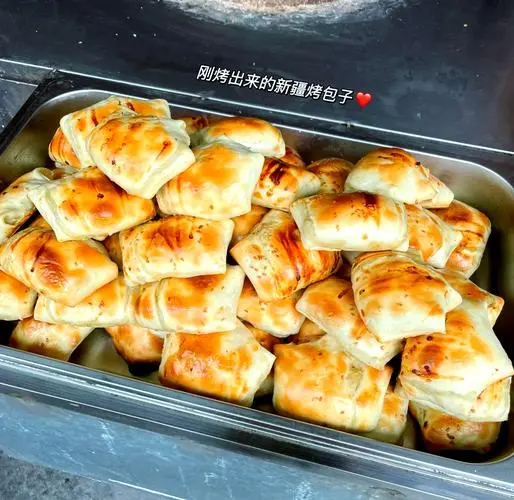
Samsa adapts with compromise. No tonur at home, obviously. A pizza stone at 250 degrees gets you most of the way there, and the filling of hand-chopped lamb, onion, cumin and pepper is exactly right even from an Irish butcher. Do not mince the lamb in a machine. Patime was emphatic about this and she was correct; the texture collapses.
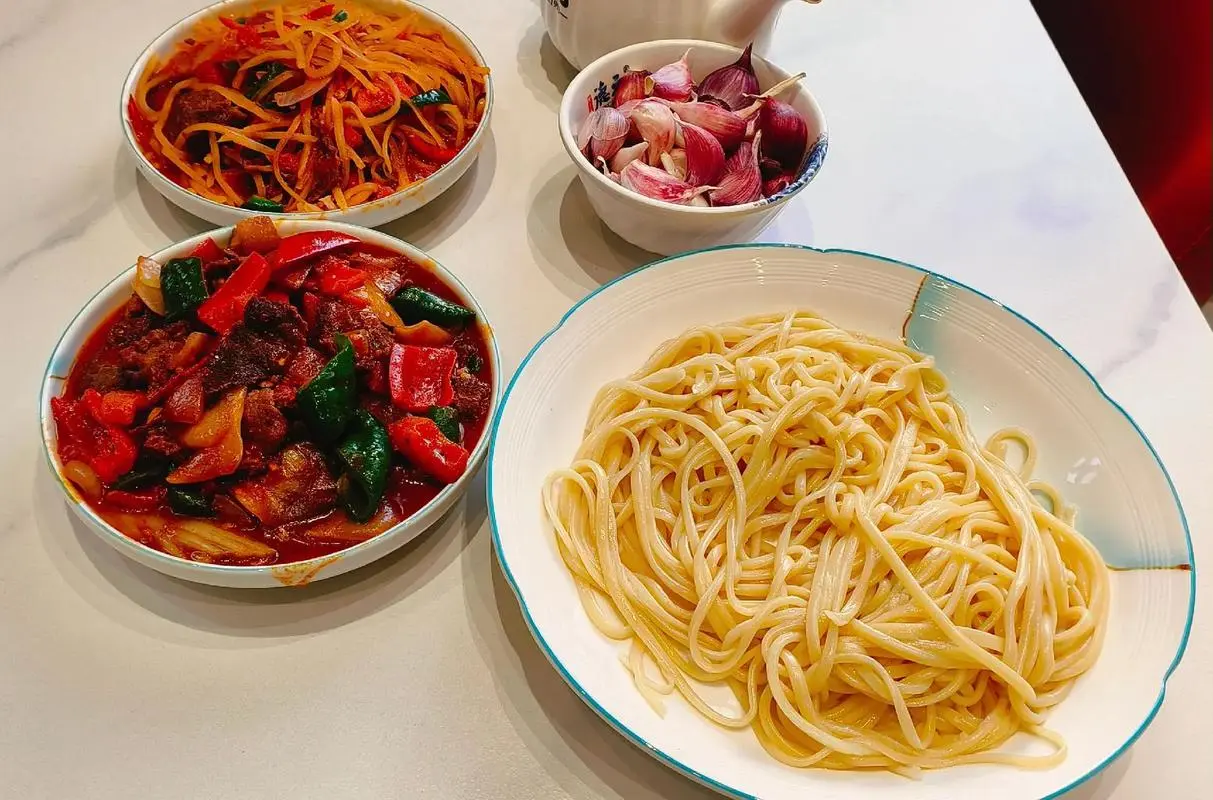
Laghman is a long-term relationship. The dough itself is just flour, water and salt, but the resting, oiling and pulling technique took Gulnar fifteen years and it shows. My noodles come out uneven and occasionally snap. The sauce, though, is very achievable: lamb, garlic, peppers, tomatoes, celery leaf, and a proper dose of cumin. I now make the sauce with shop-bought fresh noodles on weeknights, which feels like cheating and tastes like it does not. For the spicing itself, the spice shopping guide we published covers what to carry home; I brought back a half kilo of whole cumin from the Urumqi International Grand Bazaar and it has ruined supermarket cumin for me permanently.
Practical tips from three classes
- Bring a small notebook. Hosts measure by eye and hand, so write down what a “handful” looked like in the moment. Photos of each stage help enormously later.
- Wear clothes you can wash. Rendering mutton fat leaves a scent souvenir.
- Learn the words “rahmet” (thank you) and “bek tatliq” (very delicious). The reaction is worth the effort.
- If you have dietary restrictions, say so at booking, not on arrival. Lamb is the default in nearly everything; our Turpan host happily made a vegetable laghman for Roisin once she knew a day ahead.
- Tipping is not expected. Buying a bag of fruit for the household on your way over is a better gesture, and Patime’s children demolished the grapes we brought within minutes.
- Ask before filming. Cooking demonstrations were always fine to photograph; family members eating with you may prefer not to be on camera.
A sample cooking-focused day in Kashgar
8:30: Breakfast of fresh naan and milk tea near your guesthouse.
9:30: Walk the morning market with your host or on your own to watch ingredient shopping, especially the butcher rows and the spice sacks.
11:00: Class begins. Polo needs a long unattended simmer, which is exactly when samsa folding gets taught.
14:00: Eat what you cooked, slowly, with the family.
15:30: Walk it off in the Old City lanes and find a teahouse.
19:00: Night market for comparison tasting. You will judge every samsa differently now, which is the whole point.
FAQ about Uyghur cooking classes
Do I need to speak Chinese or Uyghur?
No. All three of our classes ran on demonstration, gesture and a translation app. Cooking is unusually well suited to learning by watching.
Can children join?
The family-run classes in Kashgar and Turpan welcomed the idea warmly when other guests asked. The structured Urumqi class listed a minimum age of ten.
Is it halal, and can vegetarians participate?
Uyghur home cooking is halal by default. Vegetarian versions of polo and laghman are genuinely good, but request them when booking so the host shops accordingly.
How far ahead should I book?
One or two days is usually plenty. This is not a book-from-abroad situation; arrange it after you arrive.
What should I bring home to keep cooking?
Whole cumin, dried chilli flakes, and a chekich bread stamp, which costs around 10 to 20 RMB at any bazaar and weighs nothing. Skip carrying rice; any long grain variety at home is fine. More packing-for-food-people questions are covered in our Xinjiang travel FAQ.
If you are still deciding between a family kitchen, a studio bench or a scenic-area demonstration, our guide to booking cooking and craft workshops in Xinjiang explains how each is arranged, what it costs and how to confirm a slot by WeChat.
Disclaimer
All prices, class formats and availability reflect our visit in October 2025 and spot checks in mid 2026. Family-run lessons depend on individual hosts and change without notice. Confirm prices and dietary arrangements directly before your class. This article contains no sponsored content and no affiliate links.
About the contributors: Fiona Gallagher has taught home economics in Dublin for 22 years and travelled through Kashgar, Turpan and Urumqi in October 2025 with her sister, taking three cooking lessons along the way and testing every recipe at home since. Her field notes were edited and fact-checked by Karl Huang, who runs Xinjiang Attractions and has travelled the region extensively. All classes were paid for in full by the writers, with no complimentary services accepted.