Laghman Noodles: Xinjiang’s Hand-Pulled Noodle Tradition
Published: June 25, 2026 | Author: Xinjiang Attractions Editorial Team
Why you can trust us: This guide is based on first-hand laghman-making experiences in Kashgar and Hotan, interviews with Uyghur noodle masters (non), and verified information from the Xinjiang Culinary Culture Institute. Our team has eaten laghman in over 15 cities across Xinjiang.
Quick Reference: Laghman at a Glance
| Aspect | Details |
|---|---|
| Local name | 拉条子 (lātiáozi) or Laghman (Uyghur) |
| Main ingredients | Wheat flour noodles, lamb, bell peppers, onions, tomatoes |
| Price range | 15-35 RMB per plate |
| Where to find | Every city in Xinjiang; best in Kashgar and Hotan |
| Halal status | Always halal (Uyghur cuisine) |
| Vegetarian option | Available — ask for “素拉条子” (vegetarian laghman) |
Our Experience: Watching the Noodle Master
When we first entered a laghman shop in Kashgar’s Old City, we weren’t prepared for the performance. The noodle master (ustam) stood before a mound of dough, and with a series of rhythmic pulls, stretches, and slaps against the counter, transformed it into a tangle of thick, chewy noodles in under 30 seconds.
We ordered a plate and watched through the open kitchen window as he pulled fresh noodles for our order. They hit the boiling water, cooked for 90 seconds, then landed in a wok with sizzling lamb, peppers, and tomatoes. The scent alone — cumin, garlic, lamb fat — was enough to make us forget we’d eaten breakfast an hour earlier.
In Hotan, we visited a family-run laghman shop where the ustam had been pulling noodles for 40 years. His hands moved so fast they blurred. When we asked if he’d teach us, he laughed and handed us a piece of dough — which promptly snapped back and hit us in the face. Laghman-making is harder than it looks.
What is Laghman? (And How to Pronounce It)
Laghman (لەغمەن in Uyghur, 拉条子 in Chinese) is Xinjiang’s signature noodle dish. The name comes from the Chinese “la” (pull) and “mian” (noodles), or possibly from Persian “laghm” (noodle). Either way, it’s delicious.
The noodles are hand-pulled (not cut or extruded), giving them a unique texture — chewy, substantial, and perfect for absorbing sauce. The dish is always served hot, with stir-fried vegetables and meat.
Laghman vs. Other Chinese Noodles
| Dish | Noodle Type | Sauce | Region |
|---|---|---|---|
| Laghman (Xinjiang) | Hand-pulled, thick | Stir-fried with meat/veg | Xinjiang (Uyghur) |
| Lamian (Lanzhou) | Hand-pulled, thinner | Beef broth | Gansu (Han Chinese) |
| Dao Xia Mian (Knife-cut) | Cut, irregular | Various broths | Shanxi |
| Dapanji Noodles | Hand-pulled (added to stew) | Spicy chicken stew | Xinjiang (fusion) |
How Laghman is Made: The Hand-Pulling Process
Step 1: Dough Preparation
The dough is made with wheat flour, water, salt, and sometimes egg. It’s kneaded until smooth and elastic, then rested for 30+ minutes. Proper resting is crucial — it relaxes the gluten so the noodles can be pulled without snapping.
Step 2: The Pull
The ustam takes a portion of dough, rolls it into a long rope, then begins pulling. The motion is rhythmic: stretch, fold, stretch, fold. Each fold doubles the number of noodles. After 6-8 folds, you have hundreds of noodles from a single piece of dough.
Step 3: The Slap
This is the theatrical part. The ustam slaps the noodles against the counter to separate them and create tension. It’s loud, rhythmic, and mesmerizing to watch. Some cooking classes will teach you the basic motion (but mastering it takes years).
Step 4: Boiling and Stir-Frying
The noodles go into boiling water for 60-90 seconds (thicker than Italian pasta). They’re then drained and either served with sauce on the side, or stir-fried directly in a wok with meat and vegetables.
Regional Variations Across Xinjiang
Kashgar Laghman
The noodles are thicker here, and the sauce is heavier on cumin and lamb fat. Often served with a side of raw garlic (eat a clove with each bite — it’s intense but delicious).
Hotan Laghman
Slightly thinner noodles, and the sauce often includes tomatoes (giving it a reddish hue). The vegetables are cut into larger pieces. Hotan laghman is also famous for its kebab pairing — order a side of chuanr to go with your noodles.
Urumqi Laghman
More Chinese-influenced. You might find laghman with Sichuan pepper, or with a vinegar-heavy sauce. The noodles are often thinner (closer to lamian style).
Yining (Ili) Laghman
Kazakh-influenced. Sometimes served with horse meat (yes, really), and the noodles might be cut rather than pulled. The flavor profile is milder.
Where to Eat the Best Laghman in Xinjiang
Kashgar — Old City Area
Wander into any noodle shop north of Id Kah Mosque. Look for places where you can see the ustam pulling noodles through a window. Price: 15-25 RMB. Our favorite: a small shop on Seminar Street with a green awning (ask locally — names change frequently).
Hotan — Jade Market Area
Several excellent laghman shops near the market. They’re busiest at lunch (2:00-3:00 PM). Portions are huge — one plate can feed two small eaters.
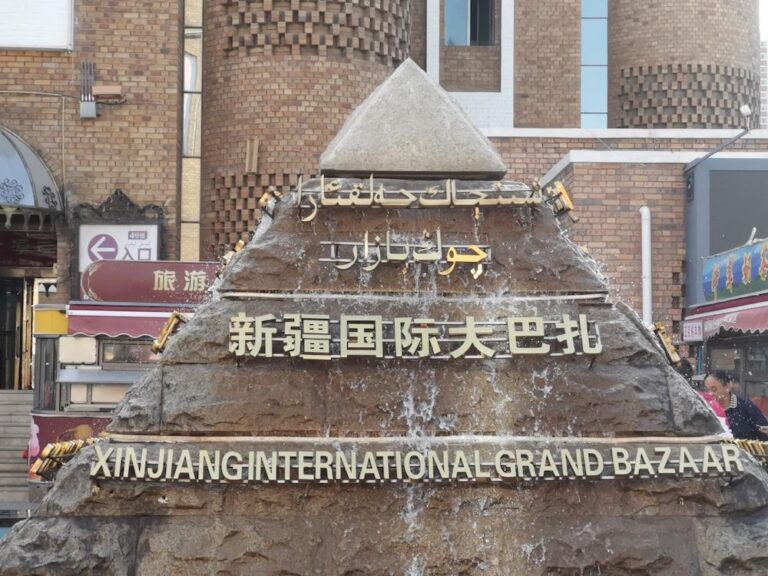
Urumqi — International Bazaar
The food court has multiple laghman vendors. More touristy, but consistent quality. Expect to pay 25-35 RMB.
How to Eat Laghman Like a Local
- Use chopsticks: Forks are rare. If you can’t use chopsticks, ask for a spoon (most places have them).
- Eat quickly: Laghman is best hot. The noodles get soggy if they sit in the sauce too long.
- Add vinegar and chili oil: Most shops have a condiment station. Add black vinegar (not rice vinegar) and chili oil to taste.
- Order “daxiao” (large/small): “Xiao pan” (small plate) is still a generous portion. “Da pan” (large plate) is enormous — consider sharing.
Vegetarian and Dietary Options
Laghman is traditionally made with lamb, but vegetarian versions are available. Ask for “su laghman” (vegetable laghman) — it’ll have tomatoes, peppers, onions, and sometimes egg. No meat, no meat sauce.
For vegans: the noodles themselves are vegan (flour, water, salt). But they’re often cooked in the same water as meat noodles, and the wok might have meat residue. If you’re strict, ask about separate preparation.
Laghman Etiquette and Culture
In Uyghur culture, laghman is everyday food — not ceremonial, not fancy, just… essential. Families make it at home (the women usually handle the dough, the men often do the pulling — it’s seen as strength-based work).
If you’re invited to someone’s home for laghman, observe these etiquette tips:
- Wash your hands before eating (there’s usually a washing station near the door)
- Wait for the eldest person to start eating
- Don’t leave noodles in your bowl — finish what you take
- Compliment the ustam (noodle-puller) — it’s a skilled job
Frequently Asked Questions
Q: Is laghman spicy?
A: Not necessarily. The chili oil is usually on the side. Ask for “bu la” (not spicy) if you’re sensitive.
Q: Can I watch the noodle-making?
A: Absolutely! Most shops encourage it — it’s part of the experience. Some ustams will even let you try pulling (prepare to fail spectacularly).
Q: How many laghman shops are there in Xinjiang?
A: Thousands. Every block in every city has at least one. It’s the most common restaurant type in Xinjiang.
Q: Can I buy laghman noodles to cook at home?
A: Fresh laghman noodles are sold in local markets (look for the noodle vendor section).They keep for 1-2 days in the fridge. Beyond that, they freeze well.
Disclaimer
This guide is for informational and cultural education purposes only. Restaurant quality, prices, and availability can vary. We encourage respectful engagement with Uyghur culinary culture — laghman is a point of pride for many families. Verify halal status personally if you have dietary restrictions. Our descriptions are based on our experiences, but individual shops may differ.
About the Author
Xinjiang Attractions Editorial Team
Our team includes culinary culture specialists, Uyghur food experts, and travelers who have slurped laghman in every corner of Xinjiang. We combine first-hand noodle experiences with cultural research to bring you the most flavorful (and accurate) food guides.
Have a laghman shop we should try? Contact us — we’re always hungry.