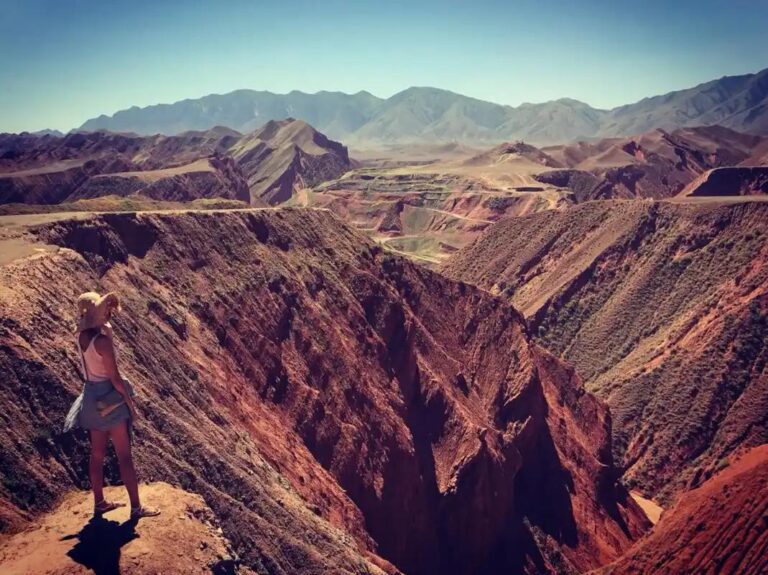
Published: August 15, 2026 | Author: Karl Huang
Why you can trust this guide
When people ask me which Xinjiang dish they shouldn’t leave without trying, I give the same answer every time: Xinjiang nang pit meat. I didn’t learn about it from a menu — I learned it standing in a Kashgar alley at nine at night, watching a cook pull a heavy iron lid off a clay dome and lift out a skewer of lamb that had been hanging in the heat for forty minutes. That was four trips and eleven cities ago. This article pulls together what I’ve eaten, what I got wrong, and the practical details you actually need before you sit down to order.
Quick reference
| Detail | What to know |
|---|---|
| Local name | 馕坑肉 (nang kang rou) |
| Main ingredient | Whole lamb ribs or leg, bone in |
| How it’s cooked | Hung inside a heated clay bread oven (the nang pit) |
| Best cities | Urumqi, Kashgar, Turpan, Hotan |
| Typical price | ¥40–80 for a shared plate; whole leg ¥200+ |
| Go with | Onion, fresh nang, black tea |
What Xinjiang nang pit meat actually is
The “pit” is the nang kang — the same round clay oven Uyghur bakers use all day to make flatbread. It looks like a fat ceramic urn, sometimes sunk halfway into the ground, sometimes standing free on a corner. Bakers heat it with dried apricot or mulberry wood until the inner wall glows. In the morning it bakes the nang that locals eat for breakfast; by evening the same wall is hot enough to roast meat. This tandoor-style clay oven is the backbone of Xinjiang meat cooking, and nangkeng rou is its most generous output.
How the pit is fired and built
Watching the oven itself is half the fun. The nang kang is built from a mix of clay, straw, and sometimes egg white, shaped into a dome and left to cure in the sun for days before its first fire. A good one lasts years. The cook lights it in the late afternoon with chunks of apricot or mulberry wood — fruit wood, never pine, because the resin would sour the meat. Once the wood collapses to embers, he sweeps them to the bottom and tests the wall with his palm. When the heat is right, the meat goes in. I’ve stood next to pits in Turpan where the outside air was 40°C and the oven wall was somewhere past 250°C; that gap is exactly why the meat browns fast on the outside while staying pink near the bone. The same pit that baked your morning nang is now your dinner oven, and the bread residue left on the clay adds a faint sweetness you can’t fake.
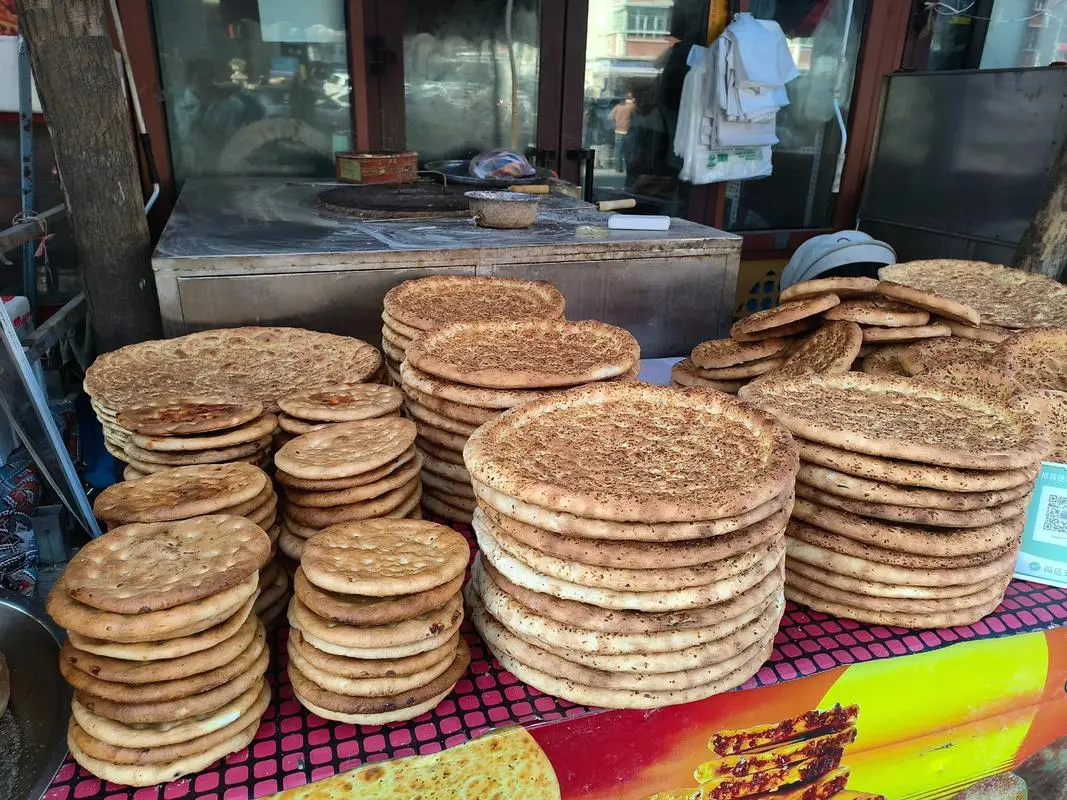
For nangkeng rou, the cook cuts lamb into fist-sized chunks, often leaving the rib or a strip of leg bone in. The meat gets a dry rub of salt, cumin, and chili flakes — nothing wet, no marinade bath. Then it goes onto a long skewer or a hooked iron rod and is pressed against the inner wall of the pit, above the embers. The lid goes back on. The bone conducts heat slowly, the fat renders against the clay, and the wood smoke does the rest. Forty minutes later the outside is lacquered and the inside is steaming.
Where to eat Xinjiang nang pit meat
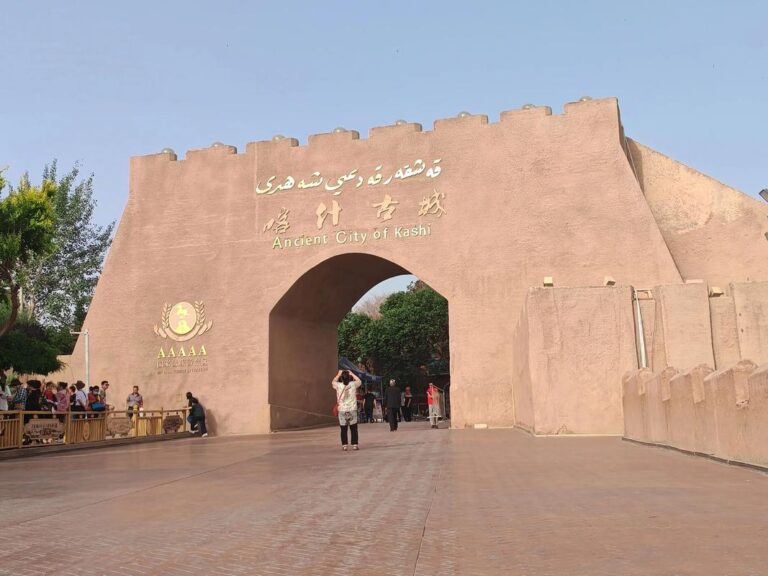
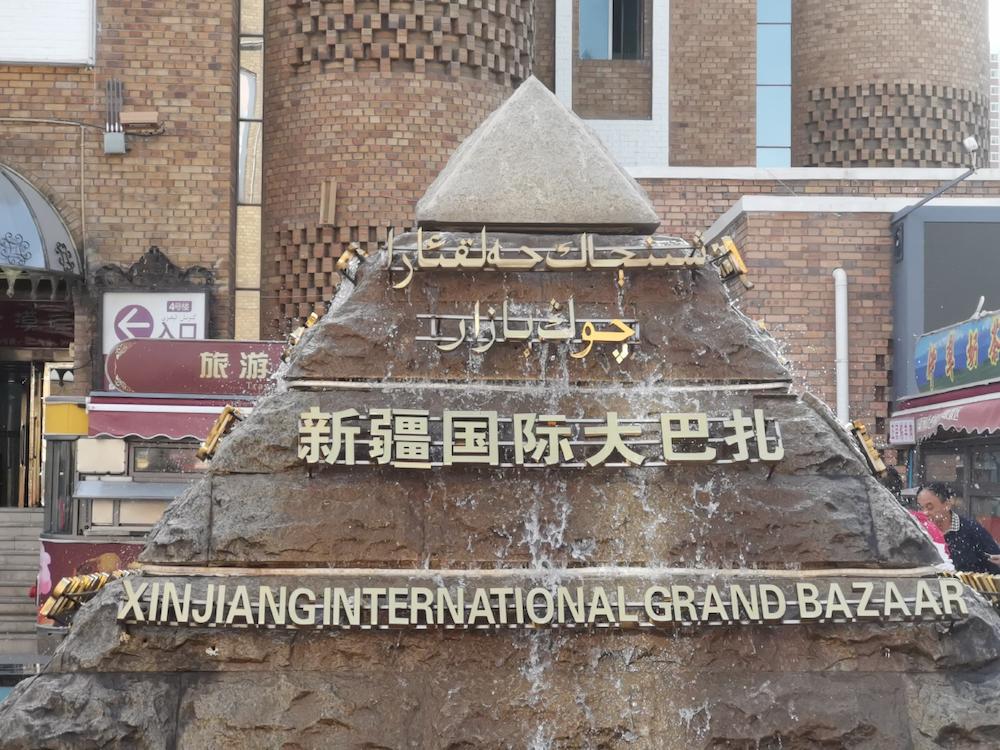
My first proper plate was in Kashgar’s old city, at a stall where the pit sat in the open and the cook pulled the skewer straight up and sliced it onto a tin tray. The meat came off the bone with a spoon. A year later in Urumqi, near the International Bazaar, I found a place that did the same thing but finished the lamb with a dusting of toasted cumin you could smell from the sidewalk. Both cities are worth a stop, and they’re different enough that I’d read up on how Urumqi and Kashgar compare before picking a base.
In Hotan, south of the desert, the pits tend to run smaller and the rub leans sweeter, sometimes with a pinch of dried rose or paprika you won’t find up north. Turpan, by contrast, serves a leaner cut — the local preference is for meat you can pull apart rather than gnaw. I kept a running note of which city did what, and the differences were bigger than I expected from a dish that looks identical on the surface. In smaller towns you’ll occasionally find a whole lamb lowered into a pit for a wedding or a festival; if you’re invited, say yes.
How to get there
Most visitors fly into Urumqi Diwopu International Airport (URC). From there, domestic flights reach Kashgar (KHG) in about two hours, and the high-speed rail gets you to Turpan in under an hour. Within any of these cities, the nang pit stalls cluster around the bazaars and the night-market streets, all reachable by taxi or a short walk from the center. If you’re building a longer route, pair this with other dishes — Xinjiang big plate chicken is the obvious companion order, and it shares the same cumin-and-lamb DNA.
Best time to go
You can eat nang pit meat any month, but the experience changes with the season. From May through October the night markets run late and you can stand outside in a t-shirt while the pit throws heat at your face. Winter is quieter and colder, but a plate of hot lamb with black tea is exactly what you want after a day on the Pamir or the Tian Shan. If your trip is short, late spring is the sweet spot: mild weather, open stalls, and none of the summer crowds that pack the bazaars by July.
Where to stay
Book somewhere walkable to the bazaar. In Kashgar, the Uyghur courtyard homestays put you inside the old city, a two-minute walk from the pits. In Urumqi, anywhere along the bazaar tram line works, and you can roll out of bed and be at a pit before the dinner rush. If you arrive tired from a long haul flight, a central hotel beats a cheap one on the edge of town — the best pits don’t keep late hours, so proximity wins.
What to order alongside
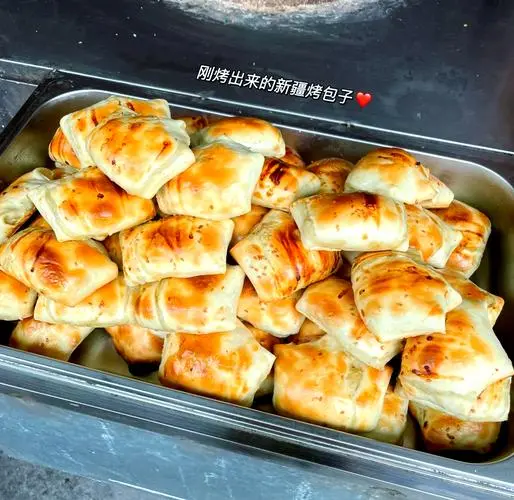
The meat is the headline, but the plate is incomplete without three things: a stack of warm nang to scoop with, raw white onion to cut the fat, and a pot of black tea. Skip the beer — it dulls the cumin. On the side, try kawap (the same lamb on a short skewer) or, if you want something from the same oven family, the samsa: a baked bun with meat or pumpkin inside.
One mistake I made early: ordering the whole leg alone. It’s a group dish. For two people, a half-plate of nangkeng rou plus a nang and a tea pot is plenty, and leaves room to graze the rest of the market. The cook will often throw a few extra nang on the tray at no charge — that’s the signal you picked a good pit.
Practical tips
- Point at the pit, then at your chest, if you don’t speak the language — most cooks understand “I want that.” For a fuller system, see the guide on ordering food without speaking Chinese.
- Watch the cook lift the lid. If the meat comes out pale and soft, it needed five more minutes — ask them to put it back.
- Cash still wins at street pits. Carry small notes; card readers fail at the worst moments.
- The best pits close when the wood runs out, not on a clock. Show up before 9 p.m.
- Don’t trust a pit with no local customers. A quiet oven at dinner time is quiet for a reason.
- If you see two pits side by side, the busier one is usually better. Heat consistency comes from repetition, and a pit that fires every evening holds its temperature better than one used twice a week.
- Ask for the cherik cut if you like it fatty, or yupka for leaner. Most stalls don’t print this, but the cook knows the words.
A simple evening plan
6:30 p.m. — Arrive at the bazaar, walk the stalls, find a pit with a crowd.
7:00 p.m. — Order half a plate of nangkeng rou, one nang, one tea.
7:30 p.m. — Eat slowly; watch the next skewer go in.
8:15 p.m. — Order a samsa or kawap to compare the oven’s range.
9:00 p.m. — Walk off the meal, or move to a second pit if you’re still curious.
Frequently asked questions
Is nang pit meat the same as lamb kebabs?
No. Kebabs (kawap) are small cubes on a short skewer, grilled over open flame. Nangkeng rou is large cuts hung inside a closed oven, so the heat is indirect and the smoke is trapped.
Is it spicy?
Usually not. The chili is a light dusting. Ask for “achchiq” (spicy) if you want more, or “achchiq emes” if you don’t.
Can I watch it being made?
Almost always. The pit is on the street or just inside the door. Cooks are used to people staring — it’s part of the draw.
How much does a whole leg cost?
A full leg for a group of four to six runs roughly ¥200–300 depending on the city and the season. Split it and add a few nang and teas; the per-person bill stays reasonable.
Is there a vegetarian version?
Rarely. The oven is built around meat and bread. If you’re vegetarian, the nang itself and the pumpkin samsa are your best bets from the same pit.
Disclaimer
This guide is based on the author’s personal visits between 2022 and 2026 and on publicly available information about Uyghur food culture. Prices, stall locations, and opening hours change, and some pits close seasonally or relocate. Always confirm current details on the ground, and respect local customs and food-handling practices. This article is for travel and cultural information only and is not affiliated with any restaurant or vendor.
About the author
Karl Huang is a travel writer who has spent several seasons crossing Xinjiang by train, bus, and rented car. He focuses on first-hand food and route reporting for independent travelers, and has published guides covering everything from the Pamir Plateau to the night markets of Urumqi. His work emphasizes practical, verified detail over promotion.