Why Xinjiang Sat at the Centre of the Silk Road
Xinjiang was the heart of the ancient Silk Road — the network of trade routes connecting China to Central Asia, the Middle East, and Europe for over 1,500 years. This guide covers the history you should know before your Xinjiang attractions visit.
What Was the Silk Road?
The Silk Road wasn’t a single road, but a network of trade routes (2nd century BCE – 15th century CE) transporting:
- East → West: Silk, porcelain, tea, paper, gunpowder
- West → East: Horses, grapes, walnuts, glass, Buddhism, Islam
Xinjiang’s Role: The Critical Corridor
Xinjiang connected China proper to the west. All goods had to pass through Xinjiang’s oasis cities.
The Two Main Routes
| Route | Path | Key Oases |
|---|---|---|
| Northern Route | Through Dzungarian Basin | Urumqi, Turpan, Kuqa |
| Southern Route | Along Tarim Basin edge | Kashgar, Hotan, Aksu |
Key Historical Periods in Xinjiang
1. Han Dynasty (206 BCE – 220 CE)
- China first established control over Xinjiang (called “Xiyu” — Western Regions)
- Zhang Qian’s expedition (138 BCE) opened the Silk Road
- Kashgar, Kuqa, Turpan became important trading posts
2. Tang Dynasty (618-907 CE) — Golden Age
- Xinjiang fully integrated into Chinese empire
- Buddhism flourished — Kizil & Bezeklik caves built
- Cultural exchange peaked: Chinese, Indian, Persian, Sogdian cultures mixed
3. Yuan Dynasty (1271-1368) — Mongol Period
- Marco Polo traveled the Silk Road through Xinjiang
- Pax Mongolica made trade safe again
4. Ming Dynasty (1368-1644) — Decline
- Sea routes replaced land routes → Silk Road declined
- Xinjiang became isolated
5. Qing Dynasty (1759-1912) — Reintegration
- Qing reconquered Xinjiang, established Xinjiang Province (1884)
Silk Road Sites You Can Visit Today
| Site | Location | Era |
|---|---|---|
| Jiaohe Ancient City | Turpan | 2nd century BCE – 14th century |
| Kizil Caves | Kuqa | 4th-8th century |
| Bezeklik Caves | Turpan | 5th-14th century |
| Id Kah Mosque | Kashgar | 15th century (rebuilt 18th) |
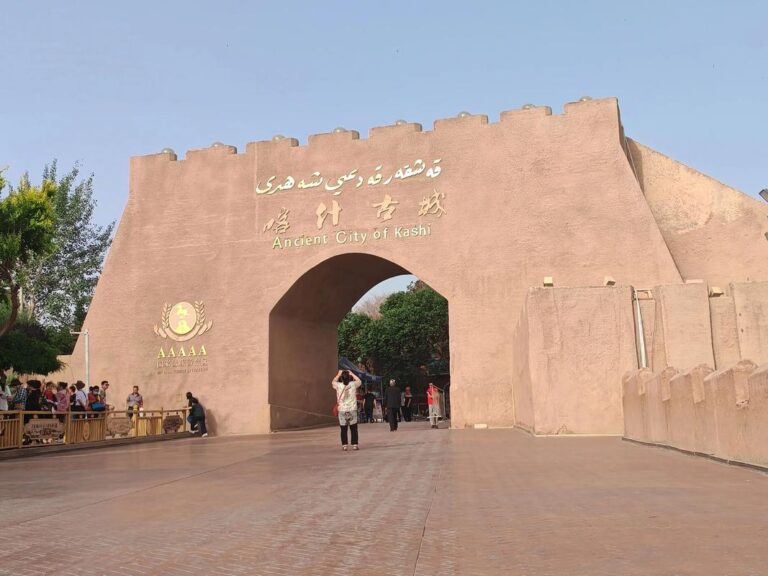
| Kashgar Old City | Kashgar | 2,000+ years, continuously inhabited |
The Silk Road Today
China’s Belt and Road Initiative (BRI) is often called the “New Silk Road” — a massive infrastructure project reconnecting China to Eurasia. Xinjiang is again the critical corridor.
Walking through Kashgar’s Old City or Jiaohe’s ruins, you’re literally walking the same paths as Silk Road traders from 2,000 years ago. It’s an incredible feeling.