Published: August 15, 2026 | Author: Karl Huang
The first time I ate Xinjiang big plate chicken was on a freezing evening in late October, in a cramped restaurant two blocks behind the International Bazaar in Urumqi. Outside it was already dark by six, the kind of dry cold that goes straight through a zip-up jacket. Inside, a waiter set down a metal platter the size of a bicycle wheel, loud with steam and the smell of cumin and fried chili. That plate changed how I think about road food in this part of the world, and it is the reason I keep sending friends to Xinjiang with one instruction: order the dapanji.
I have eaten the dish in at least nine cities across the region since then, from back-room canteens in Kashgar to a gleaming food court in Shihezi. The version changes by town, but the bones are the same, and so is the comfort. This guide pulls together what I learned the hard way, including the mistake I made on my second order that left me sweating over a plate I could not finish.
Big Plate Chicken at a Glance
| Detail | What to Know |
|---|---|
| Local name | 大盘鸡 (dapanji) |
| Main ingredients | Chicken on the bone, potato, green pepper, onion |
| Key spices | Cumin, star anise, Sichuan peppercorn, dried red chili |
| Served with | Belt noodles (皮带面) added to the sauce; naan on the side |
| Typical price | 60 to 90 yuan for a plate that feeds two |
| Best base city | Urumqi; the origin town is Shawan |
| Spice level | Adjustable, so ask before you order |
What Is Xinjiang Big Plate Chicken?
Big plate chicken is exactly what the name promises: chicken, cut through the bone, braised with potatoes, green peppers, and onions in a dark, oily sauce built on cumin, star anise, Sichuan peppercorn, and dried red chili. The “big plate” is not a metaphor. It arrives on a shared platter meant for two or three people, and the real magic is what comes after. Most restaurants will slide a portion of belt noodles (皮带面, thick hand-pulled strands named for their width) into the remaining sauce, turning the leftovers into a second course.
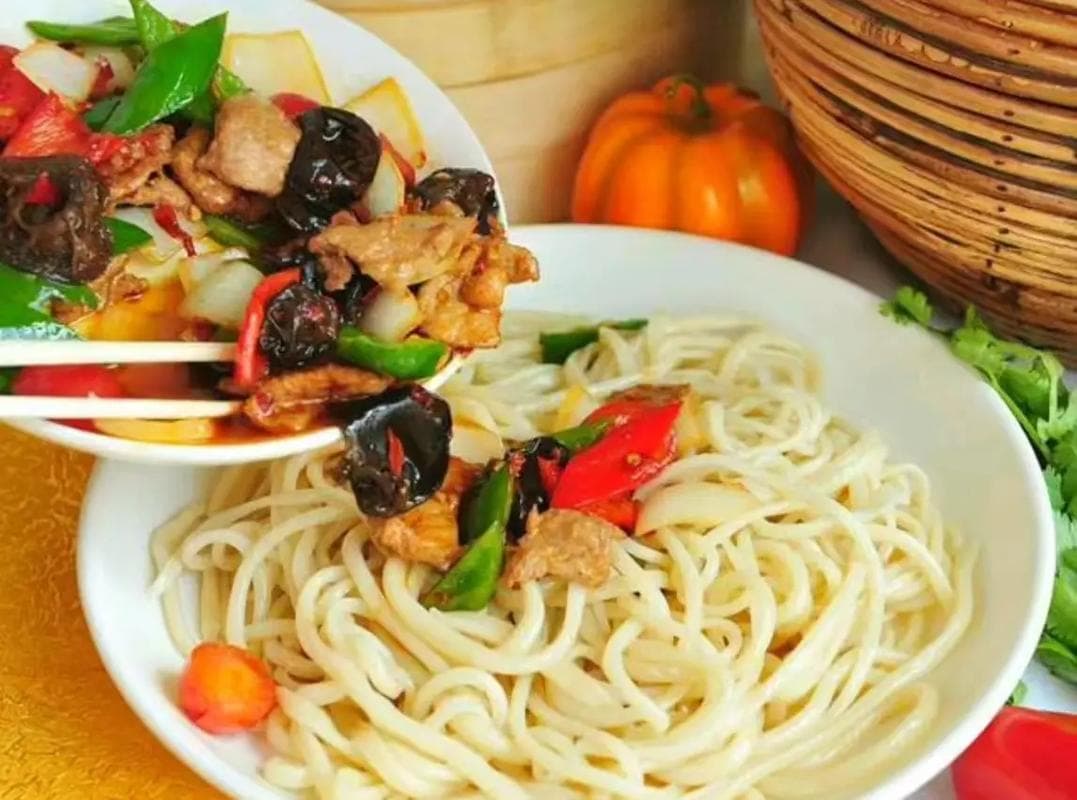
The dish sits at the crossroads of cuisines you would not expect to meet. The chicken-and-potato base feels northern Chinese. The cumin and chili are unmistakably Xinjiang. The numbing peppercorn is a Sichuan import that rode the railways west. What you taste is a region that has been a trade stop for two thousand years, boiled down into one messy, generous plate.
Where the Dish Was Born, and Why That Matters
If you want to argue about origins, the town to name is Shawan (沙湾), a small county seat on the northern route of the old Silk Road, roughly two and a half hours by car from Urumqi. Locals there will tell you, without much modesty, that big plate chicken started in their kitchens in the 1980s, cooked by long-haul drivers who needed something cheap, hot, and filling after a day on the road. I wrote up the town itself in a separate piece on Shawan, the hometown of big plate chicken, because the place explains the food better than any recipe card.
The Shawan claim is worth taking seriously for one practical reason. If you care about eating the “correct” version, the restaurants in and around Shawan still use more potato and a gentler hand with the chili than the big-city versions that crank the heat for tourists. It is a small difference, but after a few plates you start to notice it.
Our First Real Plate: A Memory From Urumqi
Back to that October night. I ordered a “medium” plate, assuming medium meant portion size. It did not. It meant chili level, and my medium came out aggressively hot. The chicken was excellent, the potatoes had soaked up every bit of the sauce, and the belt noodles, added at the end, were the best part. I ate until I could not, then watched the waiter scrape the last of the sauce onto a fresh round of noodles for the table next to us, who had ordered late.
What stuck with me was not the spice. It was how ordinary the whole thing felt. Nobody treated big plate chicken as a special occasion dish. It was Tuesday dinner. That is the clearest sign a regional food has actually earned its place, and it is why I trust it more than the items tourist brochures push to the front.
How to Get to the Right Places
You do not need to fly to Shawan to eat well. Urumqi Diwopu International Airport has direct flights from most major Chinese cities, and the high-speed rail line puts you in the city from elsewhere in the region in a few hours. From Urumqi, Shawan is an easy day trip up the G30 expressway if you have a car or a driver; without one, the train to Shihezi plus a short taxi ride gets you close enough to find a decent plate. In Kashgar and Yining, you will find strong local versions without leaving the city center, usually in the blocks around the old bazaars.
If you are building a longer route, pair the food hunt with the practical advice in my piece on ordering food in Xinjiang without speaking Chinese. The vocabulary there will save you from my medium-equals-spicy confusion.
Best Time to Eat It
Honestly, any time. Big plate chicken is on menus year-round and does not depend on a season the way, say, apricot blossom or poplar forests do. That said, I prefer it in the colder months. The dish is built for heating you up, and a plate after a day of winter sightseeing hits differently than the same plate in July. If you travel in autumn, you get the bonus of fresh peppers and a slightly sweeter sauce from the late harvest.
Where to Base Yourself
For a food-focused trip, Urumqi is the obvious base: the most restaurants, the widest range of spice levels, and good hotels within walking distance of the bazaar districts where the best small places hide. Shihezi and Shawan make sense if you want the origin-story version and do not mind a quieter town. I would not build a whole itinerary around the dish alone, but as a recurring dinner it gives structure to almost any Xinjiang route.
What to Order Alongside
A plate of chicken is rarely the whole meal. Round it out with a few standards that show up on the same menus:
- Naan (馕) for scooping sauce. The flat, sesame-studded rounds are the local bread and do the job better than a fork.
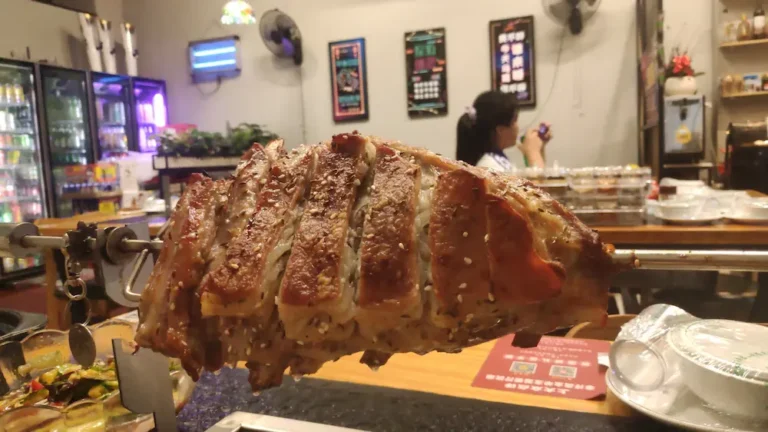
- Grilled lamb skewers (羊肉串) as a starter while the chicken braises.
- Laghman noodles if you want the belt-noodle step as its own dish rather than folded into the leftovers.
- Savory baozi (烤包子, baked buns) for a quick bite between sights.
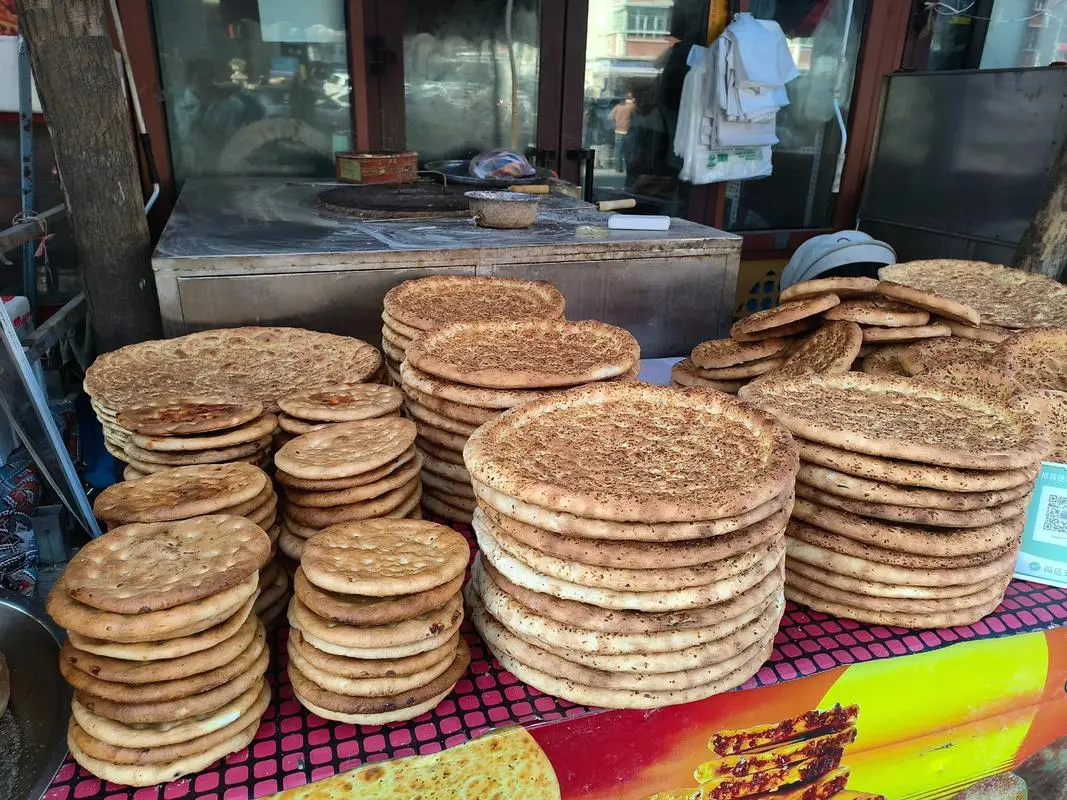
The naan deserves a sentence of its own. Tear a piece, press it into the sauce at the edge of the plate, and you get the same satisfaction as the belt noodles with none of the wait. I now order both, which means I never finish, which means I take a box back to the hotel. No regrets.
Practical Tips Before You Order
A few things I wish someone had told me on trip one:
- Spice is usually a separate question. “Small, medium, large” often refers to heat, not size. Ask for the chili level in plain terms, or you may get my October surprise.
- Portions are built for sharing. A standard plate comfortably feeds two. Order one and add sides rather than two plates for two people.
- Save room for the noodles. The belt noodles are added to the sauce, not served alongside. Flag the waiter when the chicken is mostly gone.
- Prices run low. Expect roughly 60 to 90 yuan for a plate that feeds two, more in upscale city centers, less in county towns.
- Leftovers travel. Most places will pack the sauce and noodles. Hotel microwaves are your friend the next morning.
For a deeper, hands-on angle, I have also written about booking a real Xinjiang cooking or craft workshop, where you can watch the noodle-pulling up close instead of just eating the result.
Where to Eat: A Half-Day Food Plan
If you have one free afternoon in Urumqi and want to chase the dish properly, here is the loose plan that worked for me:
- 3:00 PM — Walk the International Bazaar area, note the small restaurants with local customers (a full lot of scooters out front is a good sign).
- 5:30 PM — Order one medium plate, ask for mild, add a portion of naan and four lamb skewers while it braises.
- 6:15 PM — When the chicken is picked clean, signal for the belt noodles in the sauce.
- 7:00 PM — Walk it off along the lit streets, or box the rest and call it breakfast.

Frequently Asked Questions
Is big plate chicken very spicy?
It can be, but it does not have to be. The chili is adjustable in almost every restaurant, and the potato-and-sauce base is mild on its own. Ask for a lower level and you will be fine.
Can vegetarians eat it?
Not the standard version, which is chicken and often cooked in the same wok as meat dishes. Some places will make a potato-and-pepper plate on request, but confirm the cookware if cross-contamination matters to you.
What is the difference between Shawan style and city style?
Shawan versions tend to use more potato and a softer chili hand; big-city restaurants often turn the heat up for visitors. Both are good. The difference is a matter of preference, not quality.
Do I need to speak Chinese to order it?
No. Pointing at the picture on the menu or saying “dapanji” (大盘鸡) gets you most of the way. The bigger gap is explaining spice level, which is why I wrote the ordering guide linked above.
A Note on Accuracy
This article is based on my own travels and meals across Xinjiang between 2023 and 2026, plus conversations with local cooks and restaurant owners. Recipes, prices, and menus change, and regional claims about where the dish started are debated even inside Xinjiang. Treat the practical details as a strong starting point rather than a fixed rule, and confirm current prices and opening hours with the restaurant before you go. I have no commercial relationship with any restaurant mentioned here.
About the Author
Karl Huang is a travel writer focused on northwest China and the Silk Road. He has spent several seasons on the road in Xinjiang, documenting food, routes, and the day-to-day logistics that make independent travel work. His writing aims to give foreign visitors the same straight answers a local friend would, including the parts the brochures leave out.