Published: July 28, 2026 | Author: Karl Huang, Xinjiang Attractions Editorial Team | Guest field notes: Hazel Whitmore, market trader, Norwich, England
I have stood behind a stall at Norwich Market for twenty-three years, selling old crockery and brass in weather that would make a yak sulk. So when my son Ewan booked us two weeks in western China in September 2025, I did not go for the mountains. I went for the markets. What I found is that Xinjiang bazaar culture is not really about buying things at all. The bazaar out there works the way English markets did a century ago: it is the bank, the barber, the news service and the marriage bureau of a whole district, all under one roof of tarpaulin and poplar beams. This piece is my attempt to explain that side of it, the side you miss if you only walk in for a fridge magnet. Prices and opening patterns below are what we saw and paid in September 2025, cross-checked against listings on the official Xinjiang culture and tourism portal (xinjiang.gov.cn) before writing.
Quick reference: Xinjiang bazaar culture at a glance
| Question | Short answer |
|---|---|
| What is a bazaar here? | A weekly or daily market that doubles as a social hub: trades, food, barbers, livestock |
| Biggest famous one | Urumqi International Grand Bazaar, open daily, roughly 10:00 to 22:00 |
| Most traditional ones | Rotating village bazaars around Kashgar and Hotan, each on a fixed weekday |
| Livestock market | Kashgar Sunday livestock market (Mal Bazaar), mornings only |
| Cost to visit | Free entry everywhere; budget 50 to 100 RMB for food and small buys |
| Best months | May to October; September has fruit harvests piled high |
What a bazaar actually is, once you stop shopping
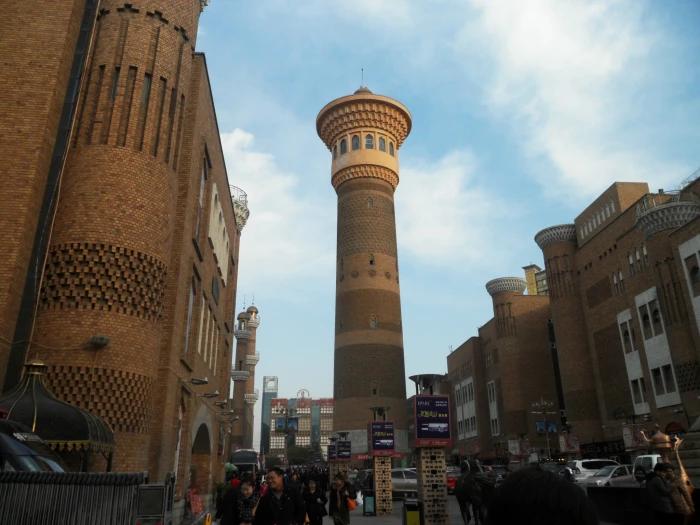
Our first stop was the Urumqi International Grand Bazaar, which is the polished, tour-bus version, and I enjoyed it the way I enjoy a well-run department store. But the moment that changed the trip came on day two, when I watched a dried-fruit seller take a phone call, leave his till drawer open, and walk off for twenty minutes. The neighbouring stallholder served his customers, dropped the notes in the open drawer, and never once looked up. I have run a stall most of my adult life and I can tell you: that level of trust between traders takes a generation to build. That, right there, is bazaar culture.
Once you know to look, you see the same pattern everywhere. Old men hold court on carpet bales for hours and never buy a thing. A knife-sharpener remembers which family owns which cleaver. The samsa oven near the east gate keeps a paper ledger of regulars who pay at month’s end. Ewan, who works in a bank, kept muttering that the whole place ran on informal credit. He meant it as an observation. I heard it as a compliment.
Bazaar days: why villages are named after weekdays
The thing that genuinely surprised me is the rotating calendar. Around Kashgar and Hotan, many villages hold their bazaar on one fixed day of the week, and some places are simply known by it. Yekshenbe Bazaar means Sunday market; Payshenbe Bazaar means Thursday market. Traders load the same van and circle the district all week, the way fairground families used to tour Norfolk. If you only have a couple of days, plan around this. We asked our guesthouse owner in Kashgar which village market fell on our free Monday, and he sent us thirty minutes out to Opal. No tour group in sight, and a farmer sold me a hand-forged sickle I had no honest use for.
The famous one is the Kashgar Sunday livestock market, and it deserves its reputation. Sheep are judged by hand, money changes fists after long theatrical arguments, and a handshake sealed with both hands is a contract. If your visit lines up with a festival, the livestock trade gets even livelier; we have covered that in our piece on the Corban Festival. Go before 10:00, it thins out by lunch.
The trades rows: barbers, blacksmiths and tea
Every proper bazaar has its working rows, and this is where I spent most of my time. In Kashgar’s old town lanes I watched a coppersmith planish a water jug with a hammer his grandfather had used, tapping in a rhythm you could set a metronome to. Ewan got a cut-throat razor shave from a bazaar barber for 15 RMB and came out looking like a 1940s film star. A dentist’s chair sat in the open air, which I photographed and Ewan refused to test.
Then there are the chaikhanas, the tea houses. We sat in one above a Kashgar lane for two hours with a pot of rose tea (10 RMB) while men played chess and argued about melon prices. Nobody hurried us. A retired teacher practised his English on me and translated the gossip: whose son was marrying, whose cousin had bought a new truck. It was the closest thing to my market’s tea hut I found anywhere in China, and I mean that as high praise. The spice stalls alone justify an hour; if that is your interest, our guide to Xinjiang spices and herbs covers what to buy and what to walk past.
Getting to the bazaars
Urumqi’s Grand Bazaar sits on metro Line 1 (Erdaoqiao station), which makes it the easiest starting point in the region. Kashgar’s Sunday livestock market is a 20-minute taxi from the old town; we paid 15 RMB each way using the DiDi app. Village bazaars like Opal are served by shared minibuses from Kashgar’s local bus stations for a few RMB, though we splurged on a taxi both ways (about 90 RMB return, the driver waited two hours). For inter-city legs, high-speed rail connects Urumqi to Turpan and conventional trains run south to Kashgar; flying saves a day if you are short on time.
When to go
We went in mid-September and I would pick it again: grape and melon harvests were in, the fruit rows were a wall of colour, and daytime temperatures sat around 25°C in Kashgar. May, June and October are also comfortable. July and August work but southern bazaars get properly hot by early afternoon, so do as traders do and go at 9:00. Winter bazaars still run, moved tighter indoors, and have their own charm if you can stand minus 15 in Urumqi. Remember that Xinjiang runs on Beijing time while daily life follows the sun, so “morning market” often means 10:00 rather than 7:00.
Where to stay
In Urumqi we stayed two stops from Erdaoqiao on the metro (a mid-range chain hotel, 320 RMB a night for a twin) so we could walk the bazaar at opening and again after dinner. In Kashgar, book inside or beside the old town; our courtyard guesthouse cost 260 RMB a night and put us five minutes from the night food stalls. Being close matters more than being fancy, because the best bazaar hours are early morning and late evening, and you will want to nip back for naps in between.
Eating your way down the food rows
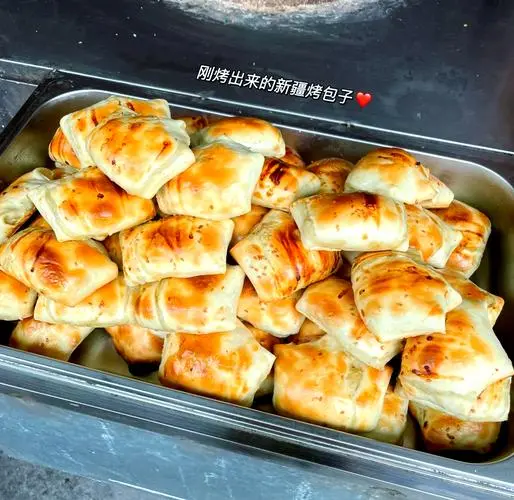
Bazaar food is the cheapest good eating in Xinjiang. Our standing order became one fresh naan (4 RMB) torn between us, a skewer or three of lamb, a bowl of yoghurt with a snowdrift of sugar (8 RMB), and whatever fruit the nearest stall was proudest of. Figs sold off donkey carts in Kashgar were the single best thing I ate all year. Pace yourself and count the naan ovens as landmarks. We have a fuller stall-by-stall plan in our street food crawl guide, and if you want markets where locals do their daily shop rather than tourists, see where locals really eat.
Practical tips from one stallholder to you
- Greet first, browse second. A nod and “yaxshimusiz” (hello in Uyghur) changes the whole interaction. More on this in our etiquette guide.
- Haggle like a neighbour, not a hostage negotiator. On tourist goods, counter at half and settle around 60 to 70 percent. On food, do not haggle at all; nobody local does.
- Ask before photographing people at work. Every craftsman we asked said yes. The one time a tourist near us did not ask, the shutters came down in every sense.
- Carry small notes. Mobile payment rules cities, but village bazaar traders liked 5s and 10s. WeChat Pay linked to a foreign card worked for us about 80 percent of the time.
- Buy where the locals queue. Twenty-three years of trading has taught me the queue is never wrong.
- Watch your budget drift. Bazaars are cheap per item and expensive per visit. Our full spending notes are in the Xinjiang cost breakdown.
A one-day bazaar itinerary, Kashgar
08:30 Naan and tea at an old-town oven while the lanes wake up. 09:30 Taxi to the livestock market (Sundays) or a village bazaar on its weekday. Walk the animal rows first, they finish early. 12:30 Back to town for laghman noodles in the covered food rows. 14:00 Nap; the traders themselves slow down now. 16:30 Trades rows and coppersmith lane, then a chaikhana until the light goes gold. 19:30 Night food stalls for skewers, figs and yoghurt. 22:00 One last pot of tea and let someone beat you at chess.
FAQ: Xinjiang bazaar culture
Do I need to speak Uyghur or Chinese?
No. Calculator bargaining, pointing and translation apps cover 95 percent of it. The two Uyghur greetings we learned earned us tea twice.
Are bazaars safe for foreign visitors?
We felt entirely safe at every one, including in crowds. Watch your bag in the crush like at any busy market anywhere.
Which single bazaar should I pick if I only have one day?
Kashgar on a Sunday, because you get the livestock market in the morning and the old town rows after lunch. Urumqi’s Grand Bazaar is the fallback if you cannot get south.
Can I pay by card or phone?
Big-city bazaars, yes, via WeChat Pay or Alipay. Village bazaars are cash-friendlier. There is more payment detail in our Xinjiang travel FAQ.
Is the Grand Bazaar in Urumqi “authentic”?
It is a real market wearing its Sunday best for visitors. Enjoy it for what it is, then balance it with one village bazaar. The two together tell the whole story, and the music and daily-life side is covered in our Uyghur culture guide.
Disclaimer
This article reflects a personal visit in September 2025 plus editorial fact-checking in July 2026. Bazaar days, prices and payment acceptance change without notice, and individual experiences vary by season and town. Confirm market days locally before travelling out to village bazaars, and treat all prices as indicative rather than fixed.
About the contributors
Hazel Whitmore has run a bric-a-brac stall at Norwich Market in England for 23 years and visited Xinjiang with her son in September 2025. She paid for the trip herself and has no commercial ties to any business named above. Karl Huang edits Xinjiang Attractions and verifies transport, pricing and opening details against official sources for every guest contribution.