Published: September 13, 2026 | Author: Karl Huang
Every few months a reader writes asking for the dates of the November silk festival in Hotan. There are none. Nothing on the prefecture’s calendar puts Atlas silk on a stage in November, and the two events that do carry it both sit in the warm half of the year. The question keeps coming back because three things get mixed together: a jade festival in July, design competitions that close in late summer, and an autumn cocoon harvest in September. November comes after all three.
Quick Reference: The Hotan Silk Year at a Glance
| Window | What happens | Where |
|---|---|---|
| 8 March | Atlas silk fashion show staged in the city (2025 edition: 23 designers, 135 outfits) | Hotan city |
| Late March to early April | Spring silkworm eggs hatch; first mulberry leaf picked | Village rearing sheds around Hotan city |
| Mid to late May | Spring cocoon peak; reeling floors at their busiest | Hotan city outskirts |
| July | Hotan Jade Culture and Tourism Festival, with silk shows inside the programme (16th edition 26 to 28 July 2026) | Jade culture square plus county venues |
| Late July to 20 August | Atlas design recruitment closes; winners go on to fashion weeks | Open call; shows in Urumqi and Beijing |
| Early September | Autumn silkworm rearing begins | Village rearing sheds |
| Late September to early October | First fresh autumn cocoons reach market | Hotan city and the Tushala area |
| November | No event. Reeling, warping, dyeing and weaving carry on indoors | Jiya Township workshops |
Why You Can Trust This Calendar
I have been through Hotan three times: in May, when the mulberry trees were still in leaf; in July, during the jade festival; and in early November, when the only other outsiders I met in Jiya were two fabric buyers from Hangzhou. The dates below come from the culture and tourism department’s filing for the jade festival, the prefecture’s own newspaper, work published by the regional sericulture research institute, and the 1981 to 2010 climate normals for Hotan city.
The Short Answer: There Is No November Silk Festival in Hotan
If you booked a flight on the strength of a November listing, the trip can still work. What you will not find is a staged show, a full workshop floor, or a courtyard hung with damp yarn. Adjust for that and November is fine; keep expecting a festival and it will feel like a closed town.
The name of the craft is worth knowing before you arrive. Atlas means tied and dyed, and it describes the method rather than the pattern: warp threads are bound, dipped and coloured in sections before anything is woven, so the design is decided on the thread instead of printed onto finished cloth. It is a national intangible cultural heritage, listed in the second batch of 2008.
What Hotan’s Festival Calendar Actually Holds
Hotan runs one large annual festival and it belongs to jade. The Hotan Jade Culture and Tourism Festival began in 2004 and reached its fifteenth edition on 25 July 2025, opening at the jade culture square with drumming, a thousand-drone display and the launch of a book on jade. The sixteenth was announced for 26 to 28 July 2026. Silk sits inside that programme rather than beside it: in July 2024 a presentation called Beauty Like Jade carried more than sixty outfits by nine designers to eight sites across the prefecture.
The trade behind the cloth is far older than any of this. Silk moved through the southern oases for centuries before anyone put it on a runway, and the merchant side is still visible in the way the Hotan Sunday Bazaar is laid out, with livestock, cloth and stone sold in separate yards.
March and Late Summer: When Atlas Silk Gets a Runway
Two other windows matter. On 8 March 2025 the city put twenty-three designers on one stage with 135 outfits, split into five men’s sets, twelve children’s, twelve qipao, four formal pieces and 102 women’s looks. Organisers picked International Women’s Day on purpose, to keep women inheritors and designers in the foreground, and used it to launch a package built around village catwalks, workshop visits and study tours.
The second window runs from late July into early autumn. A design recruitment opened on 25 July 2025 and closed on 20 August, with selected outfits promised to the Eurasia international fashion week and to Beijing fashion week. Hotan had shared a Beijing runway the year before as well, at Xiushui Street. Runways, then, fall in March, July, August and September. November gets none.
The Cocoon Year That Sets Every Other Date
Nearly every date in Jiya follows two worm cycles. Spring eggs hatch in late March or early April, and the cocoons peak in mid to late May. The regional sericulture research institute puts a good spring box at roughly 45 kilograms of cocoons, worth about 2,000 to 2,500 yuan to the household. The autumn cycle begins in early September; by mid-month the worms are in their final stage, and the first fresh cocoons reach market in the last days of September. In 2022 its autumn trial averaged 35 kilograms per box.
By November both cycles are over. The leaves are off the trees, the rearing rooms have been swept and shut, and the work moves indoors: reeling stored cocoons, twisting and spooling thread, warping, dyeing, and the loom.
What November Actually Feels Like in Hotan
The climate normals for Hotan city give November an average high of 11.6°C, an average low of 0°C, and total precipitation of half a millimetre across 0.3 wet days. It is the driest month of the year and one of the sunniest, with around 221 hours of sunshine and clear skies roughly 72 percent of the time the sun is up. Cold arrives in the first hour after dawn and leaves by mid-morning. By two in the afternoon a jacket is enough if you keep moving.
What November removes is dust: the sandstorm season belongs to spring, and autumn skies here are usually clean enough to see the Kunlun ridge from the edge of town.

A Cold Morning in Jiya: What the Workshops Look Like Off-Season
Jiya Township sits on the east bank of the Yurungkash River, ten to fifteen kilometres from the Hotan city centre, a twenty-minute drive on a clear morning. The township covers 171.8 square kilometres and holds nineteen villages; Arzangbazar is the one where almost every household weaves. Across the township roughly 800 families work at the craft alongside seven companies and four cooperatives.
On the November morning I visited, the outer courtyard was bare of the drying frames I had seen in spring photographs, and the gate stood open with nobody there. Inside, the noise is what I remember: twenty-odd wooden looms in a low room, all running at slightly different speeds, so the sound never settled into a rhythm. The oldest workshop here, Giyaliren, dates to 1984, has been a tourism site since 2007, and draws 80,000 to 90,000 visitors in a normal year. In November I counted four.
The woman at the second loom had been weaving for nineteen years and let me sit at the bench for a minute before taking the shuttle back. Her hands knew the passes; mine found the pedals and lost them again. One minute is enough to understand how much of this is muscle memory. For prices and grades, see our Atlas silk buying guide covers the practical side.
Why Colour Work Is Fair-Weather Work
Dyeing is the stage the weather controls. Bundles of warp thread are bound with corn husk or plastic sheet, dipped, wrung out, hung to dry and dipped again, and the uneven drying between dips produces the soft colour bleed the cloth is known for. In May a courtyard batch dries in an afternoon. In November it does not, so the floor works from yarn coloured in the warm months and kept in store, and the dyer I met said her winter vats take smaller loads and hold them longer.
The palette is plant and mineral. Locust flower gives yellow, pomegranate flower red, green walnut husk brown, and saffron softens a colour that has gone hard. Since 2019 the workshops have also been testing poplar alkali for quieter, greyer tones. A single cocoon yields 800 to 1,200 metres of filament, a bolt carries up to eight colours and is only about 40 centimetres wide, and a full run takes close to a week.
Getting to Jiya Without a Festival Shuttle
Hotan airport has direct services to Beijing, Shanghai, Guangzhou, Chengdu, Xi’an and Zhengzhou, and a new Beijing route opened in July 2026. By rail the line from Kashgar runs into Hotan station, and the drive south from Kashgar on the G219 is a trip in its own right; we wrote up driving the G219 to Hotan separately.
For the last leg, city buses do run, but route planners put the walk at three to five kilometres either end. A taxi from the centre is roughly 30 to 40 yuan one way, and a half-day charter usually quotes at 150 to 200 yuan, which is the version I would take in winter.
Sleeping and Eating in Hotan in the Low Season
November is quiet enough that you can pick a hotel after you arrive, and the mid-range places in the centre discount hard against summer rates. The night market keeps going, and so does the stall row around Tuan Cheng.
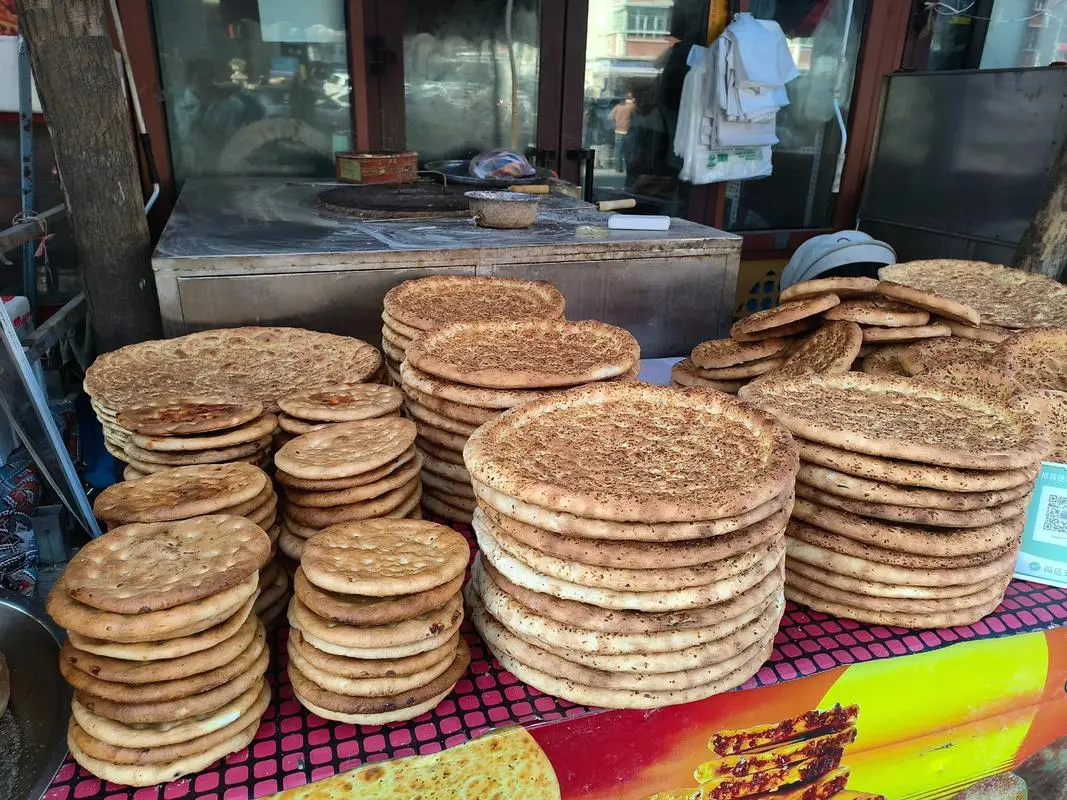
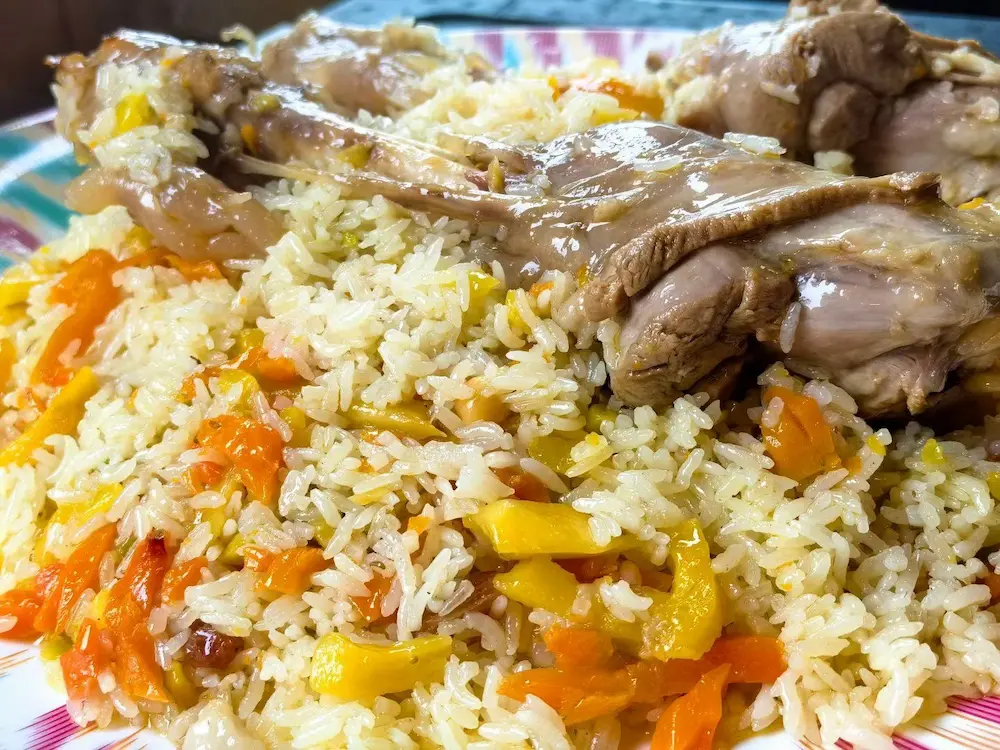
Eat the mutton pilaf at lunch, when it comes out of the pot, rather than in the evening. Naan is baked in a tandoor in front of you and stays good for days, which matters if you are heading out of town. Wonton soup, roast eggs and yogurt rice dumplings round out a night market meal. If you want to see how the oasis turns mulberry bark into something else entirely, mulberry paper in Karakax is a half-day trip west of the city.
Buying Silk in November: Stock, Prices and the Right Questions
Stock is not the problem. What you are buying, though, is often not hand-woven, and the low season is when printed lookalikes are easiest to pass off. Two questions sort most of it out: where was the cloth woven, and can you see the reverse side. On a genuine tied warp the pattern runs through to the back in a paler version of itself, with soft edges; on a print the back is white or a flat repeat with hard lines.
Hotan and Luopu pieces tend towards black and white or red and white with small accents, while Kashgar and Shache work runs brighter, with cobalt and emerald. Prices vary with width and finishing, and bargaining is normal. The jade side of the city works the same way; our guide to Hotan’s jade trade explains the same market etiquette.
A Three-Day November Silk and Jade Plan
Day one: land, walk the old quarter and the night market, sleep early. Day two: Jiya in the morning while the light is good and the looms are running, lunch in town, then the jade market in the afternoon. Day three: the Sunday bazaar if the calendar lines up, otherwise the museum and the mulberry paper workshops at Karakax. Keep Jiya in the morning; the workshops thin out after lunch and the light in the weaving rooms goes flat by four.
Frequently Asked Questions
Is there a silk festival in Hotan in November? No. The annual festival in Hotan is the Jade Culture and Tourism Festival in July. Silk shows are staged inside it, and separately in March, July and early autumn. Nothing is scheduled for November.
Can I visit a working Atlas silk workshop in November? Yes. The workshops at Jiya are open and working, though you will see fewer staff and less work in progress. Go in the morning and arrange transport in advance; no festival shuttle operates.
When is the best month to watch Atlas silk being made? Late September and early October, when the autumn cocoons come in and the reeling floors are busiest, or mid-May for the spring cycle. Both are warm enough for the dye courtyards to be in use.
Disclaimer
Festival dates, workshop hours and transport in Xinjiang change from year to year, and the details here reflect what was published or observed up to September 2026. Confirm with the venue or your hotel before travelling for a specific event. We have no commercial relationship with any workshop, hotel or operator mentioned here.
About the Author
Karl Huang has travelled in Xinjiang since 2018, mostly by rail and long-distance bus, and writes about the practical side of moving around the region. He has visited Jiya Township three times across different seasons and still cannot work the pedals on a wooden loom.