Published: July 31, 2026 | Author: Devika Shroff
Xinjiang Atlas silk shopping is less about finding a famous brand and more about reading cloth the way a tailor reads it: by width, by edge, by the smell of a burn test. I have spent fifteen years sourcing handloom textiles in Gujarat and Rajasthan for small fashion labels, and my daughter Meera is finishing a degree in textile design. We flew into Urumqi in October 2025 with one assignment: find out whether the atlas silk sold to tourists in Xinjiang was worth the price tag, and if so, where to buy it honestly.
This guide is written from that trip. We visited workshops in Jiya Township outside Hotan, walked the Kashgar Old City lanes, and spent a morning comparing bolts at the Urumqi International Grand Bazaar. I will tell you how to spot real silk atlas, what prices looked like in late 2025, and the one mistake I made so you do not have to repeat it.
Quick reference: Atlas silk buying basics
| Item | What to expect |
|---|---|
| Authentic width | Handloom atlas is narrow, usually 40–50 cm. Power-loom “atlas style” is 110–150 cm. |
| Material test | Burn a thread: silk smells like burnt hair and turns to powder; rayon melts and smells chemical. |
| Price per metre (2025) | Polyester prints ¥15–40; machine rayon ikat ¥60–120; handwoven rayon ¥120–200; silk atlas ¥300–600; fine natural-dyed silk ¥800+. |
| Best places | Jiya/Geya Township workshops, Hotan Sunday bazaar, Kashgar Old City, Urumqi International Grand Bazaar. |
| Tailoring time | 24–48 hours in Kashgar or Hotan for a simple dress; labour ¥150–400 depending on style. |
Why I care about atlas silk
In India we call a similar resist-dye technique “ikat,” and the best pieces still come from families in Odisha and Telangana. Uyghur atlas is different in one key way: it is usually warp-ikat, meaning only the vertical threads are resist-dyed before weaving. That gives the patterns their feathered, lightning-like edges. When Meera and I stood in a Jiya workshop and watched a weaver lift the dyed warp threads onto a narrow wooden loom, she whispered, “It is like our single-ikat Patola, but the geometry is Central Asian.” That is the short version of why this fabric matters: it is a living Silk Road technique, not a souvenir print.
Our expertise comes from repeated buying trips, not from a single afternoon. I have run burn tests on thousands of metres of silk and rayon, and I know how easy it is for a vendor to call a shiny polyester scarf “pure silk.” In Xinjiang I used the same tools I use in India: a magnifying glass, a lighter, and a damp white cloth to check colour bleeding.
My first buying mistake in Hotan
We started in Hotan because Jiya Township is the most famous production centre for Uyghur atlas silk. A driver took us to a workshop where a woman in her sixties was tying tiny plastic strips onto warp threads. I bought four metres of deep indigo and maroon cloth for ¥480 per metre. The vendor said it was handwoven silk. It felt right, the price felt right, and the selvedges looked hand-rolled.
That evening, in the courtyard of our Hotan guesthouse, I burned a loose thread. It melted into a hard black bead and gave off a sour, chemical smell. It was rayon, not silk. The fabric was still beautiful, still handwoven, and still fairly priced for what it was, but I had paid a silk price for a rayon piece. The lesson: in Xinjiang, as in India, “handwoven” and “silk” are two separate claims. Check both.
How to tell real atlas silk from a copy
There are four quick checks I now use every time.
- Width. Traditional handlooms in Jiya produce fabric 40–50 cm wide. If the bolt is 110 cm or wider, it was almost certainly woven on a power loom, even if the pattern looks ikat.
- Selvedge. Handwoven edges are slightly uneven, with occasional knots or loose threads. Machine edges are perfectly straight and identical from one metre to the next.
- Burn test. Ask permission, then pull one thread from the cut edge and burn it with a lighter. Silk burns slowly, smells like burnt hair, and leaves a crushable ash. Rayon and polyester melt, smell chemical, and form a hard bead.
- Dye bleed. Dampen a white tissue and rub a hidden corner. Cheap chemical dyes will transfer immediately. Good silk atlas may still bleed slightly on the first wash, but it should not turn the tissue bright red in five seconds.
One Kashgar vendor saw me pull out my lighter and laughed. He handed me his own magnifying glass and said, “Look at the warp first.” That kind of transparency is usually a good sign.
Where to shop for atlas silk
Jiya Township workshops, near Hotan
This is the source. You can watch weavers work, buy directly from the family, and sometimes request a custom colour. Prices here are usually 10–20 percent lower than in city bazaars because there is no middleman. If you are also interested in jade, combine this with a trip to Hotan or Pishan.
Hotan Sunday bazaar
The livestock section gets the fame, but the cloth sellers behind the main yard carry stacks of atlas from Jiya and surrounding villages. Bargaining is expected. Start around 30 percent below the first price and meet in the middle.
Kashgar Old City
The lanes around the Sunday Market and the carpet district have small fabric shops where tailors work in the back room. This is the best place to buy a length and have it made into a dress, vest, or scarf within a day or two. For context on Kashgar’s trading culture, see our bazaar culture guide.
Urumqi International Grand Bazaar
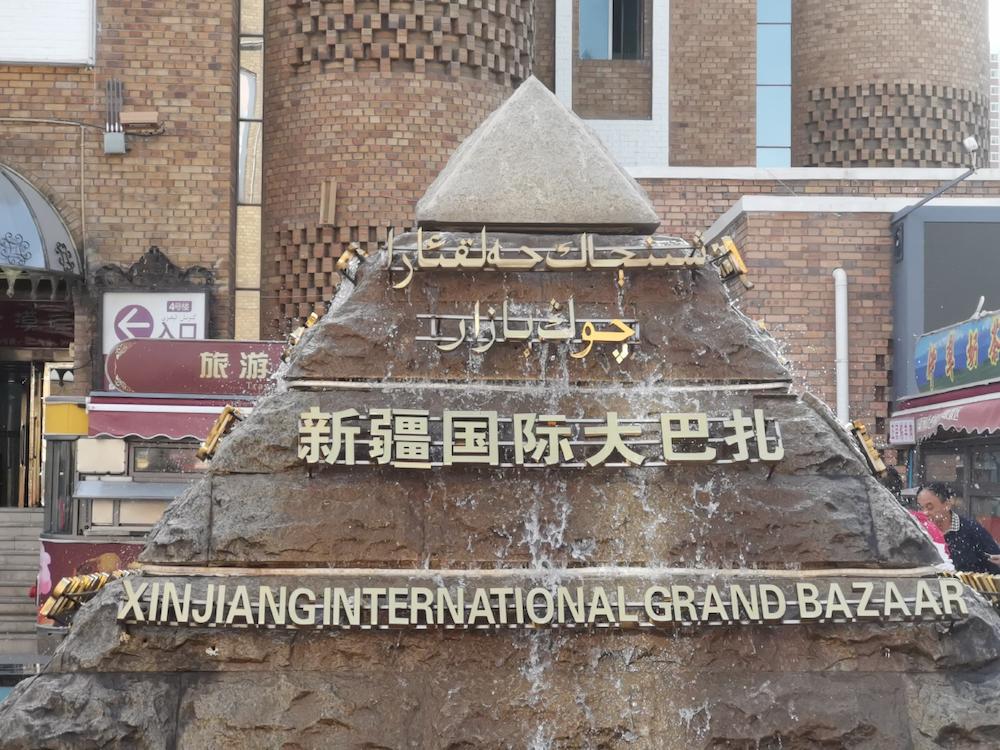
The selection is wide and the prices are higher, but everything is in one place. This is useful if you are short on time or want to compare many colours side by side before heading south. The stall owners here are used to foreign buyers and will usually let you do a burn test if you ask politely.
What to make from atlas silk
Most travellers buy atlas as a scarf or a decorative table runner, but the fabric is meant to be worn. In Kashgar we saw local women in long atlas dresses cut on the bias so the stripes curve around the body. A simple sleeveless dress takes about three metres of narrow fabric and one to two days of tailoring. Meera had a short jacket made from two metres of green and gold ikat; the tailor charged ¥220 for labour and finished it in 36 hours.
If you do not want tailoring, a lined silk scarf in the 45 cm width makes an excellent gift. It packs flat, weighs almost nothing, and does not break airline liquid rules.
Prices and bargaining
These are the prices we saw in October 2025, rounded for clarity.
- Printed polyester “atlas style”: ¥15–40 per metre. Bright, cheap, and common in tourist stalls. Fine for a costume or a beach wrap, not a keepsake.
- Machine-woven rayon ikat: ¥60–120 per metre. Looks convincing from a distance, but the pattern repeats mechanically and the hand is too stiff.
- Handwoven rayon atlas: ¥120–200 per metre. Good value if you like the craft but do not need silk.
- Silk atlas, chemical dyes: ¥300–600 per metre. This is the standard for most travellers.
- Silk atlas, natural dyes: ¥800–1,500+ per metre. Rare; ask specifically and expect to pay a premium.
In workshops, prices are usually fixed. In bazaars, you can often negotiate 10–30 percent down. The respectful way is to ask the price, look at several bolts, and then offer your best price once you have decided. Walking away is acceptable and sometimes earns a better final offer.

Care and export tips
Atlas silk bleeds. Hand wash in cold water with a little mild detergent and a splash of white vinegar to set the dye. Do not wring it; roll it in a towel and press the water out. Dry it flat away from direct sun.
For export, silk is not restricted by CITES or agricultural rules. Keep your receipt, especially if the purchase is over ¥1,000, in case customs asks about value. Most vendors will write a simple invoice if you ask.
A two-day silk route
- Day 1: Fly to Hotan. Visit Jiya Township in the morning, then browse the Hotan bazaar in the afternoon. Buy your fabric and arrange tailoring in Kashgar for the following day.
- Day 2: Drive or fly to Kashgar. Drop your fabric at a tailor in the Old City, then visit the carpet workshops while you wait. Collect your garment in the evening.
Frequently asked questions
Is all atlas silk from Xinjiang?
No. “Atlas” is the Uyghur name for the technique, but similar warp-ikat silk is produced in parts of Central Asia and Iran. Fabric sold in Xinjiang may also come from other Chinese provinces. Ask where it was woven.
Can I wear atlas silk in everyday life?
Yes. A narrow silk scarf works with almost anything. A full atlas dress is more of an occasion piece, but a tailored vest or jacket is practical and travels well.
Is it ethical to bargain?
Bargaining is normal in Xinjiang bazaars, but do it with a smile and be willing to pay a fair price. In small workshops where you can see the work, I do not bargain.
What about sizing for tailored clothes?
Bring a garment that fits you well, or know your measurements in centimetres. Most Kashgar tailors do not speak English, but a sample piece speaks clearly.
Disclaimer
The prices and travel details in this guide reflect our October 2025 trip and are provided as a reference, not a guarantee. Fabric quality varies by workshop and season. Always do your own checks before buying, and confirm current travel requirements for Xinjiang before booking.
About the author
Devika Shroff runs a handloom sourcing studio in Ahmedabad, India, and has worked with ikat weavers across Gujarat, Odisha, and Telangana for fifteen years. She wrote this guide after a ten-day textile research trip through Xinjiang with her daughter Meera.