Published: 13 September 2026 | Author: Karl Huang
More than a dozen passenger trains leave Urumqi for Kashgar on an ordinary day, and the fastest of them covers the 1,453 kilometres in eleven and a half hours. The slowest takes close to thirty. Everything that matters about the Urumqi to Kashgar train sits inside that gap, and it comes down to three decisions: which berth you book, which of Urumqi’s two stations you board at, and whether you sleep through the Tarim Basin or watch it slide past at three in the morning. We have ridden this corridor three times since 2023, twice on the overnight direct and once on a stopping train that stretched a single night into a day and a half. What follows is what those rides taught us, and what changed on the line during 2026.
Quick Reference: The Urumqi to Kashgar Train at a Glance
| Service | Leaves Urumqi | Reaches Kashgar | Journey | Cheapest sleeper |
|---|---|---|---|---|
| Z6516/7 direct sleeper | 20:40 | 08:10 next day | 11h 30m | ¥304.5 (hard, upper) |
| T9556 express | 12:06, Urumqi South | 04:22 next day | 16h 16m | ¥304.5 |
| T9526 express | 13:36 | 06:02 next day | 16h 26m | ¥304.5 |
| K9718 fast | 10:52 | 05:24 next day | 18h 32m | ¥304.5 |
| K9772 fast | 11:53, Urumqi South | 07:30 next day | 19h 37m | ¥296.5 |
| 7556 ordinary | 14:57 | 16:52 next day | 25h 55m | ¥262.5 |
| K9786 fast | 15:58, Urumqi South | 21:19 next day | 29h 21m | ¥408 |
| Distance 1,453 km. Stopping trains call at 8 to 13 stations, among them Turpan, Malan, Heshuo, Yanqi, Korla, Luntai, Kuqa, Xinhe, Aksu, Bachu and Atushi. September 2026 timetable. | ||||
Schedules come from the September 2026 timetable and are reshuffled several times a year, so treat them as a shape rather than a promise. The one constant is the direct service, which has held the same pattern since it entered service on 24 July 2022. Departures are also split between two Urumqi stations, which trips up first-time riders more than anything else here.
One Direct Sleeper, and Nothing Fast in Between
The Z6516/7 is the only train on the corridor that runs point to point without an intermediate stop, and the only all-sleeper service in Xinjiang. One deluxe soft-sleeper carriage, three soft sleepers and eleven hard sleepers works out at roughly 700 beds and no seats at all. It is 25T stock with vacuum toilets, which matters more than it sounds across a full night. Fares have barely moved in four years, so the whole spread is worth having to hand before you book.
| Berth on the direct sleeper | Price |
|---|---|
| Hard sleeper, upper / middle / lower | ¥304.5 / 315.5 / 325.5 |
| Soft sleeper, upper / lower | ¥476.5 / 497.5 |
| Deluxe soft sleeper, two-berth compartment | ¥879.5 / 919.5 |
The catch is that there is exactly one such departure a day in each direction. From mid-September, and again across the October holiday, hard sleepers sell out several days ahead and the deluxe compartments go first. If the direct is full, every alternative leaves Urumqi around midday and reaches Kashgar between four and seven the following morning. On a timetable that reads as a minor inconvenience. Standing outside Kashgar station at five in the morning with your bags is a different experience. When we missed the direct in 2024 we rode a T-class express to Aksu, slept there and finished the last stretch the next day. It cost a night and gave us a daylight view of the single-track section.
Where the Line Slows Down: Three Standards, One Bottleneck
The route is not one railway but three joined together. Turpan to Korla is double track and electrified. Korla to Aksu is double track but still diesel hauled. Aksu to Kashgar, close to 463 kilometres, remains single track running on diesel at a line speed of 80 to 120 km/h, and that last stretch is why an eleven-hour run cannot become an eight-hour one. The Southern Xinjiang line runs 1,446 kilometres from Turpan to Hotan, over ground built for twelve-force winds.
In practice the fast train’s advantage is stopping pattern rather than speed. Between 20:40 and 08:10 the direct train does not stop once, while everything else surrenders two to four hours to station dwell, passing loops and priority handed to freight. Sitting at Korla for twenty-seven minutes in the small hours is routine rather than unusual.
What Is Actually Outside the Window
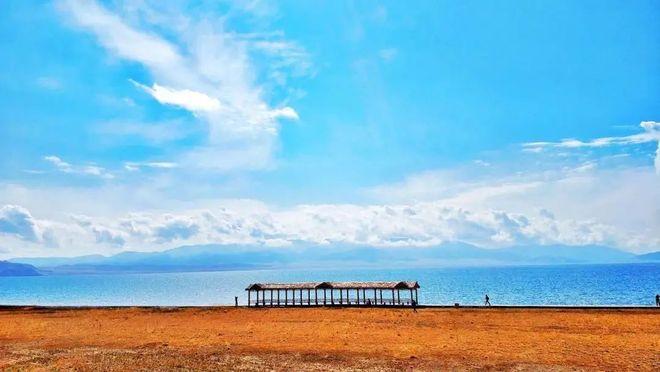
Because the best train runs at night, most riders see none of the corridor. Scenery means a daytime train and the extra hours that come with it. Leaving Urumqi, the line runs along the northern foot of the Tianshan and through the wind turbines of the Dabancheng gap, the one stretch where you can feel the carriages being pushed sideways. After Turpan it turns south, climbs through a dry gorge to cross the mountains, and drops into the Yanqi Basin. Korla comes next, and just to its southeast sits Bosten Lake, a reed-fringed sheet of water that appears without warning in the middle of gravel desert.
From Korla westward the Taklamakan stays on your left for eight hours, first as salt flats, then tamarisk scrub, then dune fields around Bachu. The run into Kashgar crosses irrigated farmland, which lands as a shock after a day of sand. If you can manage only one daytime leg, make it the return, so that you arrive rested and watch the basin go by in daylight.
Where to Break the Journey: Kuqa
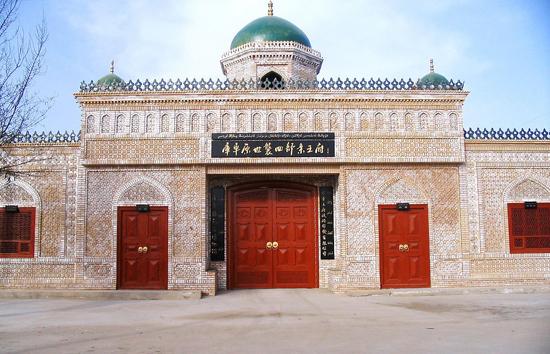
If you are on a daytime train and want one stop rather than a straight run, make it Kuqa: the old town’s princely residence is a short ride from the station, and its streets are a gentler introduction to southern Xinjiang than arriving in Kashgar already tired. Two cautions. Stopping trains hold the platform for only a few minutes, so breaking the journey means buying two tickets, and the sights usually linked to Kuqa, the Kizil caves and the red canyon, are long drives out of town rather than station stops.
Boarding in Urumqi: Two Stations, Not Interchangeable
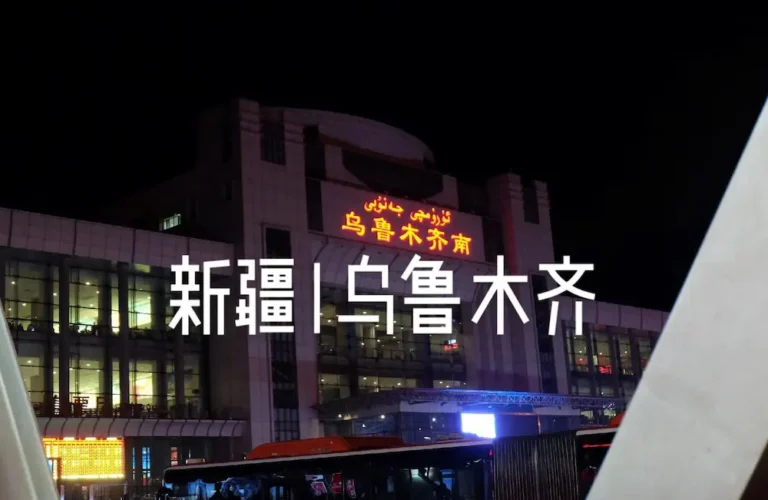
Departures are listed under two names, Urumqi station and Urumqi South. On the September 2026 boards the direct sleeper leaves from Urumqi station while several of the cheaper alternatives leave from the south station. They sit on opposite sides of a long, spread-out city, so if a connection involves changing between them, give yourself at least ninety minutes by road and more in the late afternoon.
Neither station is hard once you are in the right one. Both have security screening, left luggage and taxi ranks. Some trains, the T-class expresses among them, call at both, and the useful rule is simple: book from whichever station is closer to your hotel, not whichever train looks better on paper.
Eight New Passing Loops: What 2026 Changed Between Aksu and Bachu
The corridor’s weakest section has been recognised for years, and in 2026 the response became visible. On 1 March the railway began a capacity project on the Aksu to Bachu stretch, adding eight passing loops. The first four, at Aksu West, Yuelianghu, Yijianfang East and Duyashan, opened on 12 May, and the remaining four followed by 20 May, all of them inside ten weeks. Passing loops do not raise line speed. They cut the time a train spends waiting for a loaded coal or cotton service to clear the single track, which is where a surprising share of the timetable quietly disappears.
A second phase covering the 463 kilometres from Aksu to Kashgar, with nine further loops, went to design tender in April 2026. If you travel in 2027, expect short stretches of single-track working and occasional retimed services around Aksu.
What Ten Hours Would Need, and What the Road Already Took
The published target is plain: double track and electrify the corridor, lift it to 160 km/h and run modern electric multiple units. That would put Urumqi to Kashgar inside ten hours and Hotan within fourteen, against 21 hours 34 minutes on today’s Urumqi to Hotan service. No date has been attached, and electrification of the Korla to Aksu section is not in the current phase, so the loops are a beginning rather than a fix.
Meanwhile the road moved faster. The Urumqi to Yuli expressway opened along its full 324.7 kilometres on 26 December 2025, cutting the drive from Urumqi to Korla from around seven hours to a little over three. For Korla, the train has now lost the argument. For Kashgar, 1,453 kilometres away, it has not, since no road alternative comes close and the overnight sleeper remains the only way to arrive rested.
Berths, Meals and the Small Hours
Three things decide how you feel at the far end. The first is berth level. In an open hard-sleeper carriage the lower berth is worth the extra twenty yuan, because you get a seat by day and can sit upright without folding yourself in half. The middle berth is the cheapest of the three and the least comfortable. Soft-sleeper cabins close with a door and hold four berths, which is the difference between sleeping and dozing. Our fuller notes on berth choice are in this guide to Xinjiang sleeper trains.
The second is food. The direct train stops nowhere, so there is no platform trade, which means eating before boarding or using the dining car, where a plate of noodles and a bowl of soup is cheap and arrives hot. Hot water is available at the end of every carriage, and most passengers carry instant noodles and a jar of tea. The third is interruptions. On stopping trains the small hours bring a call at Kuqa and another at Korla, both of which wake the whole carriage, while minor stops slip past in complete darkness without anyone noticing. To see the corridor rather than sleep through it, take a daytime service; the routing notes in travelling Xinjiang without a car are a good starting point.
Arriving in Kashgar
Kashgar station sits on North Century Avenue, on the northern edge of the city and a short taxi ride from the old town. It is small by Chinese standards and does not stay lit through the night: the hall opens around departures and arrivals rather than acting as an all-night shelter, which matters if you land on one of the four a.m. trains. Buses reach the old city by day; at night you will take a taxi from a short queue.
Our last arrival was on the direct, a little after nine, which is close to ideal. By ten we had dropped the bags and were drinking tea in a courtyard house off the main street. The bazaar and the Id Kah mosque fill a day on their own, while the outlying sights need a car and most of a day each, as our guide to Kashgar’s old town sets out.
Building a Five-Day Trip Around One Overnight Run
Day one in Urumqi: the regional museum in the morning, an early dinner, then the 20:40 direct. Day two: arrive at 08:10, settle in, and spend the afternoon in the old town. Day three: the livestock market if it is Sunday, otherwise the Id Kah quarter and a teahouse. Day four: Karakul Lake on the Karakoram Highway, a long day on a good road. Day five: return by a daytime train so you finally see the corridor you slept through. If you are weighing the two, this comparison of Xinjiang train versus flight has the numbers.
Frequently Asked Questions
How long does the Urumqi to Kashgar train take? The direct sleeper takes 11 hours 30 minutes. Express and fast trains take 16 to 19 hours, and the slowest ordinary service on the board runs a little over 29 hours.
Can foreign travellers book this train? Yes, with a passport, at the station ticket office or through an agent. Berths on the direct service sell first, so book as early as the window allows. See booking Xinjiang train tickets as a foreign traveller for the practical detail.
Which side of the train should I sit on? For a daytime run toward Kashgar, the left-hand side gives you the Taklamakan from Korla onward. Before Turpan, the mountains are on the right.
Disclaimer
Timetables, fares and station arrangements in Xinjiang change several times a year, and engineering work alters schedules at short notice. The details here reflect the September 2026 timetable and should be checked against the railway’s own booking system before you commit to a connection. We have no commercial relationship with any railway, hotel or operator mentioned here.
About the Author
Karl Huang has travelled in Xinjiang since 2018, mostly by train and long-distance bus, and writes about the practical side of moving around the region. He has ridden the Urumqi to Kashgar corridor three times, twice overnight and once in daylight.