Published: August 14, 2026 | Author: Karl Huang
How I ended up ordering dinner with a photo album
Ordering food in Xinjiang worries people more than almost any other part of the trip, and it turns out to matter least. My first dinner in Urumqi went badly, entirely through my own fault. I walked into a noodle shop behind Erdaoqiao, said “menu” in English twice, got a laminated sheet of characters with no pictures, and pointed at three lines that looked different. Twenty minutes later I had three plates of identical hand-pulled noodles and a soup nobody ordered. Six trips later I was feeding a table of five in a Kashgar courtyard restaurant with a phone gallery of food photos, four words of Uyghur and a lot of pointing, for under 40 yuan a head. What follows is the playbook I wish I had that first night.
I am not a linguist and my Mandarin is still poor, which is precisely why this works. Everything below was tested in small restaurants in Urumqi, Turpan, Kuqa, Hotan and Kashgar, plus truck stops on the Duku road, none with an English menu. Where I describe a rule rather than a habit, I have said so, because payment and app policies change faster than food does.
Ordering food in Xinjiang: the cheat sheet
Keep this open on your phone for the first two days. The Uyghur column is what you will hear in family restaurants in the south; the Mandarin column works everywhere. Tones matter far less when you point as well.
| What you want | Uyghur | Mandarin (pinyin) | Note |
|---|---|---|---|
| Greeting on entry | Assalamu aleykum | ni hao | A nod works too |
| This one, please | bu bolidu | zhe ge (这个) | Your most useful phrase |
| Two portions | ikki | liang fen (两份) | Portions are large |
| Not spicy | achchiq bolmisun | bu la (不辣) | Ask before, not after |
| No meat | gosh yoq | bu yao rou (不要肉) | Expect surprise, not refusal |
| Flatbread | nan | nang (馕) | Sold by the piece |
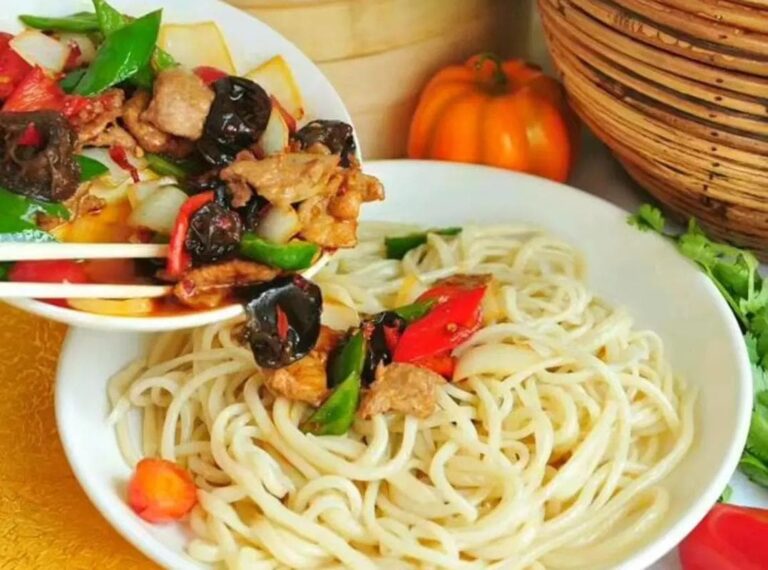
| Hand-pulled noodles | laghman | ban mian (拌面) | Say “small” if unsure |
| Rice with lamb | polo | shou zhua fan (手抓饭) | Sells out by mid-afternoon |
| Grilled skewers | kawap | kao rou chuan (烤肉串) | Order by the number |
| Tea | chay | cha (茶) | Often free or a few yuan |
| The bill | hesab | jie zhang (结账) | Or mime a signature |
| Thank you | rahmet | xie xie (谢谢) | Use it often |
What actually happens when you walk into a Uyghur restaurant
The rhythm differs from a European restaurant, and knowing it removes most of the anxiety. In a family place there is no host at the door. You choose a table yourself, and if the room is full someone waves you toward a spot. No menu arrives automatically; either you walk to the counter or catch the eye of whoever is nearest.
In the smallest shops there is no menu at all, because the kitchen makes one or two things and the steam table by the window is the menu. Some of my best meals came from lifting a lid with a questioning look, getting a nod, and holding up one finger. In Kuqa a cook walked me into the back kitchen to see the lamb before I committed to it.
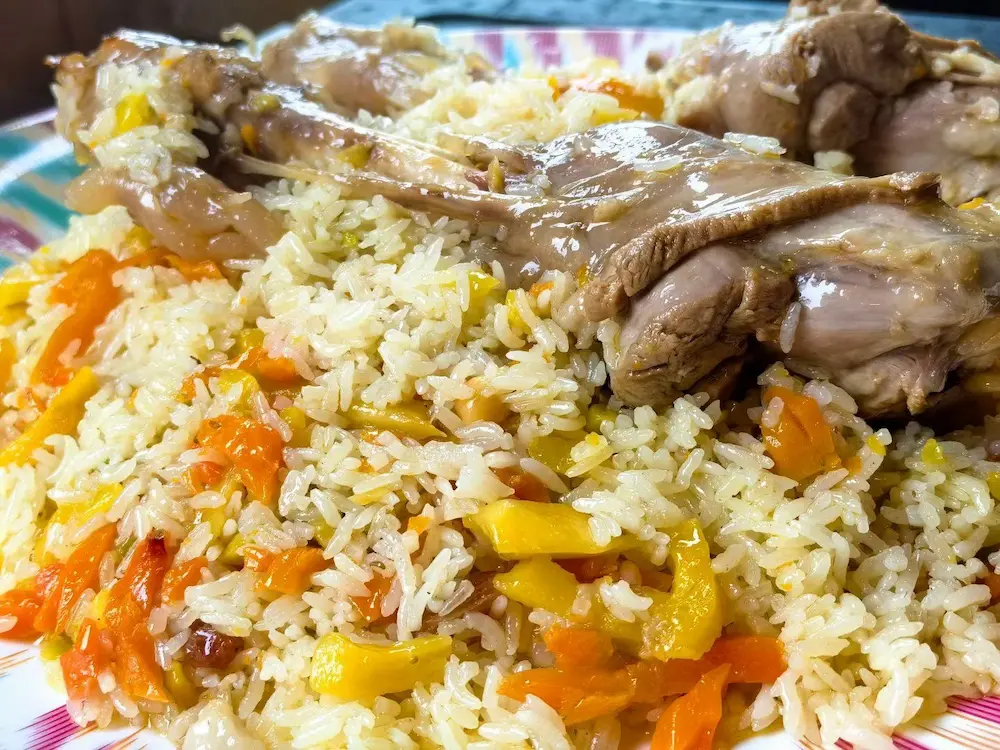
Two habits from home will trip you up: waiting to be seated, and ordering one dish per person. A single plate of noodles or a portion of polo feeds most appetites. With a group I order one fewer dish than there are people, then add more if the table looks thin.
Reading a menu with no English on it
Menu translation in Xinjiang is easier than it looks, because the vocabulary is small. Roughly twenty characters cover most wall boards. Learn to spot 羊 (lamb), 牛 (beef), 鸡 (chicken), 面 (noodles), 饭 (rice), 馕 (flatbread), 汤 (soup), 串 (skewer) and 素 (vegetarian), and a wall of characters becomes a rough grid. A line with 羊 and 面 is lamb noodles; a line with 素 is your meat-free option.
Prices are the second clue. Fifteen to 25 yuan is a noodle or rice plate for one person; 3 to 5 yuan is bread or a single skewer; anything above 60 is a shared platter such as a whole chicken or a big plate of lamb. When I see 88 beside a line, I know not to order it alone. Photo menus are worth seeking out on night one, while you work out what you like. For the wider dish vocabulary, our guide to 15 Xinjiang dishes is what I send friends before they fly, and our list of useful Uyghur and Chinese phrases covers everything outside the restaurant.
The four phrases that carry the whole meal
Learn these four Xinjiang restaurant phrases and you can eat well for a fortnight. “Zhe ge” means this one, and with a finger attached it orders anything. “Liang ge” means two of them. “Bu la” means not spicy, which matters if your tolerance is low, because a Sichuan-influenced kitchen in Urumqi can go hot. “Jie zhang” asks for the bill, though miming a scribble on your palm works just as well and usually gets a smile.
Add two more on day two. “Da” and “xiao” mean large and small, and noodle shops often sell both for a few yuan difference. “Bu yao rou” means no meat, a request not every kitchen expects but all understand. If you are vegetarian, our notes on vegetarian and vegan eating in Xinjiang go further, because the real obstacle is lamb stock rather than visible meat. Pronunciation matters less than volume and patience. I have never been mocked for bad Mandarin here. I have often been corrected, which is different and useful.
Apps, screenshots and the offline backup
My phone does three jobs at dinner. It runs a translation app with the Chinese offline pack downloaded before the trip, so it still works when the signal drops in the Tarim basin; Baidu Translate and Google Translate both handle photographed Chinese menus reasonably, and neither is reliable for Uyghur script. It holds a folder of food photos labelled in my own language, because showing a picture of samsa to a baker beats any phrase. And it holds screenshots of the ten characters I use most, since an app that needs to load is useless with a queue behind you.
I also carry my dietary limits written in Chinese, and hand the note over instead of explaining. Getting online is simple once you have a local number; see our practical notes on SIM cards and internet in Xinjiang.
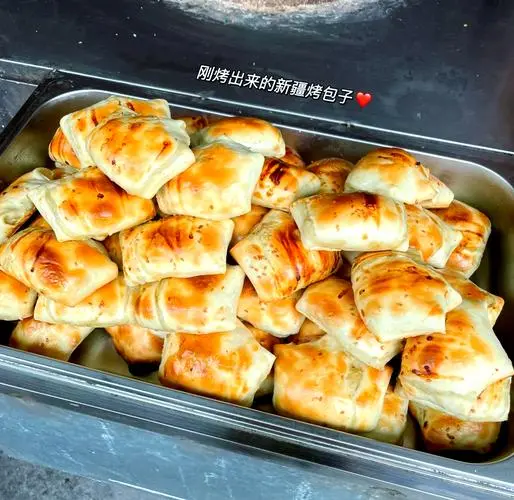
Getting to the places worth the trouble
The restaurants where nobody speaks English are usually the ones worth reaching, and they are rarely on a main road. In Urumqi the food streets near the International Bazaar are walkable and sit on Metro Line 1. In Kashgar the old town is best on foot, since half the good bread comes out of doorway ovens you would drive past. Further out, save the location as a screenshot map to show a driver, because a name in Latin letters means nothing to most taxi drivers. If you plan to hop between stalls, our night-market crawl plan sets out an order that works on foot.
Meal times and the two-hour question
Xinjiang runs on Beijing Time officially, but daily life in the south and west follows an informal local clock about two hours behind. In practice, lunch fills up between 14:00 and 15:00 on the official clock and dinner between 20:00 and 22:00. Arriving at 18:30 in Kashgar, as I once did, means an empty room and whatever was left from lunch.
Timing also decides what you can order. Polo is cooked in one pot in the morning and sold until it runs out, often by mid-afternoon, so a 21:00 arrival will not get the good version. Bread is best in the hour after it leaves the oven. Skewer stalls rarely light up before dark. If you want one dish specifically, ask your hotel what time it is served rather than assuming an all-day kitchen.
Where to stay if you want food on your doorstep
Location does more for your eating than any phrase list. In Urumqi I stay within walking distance of Erdaoqiao and the International Bazaar, which puts twenty small restaurants inside ten minutes and lets me eat late without a taxi. In Kashgar a guesthouse beside the old town means bread from a doorway oven at breakfast and a night market a short walk away. Whatever you book, ask reception to write two or three nearby restaurants in Chinese characters on a slip of paper. It costs them thirty seconds and buys you a week of easy dinners.
What to order in your first three meals
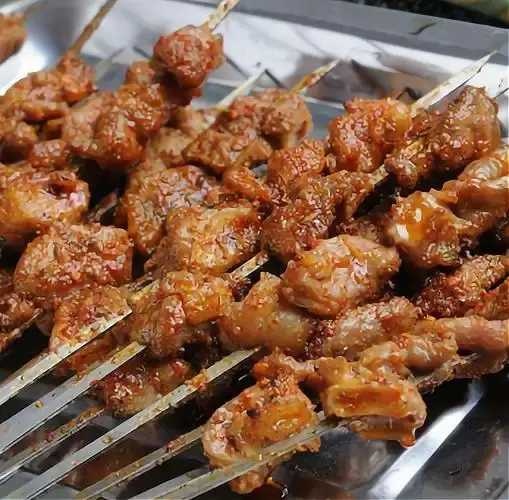
My advice for a first day: laghman first, because every shop makes it and it needs nothing beyond a pointed finger. Polo second, at lunch while the pot is full. Skewers and flatbread third, at a night market where prices are posted and you order by holding up fingers.
Save the harder dishes for later. Whole-lamb platters, offal soups and cold jellied dishes are worth trying once you know what a portion means. Almost every restaurant in the region is halal by default, which simplifies things for Muslim travellers; our guide to halal food in Xinjiang covers what to check. Alcohol is sold in Han-run restaurants and supermarkets, but asking for beer in a small Uyghur family place will usually get a polite no, and it is not worth pressing.
Habits that prevent misunderstandings
Three habits have saved me repeatedly. I confirm the price before a shared platter is cooked, by pointing at the number on the board and nodding, because a whole chicken can cost five times a noodle plate. I order in two rounds rather than all at once, which prevents the three-identical-plates outcome of my first night. And I check whether the tea is complimentary, since in some places it is a few yuan a pot.
Payment is the smoothest part of the meal. Alipay and WeChat Pay work almost everywhere, including street stalls, and both now accept foreign cards for most travellers, though I still carry small notes because a few rural shops prefer cash and cannot break a 100. Our guide to money and payments in Xinjiang explains the setup. Tipping is not expected anywhere in the region, and change left on a table will usually have someone chasing you down the street to return it.
A one-day eating plan in Urumqi
Here is the day I would give a first-time visitor with no Chinese. Around 09:00, bread and milk tea from a bakery near your hotel, ordered by pointing and holding up one finger. At midday, take Metro Line 1 toward Erdaoqiao and find a polo shop with a visible pot; ask for “yi ge” and eat while the rice is hot. Mid-afternoon, tea and dried fruit at the bazaar, where prices are quoted per jin and bargaining is normal. At about 20:00, walk the food street beside the bazaar and order six lamb skewers, one samsa and a naan, paying at each stall as you go. Nothing in that day needs a sentence longer than two words.
FAQ
Can I get by with no Chinese at all? For food, yes. Pointing, numbers on fingers and a translation app cover almost every restaurant transaction. The harder conversations are with hotels and drivers, not cooks.
Do restaurants have English menus? Some do in tourist districts of Urumqi, Kashgar and Turpan. Most family restaurants do not, and the food there is often better. Photo menus are more common than English ones.
Is Uyghur or Mandarin more useful? Mandarin is understood almost everywhere and is the safer default. A few words of Uyghur in the south is a courtesy people notice.
How do I explain a food allergy? Do not rely on speech. Have it written in Chinese before you travel and keep a photo as backup. For anything severe, stick to simple grilled or boiled dishes.
Will I be overcharged for not speaking the language? Rarely in restaurants, where prices are posted. At bazaar stalls a high opening quote is normal bargaining, not a scam; our notes on bazaar bargaining explain how far to push.
Disclaimer
This guide reflects the author’s own experience across several trips to Xinjiang, most recently in 2026, plus conversations with restaurant owners in Urumqi and Kashgar. Prices, opening hours, payment app policies for foreign cards and the availability of English menus all change. Nothing here is medical or dietary advice. Travellers with serious allergies should confirm ingredients directly and carry written documentation in Chinese rather than relying on translation apps.
About the author
Karl Huang writes about independent travel in Xinjiang and has spent several seasons in the region, from Urumqi noodle shops to family kitchens in the Kashgar old town. He contributes practical guides on food, routes and logistics to Xinjiang Attractions, focusing on the details first-time visitors tend to learn the hard way.