Published: July 23, 2026 | Author: Aysha Rahman
Why you can trust this Xinjiang vegetarian food guide
Most visitors arrive in Xinjiang expecting nothing but lamb on a stick. I did too, back in 2016, when I took a teaching job in Urumqi and had already been vegetarian for nine years. Three months in, I realised Xinjiang vegetarian food was hiding in plain sight: the flatbreads pulled straight from the tonur oven, the hand-stretched noodles, the cold sesame noodles sold from blue carts, and the mountains of melon and grapes that appear every summer. This guide comes from ten years of eating my way across the region, running a small plant-based supper club out of my apartment, and translating for vegetarian friends who got lost in the bazaars. Nothing here is copied from a brochure. It is what I actually eat.
Quick reference: eating plant-based in Xinjiang
| Question | Short answer |
|---|---|
| Is Xinjiang vegetarian-friendly? | Yes, more than expected. Breads, noodles, and produce are naturally meat-free. |
| Easiest vegan staple | Naan (flatbread) and laghman ordered without meat. |
| Biggest trap | Polo (pilaf) and most dumplings contain meat or meat broth. |
| Best cities for veggies | Urumqi, Kashgar, Yining, and Turpan. |
| Useful phrase | “Su” (meatless) plus “go shui” (no meat). |
| Best season | July to September for fresh fruit and cool salads. |
How I learned to eat vegetarian here
My first weeks were rough. I ordered what looked like a vegetable stir-fry in a Hami cafe and it came back sitting in lamb fat. The waiter was confused, not unkind. That night I walked to the Urumqi International Bazaar and watched an old man pull dough into laghman. He nodded when I said “go shui” and five minutes later I had a bowl of tomato and green-bean noodles with zero meat. That was the lesson: the dishes exist, but you have to name what you do not want.
By 2019 I was confident enough to host a weekly dinner. Ten strangers, mostly vegetarians passing through, sat on the floor of my kitchen eating pumpkin manta and cold cucumber salad. We compared notes on which Kashgar restaurants would swap meat for potatoes. The following spring I travelled to Kashgar and found a teahouse near Id Kah Mosque whose owner, a woman named Gulxan, steamed pumpkin dumplings to order and rolled her eyes at tourists who assumed Uyghur food was all meat. Those nights and that trip taught me more about regional food than any book.
Getting to the good spots
You do not need a car, but you do need patience with city buses. In Urumqi, the bazaar and the surrounding food markets are a short walk from the Erdaoqiao metro station. Kashgar’s old town is compact and walkable; most veg-friendly spots sit within a fifteen-minute stroll of the mosque, and a taxi from the airport costs about 30 yuan if you are lazy after a long flight. In Yining, rent a bike and ride out to the Ili Valley villages where families sell raw vegetables and homemade noodles from their gates. Long-distance, the rail network connects the big cities cheaply, and every station canteen has at least one plain-noodle option that you can ask to be cooked clean.
Best time for plant-based eating
Late spring through early autumn is the sweet spot. May brings the first apricots in Yining. June and July are watermelon and cantaloupe season across the Turpan basin, and the night markets fill with cold noodle stalls that need no meat at all. By September the grapes are in, and you can eat fruit for three meals a day if you want. Winter is harder: the fresh produce shrinks to cabbage, carrots, and potatoes, and more dishes get cooked in animal fat for warmth. I still travelled in January once and survived on naan, dried nuts, and vacuum-packed dates bought at the bazaar. If you are strict vegan, aim for summer when the dairy-free options multiply.
Where to stay
Look for guesthouses with a shared kitchen. In Kashgar’s old town, several courtyard homestays let you use a wok, which means you can buy vegetables at the morning market and cook your own laghman. International hotels in Urumqi usually have a breakfast buffet with tomatoes, cucumbers, bread, and fruit, but ask the night before if you need a vegan option beyond that. I avoid the all-you-can-eat mutton hotpot places; they rarely keep a clean vegetable pot. A simple hostel with a fridge has served me better than a four-star hotel, because the fridge is where the real meals start.
What to actually order
Here is the short list I give every vegetarian friend who messages me:
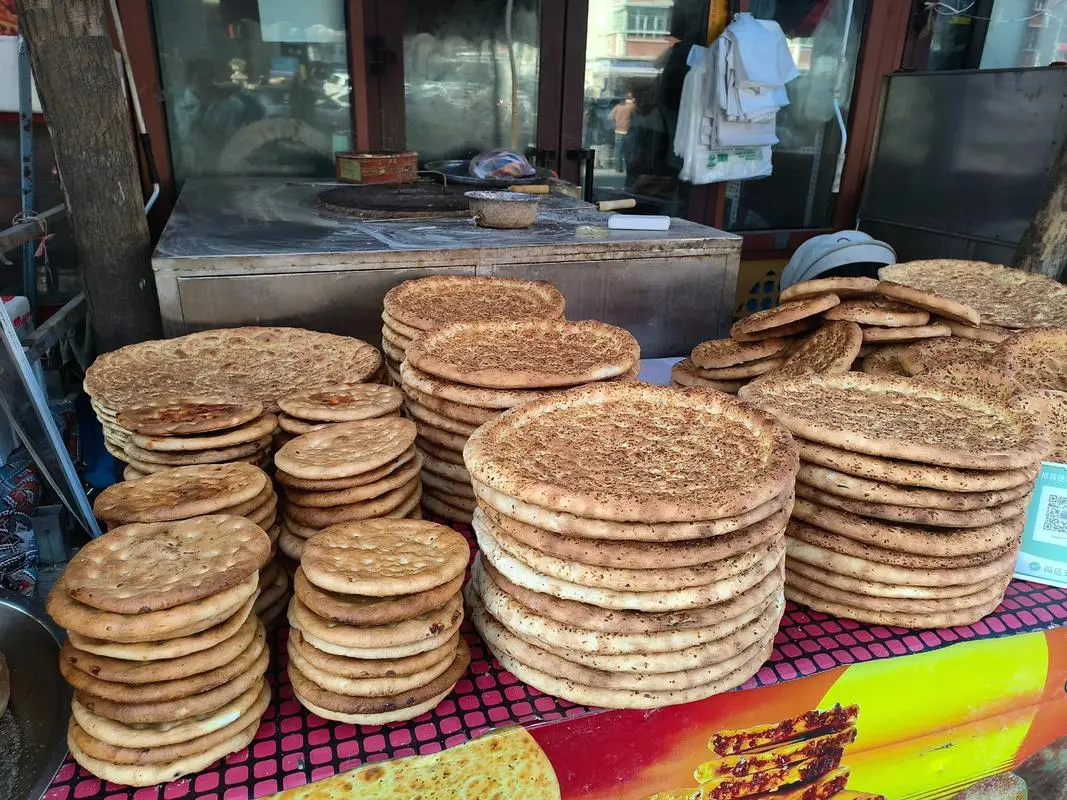
- Naan – the round flatbread baked in a tonur oven. Plain versions have no dairy or egg. Buy two and you have breakfast and a road snack. Read more in our guide to Xinjiang naan.
- Laghman (ask for “go shui”) – hand-pulled noodles with tomato, pepper, and cabbage. Say no meat and they fry the vegetables in oil instead of lamb fat.
- Liangpi – cold wheat noodles with sesame, vinegar, and chili. Fully vegan and sold at every summer stall.
- Pumpkin manta – steamed dumplings filled with sweet pumpkin. Harder to find but worth hunting in Kashgar and Hotan.
- Sangza and fried dough twists – street snacks made from nothing but flour and oil.
- Fresh fruit – Hami melon, seedless grapes, pears, and apricots in season. Xinjiang grows some of the sweetest in the country.
Watch the dishes that fool people: polo (pilaf) is almost always cooked with meat broth, and most “vegetable” dumplings at tourist spots still contain a little lamb. When in doubt, point at the oil and ask. Cooks respect a direct question, and a hesitant smile usually gets you the truth.

Practical tips that save you
- Learn three words: “su” (vegetarian or meatless), “go” (no), and “yagh” (oil). Combined, they get you further than a phrasebook.
- Carry a small translation card in Uyghur and Chinese explaining you do not eat meat, fish, or animal broth.
- Avoid the communal grills at night markets unless you watch your skewer cooked on a clean section of the rack.
- Stock up at the bazaar. A bag of naan, a kilo of grapes, and some walnuts is a full day of eating for under 30 yuan.
- Download an offline map of the bazaar before you go; signal gets patchy behind the produce walls.
- Pack a reusable container. Many noodle stalls will fill it if you ask, which keeps you fed on long bus rides.
A sample vegetarian day in Urumqi
Start at the bazaar bakery at 8 a.m. for warm naan. Walk to the morning vegetable market and buy tomatoes and cucumbers, then find a noodle stall for “go shui” laghman for lunch. In the afternoon, rest at a teahouse with dried apricots. For dinner, return to the old town and ask a homestay kitchen to steam pumpkin manta, or settle for liangpi from a street cart. The plan works just as well in Kashgar or Yining if you swap the bakery for the local morning market. Total spend stays under 80 yuan and you will not have eaten a gram of meat.
Frequently asked questions
Is Xinjiang vegan-friendly or just vegetarian?
Vegetarian is easy. Strict vegan takes more care because milk tea, yogurt, and some breads use dairy. Skip the dairy and you have a solid vegan diet built on bread, noodles, oil, vegetables, and fruit.
Will restaurants understand “no meat”?
In the big cities, yes, especially if you show a written note. In remote villages, gestures and the word “su” usually work, though the cook may still add a little oil that was used for meat earlier.
Can I find tofu or soy products?
Not traditional here, but Urumqi’s Chinese supermarkets stock tofu and soy milk. The local diet centres on wheat and produce rather than soy.
Is street food safe for vegetarians?
Mostly. The risk is shared oil and hidden broth. Watch your food cook and ask about the oil before you pay.
What about during festivals?
Big meals centre on mutton, but hosts happily pile your plate with naan, rice, fruit, and sweets. Tell them early and they will accommodate without fuss.
Disclaimer
This guide reflects my personal experience eating in Xinjiang between 2016 and 2026. Restaurant menus, prices, and kitchen practices change, and cross-contamination on shared grills is always possible. If you have a severe allergy or a strict medical diet, confirm ingredients directly with each kitchen. Nothing here is medical or nutritional advice.
About the author
Aysha Rahman has lived in Urumqi since 2016 and has eaten vegetarian across Xinjiang for ten years. She runs a small plant-based supper club, contributes to regional food blogs, and has translated for vegetarian travellers in Kashgar, Yining, and Turpan. She believes the best meal in Xinjiang is the one you point at and ask about before it hits the pan.