Published: 29 October 2026 | Author: Karl Huang
Most Xinjiang accommodation advice online reads like a hotel directory. That part does not help you much. The hard part is not picking a room type. It is knowing which town you will even be able to sleep in on a given night, because this region is the size of Western Europe and the good beds sit four to nine hours apart on roads that close for snow. Over the last six seasons I have moved through the north, the Ili valley and the Pamir, and I wrote this as a field note on where the nights actually land. When you plan rooms from abroad the same logic applies: the geography, not the app, decides your evening.
Xinjiang accommodation in four numbers
Before the stories, the shape of the problem. These are the figures that decide every booking:
| Region | Best base town | Typical double (RMB) | Book this far ahead |
|---|---|---|---|
| Northern Xinjiang (Kanas, Burqin, Beitun) | Burqin or Beitun | 300–700 | 3–6 weeks in peak |
| Ili valley (Yining, Tekes, Nalati) | Yining | 250–600 | 2–4 weeks |
| Kashgar and the Pamir | Kashgar | 280–650 | 2–3 weeks |
| Turpan and the east (Urumqi, Turpan) | Urumqi or Turpan | 220–550 | 1–2 weeks |
| Grassland and yurt stays | at the site | 150–450 | with the herder, seasonally |
Those ranges are what we paid or were quoted in 2024–2026. They move with holidays, fuel prices and exchange rates, so treat them as a compass rather than a contract.
The night the booking apps went dark
We learned the base-town rule the hard way. In early October we drove the northern loop and reached a small riverside town outside the Kanas reserve around eight in the evening, expecting to grab a room as we always had. The town was mid-harvest-festival, every guesthouse full, and both booking apps returned “no results” — not because rooms were unlisted, but because the local listings had sold out and the apps simply came back empty. We ended up twenty kilometres further on, at a family-run place with concrete walls, a working heater and a plate of hand-pulled noodles that cost less than the parking. It was not in any guidebook. It was warm, clean and exactly what we needed. The lesson stuck: in Xinjiang your fallback is not a better app, it is a longer drive to the next town that has a real hotel.
How far you drive decides where you sleep
The single most useful thing to understand about Xinjiang accommodation is that your overnight stop is set by your driving day, not by your hotel preference. The Duku Highway, for example, is a single day’s crossing of the Tianshan that ties the northern loop to the south. You do not choose where to sleep; the road’s endpoints choose for you.
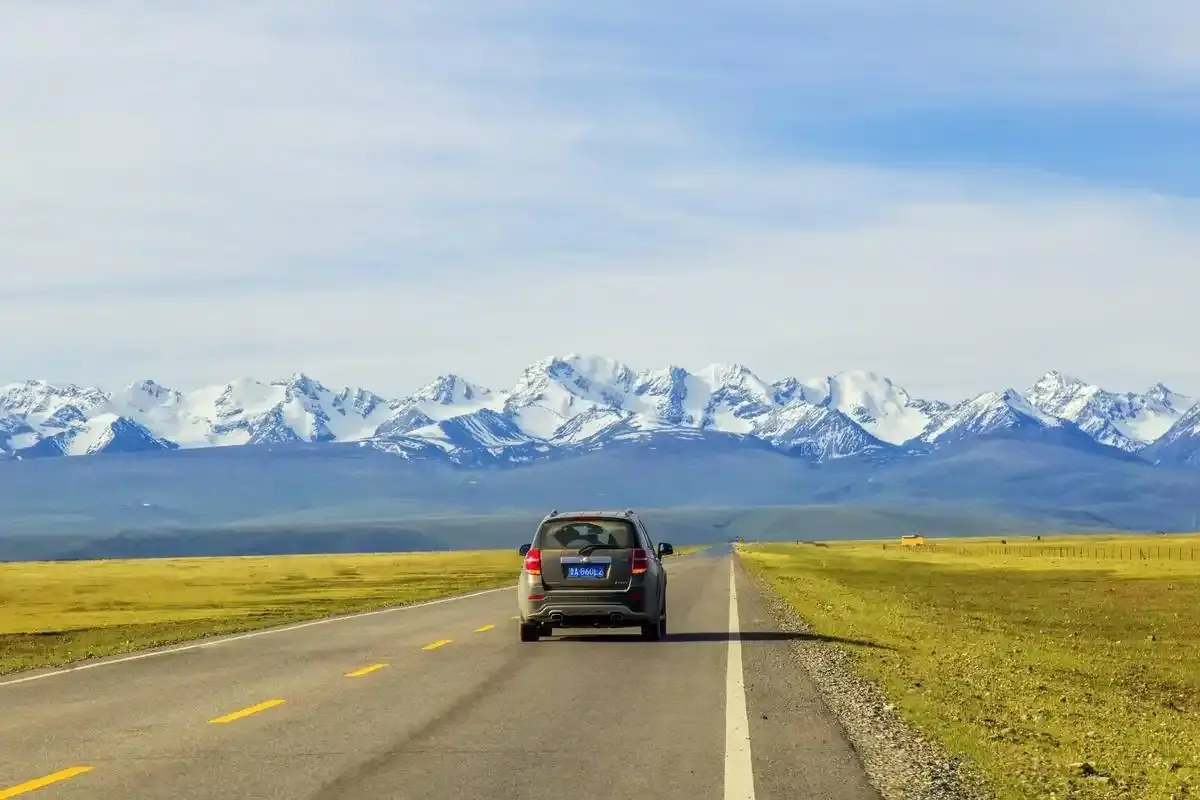
That is why a looping route works and a point-to-point dash does not. When we drove the big loops ourselves, the nightly town was whatever sat at the end of a sane day’s kilometre count, usually a place with a string of hotels rather than a single famous one. Build the drive first, then drop the towns in. The rooms follow the map.
When rooms get impossible to find
There are four windows when Xinjiang accommodation tightens to nothing. July and August are the domestic summer holidays. The first week of October, National Day, is the worst of all — the whole country is moving. Mid-October brings the poplar festival in the south, and the weeks before Spring Festival thin out the few towns that stay open. If your trip lands in any of those, lock the anchor cities (Urumqi, Kashgar, Yining, Turpan) at least three weeks out. The scenic fringe — Kanas, the Pamir, Nalati — can sell out a month ahead. Our season-by-season breakdown shows exactly which windows to avoid.
Northern Xinjiang loop: where the road actually ends
The Kanas area is the dead end of the north. Most travellers sleep in Burqin, the last real town with chain hotels and a riverfront, or push into the reserve itself. We based in Burqin and entered Kanas at opening, which beat sleeping inside at triple the price. Beitun is the railhead if you arrive by train. The point is simple: pick the town with the most beds, then day-trip into the scenery, because once the road runs out the only beds left are the expensive ones at the gate.
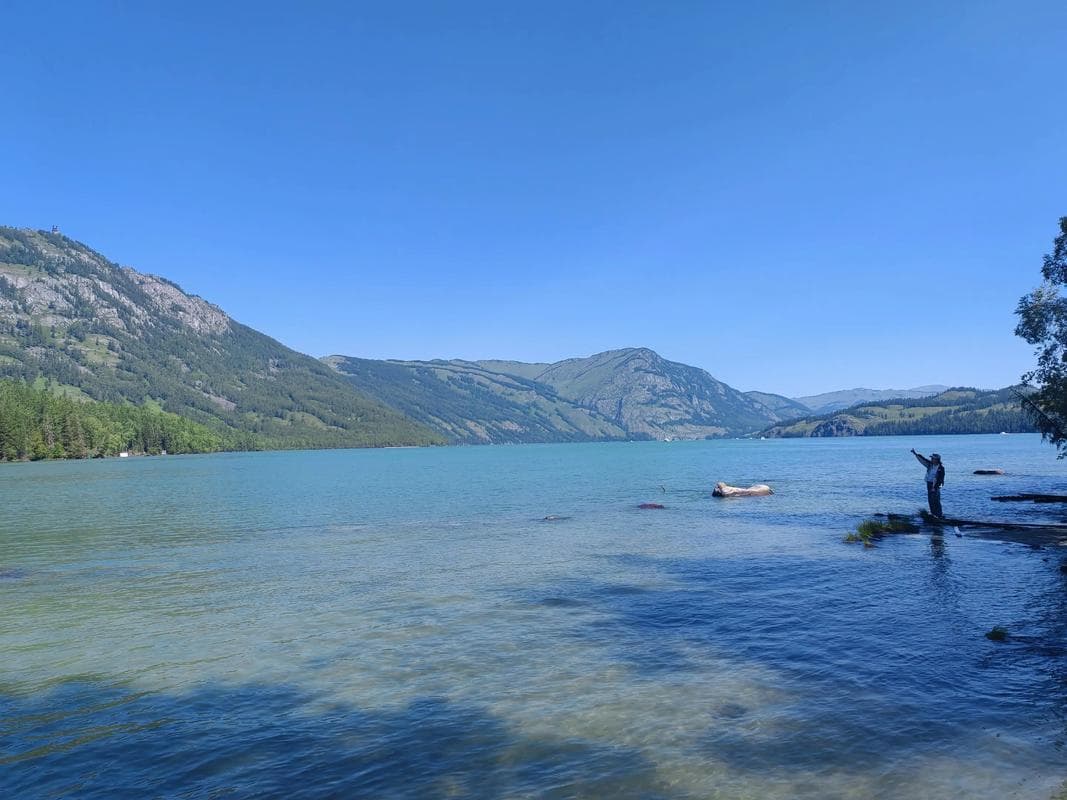
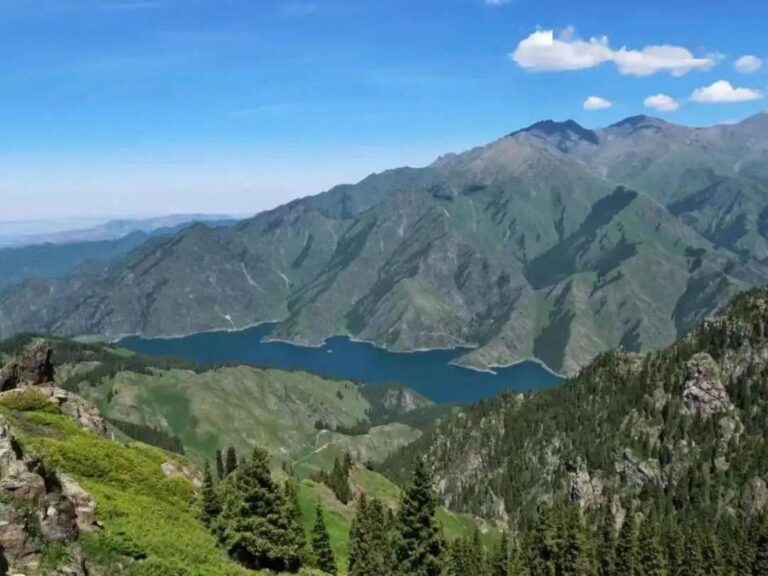
Around the lake the light turns the water a flat green-blue by late morning, and the boardwalks fill by ten. Staying down in Burqin meant we were first through the gate and back in a real bed by nightfall, which matters more than it sounds after a week of early starts.
Ili and the Tianshan fringe: a base in Yining
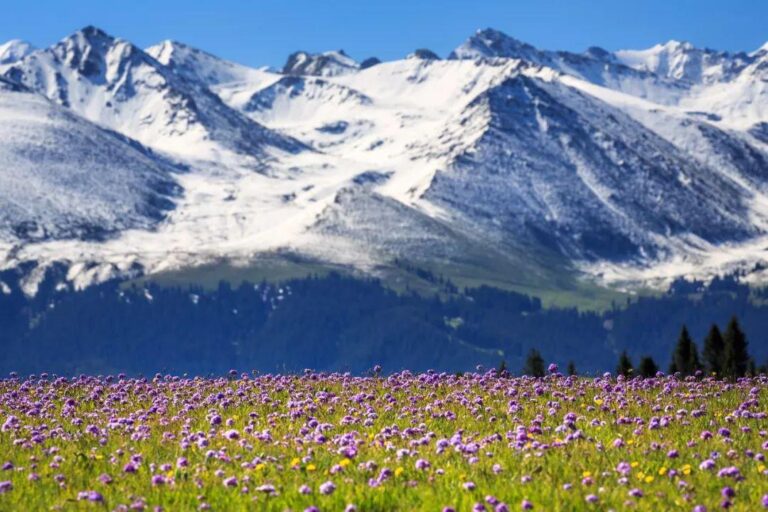
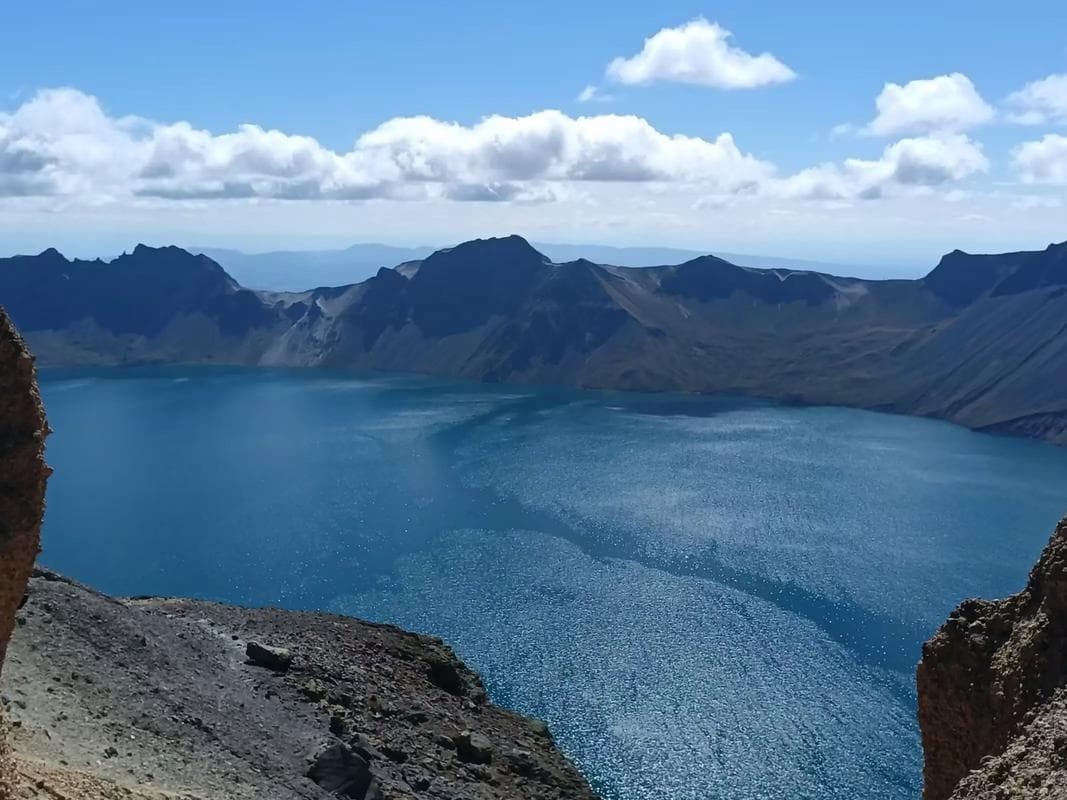
Yining is the only city in the west with a real airport, a train station and enough hotels that you can usually find a room the same day outside peak. From there, Tekes, Zhaosu and the Nalati grasslands are loops of two to four hours. We treated Yining as the anchor and moved outward, which meant we never drove past dinner looking for a bed. The northern Tianshan — the lake below Bogda, the ridges above Yining — is the spine of this whole region, and the high-country scenery is the reason most people come.
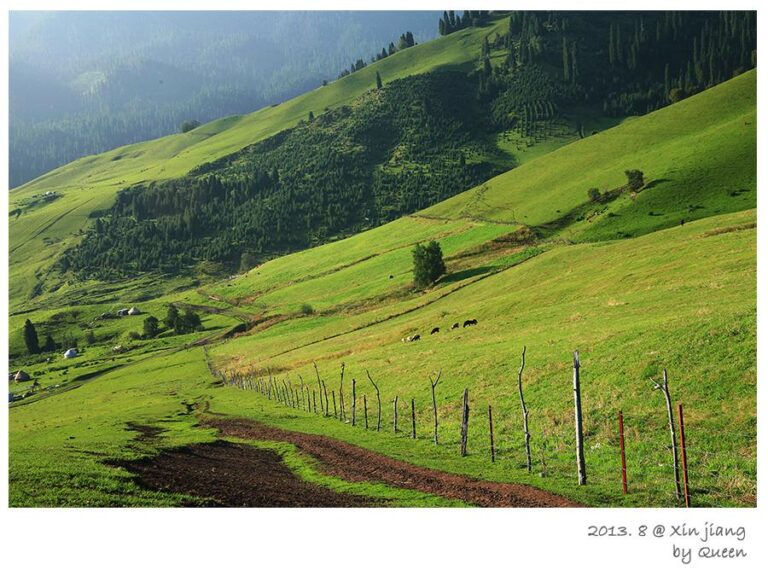
The homestays here range from blue-walled courtyard houses in the old Kazanqi quarter to herder yurts up the valleys. The courtyard places book through the usual apps; the yurts you arrange through a guesthouse or a driver, and they open only from roughly June to September when the grass is up.
Kashgar and the Pamir: one base, long days
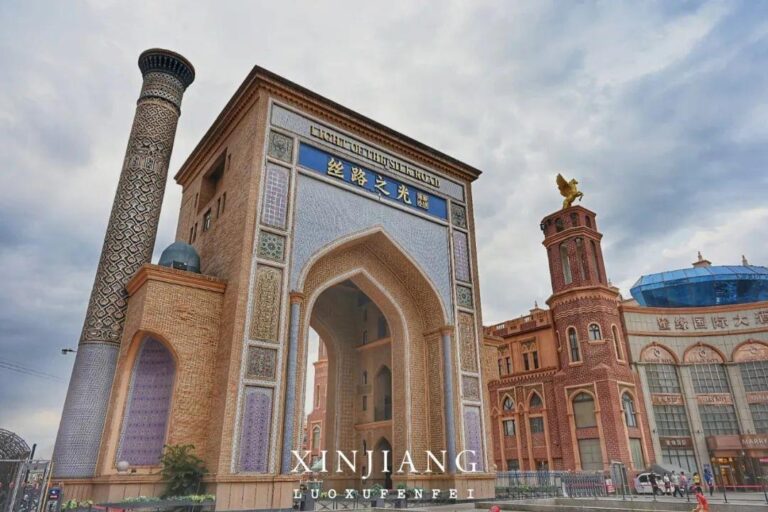
Kashgar is the only base that matters in the south-west. Everything else — the Pamir highway, Karakul, Tashkurgan — is a long day out and back, and the overnight options up there are yurts and basic guesthouses rather than hotels. Our piece on sleeping in a yurt covers the Pamir camps specifically. In Kashgar itself, the old city has courtyard guesthouses and the new city has the chains. We slept in the old city for the atmosphere and walked to the Sunday bazaar; the chains are a ten-minute taxi away when you want a predictable bed.
Turpan and the east: the easy overnights
Urumqi and Turpan are the forgiving end of the map. Flights and trains arrive late, hotels are plentiful, and a bad booking is a ten-minute taxi to another. We used Urumqi as the arrival and departure hub and Turpan as a two-night base for the ruins and the grape valleys. No drama, which after a week on the loops feels like luxury. If you are arriving on a red-eye, book the first night before you fly and let the rest sort itself out on the ground.
Dinner when you are far from a city
Food follows lodging. In the cities you have everything; at a yurt or a grassland camp you eat what the family cooks — milk tea, laghman, mutton, flatbread. On the driving days between, we learned to eat early. Small-town restaurants close by ten, and a 9 pm arrival can mean instant noodles in the room. The fix is to treat the 7–8 pm window as the meal, not the hotel, as the priority, then roll into town with a full stomach and no urgency about the front desk.
Three habits that kept us off the street
First, book the anchor city before you book the scenic fringe. The fringe sells out first and you can always day-trip in. Second, carry cash and a working Alipay or WeChat Pay set-up; some family guesthouses and yurt camps take only one of the three, and cards are hit-or-miss. Third, confirm the foreigner-registration status of any small place before you arrive, because the rule that hotels must register foreign guests is real and a few courtyard houses are not licensed for it — our guide to which hotels take foreigners walks through it. None of this is hard, but all of it is easier done at a desk in the afternoon than at a gate at night.
A 12-night loop that actually books clean
A route we have run without a single sold-out night, booked three weeks ahead in September: Night 1 Urumqi; 2–3 Yining (Ili); 4 Tekes or Nalati grasslands; 5 back to Yining; 6–7 Kuqa or Aksu (south via the highway); 8–9 Kashgar; 10 Tashkurgan or a Pamir yurt; 11 Kashgar; 12 Urumqi. It strings the real hotel cities together and uses the scenic stays as one- or two-night splurges rather than anchors. If you are driving yourself, shift a night to Burqin instead of Urumqi at the start so the northern loop closes as a ring.
What readers ask me about Xinjiang lodging
Is it safe to book a yurt? The established Pamir and grassland camps are run by local families with years of guests behind them. We have slept in both without issue. Book through a guesthouse or driver you trust rather than a random listing, and agree the price and meals before you arrive.
Do foreign cards work for hotels? International cards work at the larger chains in the cities but stall at small places. A local payment app or cash smooths the edges, which is why we carry both.
Can I just show up? Outside the four peak windows, yes in the anchor cities. At the scenic fringe and during holidays, no — you will be the person with the empty apps at eight at night.
What about altitude at the Pamir stays? Karakul and Tashkurgan sit above 3,000 metres. If you are new to altitude, spend a night in Kashgar (around 1,300 metres) first and go easy on the first day up high.
Are homestays licensed for foreigners? The registered courtyard guesthouses in Kashgar and Yining are; some rural yurts are not set up for passport registration. Ask before you commit, or keep a licensed hotel as your fallback.
Prices, permits and the rules that shift
The figures above are drawn from our own trips in 2024–2026 and will drift with the season and the exchange rate; confirm any quote at the desk. The Pamir and the Khunjerab side require a border permit, arranged in Kashgar, and permit and road rules change, so check the current position with the local authority before you travel. The foreigner-registration requirement for hotels is current policy but applied unevenly, which is exactly why we verify each small property in advance. Nothing here is financial, legal or immigration advice — it is a traveller’s note from the road, offered so your worst night is merely an early dinner rather than a long drive in the dark.
About the author — Karl Huang
Karl has spent six seasons driving and riding across Xinjiang, from the Kanas reserve to the Pamir plateau. He writes practical, first-hand travel notes for Xinjiang Attractions, focusing on the logistics that actually decide whether a trip goes smoothly. He can be reached through the site’s contact page.