Published: July 23, 2026 | Author: Mira Tan
Most visitors arrive in Xinjiang expecting kebabs and naan, and they leave having barely noticed the quiet backbone of the local table: Xinjiang dairy. I didn’t either, at first. On my second trip a Kazakh host pushed a bowl of something that looked like thin yogurt but tasted of salt and smoke into my hands, and that was the start of a habit I have not kicked since. This guide is built from those trips, from hands-on time in herders’ kitchens, and from the families who still make these products the old way.
If you remember one thing, let it be this: here, dairy is not a side dish. It is a drink, a snack, a greeting, and often the very first thing set in front of a guest. Learning to drink it properly changed how I travel through the region.
Xinjiang dairy at a glance
The quick reference below covers the six things you are most likely to be offered. Don’t worry about memorizing the names; pointing and smiling works, and most hosts are quietly delighted that you’re curious.
| Product | Local name | What it actually is | Best found | Season |
|---|---|---|---|---|
| Milk tea | süt chay / süt chai | Black brick tea boiled with milk, salted, sometimes with butter | Every home, every bazaar | Year-round |
| Kumis | qimiz / kumyz | Fermented mare’s milk, lightly fizzy, faintly alcoholic | Ili grasslands, Pamir | Jun–Sep |
| Yogurt | qatiq | Thick, tart cow or goat yogurt, rarely sweetened | Bazaars, village homes | May–Sep |
| Kurt | qurt | Dried salted yogurt balls, the travel snack of the steppe | Pasture camps, markets | Summer |
| Cream | qaymaq | Clotted cream, spooned onto warm naan | Homestays, yurts | Summer |
| Clarified butter | sary may | Cooked butter that keeps for months without a fridge | Kazakh yurts | Year-round |
What I learned drinking kumis with a Kazakh family
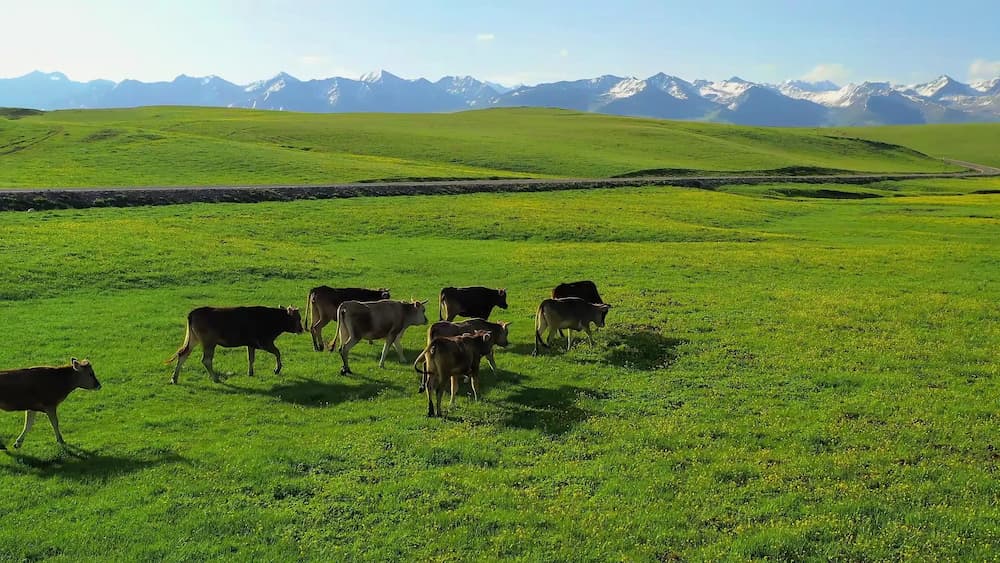
In June 2022 I stayed with a Kazakh family outside Nalati, in a yurt pitched where the grass runs flat to the foot of the Tianshan. The apai — grandmother — was up before sunrise to tend the mares, and by eight she was churning qimiz in a leather bag called a saba, swinging it from a wooden tripod twice a day. She let me try. The first pull is sharp and sour, then a cream finish rolls in, and there is a prickle on the tongue that tells you the fermentation is alive. It is nothing like the sweet yogurt drinks sold in Western supermarkets, and it is an acquired taste that I acquired fast.
What stuck with me was the rhythm, not the flavor. Kumis is made fresh every day through the warm season because mare’s milk only flows while the foals are nursing. Miss the window and you wait a full year. That single fact explains why so much of Xinjiang’s dairy culture is tied to summer pastures and why the products taste different in July than they would in December.
The three staples of Xinjiang dairy
Almost everything else branches off three core products. Get these and the rest makes sense.
Milk tea (süt chay). This is the daily drink of the whole region. Uyghur and Kazakh versions differ — the Uyghur cup tends to be milkier and salted, the Kazakh sometimes gets a knob of butter and a few fried noodles — but both start the same: brick tea simmered hard, then milk and salt added near the end. Sip it slow through a long morning. In Kashgar guesthouses I was given refill after refill with no expectation of payment, only conversation.
Kumis (qimiz). Covered above, but worth saying plainly: it is mildly alcoholic, usually well under 2 percent, more like a very weak cider than anything stronger. Children drink it; so do the elderly. Treat it as a food, not a drink to be careful around, but if you avoid alcohol for any reason, skip it and say so with a smile.
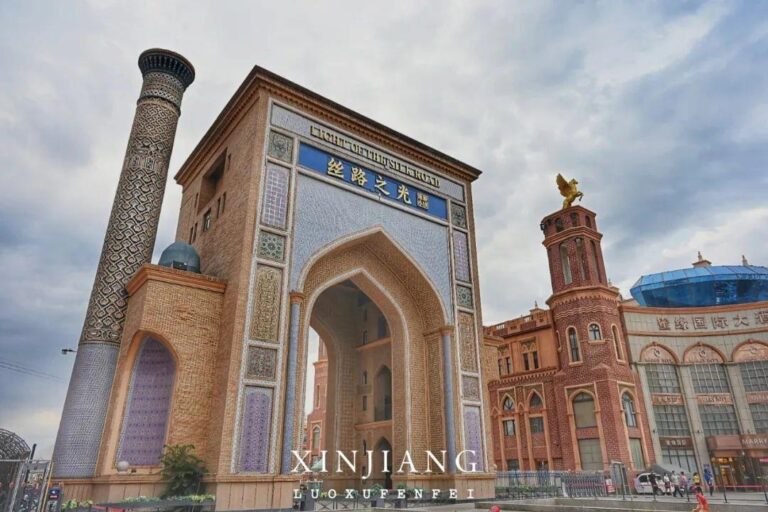
Yogurt (qatiq). Thick, unsweetened, and tangy enough to make your jaw work. Eaten plain, with a drizzle of honey if you’re lucky, or topped with dried apricots and walnuts. In the Urumqi International Bazaar you’ll see rows of shallow bowls sealed with cling film, sold by weight. That is the safe, reliable version for travelers wary of stomach trouble — the heat treatment is done at the dairy, not in someone’s yurt.

Getting to the dairy heartlands
You don’t need a plan; you need to be in the right kind of place. The pastoral dairy — kumis, fresh qatiq, qaymaq — lives where animals live: the Ili Valley around Yining and Nalati, the Pamir around Tashkurgan, and the summer pastures above most towns. Fly to Yining or take the train west from Urumqi, then a car or bus up to the grassland. City milk tea and shop yogurt are everywhere, including the Kashgar Old City and every mid-size town bazaar, so you can taste the basics without leaving pavement.
When the milk is freshest
Kumis and fresh qatiq follow the grazing season: roughly June through September, peaking in July and August when the grass is at its fattest. Milk tea and clarified butter are made year-round. If your trip is in winter, you’ll still find excellent yogurt drinks in sealed cups at any supermarket, but you’ll miss the living, churning versions that make this worth writing about. I plan dairy-focused days for July, when a single afternoon on the Ili grasslands can run through all six products on the table above.
Where to stay for a dairy breakfast
A hotel buffet will give you yogurt and maybe milk tea, but the real lesson happens in a Kazakh homestay or a Pamiri guesthouse, where breakfast is qatiq, naan, butter, and endless tea served in a felt-walled room. Near Nalati and Zhaosu, yurt stays open from late May; in Tashkurgan, family guesthouses run most of the year. Book through your host directly when you can — the money stays in the household that churns your kumis.
What to order and how to eat it
Start with milk tea and naan; tear the bread, drop it in, let it soften. Move to qatiq with honey. Try kurt only in small handfuls — they are salt bombs and a little goes a long way. Qaymaq on warm naan is the quiet luxury of the region, and if a host brings sary may for your tea, that is a sign you are liked. For a wider menu of what pairs with all this, the Xinjiang food guide lists the savory dishes that usually sit beside the dairy on a real table.
Practical tips for first-timers
- Don’t refuse flatly. An empty refusal can read as an insult. Take at least a sip of the milk tea; for kumis, a small “thank you, just a little” is fine.
- Watch the alcohol. Kumis is weak, but if you avoid alcohol, say so. Hosts understand and will switch you to tea.
- Lactose caution. Fermentation lowers lactose in kumis and qatiq, but they are not lactose-free. Sensitive stomachs should start with shop-bought yogurt.
- Buy to take home. Vacuum-packed qatiq and kurt travel well; kumis does not. Supermarkets in Urumqi and Yining stock sealed versions.
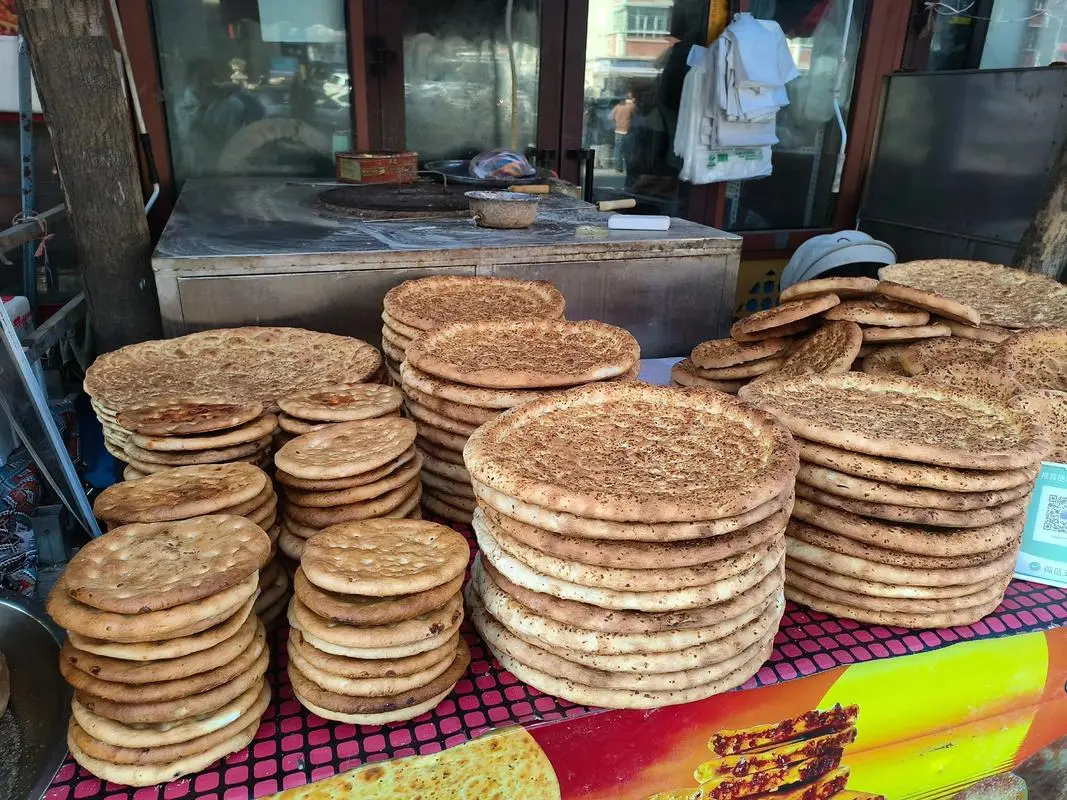
- Eat with naan. The Uyghur naan is the default spoon of the region — use it to scoop cream and soak up tea.
A three-day dairy-focused loop
If you want the full set without a long detour:
Day 1 — Urumqi. Morning at the International Bazaar for sealed qatiq and kurt to study the baseline, then milk tea at a city tea house. Evening train or flight west.
Day 2 — Yining to Nalati. Drive up to a grassland yurt stay. Churn kumis if the family lets you, eat qaymaq on naan, sleep to the wind.
Day 3 — Zhaosu or back. A second pasture morning, then return with a bag of dried kurt and a new habit. July and August only.
Frequently asked questions
Is kumis safe to drink? From a reputable homestay or a sealed commercial product, yes. The fermentation and the salt both discourage bad bacteria. I have drunk it daily for weeks without trouble.
Does it really contain alcohol? Yes, a little — typically under 2 percent. Think weak kefir, not beer.
What does kurt taste like? Salty, sour, and chewy, like a yogurt pretzel. An acquired taste, but a good trail snack.
Can I take dairy home? Sealed qatiq and kurt, yes. Fresh kumis, no — it is alive and will burst or spoil in a suitcase.
Is Xinjiang dairy vegetarian? Yes, with the exception of clarified butter made with added animal fat in rare cases; ask if unsure.
Disclaimer
This article is written for travelers, not as medical or nutritional advice. Alcohol content in kumis varies by maker and batch; people avoiding alcohol, pregnant travelers, and those with dairy allergies or lactose intolerance should check with a doctor before trying. Product names and practices differ by ethnic group and village, and what I describe is drawn from personal visits that may not match every household. Confirm details with your host, and respect local customs around hospitality and photography.
About the author
Mira Tan is a food and travel writer based in Urumqi. Over eight years she has documented the everyday cooking of Xinjiang’s communities, with a soft spot for the pastoral dairy traditions of the Ili Valley and the Pamir. She has churned kumis in three different households and still can’t make it as well as any of the apais who taught her.