Published: July 27, 2026 | Author: Karl Huang | Reviewed from a September 2025 trip to Kashgar and Hotan
I grill lamb at home in Cape Town most weekends, so when our guest writer Pieter van Rooyen told me he had planned an entire Xinjiang trip around Xinjiang roast lamb, I understood completely. What follows is his account of chasing tonur kawap, the whole roast lamb of southern Xinjiang, across Kashgar and Hotan in September 2025 with his wife Elsabe. He paid for every meal himself, took his own notes on prices and portions, and came home convinced that most of what you read online about this dish gets the basics wrong. This guide covers what the dish actually is, where ordinary travelers can eat it without ordering an entire animal, and what it costs.
Quick reference: Xinjiang roast lamb at a glance
| Question | Short answer |
|---|---|
| What is tonur kawap? | Lamb roasted in a clay pit oven (tonur), whole or in large cuts |
| Whole lamb price (2025) | 1,400 to 2,200 RMB depending on size and city |
| Single portion price | 40 to 80 RMB for roughly 250g at market stalls |
| Best cities to try it | Kashgar, Hotan, Kuqa; Urumqi for banquet versions |
| Do you need a group? | No, portions sold by weight at bazaars |
| Best time of day | 11am to 1pm, when the first batch comes out |
What kawap actually means, and what it does not
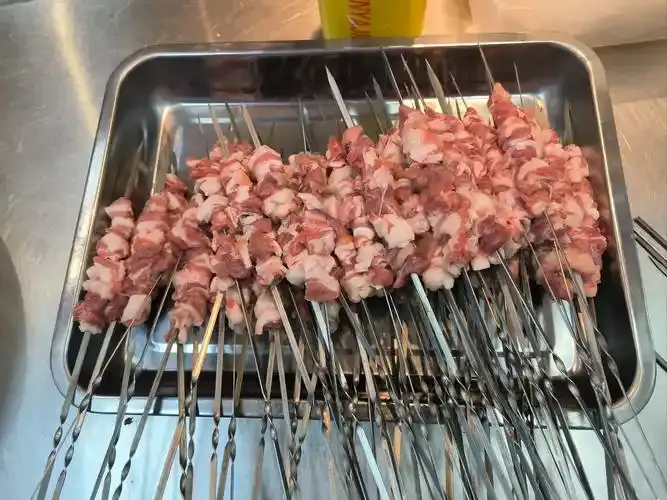
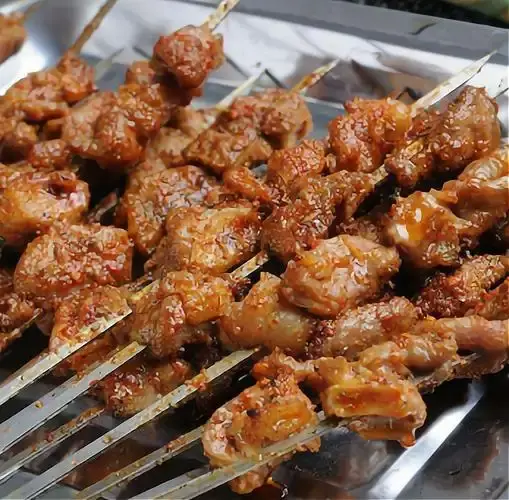
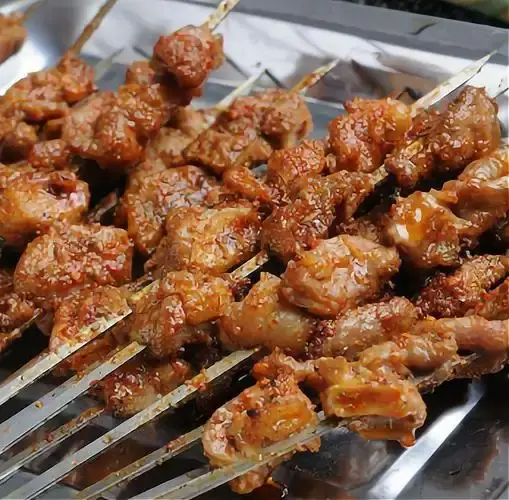
The word kawap covers a family of roasted meats, not one dish. The skewers you see on every street corner are zik kawap. The subject of this article is tonur kawap: lamb cooked inside a tonur, the same clay pit oven used for baking naan. When a whole young sheep goes in, glazed and trussed, the result is the centerpiece dish Uyghur families serve at weddings and major celebrations. If you want the street skewer version instead, our separate Xinjiang kebab guide covers that world in detail. The two are cousins, not the same meal.
Pieter’s first surprise was the glaze. At a Hotan roastery the owner, a third generation roaster named Memet, showed him the bowl: egg yolk, yogurt, flour, salt, and a little turmeric, painted on before the lamb is lowered into the sealed oven. That coating is why proper tonur lamb comes out with a lacquered amber crust while the inside stays soft enough to pull apart with fingers. No marinade injections, no cumin rub on the outside. The seasoning tradition here is restrained, which shocked a South African who normally packs his roasts with garlic.
Where we ate it: three very different experiences
The first taste was accidental. Walking through the Hotan Sunday market around noon, Elsabe spotted a crowd around a stall where a man was lifting an entire lamb out of a waist-high clay oven on an iron hook. Portions were sold by weight: 68 RMB got the two of them about 300 grams of shoulder plus a fresh naan. They ate standing at a steel counter next to a Uyghur grandfather who kept pushing the fattier pieces toward Elsabe and laughing when she took them. Pieter rates this the best single plate of the trip.
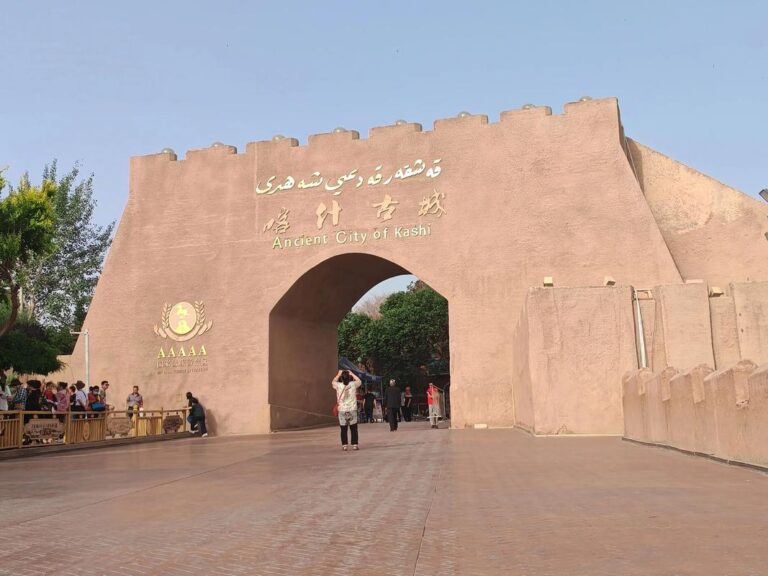
The second was a sit-down roastery in Kashgar’s old town, two streets behind the Id Kah mosque area. Here a quarter lamb, ordered a day ahead by their guesthouse owner, cost 460 RMB and arrived on a copper tray with raw onion, naan, and pomegranate juice. Six people could have eaten from it; the two of them barely managed half and the kitchen wrapped the rest without being asked.
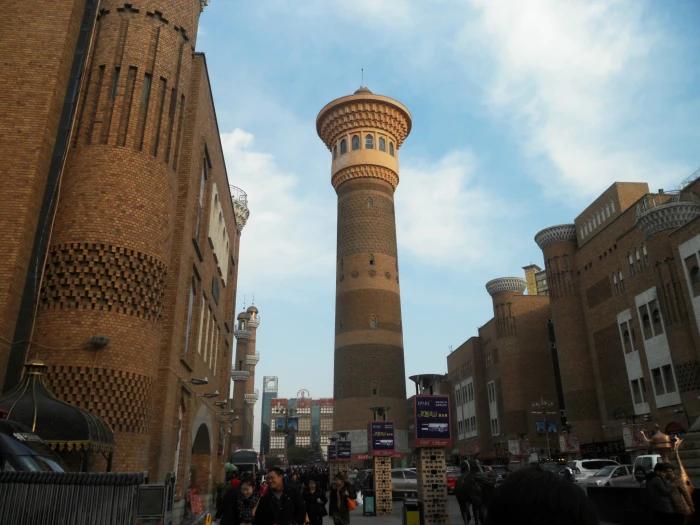
The third was a banquet version at an Urumqi restaurant near the International Grand Bazaar, where a whole ceremonial lamb is wheeled out with a knife presentation for tour groups. It cost their group of eight 1,800 RMB, booked three days ahead. Pieter found it theatrical but drier than the southern versions. His advice: if your itinerary includes Kashgar or Hotan, save the experience for there and spend your Urumqi evenings on other food.
How to order without buying a whole sheep
This is the practical part most guides skip. You have four realistic options, in ascending order of commitment:
- By weight at a bazaar stall. Point at the section you want, show a number on your phone in grams or RMB. 50 RMB per person is a generous lunch. No booking, no minimum.
- A plate at a roastery. Sit-down shops in Kashgar and Hotan sell single plates for 45 to 80 RMB with naan and tea included.
- A quarter or half lamb. Order one day ahead through your hotel or guesthouse. Quarter lambs ran 400 to 550 RMB in September 2025. Realistic for four to six eaters.
- The whole animal. 1,400 to 2,200 RMB, ordered at least a day ahead. Only sensible for groups of ten or more, or a genuine celebration.
Timing matters more than location. Tonur ovens are loaded in the morning and the first lambs come out between 11am and 1pm. Arrive at 4pm and you are eating meat that has rested under a heat lamp for three hours. Pieter tested this the hard way in Kuqa and confirmed the difference is not subtle.
Getting to the good roasteries
Kashgar and Hotan both have airports with connections through Urumqi. The overnight train from Urumqi to Kashgar takes around 17 hours; Pieter and Elsabe flew south and took the train back north, a pattern we compare in our 21-day Xinjiang itinerary. Within Kashgar, the old town roasteries are walkable from most guesthouses. Hotan’s best stalls cluster in and around the Sunday bazaar, a 15 RMB taxi ride from the city center hotels. No permits beyond the standard registration are needed for either city; carry your passport since roastery districts sit near checkpoints where it may be checked.
When to go for lamb specifically
September and October are the sweet spot. Lambs born in spring have reached ideal roasting weight, evenings are cool enough to enjoy a heavy meal, and the markets are stacked with melon and grapes to cut through the richness. Winter roasting continues but many open-air bazaar stalls retreat indoors. During Corban (Eid al-Adha, which shifts each year), whole lamb culture peaks: it is the busiest and most authentic season, but roasteries prioritize local family orders, so travelers may find whole-lamb bookings difficult that week. Portions at stalls remain easy to get.
Where to stay near the lamb action
In Kashgar, guesthouses inside or beside the old town put you within a ten minute walk of three or four roasteries. Pieter paid 320 RMB a night for a courtyard double in late September. In Hotan, the practical choice is a business hotel near the city square, around 250 to 350 RMB; nothing in the bazaar quarter itself is set up for foreign registration. Ask your front desk to write the name of the roastery you want in Uyghur and Chinese. That single scrap of paper solved every taxi conversation they had.
Beyond the lamb: what to eat alongside
A tonur lamb meal is traditionally simple: fresh naan straight from the same oven, raw onion with vinegar, and tea. Order pomegranate juice if the stall has a press. Do not fill up on polo (pilaf) or laghman beforehand, a mistake Pieter made exactly once in Kashgar. If your stomach needs a gentler day after, Hotan’s rose petal tea and fresh figs make a decent recovery breakfast. Budget eaters can treat one lamb meal as the day’s main spend; our Xinjiang travel cost breakdown shows how 60 RMB of roast lamb fits into a 350 RMB daily budget without strain.
Practical tips from two weeks of lamb hunting
- Pay attention to the queue. A stall with local families waiting at 11:30am is your stall. An empty one at noon is not.
- Cash still helps at bazaar stalls in Hotan. Most take WeChat Pay, but Pieter’s foreign card linked wallet failed twice at older stalls and small notes rescued lunch.
- Fat is the point. The tail fat (quyruk) is served proudly. Try at least one piece before deciding; Elsabe went from refusing it to requesting it.
- Portions are heavier than they look. 250 grams of rich roast lamb plus naan defeats most appetites.
- Say “az” (little) if you want a smaller cut, and hold up fingers for the price. Numbers written on a phone screen settle everything.
- Vegetarian companions have options within sight of every roastery: pumpkin samsa, vegetable laghman, and fruit. Nobody at any stall blinked at a split order.
A sample lamb-focused day in Kashgar
8:30am: Breakfast of milk tea and bagirsak pastry near your guesthouse. Keep it light on purpose.
10:00am: Walk the old town lanes and watch the roastery ovens being sealed. Owners are relaxed about photos if you buy something later.
11:45am: First lamb comes out. Order 250g of shoulder with naan, eat at the counter, roughly 55 RMB per person.
1:30pm: Pomegranate juice and a slow walk to the Id Kah square. Digest.
4:00pm: Tea house break; skip snacks.
7:30pm: Light dinner of samsa and salad. Two lamb meals in one day is a rookie error.
FAQ
Is Xinjiang roast lamb halal?
Yes. Roasteries in Uyghur districts operate under halal practice as a matter of course.
Can one or two people order a whole lamb?
You can, but you should not. Portions by weight exist precisely so small parties can eat well for under 100 RMB total.
How is tonur lamb different from Beijing style roast lamb leg?
The sealed clay oven cooks by radiant heat and steam together, closer to a tandoor than a rotisserie. The glaze crust and the pull-apart texture are the giveaways.
Is it safe for sensitive stomachs?
Freshly unloaded lamb at busy stalls gave Pieter and Elsabe no trouble across two weeks. Avoid meat that has sat out for hours and you have removed most of the risk. More food answers are in our Xinjiang travel FAQ.
What should I expect to tip?
Nothing. Tipping is not practiced and will usually be refused, sometimes with genuine confusion.
Disclaimer
Prices, opening patterns, and availability reflect a September 2025 visit and standard rates as of mid 2026. Whole lamb prices move with livestock markets and season, especially around Corban. Confirm current prices and booking lead times through your hotel before committing to a large order. This article contains no sponsored content.
About the author: Karl Huang runs Xinjiang Attractions and has traveled the region extensively since 2018. This article was written with field notes, receipts, and photographs contributed by Pieter van Rooyen, a Cape Town based food writer and lifelong barbecue obsessive who visited Kashgar, Hotan, and Kuqa with his wife in September 2025. All meals were paid for in full; no roastery or restaurant knew a review was being written.