Published: July 28, 2026 | Author: Rhys Morgan, with the Xinjiang Attractions editorial team
I have set routes at a climbing wall in Sheffield for eleven years, which means I spend my working life arguing about whether a hold is a crimp or a sloper. My personal climbing happened on Peak District gritstone, Welsh slate and one badly planned month in Catalunya. In September 2025 my partner Jess and I spent seventeen days in western China, and I went out there with a specific question: is Xinjiang rock climbing a real thing you can plan a trip around, or is it a rumour that looks good on a map? We paid for everything ourselves, we carried shoes, chalk and a crash pad rented in Urumqi, and I came home with an answer that is more complicated than yes or no. This guide is that answer, written for climbers who want facts rather than fantasy.
Short version before we start: Xinjiang has spectacular rock, a small but genuinely welcoming climbing community, and almost none of the infrastructure that word “destination” implies. If you expect Kalymnos with noodles, you will be disappointed. If you treat it as an exploratory trip where the climbing is one thread among many, it rewards you.
Quick reference: Xinjiang rock climbing at a glance
| Question | Answer |
|---|---|
| Bolted sport crags with guidebooks? | Effectively none for visitors; no published English guidebook exists |
| Best legal climbing option | Commercial gyms in Urumqi (day pass 60 to 80 RMB), exploratory bouldering |
| Famous rock | Koktokay granite domes (viewing only inside the geopark), Tianshan canyons |
| Expedition peaks | Muztagh Ata and Bogda require permits arranged through registered agencies |
| Season | Late May to early October; July and August hot in lowland canyons |
| Biggest constraints | Border permits, loose rock, zero rescue coverage outside cities |
What climbing in Xinjiang actually looks like
My education started in a gym in Urumqi, three days after we landed. I found it the unglamorous way, by searching on a Chinese map app while eating laghman, and the place turned out to be better equipped than half the walls I have worked in. Day pass, 70 RMB. Rental shoes that had seen things. A teenage girl campusing a board while her father filmed her on two phones at once.
That gym mattered because of the people, not the plastic. A climber named Yusup, who worked weekdays in a phone shop, drew me a map on the back of a receipt: where locals boulder, which canyon walls are compact enough to touch, which formations are protected and strictly off limits. Every useful thing I learned about climbing in this region came from that receipt and the three climbers who annotated it. There is no guidebook. The community is the guidebook, and the gym is where you find the community. If you take one practical tip from this article, take that one.
Yusup was also blunt about the limits. Xinjiang has no equivalent of Yangshuo, no valley where a foreigner can turn up, buy a topo and clip bolts for a week. Development never happened at scale, partly because distances are enormous, partly because much of the striking rock sits inside protected scenic areas where fixing gear is forbidden, and partly because the local scene is still small. Nobody I met pretended otherwise, which I respected.
The canyons: magnificent, and mostly not for climbing
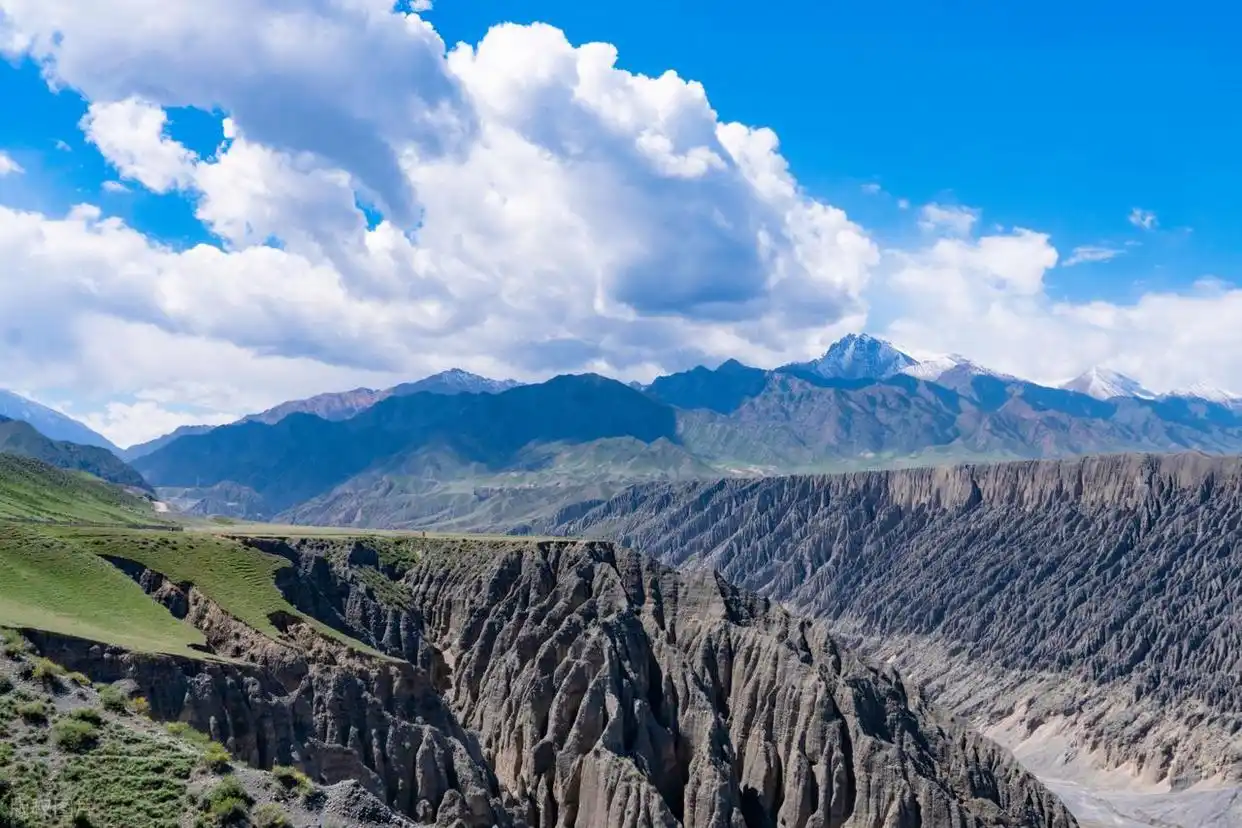
Here is the part that surprised me most as a gritstone climber who thinks loose rock is a personality trait. The great canyons of southern Xinjiang, the red gorge systems near Wensu and the wind-carved corridors around Kalpin, are made of conglomerate and mudstone so soft you can scratch your name in it with a car key. I tested a few edges at ground level in the Wensu Grand Canyon and holds simply came away in my hand, like pulling biscuits off a wall. These places are for walking and photography, and they are worth two full days for that alone. Our notes on Kalpin canyon country cover the access details.
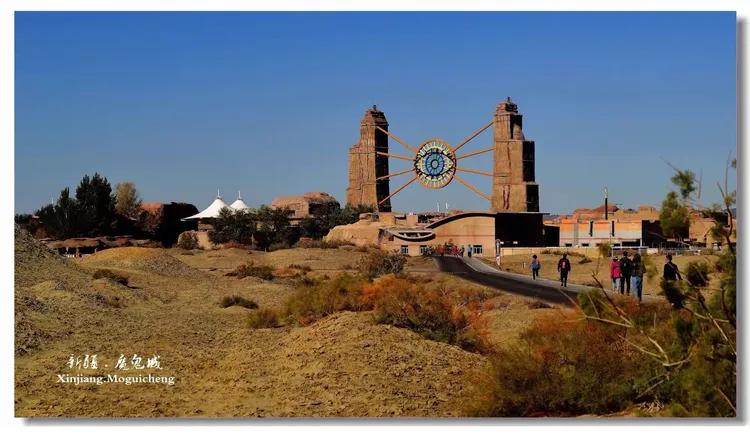
The same goes for the eroded yardang formations at Urho, the so-called Devil City in the north. Jess described the towers as sandcastles at one-to-five-hundred scale, which is geologically about right. Touching them damages them, climbing them is prohibited, and any climber who tries would deserve the resulting ride in whatever passes for an ambulance out there. Go at sunset, keep your hands in your pockets, enjoy it as a climber appreciating what wind does with fifty million years.
The granite: Koktokay and the far mountains
The rock that made me stare like a fool is in the Altai region, at Koktokay National Geopark. The centrepiece is a granite dome that rises about 365 metres straight out of a river valley, clean grey stone with crack systems you can trace from the road. Chinese climbers established lines on formations in this area years ago, but the geopark now manages the main faces as scenery, and casual visitors cannot rope up inside the park. I asked at the gate through a translation app and got a polite, definitive no. So Koktokay is a pilgrimage rather than a venue: you go to look at world-class granite and imagine, the way people visit cathedrals without expecting to hold a service.
Serious altitude objectives do exist. Muztagh Ata at 7,546 metres on the Pamir plateau is one of the most accessible seven-thousanders on earth and sees guided ski-mountaineering expeditions every summer, and Bogda’s summits attract experienced alpinists. Both require permits arranged months ahead through registered mountaineering agencies, along with liaison officers and fees that start around 30,000 RMB per person. That is expedition territory, not a rock trip, and far beyond what Jess and I were there to do. If your interest is high mountains at trekking level instead, our glacier hiking guide explains what is realistic without a permit.
Bouldering: the honest sweet spot
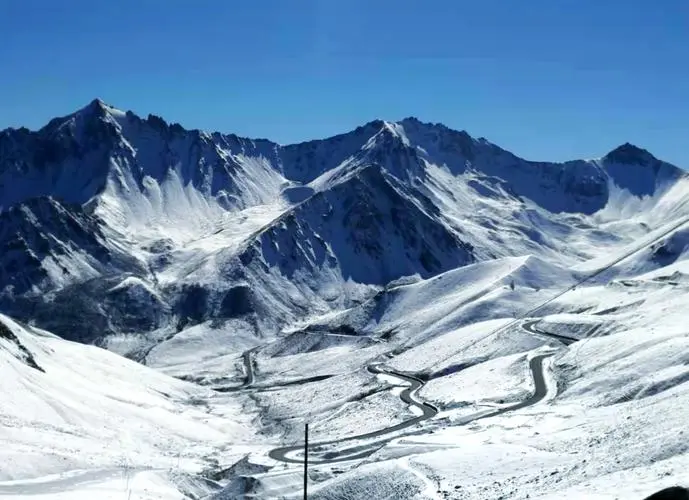
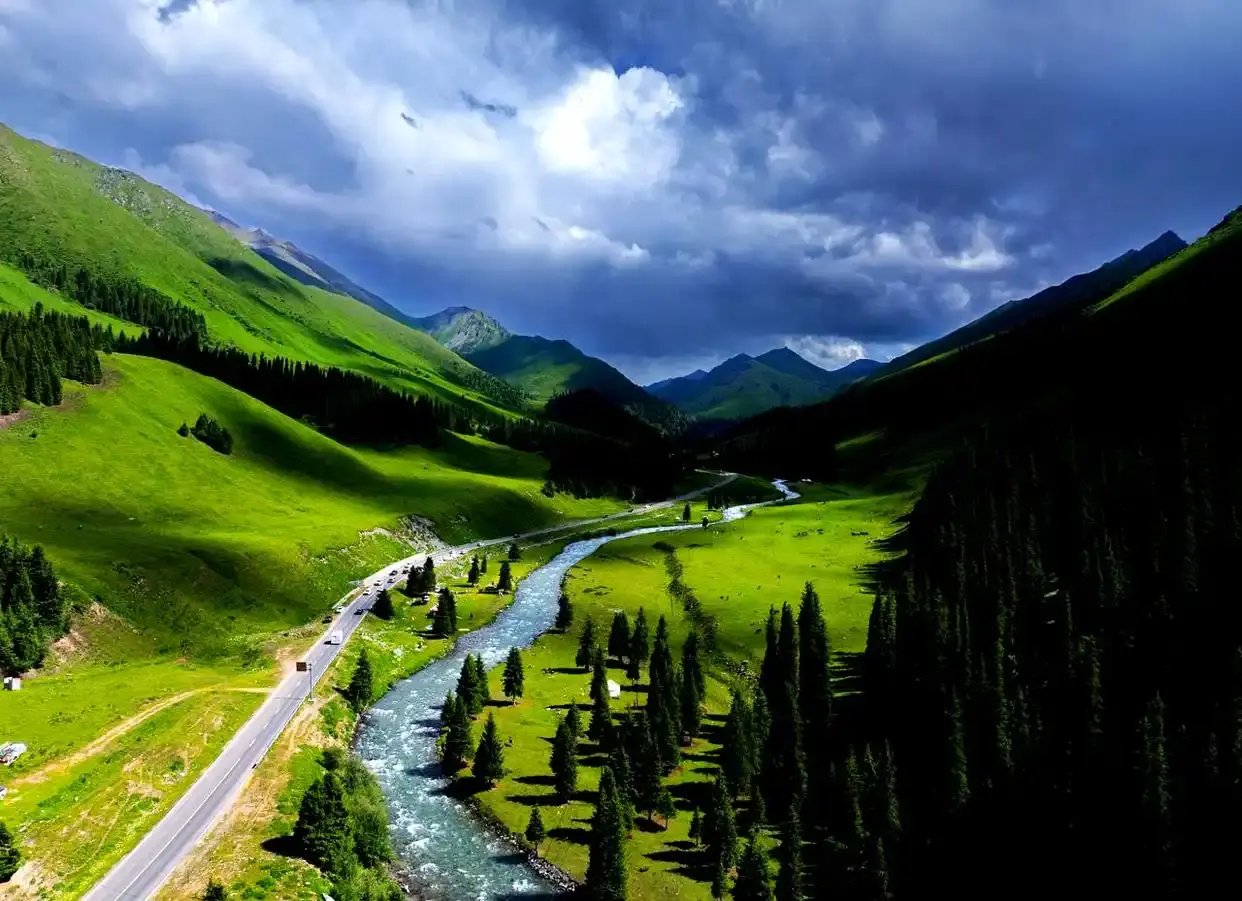
Where Xinjiang quietly delivered was bouldering. Along the Duku Highway through the central Tianshan, glacial boulders sit in meadows beside legal pull-offs, granite and gneiss blocks from two to six metres with landings that range from lovely to lethal. Yusup’s receipt map marked two clusters, and we spent a slow afternoon at one near the road’s southern half, brushing lichen off slopers while Kazakh horsemen watched us with open bafflement. Nothing we climbed has a name. Nothing has a grade. That is either the whole point or a dealbreaker, and you already know which kind of climber you are.
Three cautions from that afternoon. First, check every landing; the grass hides holes and sharp blocks. Second, stay off anything within sight of fences, herders’ camps or military infrastructure, and if anyone gestures for you to move on, smile and move on. Third, the weather flips fast at 2,500 metres; we started in T-shirts and finished in every layer we owned. Road access along this route also opens late and closes early in the year, which our driving and road conditions guide covers in detail.
Getting there and around
Urumqi is the hub, with direct flights from most major Chinese cities. From there, Koktokay is a seven-hour drive or a bus-plus-taxi combination via Fuyun; the Duku Highway needs a hired car or driver since buses do not stop where boulders live; Wensu and Kalpin work from Aksu, which has both flights and high-speed rail from Urumqi. We used trains for the long hops and hired drivers locally, about 600 to 800 RMB per day for a car and driver. Foreigners need passports for every ticket and hotel, and some border-adjacent areas require an additional permit that hotels can point you toward. Budget-wise the whole trip ran us about 700 RMB per person per day including internal flights; the full arithmetic lives in our cost breakdown.
When to go
For canyon walking and gym-plus-bouldering trips, late May to mid June and September to early October are the windows I would book again. We hit mid September and had cool mornings, warm afternoons and one day of horizontal rain in the Tianshan. July and August cook the lowland canyons past 35 degrees, though high meadows stay pleasant. The Duku Highway typically opens around June and closes by October, sometimes abruptly after early snow. Winter is gym season, full stop.
Where to stay
In Urumqi we paid 260 RMB a night for a chain hotel ten minutes’ walk from the climbing gym, clean and forgettable in the best way. Near Koktokay, the town of Fuyun has standard hotels around 200 to 300 RMB; guesthouses closer to the park cost more and book out in summer. Along the Duku corridor, accommodation means simple guesthouses in Balguntay or Qiaoerma-area homestays, and in September we walked in without booking. Aksu, the base for canyon country, has business hotels in the 200 to 350 RMB range. Always confirm a hotel accepts foreign guests before turning up; roughly a third still do not.
What we ate
Climbing food in Xinjiang is a solved problem. Big plates of laghman noodles for 20 to 25 RMB fueled every canyon day, lamb skewers off street grills at 5 RMB apiece ended them, and samsa, the baked mutton pastries, travel in a jacket pocket better than any energy bar I have carried. At a homestay near the Duku road our host’s mother made pilaf in a cauldron that predated everyone present, and Jess still talks about it. Vegetarians can manage with dapanji minus the chicken negotiations, egg-and-tomato noodles and excellent bread, though it takes explaining. Tap water is not for drinking; buy bottles or filter.
Practical tips
- Join the community first. One gym session in Urumqi will teach you more about current access than any website, including this one.
- Bring shoes, chalk and tape; buy or rent pads locally rather than flying with them.
- Do not place bolts, pitons or fixed gear anywhere. Beyond the ethics, it can put you on the wrong side of protected-area rules fast.
- Carry your passport always; you cannot buy a train ticket or check in without it.
- Download an offline translation app; outside Urumqi we met almost no English.
- Get insurance that explicitly covers climbing and check the altitude clause; our insurance and safety guide goes through the fine print.
- Rescue services outside cities are effectively nonexistent. Climb accordingly, which for us meant well below our gym limit.
- If mountains rather than boulders are the goal, read our trail-by-trail hiking guide and consider whether trekking gives you more mountain per permit.
A realistic nine-day itinerary
- Days 1 and 2, Urumqi: land, acclimatise to the time zone, two gym sessions, meet climbers, gather current information.
- Days 3 and 4, Koktokay: long drive north, full day walking the geopark gorge under the granite, photographs and humility.
- Days 5 and 6, Duku corridor: hired driver, meadow bouldering where conditions and common sense allow, homestay night.
- Day 7, transit: return to Urumqi, evening train or flight to Aksu.
- Days 8 and 9, canyon country: Wensu Grand Canyon and Kalpin on foot, fly out from Aksu.
FAQ: Xinjiang rock climbing
Is there sport climbing in Xinjiang like Yangshuo or Getu?
No. There are no developed, bolted crags open to visiting climbers and no published guidebook. Gyms, exploratory bouldering and permitted expeditions are the real options.
Can I climb the granite domes at Koktokay?
Not as a visitor. The formations sit inside a managed geopark and roping up is not permitted. It remains absolutely worth seeing.
Do I need permits?
For ordinary travel to the areas in this article, no special climbing permit exists or is needed, but border-adjacent zones require travel permits and all expedition peaks require agency-arranged permits months in advance.
Is it safe?
The rock varies from excellent to dangerously soft, weather changes fast, and rescue outside cities is effectively unavailable. Conservative decisions are not optional. Petty crime, by contrast, was a non-issue for us.
Is a trip worth it for climbing alone?
In my honest opinion, no. It is worth it as a mountain-and-culture trip where climbing is one strand. More first-timer context is in our 30-question Xinjiang FAQ.
Disclaimer: Rock climbing, bouldering and mountain travel involve serious risk of injury or death. This article describes one trip in September 2025 and is general information, not instruction, route advice or a guarantee of access; regulations, protected-area rules and permit requirements in Xinjiang change frequently and without notice. Verify current conditions locally, never climb on protected formations, use qualified guides and registered agencies for any mountaineering objective, and ensure your insurance covers your activities. Prices quoted are what we paid and will vary.
About the author: Rhys Morgan has been a route-setter at a Sheffield climbing wall for eleven years and has climbed for over twenty, mostly on British gritstone and slate. He and his partner Jess travelled independently through Xinjiang for seventeen days in September 2025, paid all their own costs, and have no commercial relationship with any gym, agency or venue mentioned. Edited and fact-checked by the Xinjiang Attractions editorial team.