Published: August 17, 2026 | Author: Karl Huang
When people start planning a trip to northern Xinjiang, the question of Kanas vs Sayram Lake comes up almost immediately. Both are glacier-fed alpine lakes, both sit hours from the nearest city, and both appear on every “must-see” list. But after a week at Kanas in late September and a couple of days circling Sayram in early June, I can tell you they feel like two different kinds of trip. One is a forest-and-village wilderness you settle into; the other is a bright, windy lake you can drive around in an afternoon and remember for the colour of its water.
This guide comes from those two trips plus the notes I keep for readers who email asking which one to prioritise when they only have ten days. I am not a tour operator and earn nothing from steering you either way, so the honest answer is “it depends on how you travel,” and the table below is where I would start.
Kanas vs Sayram Lake at a glance
Before the stories, here is the practical side-by-side. I have filled in the numbers from my own visits and the official scenic-area notices, but always re-check times and ticket prices before you go.
| Factor | Kanas Lake | Sayram Lake |
|---|---|---|
| Region | Altay Prefecture, far north | Bortala Prefecture, near the Ili border |
| Elevation | about 1,374 m | about 2,073 m |
| How you enter | Scenic-area shuttle from Jiadengyu; private cars parked outside | Own car on the 90 km ring road, or shuttle |
| Best season | Late Sept to early Oct for autumn colour | June for wildflowers and migratory swans |
| Typical visit | 2 to 3 days | Half day to 1 day |
| Overall feel | Forest, mist, wooden villages, slow | Open water, wind, easy driving, fast |
| Effort level | Moderate (shuttles, steps, cold nights) | Low (drive-up, flat, short walks) |
What it actually felt like to be there
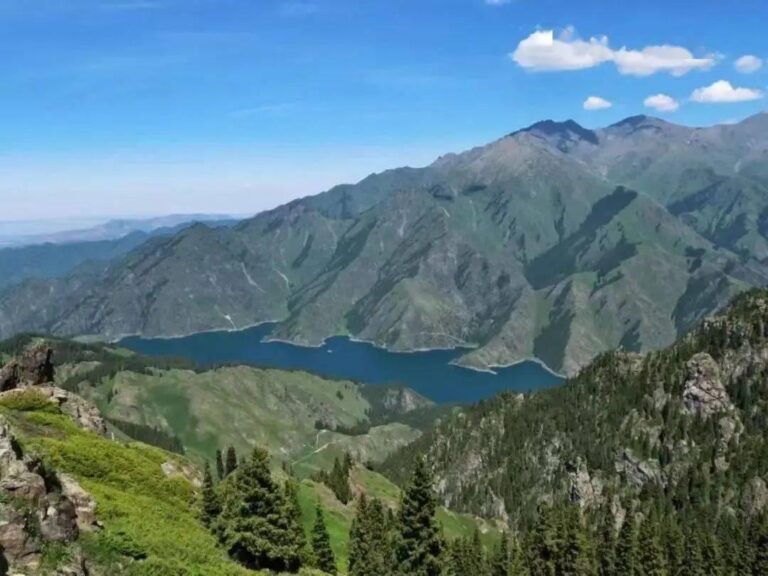
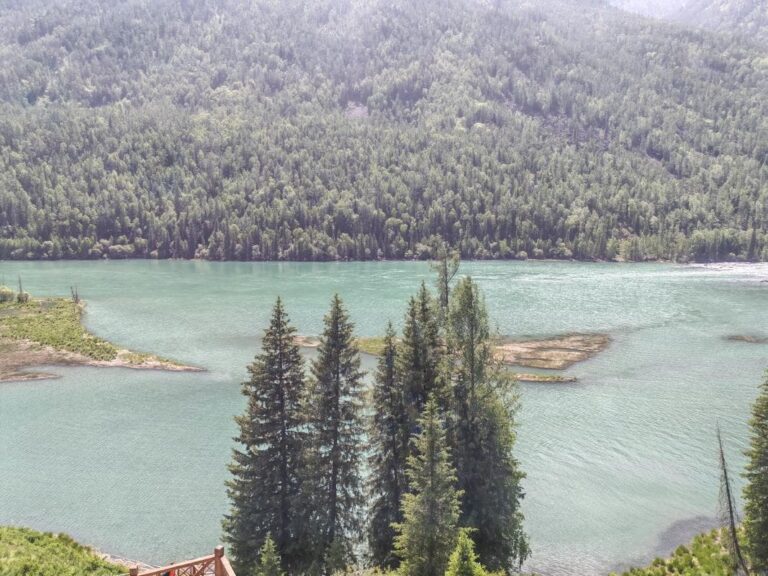
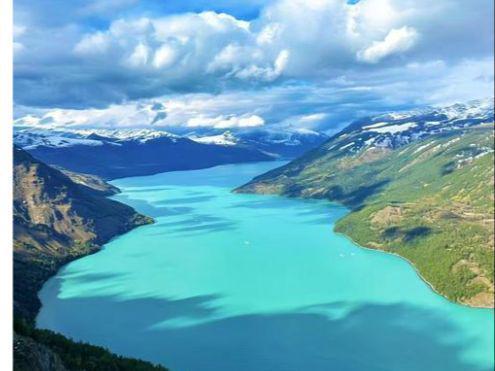
We reached Kanas on the last shuttle up from Jiadengyu at around six in the evening, just as the light turned the wooden roofs of the lakeside buildings the colour of strong tea. The next morning I climbed the 1,066-step platform at Guanyu Tai to look down on the lake. It was cold enough that my breath showed, and the water below was a flat, secretive green-grey that gave no hint of the “lake monster” stories locals tell. What stayed with me was not the lake itself but the silence of the surrounding larch forest, and the way low cloud slid through the valley around eight a.m.
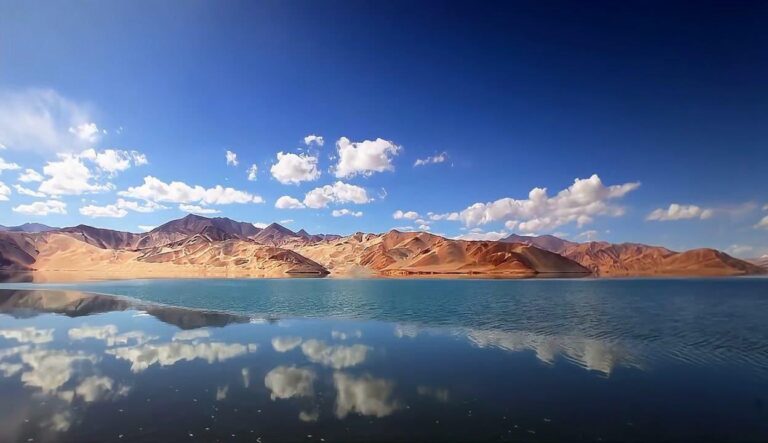
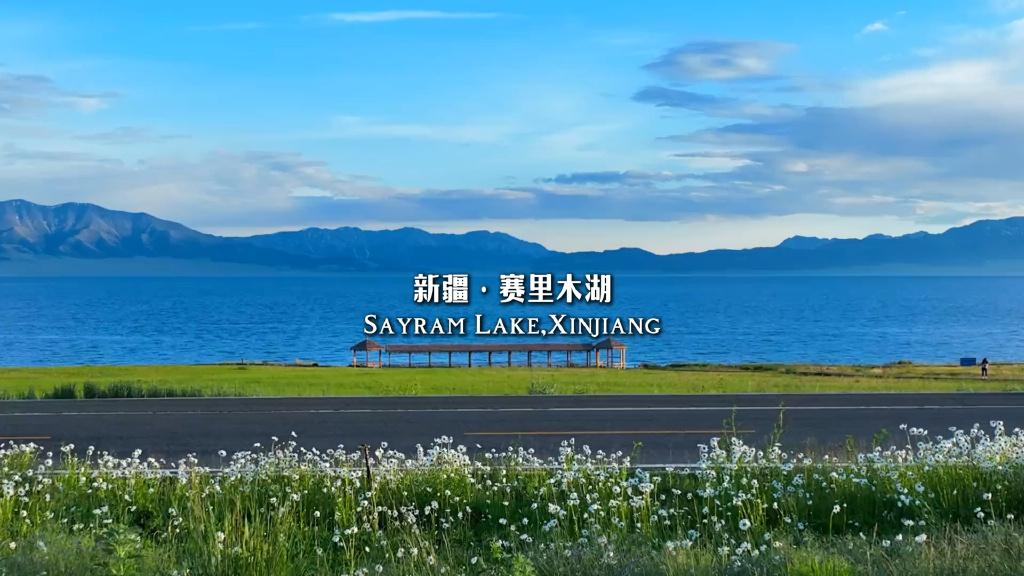
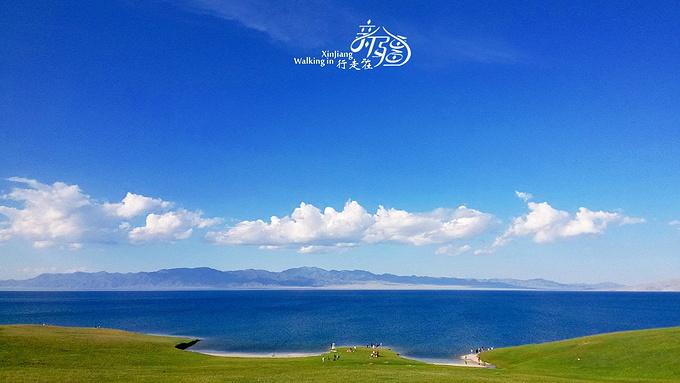
Sayram was the opposite kind of morning. We rolled in off the G30 expressway around nine, paid at the east gate, and simply kept driving. The ring road hugs the shoreline, and within ten minutes we were stopped at a pull-off watching a family of swans paddle through water so blue it looked filtered. A wind came off the surface that made the car rock. By noon the light had flattened and the blue turned silver, then back to blue by late afternoon. There is no single “viewpoint” because the whole shore is the viewpoint.
If you want the slow, forest-and-village version of Xinjiang, Hemu Village sits an hour north of Kanas and makes the wilderness feel like a place you live in rather than pass through. For Sayram, the lake is the headline and the drive is the activity.
Getting to each lake
Kanas takes more planning. Most travellers fly from Urumqi to Kanas Airport (code KJI, near the town of Burqin) or to Altay (AAT), then transfer. From Burqin you buy the combined ticket and board the scenic-area shuttle at Jiadengyu; private cars are not allowed past the gate, so the shuttle does all in-park moving. The ride from the gate to the lake itself is about an hour of switchbacks through pine forest.
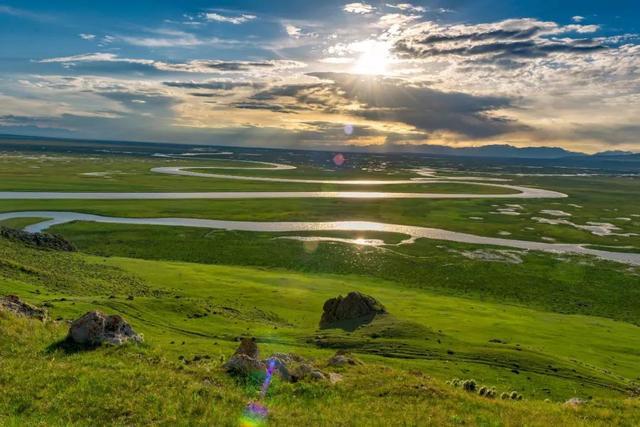
Sayram is far more forgiving. From Urumqi it is a straight run west on the G30 for roughly five and a half to six hours, and the lake sits right beside the highway exit. From Yining it is about ninety minutes east. Because you can take your own car onto the ring road, a Sayram stop slots easily into any Ili grassland road trip, which is exactly why it pairs well with the Ili vs Altai decision if you are choosing regions rather than single lakes.
Best time to visit
For Kanas, late September to early October is the famous window: the larches go gold, the tourist buses thin out after National Day week, and the photography is unreal. The cost is cold — nights near freezing, and some guesthouses start closing by late October. July and August are green and mild but busier. The lake is technically open in winter, yet many inns shut and the road can ice over.
For Sayram, early June is my pick. The hills around the shore turn into a wildflower carpet and the migratory swans are on the water. July and August bring the bluest, calmest water but also the strongest afternoon wind. September is quiet and still good. In deep winter the surface freezes solid and some years there is an ice event, though access is limited.
Where to stay
Kanas has real accommodation inside the scenic area: wooden guesthouses in Kanas Village and over in Hemu. Book these weeks, sometimes months, ahead for October, because capacity is small and demand spikes. Staying inside means you catch the early-morning light without a shuttle scramble. If the in-park prices sting, sleep in Jiadengyu or Burqin and enter each day.
Sayram is different. Most people stay in Bortala or Yining and make it a day trip, which works fine because the lake is only an hour or two away. In summer there are lakeside yurts and a growing row of resort hotels at the east gate if you want to hear the wind at night. I would not plan a multi-day stay at Sayram the way you would at Kanas; a single night is plenty.
Food around the lakes
Burqin, the gateway town for Kanas, has a riverside night market (the HeTi night market) where the move is grilled northern pike (known locally as gouyu) and a bowl of laghman after a long drive. Inside the park, food is basic and priced for a captive audience, so I ate a big breakfast at the guesthouse and kept day meals simple.
Around Sayram, lakeside yurts serve milk tea and hand-grabbed mutton, and the nearby city of Yining is one of the best food towns in Xinjiang for a proper sit-down meal. Either way, treat the lakes themselves as sightseeing, not dining destinations, and eat in the towns.
Practical tips before you go
- Kanas runs on a ticket-plus-shuttle combo. Buy it in advance through the official channel during October; same-day tickets can sell out.
- Sayram charges a separate entry, and the ring road is its own experience — budget fuel and time for at least one full loop.
- Altitude is mild at Kanas but Sayram sits above 2,000 m; the combination of thin air and wind catches some people. Move slowly on your first afternoon.
- Weather flips fast at both. Pack a warm layer even in summer; I wore a jacket at Sayram in June.
- Drones are restricted or banned across both scenic areas. Check the current rule before you pack one, and never fly without permission.
- Carry some cash for small vendors; Alipay and WeChat Pay work in the towns but not always at a roadside stall.
A sample itinerary
If you have seven to nine days and want both lakes, here is the route I would hand a friend:
Day 1: Fly Urumqi to Burqin, walk the riverside night market. Day 2: Shuttle into Kanas, climb Guanyu Tai, stay inside the park. Day 3: Morning at Kanas Three Bays (Moon, Fairy and Wolong), then transfer to Hemu for sunset. Day 4: Hemu sunrise, drive back toward Urumqi or take a flight south. Day 5: Long drive west on the G30 toward Bortala. Day 6: Full loop of Sayram Lake, overnight in Yining. Day 7: Yining grasslands, fly out from Yining or return to Urumqi.
Tight on time? Pick one. Five days favours Kanas plus Hemu; three days favours Sayram plus Yining. You will not regret either, but you will regret rushing both.
FAQ
Can I see both in one trip? Yes, but they are roughly 800 km apart by road, so plan seven to nine days or fly one of the legs.
Which is better with kids? Sayram. You drive right up, the walking is flat and short, and there is no shuttle-and-steps routine.
Which is more photogenic? Both, differently. Kanas wins for misty forest mornings and reflection; Sayram wins for open, unbroken blue water and wildflowers.
Do I need a guide? Not to enter. Kanas needs its shuttle system, and Sayram needs only a car. A guide helps if you want deeper context, not access.
How much are tickets? Prices and the exact ticket bundles change by season. Check the official scenic-area notice or the Xinjiang tourism site before you book; I do not publish numbers that go stale.
Disclaimer
This article is based on my personal visits in 2022 and 2023 and on official notices available at the time of writing. Opening hours, ticket prices, shuttle routes, drone rules and road conditions in Xinjiang change often, and the 2024-2026 seasons have seen frequent updates. Always confirm the latest details with the official scenic-area office or the regional tourism authority before you book transport and accommodation. Nothing here is official advice, and distances or times should be treated as planning estimates, not guarantees.
About the author
Karl Huang is the founder of this site and has spent several seasons travelling across Xinjiang, from the Altai forests in the north to the Ili grasslands in the west. He writes practical, first-hand guides for independent travellers and answers reader questions by email. His goal is simple: help you spend your limited days in Xinjiang on the places that actually fit how you like to travel.