Published: 21 August 2026 | Author: Karl Huang
Most foreign travellers who plan a Xinjiang trip have heard of Hami for its melons, but far fewer make the turn north into Yiwu County Xinjiang. I almost skipped it myself in 2023, assuming it was just another dry stop on the way to somewhere better. It turned out to be one of the most geographically packed corners of the region — a single county holding a color-shifting salt lake, one of the three remaining pristine Euphrates poplar forests on earth, and a flat-top glacier you can see from the highway. It is also one of the few spots where you can stand in a poplar forest, on a salt-lake shore, and under a glacier view without ever leaving the county.
Yiwu County Xinjiang: the basics most guides miss
First, the name traps people. Yiwu County (伊吾县) in Xinjiang has nothing to do with the famous Yiwu (义乌) trading city in Zhejiang. They share the Roman letters but not the place. This Yiwu is a small county in the north of Hami Prefecture, tucked against the northern foot of the eastern Tianshan, bordering Mongolia. The county seat, Yiwu Town, holds only a few thousand people, and the whole county runs quieter than a single block of the Zhejiang city that borrowed the spelling.
I write this as someone who has driven the G7 Beijing–Xinjiang expressway and then turned off onto the older G335 to reach it, so the distances and road conditions below come from actually doing the drive, not from a brochure. For the wider region, our Hami city guide covers the melon capital an hour and a half south.
| Fact | Detail |
|---|---|
| Region | Hami Prefecture, northern Xinjiang |
| County seat | Yiwu Town (伊吾镇) |
| Main sights | Iwu Poplar Forest (Naomao Lake), Magic Color Lake (Yanchi), Kalik Glacier, Nailengge’er grassland |
| Best season | June–August (greenery, lake color); late Sept–mid Oct (poplar gold) |
| Getting there | G7 expressway to Hami, then G335 north ~176 km; or train to Hami + drive |
| Typical stay | 1–3 days |
A morning I misjudged the wind
The wind is the first thing you learn about Yiwu, and I learned it the hard way. On my second morning in Naomao Lake (淖毛湖), I walked out of the guesthouse at seven to photograph the poplar forest at sunrise, wearing only a light jacket. The forecast had said calm. Within twenty minutes the wind came off the desert at a speed that pushed me sideways, sand in my teeth, the tripod useless. Locals call this stretch one of the windiest corridors in eastern Xinjiang, and the “forty-day wind” season is no exaggeration. I retreated, ate noodles, and went back at noon when it had dropped. The guesthouse owner just laughed and handed me a heavier coat; she had seen it a hundred times. The lesson stuck: in Yiwu, plan photography around the wind, not against it.
The three sights that justify the drive
The Iwu Poplar Forest (伊吾胡杨林). Spread across roughly 476,000 mu (about 31,700 hectares) around Naomao Lake, this is one of only three intact Euphrates poplar forests left on the planet. What makes it different from the more famous stands at Luntai or Ejina is the age range: you walk from saplings through trees a thousand, three thousand, six thousand, and by some counts nine thousand years old, all in one circuit. The dead trunks stand upright, bleached, fighting-shape against the sky. Late September to mid-October is the window; the light at opening and closing of the day is the whole point. We cover the wider autumn poplar calendar across Xinjiang in a separate piece.
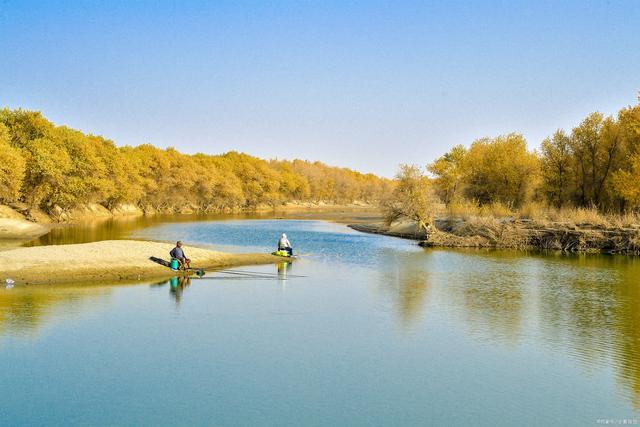
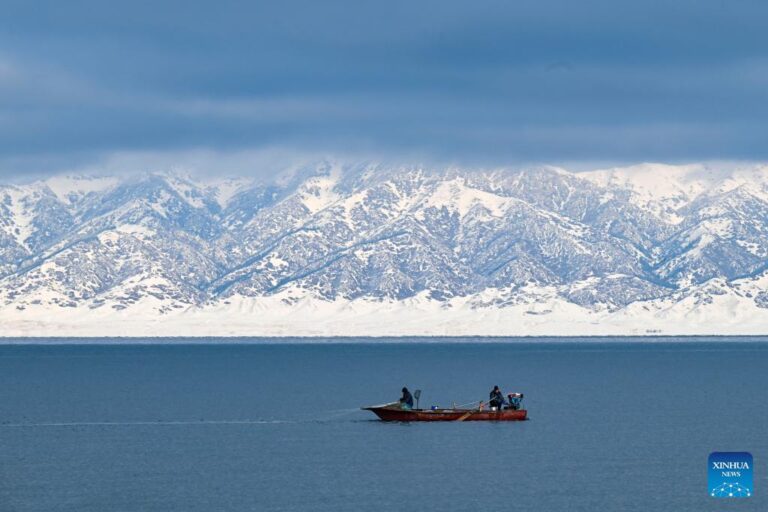
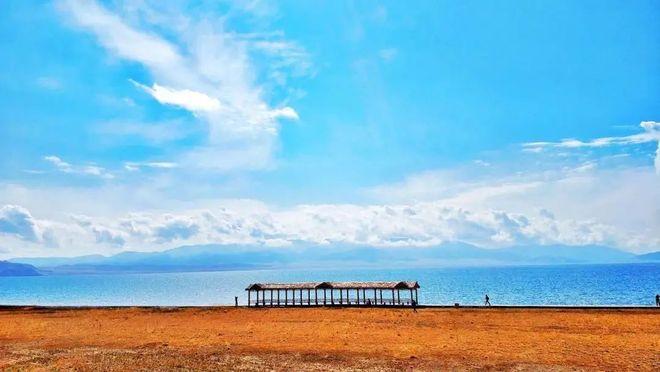
Magic Color Lake (幻彩湖, Huan Cai Hu). A salt lake in Yanchi Township that changes color with the weather. On a clear day it reads blue; before rain it can turn purple; with wind and sun it blooms pink. The cause is a salt-loving algae (Dunaliella) in the water, and local herders genuinely use its shade as a weather forecast. Standing on the shore with grassland behind and Tianshan snow ahead, you understand why people call it the “weather lake.”
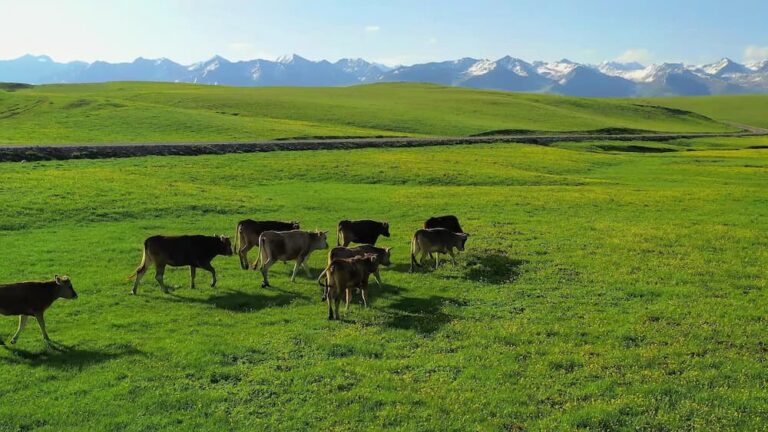
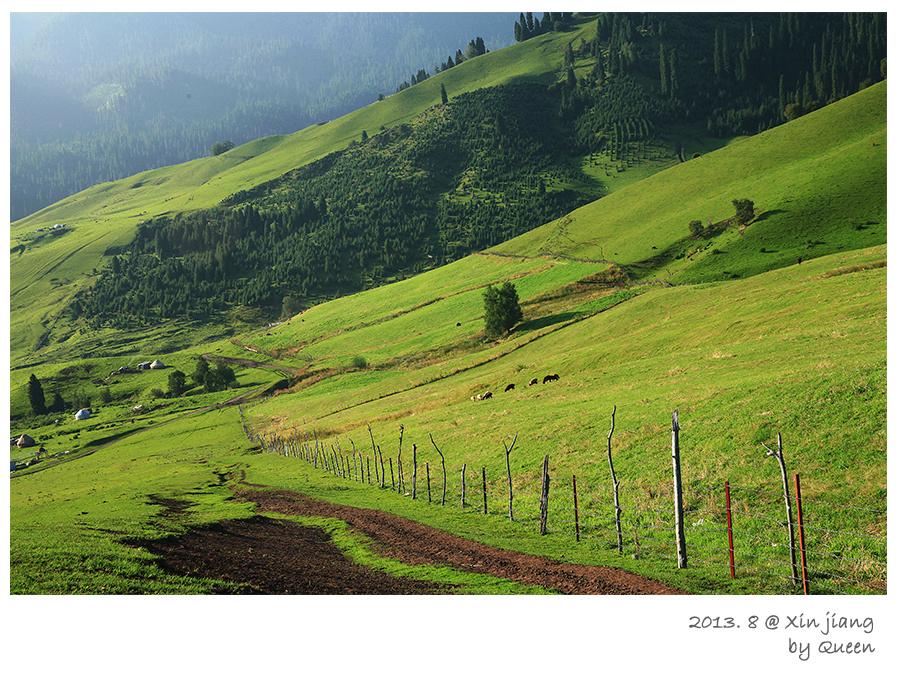
Kalik Glacier (喀尔里克冰川) and the grasslands. South of Yanchi, the Kalik massif holds a flat-top glacier at around 4,888 meters, one of the larger of its kind in Asia and the source of the Yiwu River. You will not trek onto it without permits and proper mountain kit, but the view from the lower pastures is enough for most visitors. Above the treeline, the Nailengge’er (乃楞格尔) and Qianshan grasslands run green through summer, dotted with Kazakh yurts, much like the Barkol grassland further north in the same prefecture. It is the kind of place that makes the long drive worth it.
Getting to Yiwu County
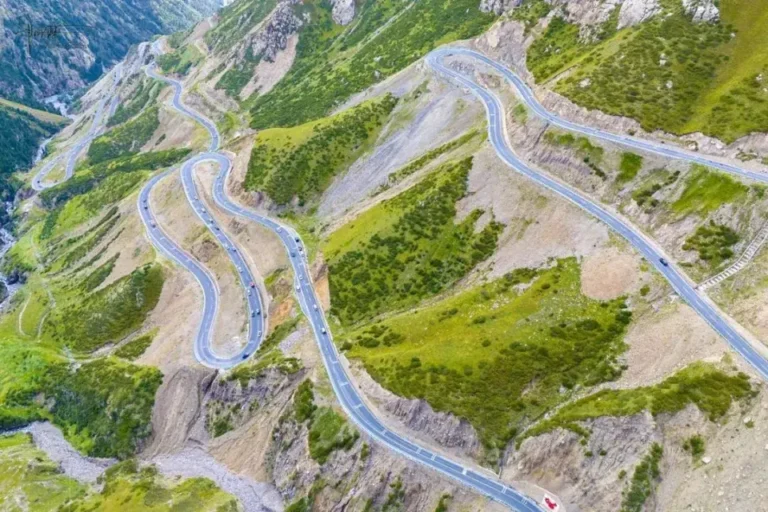
The fastest road approach is the G7 Beijing–Xinjiang expressway to Hami, then the G335 (formerly S303) north for about 176 km to Yiwu Town. The G7 section is dull but fast; the G335 climbs into the mountains and is far prettier. If you would rather not drive, take the high-speed rail to Hami and pick up a car there — our car rental logistics guide walks through what the counters will and will not tell you. Within the county the sights are spread out, so a car is close to essential; the poplar forest alone is an hour northeast of the seat at Naomao Lake.
When to visit Yiwu County
Two good windows. June through August brings green grasslands, the lake at its most colorful, and bearable temperatures while the rest of the basin bakes. Late September to mid-October is the poplar season: the forest turns gold and the photography crowds thin out after National Day. I would avoid deep winter unless you specifically want empty roads and serious cold; some guesthouses close. Spring is windy and brown. Pick your month by what you came for.
Where to stay
Yiwu Town has the most reliable hotels — basic but clean, with heating that works, which matters more than it sounds. For the poplar forest, Naomao Lake Town has lodging right at the gate, convenient for sunrise, though options are limited and book out in October. I stayed in Yiwu Town and drove out each morning; the extra hour was worth the better bed and the hot water. Book ahead in peak poplar weeks.
What to eat in Yiwu County
The county sits inside Hami, so the famous Hami melon shows up on every table in season, sweeter than most travelers expect. Beyond that, expect hearty northern Xinjiang food: hand-pulled laghman noodles, mutton stews, and flatbread cooked over coals. In Naomao Lake the poplar-area canteens serve simple but filling plates; don’t expect fine dining, expect fuel. A thermos of hot tea at dawn by the lake is the best meal of the trip.
Practical tips before you go
- Wind is the real hazard. Bring a windproof layer even in summer; sand gets everywhere.
- Fuel up in Hami or Yiwu Town. Stations thin out toward Naomao Lake and the border roads.
- Signal drops outside towns. Download offline maps before you leave the seat.
- The poplar forest ticket is modest (around 45 yuan at last check), and a 2-day pass makes sense if you want both sunrise and sunset.
- Border area: carry your passport. Yiwu sits near the Mongolia frontier; random checks happen.
- Altitude at the glacier viewpoints is real. Move slowly if you feel it.
A three-day Yiwu County plan
Day 1: Rail or drive to Hami, collect a car, and head north on the G335. Arrive Yiwu Town afternoon, walk the small center, early night.
Day 2: Dawn drive to Naomao Lake for the poplar forest at first light. Spend the morning among the old trunks, return for lunch, then the afternoon at Magic Color Lake near Yanchi on the way back. Sunset from a quiet pasture if the wind allows.
Day 3: Morning in the Nailengge’er or Qianshan grassland, a look toward the Kalik Glacier viewpoints, then the drive back to Hami for your onward train or flight.
Frequently asked questions
Is Yiwu County the same as Yiwu city in Zhejiang? No. The spelling is the same in English, but Yiwu County is in Xinjiang’s Hami Prefecture, near the Mongolian border. The Zhejiang Yiwu is a trading hub thousands of kilometers southeast.
Do I need a permit for Yiwu County? The county itself is open to foreign visitors; just carry your passport because of the border location. Kalik Glacier climbing permits are a different, stricter matter.
Can I see the poplar forest and the lake in one day? Yes, but tightly. They are roughly an hour apart by road. Give the forest the dawn and the lake the afternoon for the best light and color.
Is it worth visiting outside autumn? Absolutely in summer, when the grasslands are green and the lake shows its colors. Autumn is best for the gold poplars; winter is for solitude seekers.
This guide reflects the author’s own visits and was last checked in August 2026. Opening dates, ticket prices, road conditions, and border rules in Xinjiang change without notice. Confirm the current details with the official Xinjiang tourism site and your embassy before you travel. We are not responsible for changes or losses arising from reliance on this information.
About the author — Karl Huang
Karl has driven and written about Xinjiang’s back roads for several years, focusing on the places most tour buses skip. He prefers small counties like Yiwu to the headline cities, and files his notes within days of each trip so the details stay current.