Published: September 13, 2026 | Author: Karl Huang, travel writer based in Urumqi
Search February and swans together and the Bayanbulak swan count turns up in the same breath as a migration, which is where the confusion starts. The reserve does produce a number in February, but it comes from a winter patrol, not from the migration that fills the wetland later in spring. We rang the service line twice before driving up from Hejing, spent a night in the town while the pipes were still thawed, and walked the one boardwalk the core area allows visitors to use. The honest summary: February here is a cold, cheap, almost empty month with a small group of swans holding open water, and the spectacle most guides sell you does not begin until mid-March. If you want a crowd of birds, book April. If you want the frozen marsh to yourself, February is the month. Our guide to birdwatching in Xinjiang is worth reading first, because the timing rules differ on every wetland.
February at Bayanbulak in numbers
| Reserve status | Founded in 1980, upgraded to national level in 1986; China’s only national swan reserve |
|---|---|
| Size and height | About 1,000 to 1,100 sq km of high basin, floor between 2,400 m and 2,600 m |
| Swans in breeding season | Whooper, tundra and mute swans; close to 10,000 whoopers, some 100,000 wild birds at peak |
| Swans in a normal February | Tens rather than thousands; 16 recorded through the winter of 2023-24 |
| February temperatures | minus 30C to minus 20C at night, minus 18C to minus 8C by day |
| Entry and shuttle | 65 yuan entry, 62 yuan shuttle, 9 yuan each way on the Nine-Turn River shuttle |
| Drive from Urumqi | Seven to eight hours via the G0711 expressway and Hejing |
| Reserve service line | 0996-5350195 (service), 0996-5350199 (mountain rescue) |
Why February is a counting month, not a migration month
The birds that fill every Bayanbulak photograph spend the winter far to the south, in India, Myanmar, Pakistan and as far away as the Black Sea and the eastern Mediterranean. They come back from the middle of March into early April. In 2026 the first returnees were filmed on 11 March. In 2024 cold weather pushed the first arrivals to around 20 March, about five days later than the year before, and the migration peaked in mid-April. Departure runs from late September into early November. That gives a stay of six months or more and leaves February sitting in the middle of an empty window.
What “Bayanbulak swan count” actually measures
The winter figure is a census, and the staff who compile it do the work on patrol, on foot and by vehicle, across two basins that take days to cover. The published series is short and jumpy. Ninety-six swans stayed through the winter of 2001, ninety in 2003, then 104, then 158, then more than 200 by late 2006. By the winter of 2014-15 the reserve reported over 400, roughly a twentyfold rise in a decade, credited to herder resettlement, grazing bans and a feeding programme that began in 2009. Recent years have not held that line. A New Year 2023 patrol through the Great and Little Yuldus basins logged a little over 100 whoopers, ducks and geese combined. The winter of 2023-24 left 16 swans on site. A ranger who has worked this ground for years gave us a plainer figure: around 200 in a normal winter. When the ground locks solid, keepers carry maize out to the birds once every seven to ten days.
Where the winter birds sit
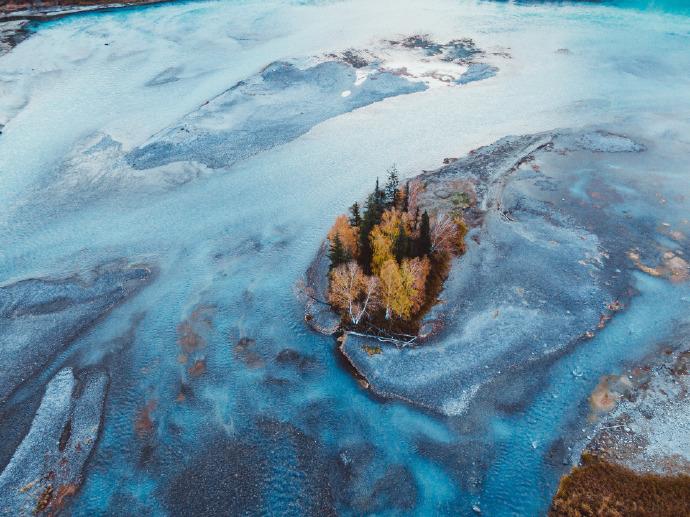
Winter swans do not spread across the marsh. They collect where moving water keeps a hole open, at springs, feeder channels and the pool the reserve feeds. Shallow lakes freeze edge to edge and hold nothing. The productive core is closed to vehicles and visitors all year, so the birds you can actually watch are the ones near the public boardwalk. On a clear February afternoon that is a modest gathering, often with red-billed gulls mixed in and a few whoopers standing on the ice instead of swimming.
The morning we spent on the boardwalk
Gates in the visitor season open at 09:00, and the good light arrives well before that, so we were parked and waiting with the engine running. Swan Homeland has one boardwalk, about 300 m out and the same distance back, and in February it belongs to you. Nobody checks a shuttle ticket, because no shuttle runs in the dead of winter. The swans nearest the railings are the station’s semi-captive birds, the ones that could not fly out with the flock and stay for feeding and treatment. Keepers came past with buckets around ten. What stays with me is the sound: ice cracking under its own weight somewhere out in the marsh, and no other noise at all. Bring a spare camera battery in an inside pocket, because mine fell from full to a third inside forty minutes.
Roads that close, and the one that stays open
The Duku Highway over the Tianshan shuts for the winter. That cuts the direct line to Kuqa and Nalati and turns Bayanbulak into a valley reached from one side only. The working route runs from Urumqi on the G0711 expressway through the Tianshan Shengli tunnel to Hejing, then out on the G218 and the S321 into the grassland: seven to eight hours in good conditions. Hejing itself to the scenic gate is about 274 km, roughly five hours at winter speeds. Bayanbulak airport opened in late August 2024, but the published Urumqi to Bayanbulak to Kashgar rotation has been a summer service running from early June to mid-October, so do not build a February plan around flights. Snow tyres and a spare day matter more than saving an hour. Our notes on winter driving in Xinjiang cover the tyre rules, and Hejing is the sensible place to break the drive.
Tickets, shuttles and numbers worth saving
Prices are set at the gate and in town rather than online only. Entry is 65 yuan, the shuttle is 62 yuan on current listings, and the short hop from Brazilik out to the Nine-Turn River viewpoint is 9 yuan each way or 18 yuan return. Self-drive is allowed with a service fee starting at 100 yuan for a car of up to five seats, plus entry for every passenger. Winter operations run thinner than the 09:00 to 19:30 summer window suggests, and the interior shuttle may not run at all. Call before you commit a day to it: 0996-5350195 for the service desk, 0996-5350199 for mountain rescue, 0996-5350193 for general enquiries. Two answered calls saved us a wasted morning.
Cold, in figures
The prefecture’s meteorological bureau forecast lows of minus 30C to minus 20C and highs of minus 18C to minus 8C for Bayanbulak across the 2026 Spring Festival week. February 2025 averaged a high of minus 13C and a low of minus 31C. Records in this basin have touched minus 38C and minus 39C in late January and early February. Wind changes the experience more than the number does. Gales at the passes regularly reach force 9 or 10, and drifting snow can close visibility on the S321 inside an hour. Water in a bottle freezes in a coat pocket, and gloves come off for about ninety seconds at a time.
Sleeping in Bayanbulak town in winter
Almost all accommodation sits in the town rather than the marsh. Family guesthouses and small hotels line the main street, with a handful of rural homestays in Chahansai village and two camps, Jangar and Feichi Bayin, that mostly serve the summer self-drive trade. In February you are choosing from a short list. Rates are the lowest of the year and heating is usually good, but hot water can be seasonal, so ask whether the pipes are live and whether the kitchen is open before sending a deposit. Power and mobile signal in town are reliable.
Food that makes sense at minus twenty
Bayanbulak produces a black-headed sheep that locals treat as the reason their lamb tastes different, and winter menus lean on it hard: roasted leg and ribs, kebabs straight off the charcoal, and a Jangar spread built from roast lamb back, tie’ao baozi and a whole-lamb soup. Beyond that you will find pilaf, laghman, baked samsa and milk tea, all of it hot and none of it fussy. Kumis is fermented mare’s milk and is better treated as a curiosity in winter than a thirst quencher. Portions are large, and February prices are kind.

Watching without doing damage
The reserve splits into core, buffer and experimental zones, and the core stays closed to people and vehicles in every season. That rule is the reason the swans are still there. Drones are banned across the scenic area, pets are not admitted, and the boardwalk is the whole of your access. Bread and snack food do real harm to waterfowl, so leave feeding to the keepers with their measured ration. Voices carry further than you expect over ice, and a normal indoor volume reaches the birds.
If February fails, the weeks that deliver
Two windows beat February comfortably. Mid-April is the migration peak, when counts climb toward ten thousand whoopers and the reserve estimates nearly 100,000 birds of all species across the wetland. Late May into June is the brood season, when adults will not abandon their young and observation from a distance is easy. Late September brings the flock together again for flight practice before departure. The famous Nine-Turn River sunset, the one that stacks nine suns along the bends, lines up around the Mid-Autumn Festival, so it belongs to autumn rather than winter. For the warm-season version of this grassland, see our page on Bayanbulak Grassland and the Nine-Turn River. If you want winter swans with an easier walk to the water, the Ili valley has the other option, and Yining’s swan spring explains how it differs.
Four days, one winter window
Day one: Urumqi to Hejing on the expressway, about five hours, sleep there. Day two: Hejing to the grassland, three to four hours on the S321 with a stop wherever the ice looks interesting, then the boardwalk in the afternoon and the last light from the town edge. Day three: back to the boardwalk at first light for the feeding round, then the self-drive loop past the marmot slopes and the frozen river bends, a long hot lunch and an early night. Day four: drive out toward Hejing and Urumqi. Keep a spare day if you can, because one snow event can hold the S321 for half a day.
Reader questions about the February trip
Will I see thousands of swans in February? No. Plan on a small group at the open water near the fed pool, and treat anything more as a bonus.
Is the scenic area open at all in winter? The town is lived in year round and the gate staff are reachable, but shuttles and services are reduced. Phone 0996-5350195 before you drive up.
Do I need a permit? No permit is needed for the town, the road or the public boardwalk. The core zone is closed to everyone.
Disclaimer
Numbers in this article come from published reserve and prefecture figures and from calls to the reserve service line, and they move from year to year. Winter services, road conditions and ice state change quickly, so confirm details before travelling. Nothing here replaces local advice or a current forecast for the basin.
About the author
Karl Huang writes about Xinjiang from Urumqi, where he has lived for eleven years. He covers the grassland reserves, the southern oases and the mountain roads between them, and travels them in every season, including the cold ones.