Published: 12 October 2026 | Author: Karl Huang
Most travellers who fly into Kashgar never leave the old town. That is a mistake I made on my first trip and corrected on my second. Seven kilometres south of the city, in Shufu (Konasheher), a county whose name most guidebooks skip entirely, sits a village where almost every other courtyard turns out a working musical instrument. I went there expecting a quick photo stop and left with a deeper respect for how a craft survives than I have felt anywhere else in Xinjiang.
This guide is built from a visit I made in spring 2026, together with figures confirmed against the Shufu County government website and reporting from China Daily and the Xinjiang Daily. Where I am guessing, or where local conditions are likely to shift, I say so plainly. I am not affiliated with any workshop, and nobody paid for this write-up.
Quick reference: Shufu and the instrument village at a glance
| Location | Shufu County (Konasheher), Kashgar Prefecture; instrument village in Wukusake (Uksak) Town, about 7 km south of Kashgar city |
| What it is | Tuowankewukusake Village, officially named “China Xinjiang Ethnic Musical Instrument Village” by the State Council in 2000 |
| Claim to fame | Makes 27 categories and 50-plus types of Xinjiang traditional instruments; birthplace of the rawap lute |
| Entry | Free to walk the village; museum and open workshops welcome daytime visitors |
| Best months | April to June and September to October |
| Time needed | A half day from Kashgar |
Why Shufu (Konasheher) is worth the detour
Shufu is the kind of place maps render in faint grey. The county seat, Konasheher, is a quiet grid of poplar-lined streets where the loudest sound on a weekday afternoon is a tractor idling. But the moment our driver turned off the main road toward Wukusake Town, the air changed. From behind mud-brick walls came the tap of chisels and the long, sympathetic ring of a string being tuned.
The Uksak instrument village, Uksak being the local spelling of Wukusake, does not announce itself with a ticket gate. You simply walk in. Boys wheel past on bicycles, old men sit on rugs repairing soundboxes, and every few doors a workshop throws its front room open to the street like a shop that forgot to install a door.
What the village actually looks like
Forget the image of a museum with velvet ropes. This is a working agricultural village that happens to build lutes. Courtyards hold stacks of air-dried mulberry wood. Handsaws hang from nails. In one yard a grandfather was teaching a boy of maybe nine to sand a neck, the same way his own grandfather taught him, and neither looked up when we passed.
According to the county government, the village has been making instruments for more than 150 years, through family workshops handed down the generations. Today around 64 households and 130-odd artisans keep the trade alive, turning out more than 60,000 instruments a year. The numbers sound abstract until you stand in a room where a single maker will spend two full years on one decorated rawap.
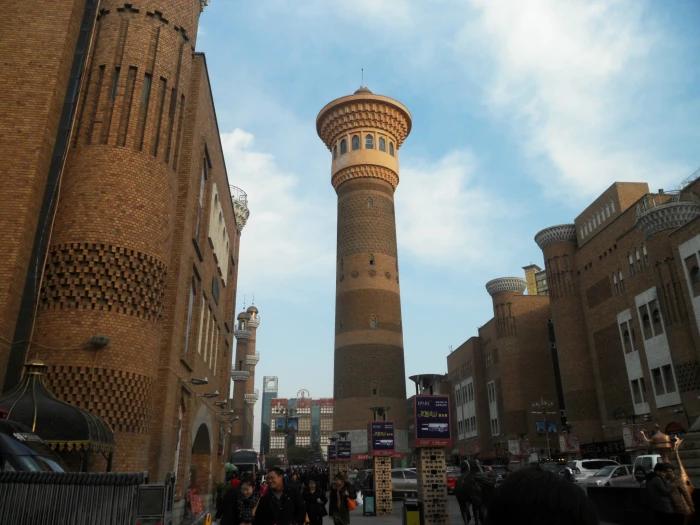
Inside a rawap workshop: how a Xinjiang lute is built
The rawap (rewap, written 热瓦普 in Chinese) is the instrument the village is best known for, a short-necked, rounded-body lute whose sound sits somewhere between a banjo and a sitar. I watched one being made and it is nothing like a factory process. It begins with the wood. Makers here insist on mulberry at least fifty years old for the resonator, because younger wood warps and kills the tone within a season.
The soundboard is stretched with python skin, yes, real python skin, which is one reason a good rawap is not cheap. Bone from ox is carved for the nut and bridge. Then comes the slow part: shaping, lacquering, inlaying mother-of-pearl, and stringing, with the maker tuning by ear the entire way through. If you want the instrument itself explained by someone who repairs them for a living, our piece on Xinjiang’s dutar and rawap goes deeper on the mechanics.
One master I spoke with, whose family has done this for five generations, sells around 200 rawaps a year. Plain ones leave the village at about 600 yuan; a heavily decorated piece with inlay can reach 10,000 yuan. He told me the decorated ones take over two years. I believed him the second he handed me one and I felt how light and alive it was in my hands.
The giant instruments museum
In the centre of the village is a small museum that is worth the walk on its own. Inside stand instruments scaled up to absurd size: a 3.93-metre rawap, a 4.7-metre dutar, and a 4.95-metre satar. They are not props, each was built to play, and they hold Shanghai Great World (Guinness-class) records. Standing under the giant rawap, my travelling companion, a guitarist, just laughed and said he would need a ladder to reach the frets.
The museum also displays the paperwork that matters to a place like this: the 2000 State Council naming, the 2011 recognition as one of China’s first national intangible-heritage productive-protection bases, and the AAA tourist-attraction rating from the same year. A 2024 upgrade backed by Guangzhou aid-Xinjiang funding added a folk street and a food street, finished in 2025, which is why the lanes now feel part open-air workshop and part small cultural park.
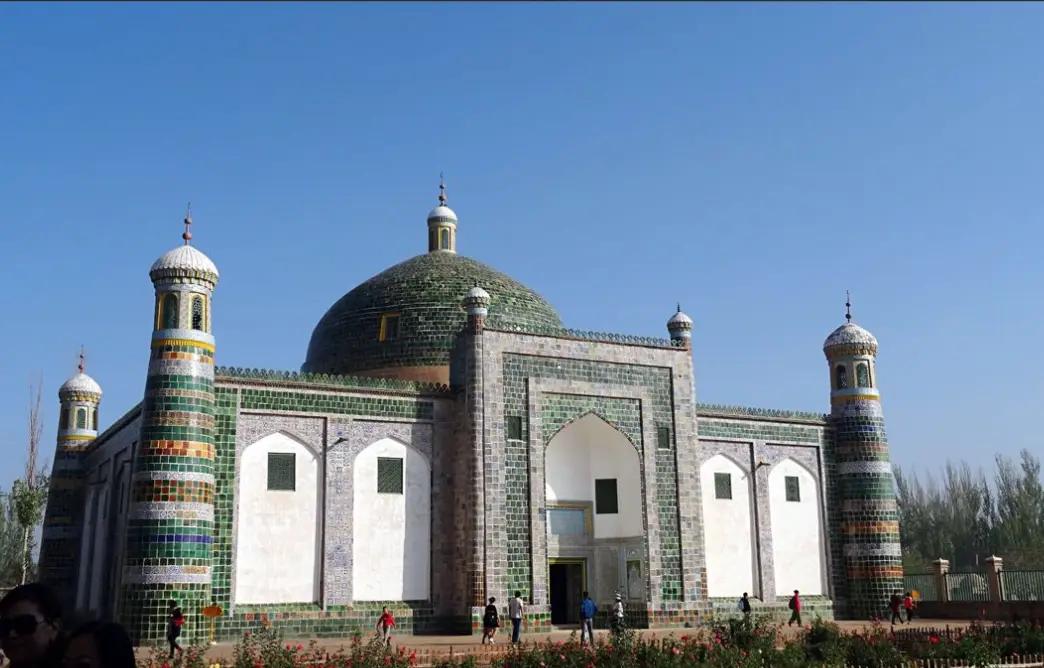
Getting to Shufu (Konasheher) from Kashgar
Most people base themselves in Kashgar and make this a half-day trip. A taxi from the old town runs about 25 to 40 yuan and takes twenty minutes in light traffic. Ride-hailing apps work in Kashgar but get patchy at the village end, so agree a return price or have your driver wait. Public minibuses run from Kashgar’s southern bus stations toward Shufu town; tell the driver “Wukusake” and walk the last kilometre, or take a motorcycle taxi from the town centre.
If you are driving yourself, the road is sealed and signed. Shufu sits on the route that continues toward the southern border corridor, so it is an easy add-on if you are already heading south. Just do not expect highway speeds through the villages, livestock has right of way, literally, and nobody is in a hurry. If you want to string together more quiet stops, our notes on Taghraq and Karaterek cover two oasis villages further west.
Best time to visit the instrument village
Spring, from April to June, and early autumn, September to October, are the comfortable windows. Summers are hot and the workshops, being open-fronted, get stuffy by midday; winters are cold but the makers are still at work, and you will have the lanes almost to yourself. I went in late April and the poplars were just coming into leaf, which made the mud-brick lanes photogenic without the summer dust.
There is no fixed festival at the village, but if your trip overlaps with a muqam performance in Kashgar, go to that afterwards. Hearing a rawap played by someone who learned on one of these very workbenches closes the loop in a way no museum can.
Where to stay
Stay in Kashgar. The old town has a range of guesthouses, from backpacker dorms to comfortable mid-range hotels, and basing there means you can do the instrument village in the morning and be back for a late lunch. Shufu town itself has a couple of basic hotels but nothing I would cross the city for. If you want to be out before the heat builds, a Kashgar base is the only sensible choice.
What to eat in Shufu
Shufu eats like the rest of southern Xinjiang: hand-pulled laghman noodles, samsa baked in clay ovens, and chewy nan bread pulled hot from the tandoor. The village itself has small tea stalls rather than restaurants, so eat in Kashgar or at the town centre before you arrive. One stall outside the village sold the best samsa I had on the whole trip, mutton and onion, the pastry blistered from the oven floor. I ate three and regretted nothing.
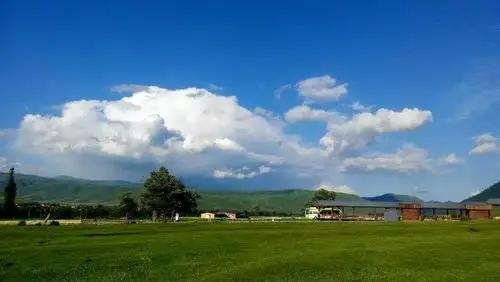
Practical tips before you go
- Ask before photographing a maker at work. Most are proud and will pose, but a few are shy about it, and it costs nothing to ask first.
- Bring cash. The workshops are not set up for cards, and the good pieces are negotiable in person.
- If you plan to buy, go early. The best inlay work sells to dealers who arrive before noon.
- Wear shoes you can slip off. Some workshops are entered through family living rooms.
- For a wider shopping plan, our Xinjiang souvenir guide lists what is worth carrying home and what is not.
A half-day itinerary
09:00, leave Kashgar old town by taxi. 09:20, arrive at the instrument village and start at the museum. 10:00, walk the lanes, peek into two or three open workshops, and talk to a maker. 11:00, tea at a village stall; buy a small instrument if tempted. 11:30, taxi back, stopping at a roadside samsa oven. 12:15, back in Kashgar for lunch, then the century-old teahouse in the afternoon.
Frequently asked questions
Is the instrument village the same as Kashgar? No. It is in Shufu County, about 7 km south of Kashgar city, in Wukusake (Uksak) Town. Most visitors treat it as a side trip from Kashgar.
Can I actually buy a rawap? Yes. Workshops sell directly, from simple 600-yuan pieces to decorated ones over 10,000 yuan. Haggle politely and bring cash.
Do people speak English there? Rarely in the village. In Kashgar old town you will find enough English to get by, but at the workshop a translation app and patience go a long way.
Is it worth it if I do not play an instrument? Absolutely. The draw is the craft and the unhurried village life, not music theory. Even my non-musical travel partner called it the most real stop of the trip.
Disclaimer
This article reflects a single visit in spring 2026 and information current at the time of writing. Opening hours, prices, and transport options in Shufu can change, and the village’s appearance shifts with the seasons and with work cycles. Confirm details locally before you travel, especially if you plan to buy a high-value instrument. I have no commercial relationship with any workshop mentioned. Foreign visitors to Xinjiang need valid permits and registration; check the latest entry rules before you go.
About the author
Karl Huang is a travel writer focused on Xinjiang and western China, with first-hand reporting from Kashgar, the Pamirs, and the Tian Shan. He has spent extended time in the region’s oasis towns and writes practical, experience-based guides for independent travellers. His work emphasises verified facts and honest first-person observation over promotional language.