Published: October 11, 2026 | Author: Karl Huang | Category: Xinjiang Cities
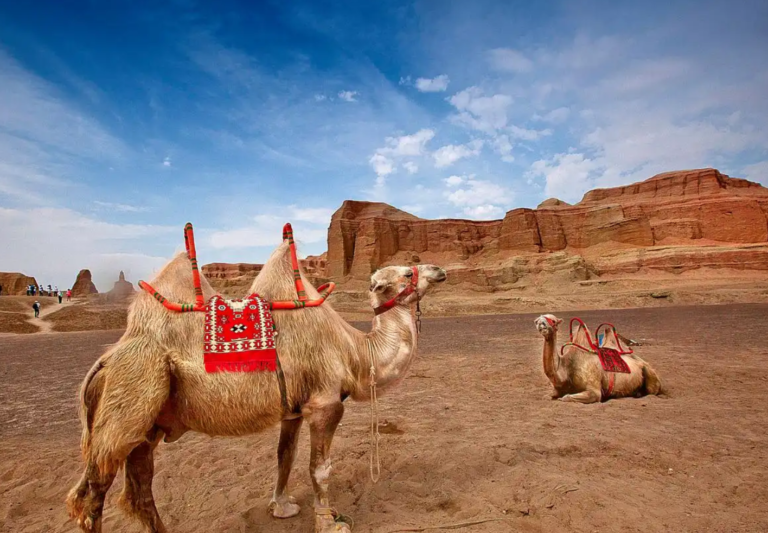
Most visitors pass through Karamay for the wind-carved ridges of the Ghost City and never ask why the city exists at all. The answer sits in two places a short taxi ride apart: the Karamay Museum on Junggar Road, and Well No. 1, the hole in the ground that turned empty Gobi into a city of nearly half a million people. We spent a frozen late-November morning moving between the two, and it became the most memorable day of our third trip to Xinjiang. This guide collects what we saw, the details we had to hunt for, and the things we would do differently if we went back tomorrow.
A word on why the specifics here can be trusted. We visited in person, and every address, date and opening hour below was cross-checked against notices published by Karamay’s municipal government and the museum’s own registration record with the national heritage authorities. Where the official sources disagree with each other, and they do on one closing time, we say so plainly rather than papering over it.
Why a Museum About Oil Deserves an Afternoon
Museums about industry sound like homework. This one is not. Karamay exists because oil did: in Uyghur, the city’s name means “black oil,” borrowed from a low hill of dark asphalt at the city’s edge where crude had been seeping out of the ground for as long as anyone can remember. Herders knew the sticky pools centuries before anybody drilled. When the first big oilfield of the People’s Republic came in here in 1955, a city grew around the rigs within a few years, and the museum tells that story with a surprisingly light touch.
What won us over was the physical stuff. In the yard outside the halls sit an early drilling derrick, a nodding pumpjack, and the battered trucks that hauled water across the Gobi when there was no road. Inside are more than 7,400 objects, including 143 items graded as first-class national cultural relics, which is a staggering number for a city museum founded in 1983. If you have already seen Xinjiang Museum in Urumqi, this makes an interesting counterpoint: one museum explains an ancient oasis civilization, the other explains a city that is barely seventy years old.
Karamay Museum: The Facts That Matter
| Item | Detail |
|---|---|
| Address | No. 22 Junggar Road, Karamay District (克拉玛依区准噶尔路22号) |
| Admission | Free |
| Closed | Mondays (open on public holidays) |
| Hours | From 10:00; official pages list closing at either 18:00 or 19:00, call 0990-6225701 to confirm |
| Scale | Opened July 1983; grounds of about 48,000 sqm, exhibition halls of 2,742 sqm |
| Highlights | The 1955 Heiyoushan dugout, the Pioneers’ Wall relief, original drilling equipment |
| Booking | Phone 0990-6225701, or reserve through the “You Xinjiang” WeChat account |
A Cold Morning at Well No. 1
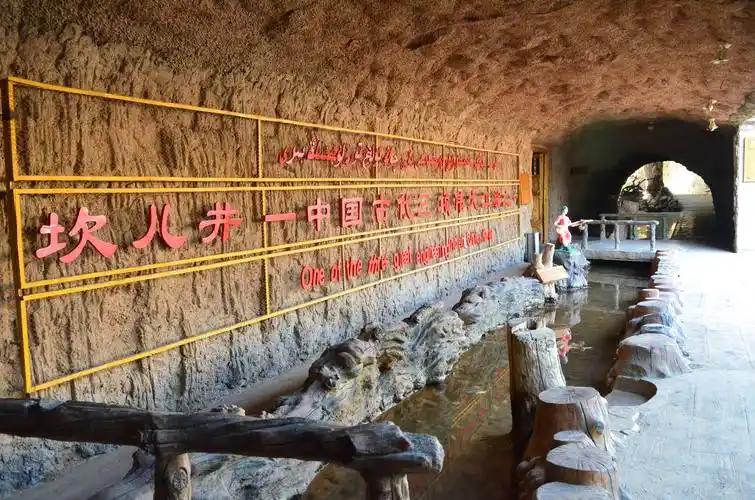
We started at the well site instead of the museum, and we are glad we did, because the story makes more sense in that order. On October 29, 1955, the drilling crew at this spot brought in a flow of crude. The initial yield was modest, about 3.7 tons a day, but it was proof. Within weeks a full exploration campaign was heading for the Junggar Basin, and Karamay oilfield became the first large oilfield discovered in New China. Old workers interviewed years later described the well site erupting: shouting, jumping, men dancing on the frozen ground.
Today the site is a free public plaza, and its centerpiece is hard to miss. The “Big Oil Bubble” is a sculpture of mirror-polished stainless steel, fifteen meters tall and up to twenty-eight meters across, designed by Yang Xu for the site’s sixtieth anniversary in 2015. Its shape copies the fat bubbles that swell and pop in the oil pools on nearby Black Oil Mountain. Two hundred smaller steel bubbles are scattered around it, and on a clear day the whole array reflects the skyline that the well ultimately paid for. We had the plaza almost to ourselves. The wind came off the Gobi at full force, our thermos of tea went cold within the hour, and the steel bubble threw back a light so hard it was painful to look at for long.
The well itself earned serious protection: a monument went up in 1982, the site entered the autonomous region’s heritage list in 2007, and in 2013 the State Council listed it among the nation’s key protected cultural sites. Stand at the railing, look past the sculpture to the apartment blocks on the horizon, and the chain from 1955 to now is unusually easy to see.
Inside the Halls: Dugouts, Rigs and the Pioneers’ Wall
The museum, about ten minutes away by taxi, fills in everything the plaza leaves out. The exhibit we think about most is the Heiyoushan dugout, reconstructed on the museum grounds and protected as a regional heritage site in its own right. These sunken earth shelters, roofed with saxaul scrub, were where the first drilling crews actually lived through the winter of 1955. The display does not romanticize them. Sand came in through every seam. Water had to be melted from snow. One quotation on the wall mentions eating flatbread soaked in snowmelt for weeks.
From there the halls walk you forward through the decades: Soviet-trained crews in the 1950s, the college volunteers who arrived in the 1960s, the discovery of more than thirty oil and gas fields across the basin, and the cumulative three hundred million tons of crude the region has produced. A large relief called the Pioneers’ Wall, plus the bronze “Pioneer” sculpture outside, give faces to workers who otherwise appear only in grainy photographs. Signage is mostly in Chinese with brief English summaries, so we kept a translation app open and still spent nearly two hours inside.
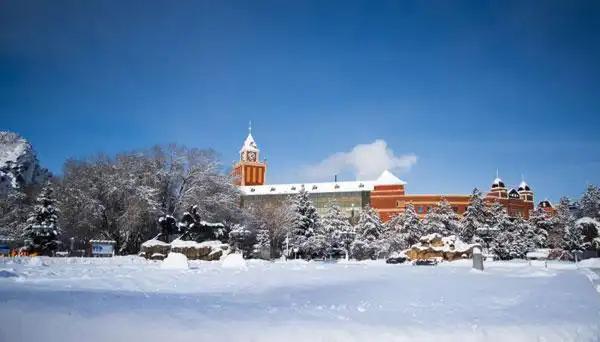
Walking out into the snow afterwards gave us a strange little shock of perspective. The comfortable, snow-swept city around the museum is itself the museum’s final exhibit.
Reaching Karamay and Finding the Museum
Karamay sits in the northwestern corner of the Junggar Basin, and getting there is easier than most foreign travelers assume. Direct flights from Urumqi take about an hour. Trains run several times a day and take anywhere from roughly four to seven hours depending on the service, which is why we chose the overnight option and saved a hotel night. Driving is about 390 kilometers from Urumqi, mostly on the G3014 expressway, call it four to five hours in winter conditions.
The museum is on Junggar Road in the main urban district, close enough to the center that any taxi ride costs only a few yuan. From the railway station expect a fifteen-minute ride. Drivers know the place simply as “bowuwuguan,” the museum, so writing down 准噶尔路22号 for the driver removes all ambiguity. The Well No. 1 plaza is also inside the city, south of the center, and the two connect easily by taxi in one morning. If you are continuing north afterwards, the Ghost City in Wuerhe is roughly a hundred kilometers away, and our Karamay and the Ghost City route covers that pairing in detail.
Why We Went in Winter and Would Do It Again
Nobody calls Karamay a winter destination, and the wind will test that opinion hourly. But for this particular day out, the cold season worked in our favor. The museum is indoors and quiet, the well plaza was empty enough to photograph freely, and off-season hotel rates in a city built on oil salaries are genuinely low. Temperatures between late November and March sit well below freezing, and the wind makes it feel harsher, so plan around short outdoor bursts and long indoor stretches. Summer visitors get pleasant evenings but share every site with tour groups moving between Urumqi and Altay. If your route follows Xinjiang’s industrial heritage themes, pairing this with Karamay in any season works; just book the Ghost City shuttle ahead in July and August.
Sleeping in an Oil Town
Karamay’s hotel stock is better than its size suggests, because the city hosts constant business travel. We stayed in a business hotel near the civic center for well under 300 yuan, with fierce heating and the kind of shower pressure you dream about after a night train. Chains around Junggar Road and the southern district suit this itinerary best, keeping both the museum and the well plaza within a ten-minute taxi. In peak summer, weekends fill with self-drive tourists heading for Altay, so reserve ahead then; in winter you can usually just walk in.
Dinner After the Museum
Oil money shows up on the plate. Karamay’s restaurants lean hearty: lamb skewers the size of a forearm, big-plate chicken piled over hand-pulled noodles, and roasted lamb ribs that local colleagues told us to order a day ahead. We ate at an unassuming place near the cultural street, where dinner for two with tea came to about 130 yuan. The city’s population was built by migrants from every province, so along the main food streets you will find Sichuan heat, northeastern stews and proper Lanzhou beef noodles within a block of each other. Vegetarians will manage on noodle shops and the excellent local flatbread, but options narrow quickly after 21:00 in winter.
Small Things That Made the Visit Smoother
- Call ahead on hours. Different official pages list 18:00 and 19:00 closing; the museum’s number is 0990-6225701.
- Monday is the real closure day, though public holidays open as normal. We nearly made that mistake.
- Bring translation support. English text exists but is thin; a translation app carried us through the detail labels.
- Gloves before phones. At Well No. 1 we could not operate a camera for more than a minute bare-handed.
- Reservations are technically required through the “You Xinjiang” WeChat account, but staff waved us in politely on a dead-quiet weekday. Book anyway to be safe.
Half a Day: Museum, Well Site, Black Oil Mountain
09:30, arrive at the museum right after opening and work through the halls before any groups appear. 11:45, taxi to the Well No. 1 plaza, about ten minutes, and give the sculpture and the memorial an unhurried hour. 13:00, a late lunch back in the center. 15:00, finish at Black Oil Mountain, the low seeping hill that gave the city its name, where oil still bubbles up through pools of black asphalt just as it did before 1955. If you have a second day, the Ghost City deserves a full morning, and the full Karamay itinerary we built earlier slots this museum day neatly in front of it.
What Visitors Ask First
Is the Karamay Museum really free? Yes. Admission has been free since it opened its doors in 1983; only special temporary exhibitions ever charge, and none were running during our visit.
How long should I set aside? Ninety minutes to two hours for the museum, plus an hour at the well plaza. Half a day total is comfortable.
Is there anything for visitors who do not read Chinese? The main narrative panels carry short English summaries, and the physical exhibits, rigs, dugouts and photographs, tell much of the story on their own. A translation app covers the rest.
Can you actually see the original well? The original wellhead is preserved at the plaza beneath the sculpture complex, marked as a national protected site. You view it from the surrounding walkway.
Where Our Facts Come From
Dates, addresses, opening arrangements and heritage listings in this article come from Karamay municipal government public notices, the national museum registration system, and reporting by China Daily and Xinjiang Daily on the well’s history. Our account of conditions, prices and food reflects a visit in late November 2026 and may change. Fees, schedules and exhibition line-ups are all subject to adjustment without notice, so verify anything time-sensitive directly with the museum before you build a day around it. We are travel writers, not representatives of any site described here, and nothing in this article is sponsored.
About the Writer
Karl Huang has been traveling through Xinjiang since 2022 and writes most of the city-level guides on this site, with a habit of visiting in the off months when towns show their real routines. He researches each piece against official government notices and local reporting, then walks the route himself before publishing. His other recent work includes guides to the region’s county towns, winter road conditions and museum collections across the far west.
Questions travelers ask about Karamay Museum
What is the Karamay Museum about?
It tells the story of Xinjiang’s oil industry, centred on the “Well No. 1” that started the city, with geology and old machinery exhibits.
How do I get there?
In central Karamay (Baijiantan district); a short taxi or bus ride from the airport or train station.
Is it worth a visit?
Yes, if you are interested in industrial history or how a city rose from the desert on black gold.