Published: September 10, 2026 | Author: Karl Huang | Category: Xinjiang Cities
Most pages about southern Xinjiang leave the small towns in between as a line on the map. Muji Town in Pishan County is one of them, and I have stopped there twice in the last three years on the way between Hotan and Yarkand. What surprised me on the second visit was how much detail a 30,000-person oasis can hold.
Muji at a glance: numbers behind a small town
| Item | Figure | Source |
|---|---|---|
| Chinese / Uyghur name | 木吉镇 (Muji) | ps.gov.cn; Xiyu Tongwen Zhi |
| County | Pishan (Guma), Hotan Prefecture | Pishan County portal |
| Distance from Guma | 46 km by road, 48 km straight line | Tencent Maps; 1997 gazette |
| Area | 3,413.75 km², mostly sand | Pishan yearbook 2018 |
| Registered population | 29,684 (99.92% Uyghur, 2018) | Township code table |
| Communities / villages | 3 communities, 18 villages | NBS division 2019 |
| Elevation at oasis centre | About 1,150 m | Township gazette |
| Climate | Warm-temperate continental, very arid | County climate normal |
| Annual temperature | 12.5°C average; -5.0°C Jan, 25.3°C Jul | County climate normal |
| Frost-free days | 217 | County climate normal |
| Annual precipitation | 57.0 mm, mostly May to September | County climate normal |
| G315 inside town | 11 km | Township gazette |
| Reservoirs | 2, combined 5.6 million m³ | Township gazette |
| Canal from Sangzhu | 11 km artificial channel | Township gazette |
| Local specialty | Muji peaches along the G315 strip | County specialty list |
If you are comparing Muji against Guma, the county seat, think of it this way: Guma has the government, the jade market and the rail station, while Muji has the orchards, the reservoirs and eleven kilometres of G315. Drivers pass through Muji on the way to Yarkand or Yutian without realising that the highway strip they are crossing belongs to a town with 18 villages.
What “Muji” means: a corner of the world
The Xiyu Tongwen Zhi, the Qing gazetteer that standardised Xinjiang place names, records the name as “木济” and explains it as pianyu, a corner that sits apart. That reading matches the ground: Muji is the easternmost town of Pishan, pushed against the Sangzhu township line, and most of its 3,413 km² is desert that nobody farms. The oasis is a thin strip along the G315, not a town with suburbs. The township became Muji Commune in 1978, Muji Township in October 1984, and was upgraded to a town in 2013 (新政函[2012]364号; 皮政发[2013]8号). Older maps from 1984 to 2013 still call it Muji Township.
A flat oasis ringed by dunes
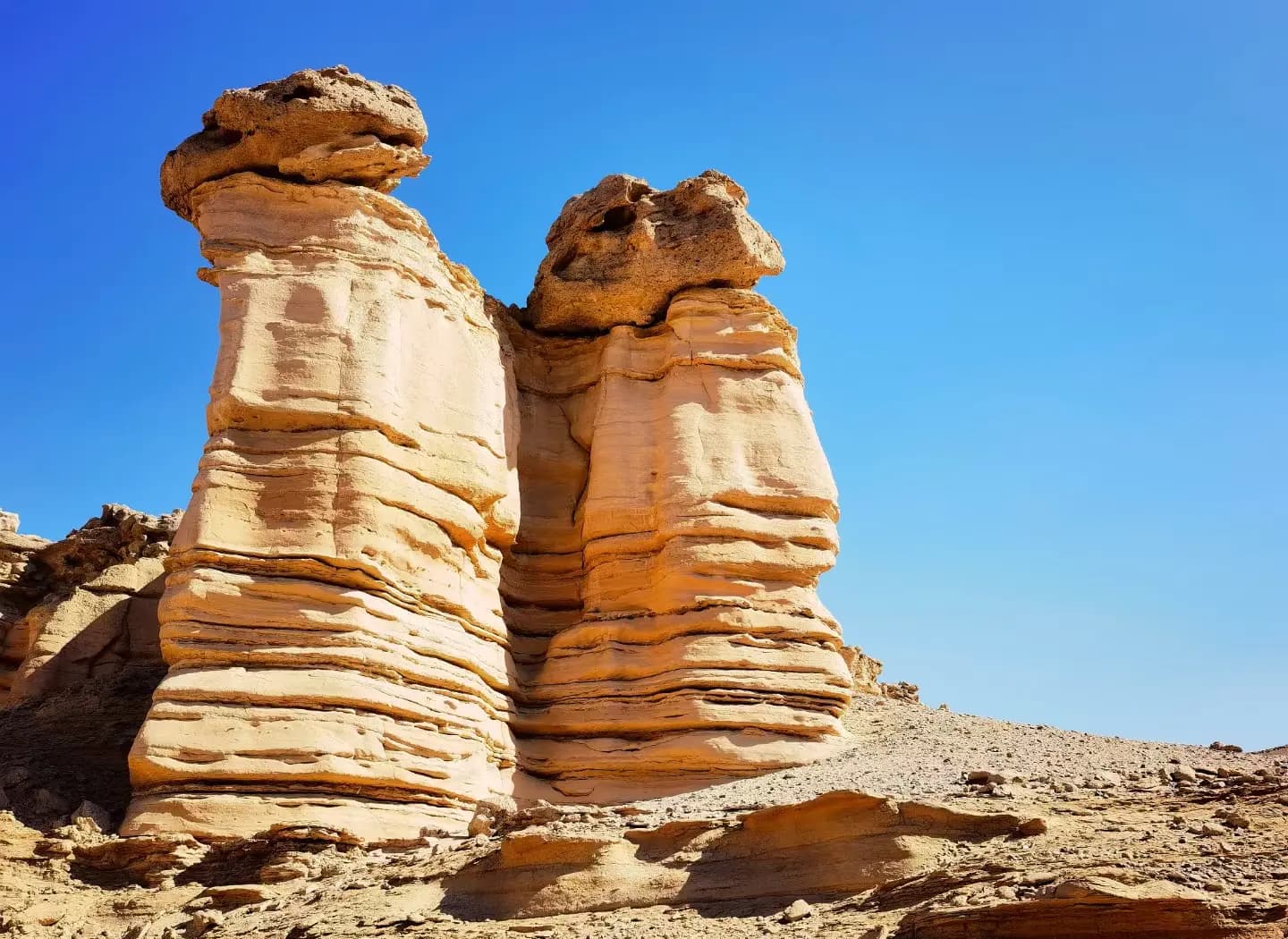
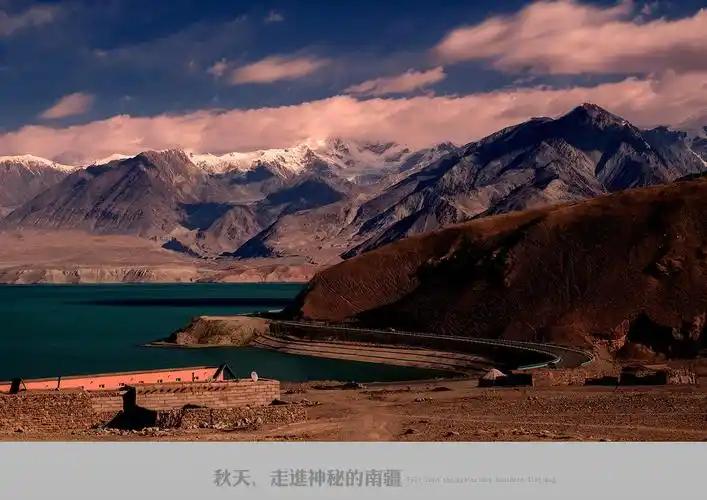
The first time we pulled over at Muji it was because the desert looked closer than the map suggested. The Pishan gazette describes the terrain as “三面环沙丘, 中、南部为绿洲灌区” – dunes on three sides and an oasis-irrigation zone in the middle and south. Elevation sits at around 1,150 metres, the land tilts gently from south to north, and cultivation runs in thin belts along the canal from Sangzhu.
The eastern edge touches 藏桂乡 (Zanggui Township) and the southern edge touches 桑株镇 (Sangzhu Town), the direction from which the canal water arrives. To the west and north the dunes of the Taklamakan close in, and the next settlement of any size is back across them in Guma.
Water before anything else: two reservoirs and a canal
Muji has no river of its own. The water that keeps 30,000 people, 5,400 mu of arable land and 25,000 mu of orchards alive is Kunlun snowmelt, lifted through two reservoirs with a combined capacity of about 5.6 million cubic metres and one 11-kilometre artificial canal from Sangzhu Town. That is the entire surface-water budget for a town the size of a small English county.
The karez system that underlies much of Pishan performs the same job a different way: vertical wells through the gravel fan hit the snowmelt water table, then connect underground so the flow runs without evaporation. Muji itself does not run a named karez field, but the Sangzhu canal carries snowmelt out of sight and only surfaces it at the field edge. The dirt tracks heading east off the G315 mostly lead to a canal head where the irrigation cycle begins.
Eleven kilometres of G315: the road that holds the town together
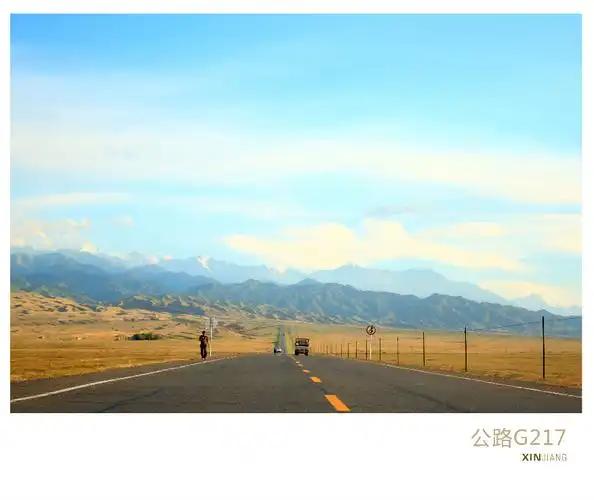
The G315 passes through Muji for 11 km, and in practice that is the town. The road runs east-west, the bazaar and petrol station sit on its south side, and the orchards run north and south of it in thin belts. The township gazette records 83 km of village-to-village road (51 km paved, 6 km gravel), plus a single passenger station sending out about 42 minibuses a day carrying roughly 407 passengers – none of them intercity buses, only short-hop services to Guma. The “town centre” most travellers see is therefore a strip, not a square. One main junction with county road X643 links Muji back to Guma (4.5 km from the G315 turn-off) and continues south toward the Karakoram foothills.
The peach belt along the highway
The Muji peach (木吉桃子) is the single local product the county promotes. It grows in a narrow belt along the G315 between 萨依巴格村 (Sayibage) and 阿热江尕勒村 (Arejianggale), all of it snowmelt-irrigated. The four main varieties are tu peaches (土桃), oil peaches (油桃), flat peaches (蟠桃) and “longevity” peaches (寿桃), and roadside stalls begin selling them from late June. By mid-September the season has usually ended.
The orchards sit on the edge of the road, not in front of a farmhouse, so the cleanest way to buy is to stop at a stall. Most take cash and WeChat. A kilo of firm local peaches in late July runs 10 to 15 yuan; by mid-September the same kilo drops to about half that. For photographs, morning light works best because the road runs roughly east-west and the summer sun comes in low from the south.
Orchards, livestock and bazaar scale: what 30,000 people actually do
Behind the peach belt, the broader orchard economy is more varied. The 2011 gazette records 25,000 mu of planted forest-fruit area dominated by red dates (红枣), walnuts (核桃) and peaches, with smaller amounts of apricot and apple. The town also reported 1,200 cattle, 32,000 sheep, 3,000 donkeys and 120,000 poultry in the same year – small per household but, multiplied across 18 villages, a meaningful base. Cropland is 54,000 mu (about 36 km²) and 2011 grain output was just under 1,300 tonnes of wheat and maize.
Commercial life is small but real. The 2011 gazette counts 233 retail shops and one covered bazaar with annual turnover of 2.8 million yuan. By 2018 shops above 50 m² had grown to 15, and the post office ran a 51 km daily route with 18 drop points and 93% rural coverage.
Reaching Muji from Hotan and Guma
The route runs G315 east from Hotan through Moyu, crosses Pishan County and reaches the Guma junction about 170 km from Hotan. From Guma, Muji is another 46 km: turn south out of the county seat, drop onto the G315 east, and after about 35 km take county road X643 north for 4.5 km. Total drive time from Guma is around 50 minutes in good conditions.
There is no rail station in Muji. The nearest is Pishan Station, about 35 km west on the Kashgar-Hotan line. Most travellers hire a driver in Guma for a half-day loop (350 to 500 yuan for the car), or simply stop on the way between Hotan and Yarkand. The 11 km of G315 inside Muji has informal parking lay-bys every 2 to 3 km, enough for a roadside peach stop without driving into town.
When to come: the 217 frost-free days
Muji has a frost-free period of 217 days, so almost any month between April and October is workable. The peach season runs from late June through early September; January is the coldest month, with an average of -5.0°C and an extreme low around -22.9°C; July days can hit 41°C in a hot year. Sandstorms are most common in May.
For comfortable walking weather in the bazaar and orchards, plan late September or early October: dates and walnuts are at their best, daytime temperatures sit in the low to mid twenties, and the evening air has a clarity you do not get in mid-summer. April to early May is the alternative if you want to see the orchards in flower, though the wind can be unpleasant.
Where to sleep, and where to sleep instead
There is no hotel in Muji itself. The Pishan gazette lists guesthouses only at the county seat, so plan Muji as a day-stop from Guma, where small inns and a couple of better-standard hotels will cover most budgets. A basic double in Guma runs 150 to 250 yuan in 2026; better hotels run 350 to 500 yuan. From Guma, Muji is a 50-minute drive each way. If you want a longer stay, base yourself in Hotan (about two and a half hours one way) or sleep in your vehicle in a G315 lay-by; expect locals to assume you have broken down.
Eating in the Muji kitchen
Restaurants are mostly small Uyghur family places along the G315 strip. Expect polo (rice with carrot and mutton), skewers (烤羊肉串), tonur kawap (tandoir bread), and a Hotan-style doppa rice and lamb soup that uses less tomato than the Kashgar variant. Pomegranate and mulberry juice are common in summer, and walnuts appear in everything from noodles to desserts once the October harvest starts. Prices run a little below Hotan city.
There is no dedicated restaurant row; family places rotate open days, so the safest plan is to ask at your Guma guesthouse what is open that day or pick the place with the most cars outside. Allow 60 to 90 minutes for a sit-down lunch if you order from scratch.
Dust, summer heat and the July-August flood risk
Muji sits at the desert edge, so dust is part of the deal. The county climate normal records about 16.6 precipitation days a year and roughly 30 sand-and-dust storm days, with most storm activity in May. Even on a normal July afternoon, expect a thin film of fine sand on every surface within an hour of being outside. Pack a microfibre cloth for camera gear and a buff for the face.
The other risk is water. The Pishan gazette records one to two flash-flood events per year, concentrated in July and August when snowmelt combines with rare but heavy desert storms. The worst recent flood hit in 2007 and destroyed road bridges and farmland with direct losses reported at 1.3 million yuan. The small bridges on county road X643 can be impassable for a few hours after a storm, so check the local weather the morning of your visit if driving between July and September.
A half-day plan
From a Guma base, leave after an early lunch and drive the 46 km east on the G315. Stop first at the Sayibage peach stalls for photos and a tasting if the season is right, then continue 5 km east to the Arejianggale end of the belt. Turn back west and take the X643 spur 4.5 km south to the old bazaar lane – the densest cluster of small shops and the easiest place to photograph a working Uyghur market without a tour group. From the bazaar, return north to the G315 and drive back to Guma, with one final stop at one of the reservoir headworks if time allows.
With a full day, add the Sangzhu walnut grove about 30 km further south and the Sangzhu rock paintings if a local driver is available. With two days you can also walk out into the dunes north of the highway at sunrise, though you will need a local guide who knows the soft-sand patches.
Frequently asked questions
Is Muji worth a stop on the way between Hotan and Kashgar?
If you like Uyghur market towns and want to see what an oasis at the desert edge actually looks like, yes. If you are rushing, the G315 strip is interesting but you can drive through it in 15 minutes.
Can I stay overnight in Muji?
There is no hotel. Most travellers stay in Guma or Hotan and visit Muji as a day-trip.
Do I need a permit?
No special permit. Muji is open to foreign visitors and there is no checkpoint on the G315.
When are the peaches in season?
Late June through early September, with peak supply in July and August.
Is the G315 inside Muji safe to drive?
Yes, except during sandstorms in May or flash floods in July and August. Check the local forecast before driving in those months.
Disclaimer
This note is based on two personal visits (2023 and 2025), the Pishan township gazette, the Pishan statistical yearbook, the Pishan climate normal and the Xiyu Tongwen Zhi. Road conditions, shop hours and seasonal product availability can change without notice. Check locally before driving the G315 between Hotan and Yarkand, and respect the cultural norms of the small Uyghur communities you pass through. Prices quoted in 2026 yuan.
About the author: Karl Huang has been travelling the southern Xinjiang oases since 2019 and writes the Xinjiang Cities section of this site.