Published: September 10, 2026 | Author: Karl Huang | Last updated: September 2026
Most visitors to Urumqi have never heard of Wujiaqu, and that is exactly why I keep going back. I have crossed this corner of the Junggar Plain four times since 2023, twice by car in spring when the tulip beds were at their loudest and once in December when the wetland froze hard enough to walk the shoreline. This guide to Wujiaqu Xinjiang pulls together what I wish I had known on the first trip: what the city is, how its lake went from soldier-built reservoir to bird sanctuary, and how to fit it into a day from the capital.
Why trust this page? The numbers below come from the Sixth Division Wujiaqu municipal government, the Bingtuan’s news service, or ticketing platforms checked in 2026, and the travel details come from my own notes. Where a fact is seasonal, I say so.
Wujiaqu at a Glance
| Item | Details |
|---|---|
| Distance from Urumqi | 32 km north by road; about 40 to 60 minutes by car |
| Status | County-level city run by the Xinjiang Production and Construction Corps’ Sixth Division (“shi-shi he yi” system), incorporated on 19 January 2004 |
| Main sight | Qinggeli Lake scenic area, 3 km south of downtown, 4A rated |
| Lake facts | 36 sq km total, 17 sq km of water, 10 sq km of wetland |
| Signature seasons | Tulips mid-April to early May, lotus July to early September, migrating birds late September to mid-November, ice festival December to February |
| Getting there by bus | Coach from Urumqi high-speed rail station roughly every 30 minutes, about 9.5 yuan; city bus D008 from the railway station area every 10 to 20 minutes |
| Birds recorded | More than 220 species, around 48 percent of all bird species in Xinjiang |
A City Younger Than Its Own Name
Wujiaqu became a city in January 2004, which makes it one of the youngest urban places in China. The name is much older. In the late Ming and early Qing, five households cut a channel from the Laolong River to water their fields, and travellers started calling the spot “five families’ canal”. That muddy ditch is the reason a city of broad streets and poplar windbreaks exists here at all.
administratively, Wujiaqu is the seat of the Sixth Division of the Bingtuan, the corps of former soldiers and their descendants settled across Xinjiang in the 1950s to farm the frontier. City and division share one government, a setup the Chinese call “shi-shi he yi”. The division traces its lineage to a 1927 peasant uprising in Hubei, spent the war years guarding the leadership in Yan’an, and its 16th Regiment’s combat record later inspired the Chinese TV drama “Liang Jian”. The elderly men playing chess on Changzheng East Street are descendants of that unit.
The city itself is small and low-rise, about 38 sq km of built-up area holding a bit over a hundred thousand people. Greenery covers 41 percent of it, enough for a national garden city title. If you have seen Shihezi further west, Wujiaqu feels like its little sibling, less monumental but closer to Urumqi. Neighbours are Changji 28 km to the southwest, Urumqi’s Midong district 22 km east, and Fukang 63 km away.
Qinggeli Lake: A Reservoir That Became a Sanctuary
The reason to come is water, which is not what most people expect from a city that has the Gurbantunggut Desert starting 60 km to its north. Between 1952 and 1955, soldiers of the 17th Division of the Sixth Army hauled earth by hand to dam a spring belt where the Urumqi River, the Toutun River and the old Laolong channel meet. They named their dam Mengjin, the unit’s wartime code name, and locals still call it the “first lake of military reclamation”. In Mongolian, the older name Qinggeli means something like “water of the gods”.
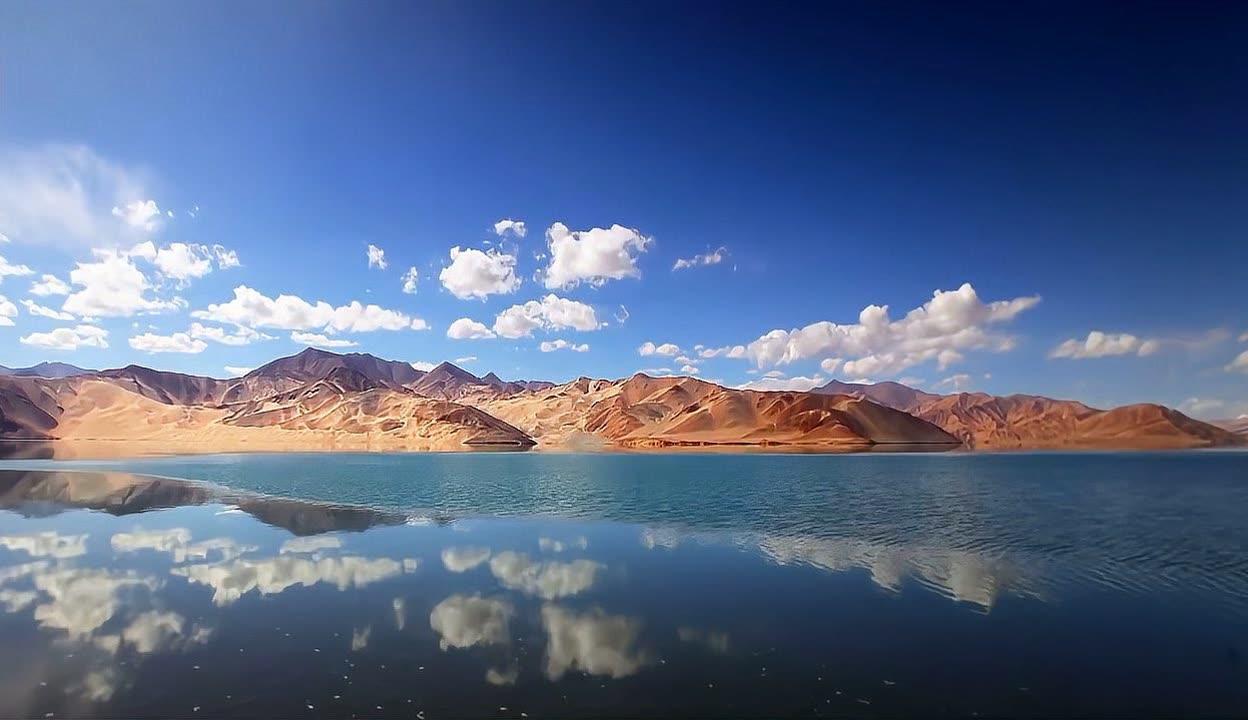
I like telling people this lake is technically infrastructure. It still irrigates the farms around the city, and its 36 sq km include 17 sq km of open water and 10 sq km of reed wetland. Because it sits on a spring zone at the very edge of the desert, it became the only substantial wetland nature reserve the Bingtuan runs, and one of the closest real wetlands to Urumqi. Photographers from the capital drive out at dawn for the sight of Bogda Peak floating upside down in the calm water on clear mornings. On my October visit the reflection was so sharp that a friend’s drone photo looked like two mountain ranges welded together.
Four Festivals, One Shoreline
The scenic area runs on a festival calendar, and each season changes the lake completely.
Spring, tulips. The first plantings of 100,000 bulbs across ten varieties have grown into roughly three million bulbs across more than thirty varieties, laid out in long flower belts that run the length of the visiting route rather than in one bed. The 21st tulip culture and tourism festival opened on 18 April 2026 and ran to 10 May, with free entry, free parking and free shuttle buses from the outer lots. On a weekday morning in late April I counted more photographers than tulip thieves, which says something good about the crowd. Arrive before 11:00 or after 16:00 to dodge the tour buses.
Summer, lotus. From early July to early September, over 500 mu of lotus ponds flower, some 200,000 plants across 43 varieties, plus 30,000 water lilies in 15 varieties. A small tourist train crawls through the ponds so you can photograph the flowers without wading into the mud, and evening food stalls appear with the usual Xinjiang grill lineup.
Autumn, birds. Late September to mid-November is migration season, when tens of thousands of birds stage on the water before heading south. More on them below.
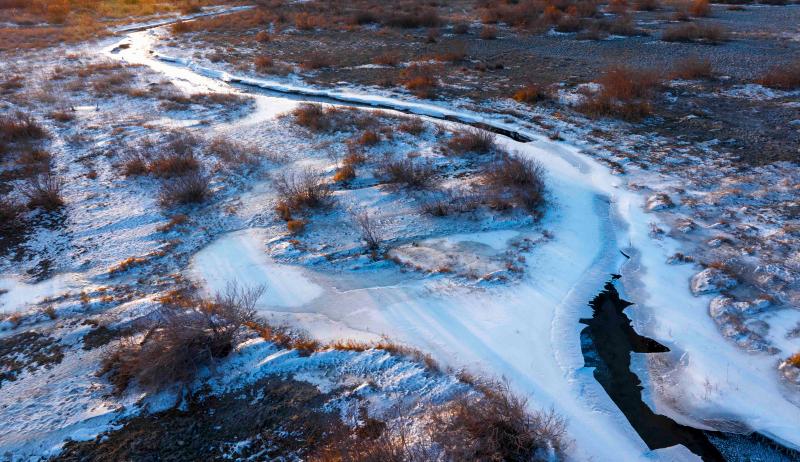
Winter, ice. The lake freezes solid, and an ice and snow festival takes over from late December into February with skating, ice slides and photo installations around the Qinghu Yuyuan resort area. Temperatures sit far below zero, so this is a short-visit season rather than a wander-around one.
Birds Over the Reeds
In 2023 researchers counted more than 220 bird species at Qinggeli, roughly 48 percent of every bird species recorded in Xinjiang, and the annual passage exceeds 200,000 birds. The protected list is heavy: black storks, golden eagles, Pallas’s fish eagles, white-tailed sea eagles and great bustards at the first-class level, with Dalmatian pelicans, Eurasian spoonbills and whooper swans among the second-class species. I am a casual birder at best, yet even I picked out pelicans one November morning, big grey-white rafts drifting beyond the reed line.
If this side of the region interests you, pair the lake with our wider guide to birdwatching in Xinjiang, which maps the seasons across Kanas, Bayanbulak and the Tarim wetlands. At Qinggeli the advice is simple: bring binoculars, stay on the boardwalks, and go in the first two hours after sunrise when the reeds are still quiet. Reserve staff keep observation points along the western shore.
Getting to Wujiaqu from Urumqi
This is the easiest half-day escape from the regional capital, and I have done it three different ways.
City bus. Route D008 runs from the south square of Urumqi railway station to the 101st Regiment area on Wujiaqu’s southern edge, first departure around 8:00, last around 21:00, every 10 to 20 minutes. Route 3003 links the Youxingjie area to Wujiaqu’s south bus station with similar frequency. Both stop constantly; budget 90 minutes. Fares are a few yuan.
Intercity coach. From the bus terminal opposite the high-speed rail station’s north square, coaches leave roughly every half hour from 9:00 to 20:00, around 9.5 yuan, about two hours including stops along Beijing Road.
Car. Driving is the winner. The road north crosses flat farm country, and from the city centre you reach the lake gate in about ten minutes. Taxis or ride-hailing from Urumqi cost 60 to 90 yuan each way. During the tulip festival the city adds free shuttles from outer car parks, and routes 1, 2, 5 and 8 run from downtown straight to the lake between 8:00 and 20:30.
When to Visit
April and May give you flowers and soft light; the last ten days of April are peak. July and August are hot on the plain but the lotus ponds and evening lake breeze make it bearable, and the light before 9:00 is lovely. October is my pick: cold mornings, golden poplars, and birds stacking up on the water. Winter is for a quick frozen-lake photo run, not for lingering. Tulip festival dates shift slightly with the bloom each year, usually opening in the third week of April.
Where to Stay
Wujiaqu has mid-range business hotels clustered around the civic centre and Qinghu Road, mostly 150 to 300 yuan, clean and unremarkable. There is no international chain here. Most travellers sleep in Urumqi and day-trip, which I recommend unless you want a dawn photo session at the lake, in which case one night in town saves you a 5:30 alarm. The Qinghu Yuyuan resort by the lake has its own rooms and is the closest option to the water.
What to Eat
The food map is Bingtuan canteen meets Xinjiang grill. Big-plate chicken with potatoes and wide belt noodles is the reliable order everywhere in town. Lamb skewers off the street grills near the night market are honest and cheap. The surrounding farms are serious producers, and the 103rd Regiment at Caijiahu north of town is known as a hami melon hometown, so from July onward the melons sold roadside here are about as fresh as that fruit gets. In spring the festival stalls add cold skin noodles, grilled gluten and hand-pulled ice cream. Nothing here is refined, and that is the point.
Beyond the Lake: The Wider Sixth Division
The division’s territory is a scatter of farms from the border hills to the desert, and a couple of outliers reward a longer trip. Yiwanquan, a 4A resort under the Tianshan front near Qitai about 250 km east, has cold spring water and forest slopes, a cool-summer escape. The 103rd Regiment’s Caijiahu has a regimental history museum tied to the “Liang Jian” story plus a sand-lake scenic area. Out by the Mongolian border, Beitashan keeps petroglyphs and petrified wood, while the walled ruins of Maqiao old town sit in the desert. These are road-trip destinations, and the desert sections need a full tank and a local check on conditions first.
A One-Day Plan
Leave Urumqi at 8:30, reach the lake by 9:30 and walk the southern shore loop while the light is still angled. Take the small train through the lotus ponds if it is summer, or the boardwalks if it is autumn. Lunch in town on big-plate chicken, then spend the early afternoon with the military reclamation exhibits downtown, which put the lake and the farms in context better than any plaque at the shore. Finish with skewers at the night market and the 40-minute ride back to the capital.
Practical Tips
Bring sun protection even in winter, the plain gives no shade. Mobile payment works everywhere, foreign cards do not. Weekends during the tulip festival jam the car parks by noon, so use the free shuttles. Drones need no permit at the lake but stay clear of the bird core zones in migration season, and respect the signage. The scenic area opens at 9:30 daily. If high mountain lakes are your real target, Fukang and Tianchi are the classic pairing, and Wujiaqu is the flat, easy counterpoint.
Frequently Asked Questions
Is Wujiaqu worth a day trip from Urumqi? If you are in the capital for more than three days and have already done Tianchi and the bazaar, yes. It is the cheapest change of scenery around: a real wetland, a strange young city, and half a day door to door.
When is the Wujiaqu tulip festival? It usually opens in the third week of April and runs into early May. The 2026 edition ran 18 April to 10 May with free entry. Check the Sixth Division’s official announcements for exact dates each year.
Can I reach Qinggeli Lake without a car? Yes. Take D008 or the coach from Urumqi to Wujiaqu, then a local taxi or festival shuttle covers the last 3 km.
Disclaimer
This article reflects conditions as of September 2026. Festival dates, bus timetables, prices and opening hours change with seasons and local decisions. Confirm details with official Bingtuan or Sixth Division government channels before travelling, and follow all posted rules in the nature reserve.
About the Author
Karl Huang has travelled Xinjiang since 2019 and writes the guides on this site, favouring small cities, road corridors and working landscapes over checklists. All visits described here were self-funded.