Published: September 7, 2026 | Author: Karl Huang | Category: Xinjiang Cities
Yengisar Xinjiang usually enters a traveler’s plans for one reason: the knives. The county an hour south of Kashgar has been forging decorated blades for centuries, and most itineraries now treat it as a souvenir stop between Kashgar and Yarkant. After four visits since 2018, I think the knives are only the third most interesting thing here. The apricot orchards that feed half the county come first, and the tightrope tradition runs a close second. This page is about the county itself, its seasons, its surprisingly good railway, and the working town behind the souvenir stalls, because that is the version of Yengisar you actually get once the day-trip buses pull out.
How many visits does a town take
My first pass through came in June 2018 on the road down to Yarkant, and I treated the place as a toilet stop. I have been correcting that mistake since. I returned in April 2023 for the blossom festival, in June 2025 to watch the first harvest crates being sealed and trucked north, and again in August 2026, when I finally gave it two full nights instead of one. The figures on this page come from the county government’s own releases and from the national intangible heritage registry; the opinions come from those four trips. Where the two disagree, I say so.
Yengisar Xinjiang: the county in numbers
Numbers I keep re-checking against official sources, because they settle most planning arguments:
| Item | Detail |
|---|---|
| Location | South of Kashgar, on the northern foot slopes of the Kunlun range at the western rim of the Tarim Basin |
| Distances | About 65 km from Kashgar by road; Kashgar airport roughly 75 km; railway station 2.5 km from the county seat |
| Size and people | 3,425 sq km, 4 towns and 10 townships, close to 300,000 residents |
| Famous for | Knives (national craft heritage, 2008), Samaiti apricots (geographical indication, 2007), Dawaz tightrope walking (national heritage, 2006) |
| Rail | Yengisar station on the Kashgar-Hotan line, passenger service since 28 June 2011 |
| Best weeks | Early April for blossom; after June 15 for the apricot harvest; late September for quiet roads |
| Signature sights | The knife village in Mangxin, the orchards of Aigusi, Muziluke wetland (AAA-rated) |
A new fort between two old cities
The name is the first clue to what this place is. Yengisar comes from two Uyghur words meaning new fort, a stronghold raised on the road between Kashgar and Yarkant, the two heavyweight cities of the southern Silk Road. Qing dynasty geography from the eighteenth century records the name in that older form, and the county’s own history notes that the garrison town received its present Chinese spelling after 1759. It stayed a midpoint ever since: a courier station on the overland route, later counted among the eight major towns of southern Xinjiang, and a county in its own right from 1913. Driving south today you cross irrigated fields that end abruptly in grey stony desert, and the oasis sits exactly on that seam. That seam explains the food: about 70 millimetres of rain a year, nearly 3,000 hours of sun, and every drop of the rest hauled in by canal.
The orchards outrank the knives
Every June the county quietly reorganizes itself around fruit. The local apricot, Samaiti, is traced by county records to a farmer of that name in Aigusi township roughly four hundred years ago, and it has done well out of being difficult to grow anywhere else. It carries a national geographical indication from 2007, growers call it the pearl of the ice mountain, and at a national fruit conference in 2002 a room of two hundred specialists voted it China’s finest apricot, which around here counts as settled law. The orchards now cover something near 11,800 hectares, with a planned output around 65,000 tonnes in 2025. Official picking starts after June 15 so the fruit can clear 35 grams and 18 percent sugar. I bought four kilos off a roadside scale in 2025 for pocket change and ate half of them before the car cooled down. If you come in early April there is a blossom festival; late June brings a fruit-judging contest that farmers take far more seriously. Cold-chain trucks now reach Shanghai and Guangzhou within 72 hours, and Jining, the county’s partner city in Shandong, runs the promotional sales you will see advertised.
The town that walks on ropes
The second surprise is Dawaz, Uyghur high-rope walking, performed with no safety line and a balance pole about six meters long. The craft is old enough to appear in a dictionary compiled in the 1070s, and it joined China’s first national heritage list in 2006. Its most famous living practitioner was born here: Adil Hoshur, sixth son of a rope-walking family, who crossed 640 meters of cable over the Qutang Gorge in 13 minutes 48 seconds in 1997, then walked 1,399.6 meters between two peaks of Mount Heng in 52 minutes flat in 2000, collecting five Guinness records along the way. He now puts real money and time into a training center in the county, set up in the early 2010s, and a purpose-built performance and teaching hall opened in 2021 with Shandong aid funding. Ask at your hotel whether any training session is open to visitors; we watched teenagers practice on a low wire and it was better than most staged shows.
Blades, clay, and the economics of a craft town
The knife technique entered the national intangible heritage list in 2008, declared by the county with its cultural center as guardian. Blades usually run 11 or 12 centimeters, named after the shapes they imitate: crescent moon, fish belly, phoenix tail, eagle, red-billed chough. Handles are brass, yak horn or deer antler, and the county’s registered inheritors count more than seventy patterns across some 480 years of making. The senior national inheritor, Wufuer Reheman, born in 1955, registered the Badam Flower brand back in 1988. The heart of the trade is a village in Mangxin township where over 80 percent of households live off blades: 72 workshops and shops, around 500 working smiths. In June 2023 a heritage courtyard called the Knife King’s Former Residence opened there with Jining’s help. The county also guards a second national technique, mould-pressed Uyghur pottery, which almost no day-tripper sees. For the street-level view, our knife-town walking guide covers the workshops stall by stall, and our Xinjiang handicrafts atlas sets the knives beside silk and hats.
Getting there: a proper railway, a fast road
Yengisar has a railway station most foreign travelers have never heard of. The Kashgar-Hotan line opened to passengers on 28 June 2011, and Yengisar sits 66 rail kilometers from Kashgar, with the platform a 2.5 kilometer ride from the county center. The slow trains on this line are famous for farmers boarding with sacks of almonds, crates of fruit and the occasional live goose for the Kashgar markets, and the fare costs a few yuan; it is the best cheap theatre in the prefecture. By road it is about 65 kilometers south of Kashgar on a divided highway, an hour with margin, and Kashgar’s airport is roughly 75 kilometers away. Our Kashgar travel guide handles the arrival logistics most visitors need first.
Choosing your week: blossom, harvest, heat
We timed the 2023 trip to the blossom festival and got one perfect pink morning out of three grey ones, which is the honest odds sheet: blossom lasts roughly ten days and slides with the spring, so book flexibly. The window I now aim for is the third week of June, when picking has just started after the June 15 opening date and the first crates are still being graded at the roadside. July and August are hot, with the high thirties common and the fruit sold out by mid-month. Late September is quiet and kind to cyclists. Winter is bare and cold; the forges stay lit but the orchards give you nothing to look at.
Sleeping in the county seat
There are no international chains and no need for one. The county seat keeps a strip of business hotels near the bus station, where a clean double runs roughly 150 to 250 yuan, and a couple of newer places have opened along the main road since 2023. Rooms do sell out during the April blossom festival and the late-June fruit contest, so book those weeks ahead and walk in the rest of the year. Front desk English is rare; show a screenshot of where you want to go and someone will phone a driver for you. The practical upside of sleeping here rather than Kashgar: pharmacies, banks and repair shops all work at small-town pace, and dinner costs half.
What lands on the table
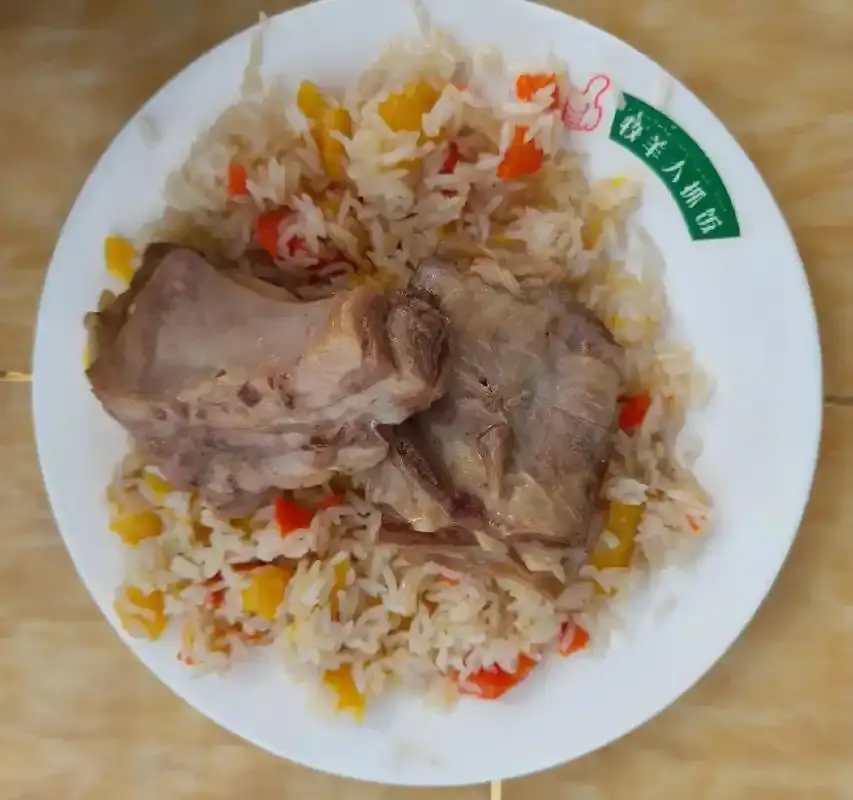
Southern Xinjiang eats heavier and sweeter than the north, and Yengisar cooks to type. Lamb pilaf piled with carrot and raisins is the midday default, samsa come out of the tandoor at the street corners, and skewer smoke owns the night market from about nine. In June the apricots invade everything, including the freezer cases of apricot ice you should not leave without trying. Teahouses near the bazaar pour for older men playing dice-shaped dominoes; sitting down quietly with a bowl is welcome. If your route lines up with a Sunday, our Kashgar Sunday market guide covers the far bigger version an hour north.
Small things that make the day easier
Carry cash, because orchard stalls and most tandoor counters still do. Ask before photographing people, especially smiths at the wheel; most say yes once you have bought something. Friday midday prayer quiets the bazaar for an hour or so, plan around it. If you buy a blade, remember it can only travel in checked baggage, and several workshops will pack and courier it to a forwarding address if you ask; check your home country’s rules before you spend real money. Police checks are routine on the highway, so keep your passport reachable, and treat the town as what it is: a working county, not a museum.
Two days around the county
Day one: drive down from Kashgar in the morning, spend the late morning in the Mangxin knife village watching the courtyard workshops, eat pilaf in the county seat, then take the pottery kilns or the bazaar in the afternoon and the night market after dark. Day two: in April, run out to the Aigusi orchards for blossom; in June, buy crates at the roadside grading stations after the morning pick, then spend the afternoon at the Muziluke wetland on the county’s desert side before catching the evening train back or pushing on to Yarkant for a second night. Both versions leave the evening free, which in this town is the best part.
Questions travelers actually ask
Can I buy a knife and take it home? Yes, but only in checked baggage, never in the cabin, and workshops can courier a packed blade to a hotel or forwarding address. Confirm your own country’s import rules first.
Is Yengisar worth a night or just a stop? A night, if you come for blossom or harvest. Otherwise a four-hour stop covers the knife village and the county seat comfortably.
When exactly is the apricot season? Official picking opens after June 15 and the bulk of the crop moves before mid-July; the blossom festival sits in the first days of April.
How this page was checked
County figures come from the Yengisar county government website, heritage listings from the national intangible cultural heritage registry, and railway details from the Kashgar-Hotan line’s opening records. Travel impressions are from visits in 2018, 2023, 2025 and 2026. No hotel, workshop or restaurant named here has paid for placement, and prices shift often enough that you should treat every number as a snapshot, not a quote.
About the author
Karl Huang has traveled in Xinjiang every year since 2016 and writes this site’s Xinjiang Cities series. He collects place names that translate badly, which is how a county called “new fort” ended up with two pages here.