Published: August 26, 2026 | Author: Karl Huang
Why you can trust this guide
Most travel pages about Toli county Xinjiang are two sentences lifted from a map, repeating the same vague line about “vast grasslands.” We are not writing that. In July 2025 my partner and I rented a car in Karamay and drove the G3015 north toward Tacheng, spending one night in Toli township and two long afternoons on the pasture that surrounds it. Everything below comes from that trip, the notes I scribbled at roadside stops, and a long chat with a Kazakh herder family who let us into their yurt for milk tea. Where I am guessing, or where road and weather conditions change, I say so plainly.
| Item | Detail |
|---|---|
| Where it is | Tacheng Prefecture, northern Xinjiang, on the Karamay–Tacheng corridor |
| Distance from Karamay | Roughly 150 km north by road (G3015) |
| Best months | June to August, when the pasture is green and herder camps are up |
| Main draw | Open summer grassland, Kazakh yurt camps, the Laofengkou wind gap |
| Nearest airports | Karamay (KRY) to the south, Tacheng (TCG) to the north |
| Where to stay | County-town hotels only — no resorts, no campsites with facilities |
| What to eat | Kazakh lamb, laghman noodles, kumis (fermented mare’s milk), naan |
Our drive through Toli
We left Karamay around nine in the morning. The first stretch is oil-country flatland, then the road starts to roll and the scrub gives way to open grazing land. By early afternoon we were crossing the Laofengkou — the “Old Wind Mouth,” a gap in the hills where the wind comes straight off the steppe and hits you sideways. Our rental’s doors fought us when we opened them. Locals plant rows of trees as windbreaks here, and there is a small museum stop if the gusts keep you inside the car.
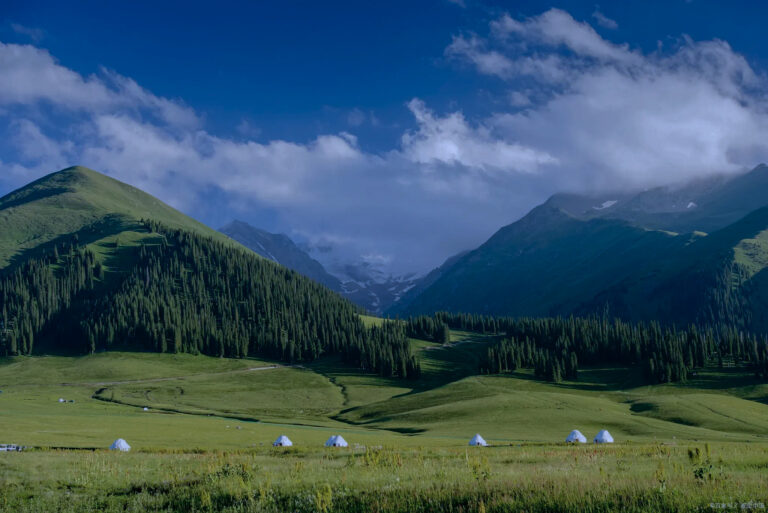
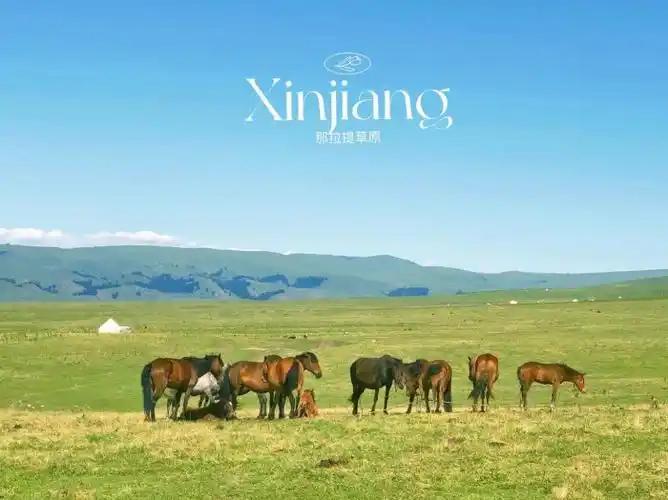
What surprised me was how quickly the land opened up past the wind gap. One moment you are squinting against dust; the next you are on a ribbon of road between low green hills dotted with white yurts and slow-moving sheep. We pulled over near a herder camp and ended up staying far longer than planned.
The family we met had set up two yurts on a flat shelf of grass above a small stream. The grandmother was bent over a pot of milk tea, the grandfather was mending a bridle, and three kids chased a dog between the sheep. They waved us in without ceremony, pressed warm tea and a bowl of thick yogurt into our hands, and let me photograph the line of drying cheese laid out on a clean cloth. Nobody asked for money at first; when we left we paid what felt right and they looked pleased rather than calculating. That half-hour did more to explain Toli than any road sign.
Getting to Toli
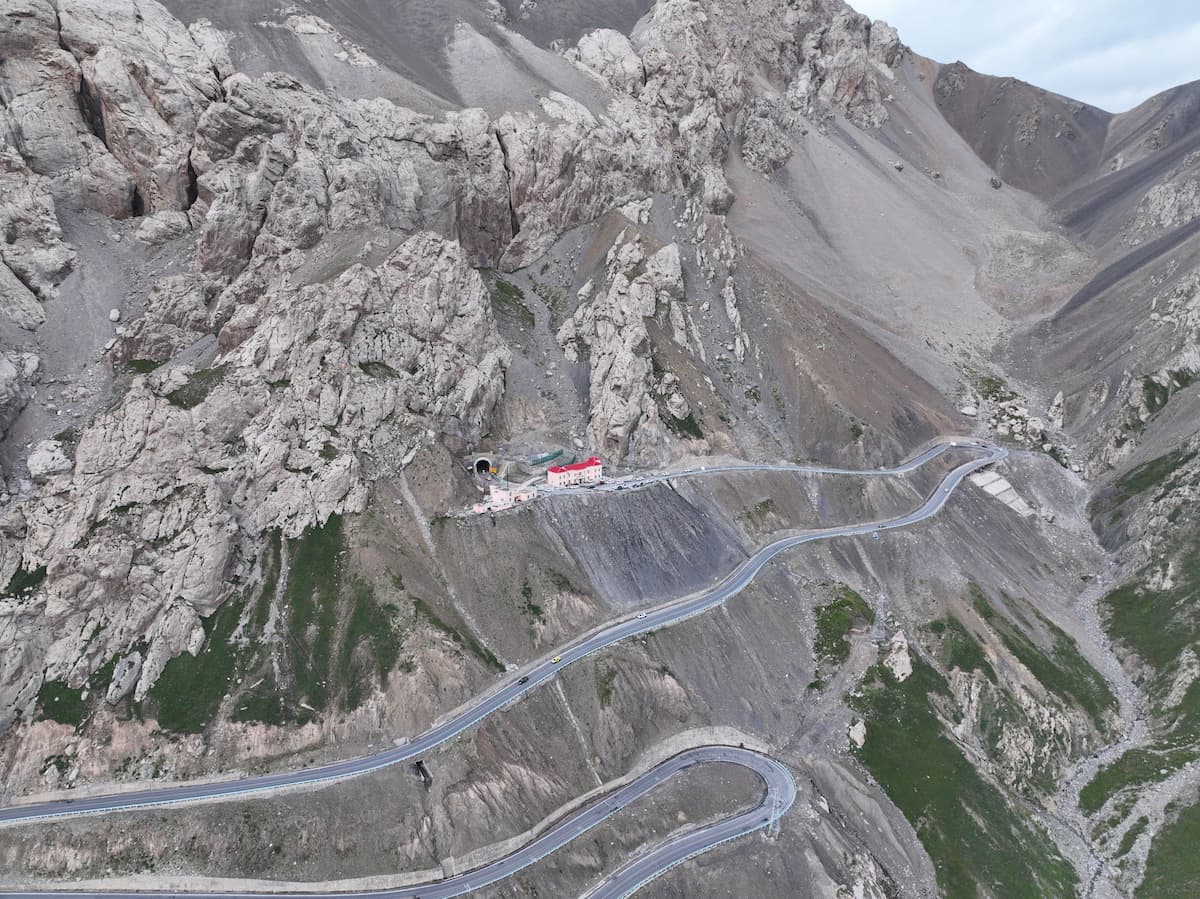
The simplest way in is your own wheels. Self-driving Xinjiang is very doable on this corridor: the G3015 expressway links Karamay and Tacheng directly, and Toli sits about halfway. Buses also run between Karamay and Tacheng and will drop you in the county town, but the interesting parts — the pasture, the yurt camps, the wind gap — are off the main drag and need a car or a local driver.
There is no passenger train station in Toli itself; the nearest railheads are Karamay and Tacheng, which a regional line now connects. If you are building a northern loop, it makes more sense to drive in from Sayram Lake or out toward Kanas Lake, using Toli as a quiet overnight rather than a destination you race to.
A practical note on the road itself: the new G3015 expressway is fast and smooth, but it bypasses the old S201 pasture road that actually runs through the scenery. If you want the views, take the expressway to the Toli exit and then use the older surface roads for the last stretch — they are paved but narrower, with the occasional herd crossing. We saw cattle on the tarmac twice and slowed to a crawl both times. Give yourself extra time; the drive is short on paper and long in practice once you start stopping.
Toli county Xinjiang: when the pasture turns green
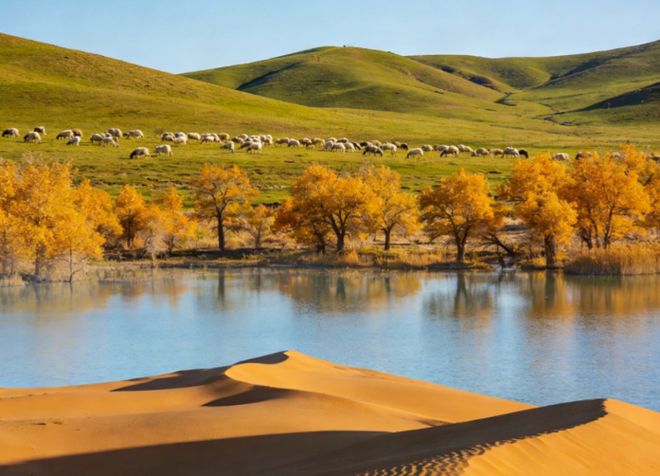
Timing matters more here than at the headline sights. Toli county Xinjiang lives for its summer pasture. From June to August the hills are green, the yurts are up, and herders are milking mares and making cheese in the open air. This is the window to come.
Spring (April to May) is the wind season — the Laofengkou lives up to its name and sand blows across the road. Autumn is short and cold; by late October the camps are down and the land is grey. Winter is silent and very cold, with snow on the passes. I would only come then for the quiet, not the scenery.
Where to stay
Be honest with yourself: Toli is a working county town, not a resort. You will find mid-range Chinese hotels and a few guesthouses, clean and functional but without much character. We stayed in a standard county hotel for about 200 RMB a night, which had hot water, a real bed, and a breakfast of flatbread and tea — enough after a day of driving.
If you want the pasture experience, ask locally about yurt stays with herder families. We did this through a chance meeting rather than a booking app, and paid a small amount for food and a floor to sleep on. It was the best part of the trip, but it is not a serviced hotel — bring a sleeping bag liner and lower your expectations on the bathroom.
One thing to set straight: do not expect Western-style hotels with gyms and lounges. The county-town options are the kind where the lobby doubles as a waiting room, the wifi reaches the corridor better than the bedroom, and the front desk speaks limited English. For a traveller who has just spent the day on open grassland, that is fine. Book ahead in July and August, when the summer pasture draws domestic tourists and rooms tighten. In the off months you can usually walk in.
What to eat
The food is the easy highlight. Toli’s tables are Kazakh before they are anything else. Order laghman (hand-pulled noodles with a tomato-and-meat sauce), manty (steamed dumplings), and whatever lamb is on the grill — it is almost always slaughtered and cooked the same day. Naan comes warm from the tonur oven. If you are offered kumis, the fermented mare’s milk, try a small bowl; it is sour, lightly fizzy, and an acquired taste I did not fully acquire.
Markets in the county town sell dried curds, homemade butter, and smoked horse sausage. None of it is packaged for tourists, which is the point. A full plate of lamb and noodles ran us under 40 RMB a head. If you cook your own, the morning market has fresh vegetables and slabs of lamb that a guesthouse kitchen might let you use — ask first, since not every place is set up for it.
Two dishes deserve a special mention. Manty here are steamed rather than boiled, bigger than a dumpling and stuffed with lamb and onion, served with a scrape of sour cream on top. And the smoked horse sausage, casings fat and dark, sliced thin and eaten cold with bread — strong, a little gamey, and very much the local flavour. Vegetarians will struggle; even the “vegetable” dishes often carry a meat base, so say so clearly when you order.
Practical tips
Bring cash. Smaller eateries and roadside stands outside the town center do not always take foreign cards, and while Alipay works with a linked international card, signal on the open pasture is patchy. Fill the fuel tank in Karamay or Tacheng before the middle stretch — petrol stations thin out between the two. Sunscreen and a windproof layer are non-negotiable; the same wind that shapes the gap will dehydrate you in an afternoon.
Language is mostly Mandarin and Kazakh. A few phrases of either go a long way at a yurt door. And tell someone your route: mobile coverage drops on the back roads, and a county this quiet has little margin if a car breaks down far from town.
Two more things visitors overlook. First, ask before photographing people — herders are usually happy to pose once you have shared a cup of tea, but pointing a lens across the fence without a word reads as rude. Second, the weather swings hard between sun and a sudden chill, even in July; we started a morning in t-shirts and needed jackets by noon when cloud covered the hills. Dress in layers and keep a spare in the car.
A sample two-day itinerary
Day 1 — Karamay to Toli. Leave Karamay mid-morning, stop at the Laofengkou wind gap for an hour, reach Toli by mid-afternoon. Walk the town, eat lamb and laghman, sleep.
Day 2 — Pasture and onward. Hire a local driver or take your own car out to a herder camp in the morning. Drink milk tea, watch the sheep move, buy some dried curds. In the afternoon continue north to Tacheng for its Russian-flavored old streets, or turn back south toward Karamay.
This is a slow route on purpose. Toli rewards a half-day of doing nothing much more than a checklist of sights.
Frequently asked questions
Is Toli worth a dedicated trip? On its own, probably not for a first-time visitor. As an overnight on the Karamay–Tacheng drive, or as a quiet pasture stop on a longer northern loop, yes.
Can I visit a yurt camp without arranging ahead? Sometimes, by showing up and asking, as we did. Do not count on it in shoulder season when camps are down. Be ready to pay, eat what is offered, and leave the place as you found it.
How bad is the wind, really? At Laofengkou in spring it is genuinely strong — hold the car door, secure loose items. In summer it is a breeze, not a problem.
Do I need a permit? Toli is open to normal domestic and foreign tourism without a special permit, but border areas of Tacheng Prefecture can have restrictions; carry your passport and check locally before heading to remote stretches.
How many days do I need? One night is enough to see the town and reach the pasture; two gives you a relaxed morning with a herder family and a proper drive. I would not budget more unless you are using Toli as a base for the wider Karamay–Tacheng corridor.
Is it family-friendly? Yes, if your kids tolerate long drives and simple beds. The open grassland and the animals are a hit with children; the lack of entertainment and thin wifi are not. Bring your own distractions.
Disclaimer
This guide reflects one visit in July 2025 and conditions on the northern Xinjiang corridor change with the season, the weather, and road works. Prices, opening times, and transport links were accurate to the best of our knowledge at the time of writing but may shift. Always confirm current details with locals or your accommodation before committing to a remote drive, and respect herder land and livestock. We are independent travellers, not a tour operator, and we do not receive commission from any hotel, restaurant, or service mentioned here.
About the author
Karl Huang is a travel writer focused on northwestern China. He has driven more than 4,000 km across Xinjiang, from the Taklamakan’s edge to the pastures of the north, and writes first-hand guides based on his own trips. He can be reached through the contact page for corrections and updates.