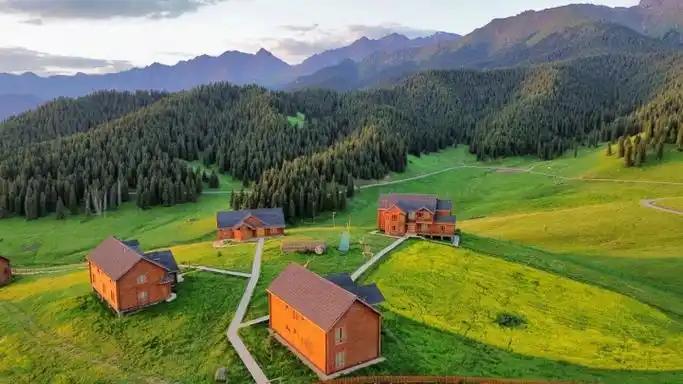
Published: October 18, 2026 | Author: Karl Huang
Kuerdening is the kind of place that makes Ili drivers lower their voices. We came in from Yining on a Tuesday in early July, and the last stretch of road narrowed into a valley that runs the wrong way: north to south, straight toward the snow, instead of sideways along the range like every other gorge in the prefecture. The valley floor sits near 1,500 meters, and the air was about eight degrees cooler than the city we had left that morning. This guide draws on three visits across two summers, plus figures from the Gongliu County government and the regional nature-reserve authority.
| Item | Detail |
|---|---|
| Location | Gongliu County, Ili Kazakh Autonomous Prefecture, in the mountains southeast of the county seat |
| What it is | A north-south glacial valley and national Schrenk-spruce reserve, part of UNESCO-listed Xinjiang Tianshan (2013) |
| Valley shape | About 14 km long, up to 1 km wide, floor averaging roughly 1,500 m |
| Area | About 1,176 km² across the reserve and the scenic zone |
| Distance | About 88 km southeast of the Gongliu county seat; roughly 150 km from Yining |
| Self-drive loop | About 60 km, open to vehicles of 7 seats or fewer |
| Best months | June to August for green meadow; late September to mid-October for gold trees |
| Status | National AAAA scenic area, national nature reserve, national water-conservancy scenic area |
The Valley That Runs Sideways to the Mountains
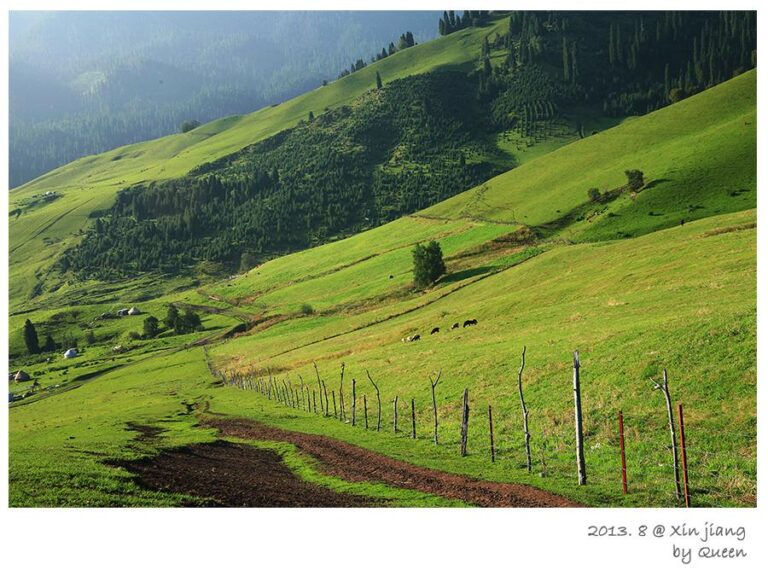
Almost every valley in the Ili grassland country follows the grain of the land. Water runs downhill, the walls close in, and the road climbs along the side. Kuerdening does something else. It is the only broad valley in the Ili scenic belt that runs north to south, roughly parallel to the snow peaks instead of cutting across them. The name is Kazakh for “horizontal valley,” and the logic is obvious once you are inside. The walls stay open, the floor stays flat, and the view up the valley is a straight line to the high Tianshan.
Because the valley opens to the north, cold air drains out and warm air lingers, which is why locals describe Kuerdening as warm in winter and cool in summer. The floor sits near 1,500 meters, high enough to stay cool in July and low enough that altitude is not a worry. And because it is broad rather than a slot, it holds grassland, forest, stream, and cliff in one frame, the combination that placed it on China’s list of the ten most beautiful forests. In 2013 the surrounding landscape was inscribed as part of the UNESCO World Heritage property Xinjiang Tianshan, together with the Kalajun meadow in neighbouring Tekes County.
Why Kuerdening Looks Different From the Rest of Ili
The forest is the reason. Kuerdening is the core of a national reserve for Schrenk spruce, the dark narrow conifer that clothes the middle slopes of the Tianshan. The area was set aside in 1984 as a snow-spruce protected area and was upgraded by the State Council in 2000 to the West Tianshan National Nature Reserve. The trees are old, but their density is what stands out. The Gongliu County government describes the standing volume per hectare here as rare anywhere in the species’ range.
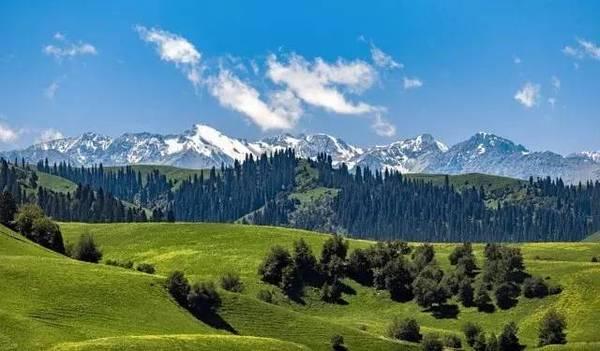
The county’s own figures give a sense of how much is packed into the reserve: more than 1,000 species of higher plants, 146 kinds of land vertebrates, 196 insects, and more than 30 nationally protected animals. A separate tally puts vascular plants near 1,594 species and wild vertebrates at 223. The numbers differ with the survey, but the point holds. This is one of the few places in the interior of Eurasia where a complete forest ecosystem survived the last century more or less intact, which is why researchers call it a natural gene bank.
Our First Morning Among the Spruce
We slept in a yurt a few hundred meters off the valley road and woke before seven to a cow bell and, under it, the stream. The light at that hour comes in low from the north and turns the spruce trunks copper. By eight the meadow was already bright enough that we were down to shirtsleeves. We walked a stretch of trail that follows the creek, past a plank footbridge and a cluster of wild raspberry canes, and did not see another person for close to an hour. That is the part the photographs miss. Kuerdening is quiet, and the quiet is half of what you are paying for.
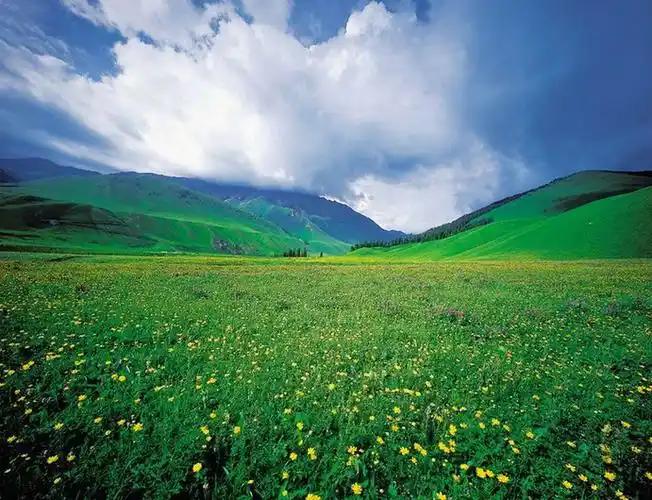
By mid-morning the tour vans arrive and the main viewpoints fill up. If you want the empty version, treat the valley as a morning place. The light is better, the temperature is better, and the herders are still moving stock along the edges of the meadow rather than sitting out the heat.
How We Reached Kuerdening From Yining
There is no train and no scheduled bus to the gate, so this is a road trip. From Yining the drive runs east through the Ili Valley to Gongliu, then turns southeast into the mountains. The government figure for the distance from the Gongliu county seat is 88 km. A 2022 report from China National Radio gives 55 km from the town centre and 150 km from Yining. In practice, allow one and a half to two hours from Gongliu town and around three hours from Yining, because the final stretch climbs and the road is shared with livestock.
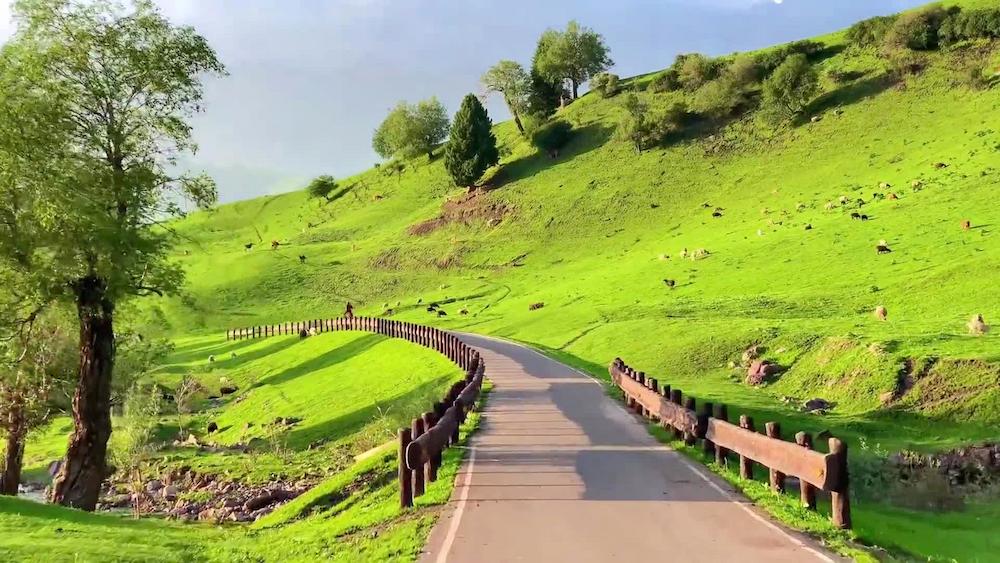
Self-driving is the sane option. The scenic area runs a roughly 60 km loop past the Ten-Mile Gallery, the Ayusai viewing platform, a base camp below the main peak, the World Heritage exhibition centre, and Moon Bay, and it is open to vehicles of seven seats or fewer. Larger buses have to use the shuttle service. Fill the tank in Gongliu before you turn off, because there is no fuel inside the valley.
The Season That Changes Everything
Kuerdening has two peaks and a long, pleasant middle. The first peak is June through August, when the meadow is green, the wildflowers are out, and the valley works as a cool escape from the heat of the Ili floor. July is the busiest month, and the yurts fill on weekends, so book ahead if that is your window. The second peak is late September into mid-October, when the spruce stays dark but the poplar and birch along the water turn gold against the first snow on the peaks. That is the photographer’s season, and the light is cleaner than in summer.
Spring arrives late at this elevation. April and May bring green-up and wild fruit blossom lower down, but the high meadows can still be brown and the passes may see late snow. Winter is quiet and often beautiful, with snow on the spruce and almost no visitors, though some services close. Whatever season you choose, pack for a fifteen-degree swing in a single day. The valley’s north-south shape gives it a mild climate, not a predictable one.
Sleeping Inside and Outside the Reserve
Your choice of bed decides the character of the trip. Inside and just outside the scenic area there are Kazakh yurt camps and small family guesthouses, mostly simple: shared bathrooms, felt walls, a stove, and meals cooked by the family. We paid for a yurt with four beds and a wood stove, and it was warm enough that we let the fire die by midnight. This is the option to take if you want the morning light and the quiet.
The comfortable alternative is Gongliu town, where the hotels are ordinary but reliable, with hot water and Wi-Fi, about ninety minutes from the gate. Yining, three hours out, has the full range from budget to international-standard rooms and makes sense if Kuerdening is one stop on a longer Ili loop. Wherever you stay, confirm the booking in writing in July and August, and ask whether the price includes meals. At the yurt camps it usually does.
What We Ate in Gongliu
The food is pastoral Ili cooking, and it suits the cold mornings. Breakfast at the yurt was milk tea, fresh naan from a tonur, butter, and a bowl of thick yogurt with honey. The honey is local and good, because this corner of Ili is bee country and the hives move up the valley with the flowers. Lunch and dinner ran to hand-pulled laghman, lamb cooked over coals, and a smoked mutton dish the family served cold with onion. In late summer the same meadows give wild strawberries, raspberries, and mushrooms, and the guesthouses will often add them to a meal if you ask.
In Gongliu town the choice widens to the usual Xinjiang staples: big-plate chicken, noodle shops, and bakeries. But the valley food is the reason to eat where you sleep. Carry cash; the smaller camps and stalls may not take a card, and mobile signal drops inside the reserve.
Small Things That Made the Trip Easier
- Download an offline map before you leave Gongliu. Coverage inside the valley is patchy and the side tracks are not well signed.
- Bring layers and a rain shell. The valley is mild, but a summer afternoon can turn grey in twenty minutes.
- Respect the reserve rules: stay on trails and boardwalks, do not pick plants, and remember the wild apple and apricot trees are protected species.
- Fuel up and buy water in Gongliu town, because services inside the scenic area amount to a few stalls.
- If you drive the loop, start early. The 60 km looks short on paper, but the stops add hours and afternoon traffic builds at the popular platforms.
- Mosquito repellent helps near the creek in July, when the meadow edge breeds them.
A Two-Day Route Through the Valley
This is the shape we would give a first visit.
Day 1, Yining to the valley. Leave Yining after breakfast, reach Gongliu by late morning, and turn southeast into the mountains. Check in at a yurt camp, then drive the loop in the afternoon: Ten-Mile Gallery first, the Ayusai platform for the late light, and Moon Bay on the way back. Eat dinner at the camp and stay up for the stars, which are the real attraction after dark.
Day 2, forest morning and out. Walk the creek trail before the vans arrive, visit the World Heritage exhibition centre to understand what the reserve protects, and have lunch before driving out. From the gate you can return to Yining, continue east to Nalati grassland, or loop back through Gongliu for the evening. If you have a third day, add the Kalajun meadow above Tekes. The two together form the UNESCO property, and seeing both makes the listing make sense.
If you are building a wider Ili itinerary, our Ili Valley travel guide covers the logistics around this loop, and our notes on Gongliu and the Xinyuan grasslands explain the quieter county roads that connect them.
Questions We Get Asked About Kuerdening
Where exactly is Kuerdening? In Gongliu County, Ili Kazakh Autonomous Prefecture, in the mountains southeast of the county seat. The government puts the gate about 88 km from town and roughly 150 km from Yining.
Is Kuerdening the same as Kalajun? No, but they are related. Both are components of the UNESCO World Heritage property Xinjiang Tianshan, inscribed in 2013. Kalajun lies in Tekes County and Kuerdening in Gongliu, and the two are often visited on the same trip.
Can I drive myself in? Yes, on the roughly 60 km scenic loop, as long as your vehicle has seven seats or fewer. Larger vehicles use the shuttle.
Do I need a special permit? Not for the scenic area, where you enter through the normal gate. The core of the national nature reserve is closed to general visitors, and rangers will redirect you if you wander off the marked routes.
When is the best time? June to August for green meadows and wildflowers, and late September to mid-October for golden trees and clear light. July weekends are the busiest.
A Note on Accuracy and Conditions
This guide reflects our visits in 2025 and 2026 and public figures from the Gongliu County government, China National Radio, and UNESCO. Distances and seasonal windows are close but not exact: road clearing, ticket arrangements, and shuttle schedules change with the weather. The reserve is also a protected area first and a scenic area second, so rules on trails and access can tighten without notice. Confirm current conditions with your hotel or a local guide before you set out, and treat any price quoted here as a range rather than a promise. We have no commercial relationship with any operator mentioned.
About the author
Karl Huang writes about overland travel in Xinjiang, with a focus on the Ili Valley and the Tianshan. He has driven the valley roads around Gongliu, Tekes, and Xinyuan across several seasons and reports what he finds on the ground, including the parts that do not match the brochures.