Published: October 21, 2026 | Author: Karl Huang
Oytag Xinjiang is the ice mountain park that sits about 120 km southwest of Kashgar, tucked against the 314 highway that climbs toward the Karakoram and Pakistan. We first rolled past its roadside archway on a June drive to Tashkurgan and turned back the next morning, and what we found was a cold pocket of glacier, spruce and red rock sitting above a county where the afternoon temperature had been pushing 34°C. This guide is built on two visits in 2025 and 2026, the park’s own 4A record, and the account published by China National Radio in September 2026.
| Item | Detail |
|---|---|
| Location | Oytag Town, Akto County, Kizilsu Kirghiz Autonomous Prefecture, on the G314 about 120 km from Kashgar and roughly 85 km from Akto town |
| Status | National 4A scenic area since 2011; also a national forest park (克州冰川国家森林公园) |
| Elevation | Visitor area around 2,300 m; the park spans roughly 2,300 to 5,300 m |
| Headline glacier | Qikelazi Glacier (其克拉孜冰川), ice tongue at about 2,800 m, one of the lowest modern glaciers in China |
| Signature peak | Ayranish Snow Mountain (阿依拉尼什雪山), 6,684 m, the source of the Oytag River |
| The summer show | Warm-season snow avalanches, viewable from a platform about 8 km away, completely safe |
| From Kashgar | About two hours by car on the G314 |
| Tickets | Around 50 yuan for entrance plus shuttle (platform prices vary 45 to 53 yuan); horse ride single about 50, round about 100 yuan |
| Hours | Roughly 10:00 to 20:00 in season |
| Best window | Late May to early October; July and August for the avalanche show |
Why Oytag Xinjiang stays cold while Akto bakes
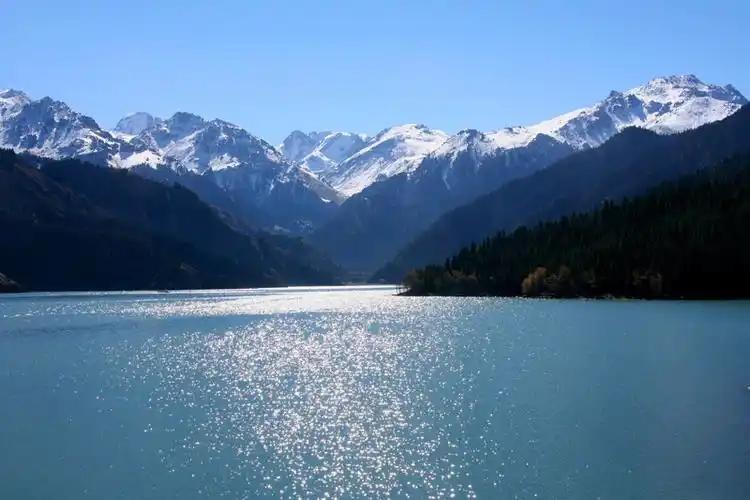
The single strangest thing about this place is the temperature gap. Akto county town, down on the warm side of the foothills, can sit at 30 to 34°C in July and August. Drive up the valley for an hour and the same afternoon reads 10 to 20°C. The park is a glacial basin, and three things keep it cool: the elevation, the shade cast by thick spruce stands, and the cold air that drains off the glacier and pools in the gorge. We stepped out of an air-conditioned car into a wind that felt like a walk-in fridge, and within ten minutes everyone had a fleece on. That contrast is the whole reason the park works as a summer escape, and it is why locals from the hot plains treat the road up here as a free piece of air conditioning.
Standing under the lowest glacier we have seen
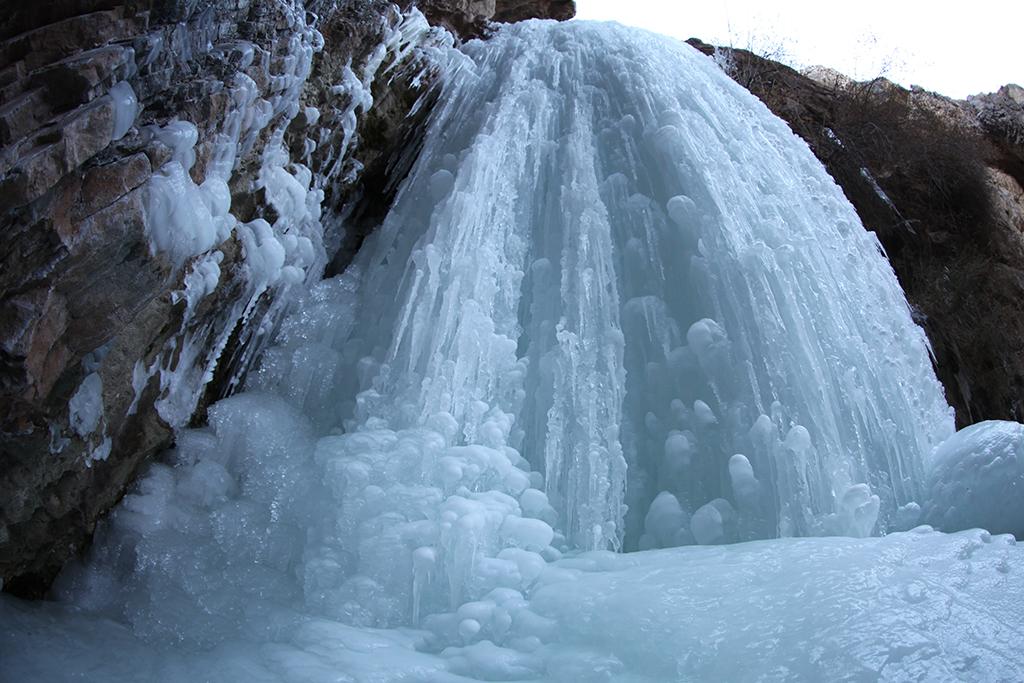
The trail from the shuttle drop runs about three kilometres uphill toward the glacier viewpoint, and the payoff is the Qikelazi Glacier. Most glaciers people visit in China sit far higher; this one pushes its ice tongue down to around 2,800 m, low enough that you reach the cold zone on foot without a climbing permit or a prayer to altitude. We walked through spruce forest first, then open meadow, then a band of bare rock where the meltwater cuts a grey-green channel. The front of the glacier is a wall of blue-white ice streaked with grit, and below it an ice cave leaks a stream that becomes the Oytag River. Standing there with the roar of running water and the smell of cold stone, it is easy to forget you are only two hours from a city of half a million people. The spruce here is the same Schrenk spruce you find across the Tianshan, but the combination of glacier, forest and red rock in one short walk is what makes the park unusual.
Where red rock meets white ice
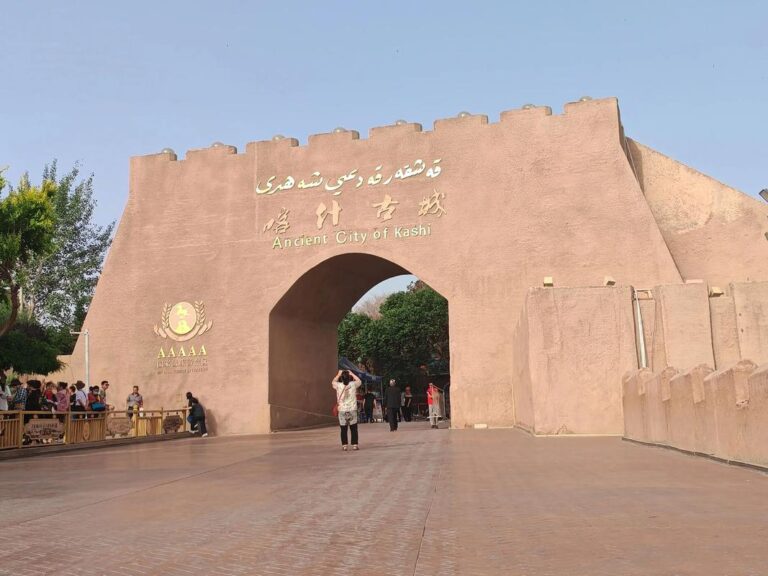
Before you reach the glacier you pass the red mountain, a band of crimson sandstone that the park has opened as a free roadside stop. The cliffs are folded and ribbed like cooled lava, and against the white of the distant glacier and the green of the spruce they make a three-colour photograph that needs no filter. We spent twenty minutes here on the way in just watching the light move across the rock. One trap to flag: a grand 4A stone archway stands by the highway about 30 km before the real ticket office. It sells snacks and oxygen cans and looks official, but it is only a photo gate. The actual entrance and shuttle are another half hour up the road, so do not stop and assume you have arrived. Keeping the red rock and the white ice in the same frame is the cheapest, best souvenir the park offers.
The summer avalanche you can watch from safety
This is the part that pulls people back in July and August. Under the strong mountain sun the thick snow piled on the glacier starts to slough, and chunks slide down the ice face in a slow-motion white wave. The whole event lasts about a minute, and the park has built a viewing platform roughly 8 km from the slide path, so you watch it the way you would watch distant fireworks: with a clear, safe gap in between. We caught one on a July afternoon and it was less a danger than a small natural theatre, the kind of thing that makes a hot southern Xinjiang day feel like a polar documentary. It does not happen in winter, when the snow is locked solid, so time your visit for the warm months if the show is the point.
The drive out of Kashgar on the 314
From Kashgar you take the G314 southwest, the same road that eventually becomes the Karakoram Highway toward Tashkurgan and Pakistan. The tarmac is good and the drive is about two hours with a fuel and toilet stop. Oytag sits before the border control that gates the Pamir, so a day trip here does not require the border permit that the stretch beyond Akto demands. We treated it as a warm-up for the high plateau: glacier in the morning, Kashgar in the evening, and the real Pamir left for the next day. For the wider road context, our Karakoram Highway guide covers the full climb past Tashkurgan, and our Tashkurgan travel guide explains the permit and the plateau stops beyond. If you are basing in the city first, the Kashgar travel guide lays out where to sleep and eat before you head up.
When the ice actually performs
Late May through early October is the open season. June is our favourite for the meadows: the grass is green, the wildflowers open, and the crowds are thin. July and August bring the avalanche show but also the most visitors, so go on a weekday morning. September and early October turn the higher larches gold and the air gets sharp, a good window if you want photos without tour coaches. Deep winter closes parts of the road and drops the temperature hard, so we do not recommend it for a first visit. For how this sits inside the province’s wider weather, our month-by-month best time guide breaks down the trade-offs region by region.
Beds for the night
The easiest plan is a day trip from Kashgar and back, which is what most visitors do. If you want to linger, Akto county town has a strip of basic county hotels at county-town prices, clean enough for a night, while Kashgar has the full range from hostels to four-star towers. There is no in-park lodging worth the name, and the cold after dark makes a valley floor tent a poor idea unless you are properly equipped. We have always driven back to Kashgar and eaten a late dinner there, which keeps the day simple and the bed warm. The Akto County overview explains the town itself and why most travellers only pause here on the way through.
Eating on the Pamir foothills
Pack water and a snack before you leave Kashgar. The kiosks near the roadside archway charge tourist prices for instant noodles and warm drinks, and the real gate has little more. The valley itself is not a food destination. We eat a big breakfast in the city, carry nuts and a bottle up the trail, and save the proper meal for the drive back: laghman noodles, pilaf with carrot and lamb, grilled skewers and naan in Akto or Kashgar. The Kyrgyz market town flavour of the region shows up best in the city, not on the mountain, so treat the park as scenery and the city as the kitchen.
What to pack for the cold pocket
Even in July bring a fleece or light jacket; the wind off the glacier cuts through a T-shirt fast. The sun at 2,300 m is strong, so sunglasses, a brimmed hat and sunscreen earn their place in the bag. Wear proper shoes for the uphill three-kilometre trail, because the loose rock near the top is unforgiving on sandals. Carry some cash, because signal dips in the gorge and the small stalls prefer paper. If the climb sounds like too much, horses wait near the trailhead at a flat rate, single about 50 yuan and round about 100, with no hard sell. Take it slow at altitude and the walk back down feels shorter than the walk up.
A half-day loop from Kashgar
This is the shape that worked for us. Leave Kashgar by 8:00 and you reach the real gate close to the 10:00 opening, ahead of the tour buses. Buy the shuttle, ride to the trailhead, and walk up to the glacier viewpoint, allowing two to three hours with photo stops and the red-mountain detour on the way. Eat a late lunch in Akto town or hold out for Kashgar, and you are back in the city before 18:00 with the evening free. It pairs neatly with a Pamir overnight: Oytag on day one, Tashkurgan and Khunjerab Pass on day two and three, the glacier as a gentle introduction to the high country before the passes get serious.
Questions people ask before the drive
Do I need a border permit for Oytag itself? No. The park lies before the checkpoint that gates the Pamir, so a day trip from Kashgar needs only your ID. You need the border permit only if you continue past Akto toward Tashkurgan.
How long does it take? A half day from Kashgar is enough for the glacier viewpoint and the red mountain. Add the drive and you are out roughly six to seven hours round trip.
Is the avalanche dangerous? Not from the viewing platform, which sits about 8 km from the slide path. The park built it precisely so visitors watch the snow move at a safe distance.
Is it suitable for children and older travellers? The base altitude of 2,300 m is modest by Xinjiang standards, so altitude sickness is rare. The trail is a three-kilometre uphill walk, so pace it, use the horses, and skip the top scramble with small children.
How much does it cost? Plan for around 50 yuan for entrance plus the shuttle, with platform prices running between 45 and 53 yuan depending on the booking site, and the horse option on top if you take it.
A straight word before you book
This guide reflects two visits in 2025 and 2026 and the public records of China National Radio and the park’s 4A listing, including the ticket listing on Ctrip. Ticket prices, shuttle rules and opening hours shift with the season and with park policy, so treat every figure here as a range to verify against the current listing before you go. The roadside 4A archway is not the ticket office, and the glacier is a retreating one, so the ice we stood under in 2025 may look different by the time you arrive. We have no commercial relationship with the park or any operator named here, and weather at altitude changes faster than the forecast admits.
About the writer
Karl Huang writes about southern Xinjiang for travellers basing in Kashgar. He has driven the G314 up to Oytag twice, once in the green of June and once in the avalanche season of July, and uses the glacier park as a gentle warm-up before the high Pamir passes.