Published: October 23, 2026 | Author: Karl Huang
Most travellers treat Gongliu County as a dot on the map between Yining and the mountains, a place to blow through on the way to somewhere prettier. We did exactly that on our first trip, and we were wrong. On three later visits we learned to use the county seat as a base, and it changed how the whole southern-Ili loop worked for us. This is a practical guide to doing that: why the town is a smarter place to sleep than the parks, what it actually offers, and how to run the drives out of it.
I write this as someone who has now based in Gongliu for stretches in July, September, and a cold April. The figures below come from the Gongliu county government and the regional nature-reserve authority, and where tourism copy and navigation apps disagree, I have said so.
Gongliu County by the numbers
| Fact | Detail |
|---|---|
| Location | Gongliu County, Ili Kazakh Autonomous Prefecture, north foot of the Narat range, central Ili valley |
| Area | 4,528 km² |
| Population | About 187,000 (2019 household registration) |
| County seat | Gongliu Town (Ölgön / &Guml;öngliù zhèn) |
| Administration | 6 towns, 2 townships |
| Nearest hub | Yining, ~110 km / 1 hr 50 min by car |
| Main gates | Kuerdening ~88 km SE; Qiaxi ~72 km SE; Wild Walnut Valley ~15 km |
| Labels | China Natural Oxygen Bar (2019); National Ecology Demonstration County (2019) |
The name itself tells you what kind of place this is. “Gongliu” was put together at the county’s founding from the first parts of “Gongnaisi” and “Tekestal” — the hope was something like “consolidate and remain.” In Kazakh it is called Togustara, “nine tributaries,” after the small rivers that braid down off the mountains. Locals will tell you the county looks like a butterfly on the map: one wing is forest and alpine meadow, the other is the flat farmland of the Ili valley floor where the wheat and sunflowers run right to the foot of the hills.
Why Gongliu makes a better base than the parks themselves
Kuerdening and Qiaxi are the headline sights, and both sit deep in the mountains southeast of the seat. The catch is that sleeping inside them means paying for a yurt or a camp, eating at one kitchen, and being an hour from a pharmacy if someone gets sick. The county town solves all of that. We found we could wake in a real bed, eat a proper breakfast, fill the tank, and still be at the Kuerdening entrance before the morning light hit the spruce. For a family or anyone on a longer Ili trip, the maths is simple: the town is cheaper, more flexible, and less exposed if the weather turns.
There is also a rhythm argument. The valleys are quiet at dawn and again after the day-trippers leave around six. By basing in town you can be on the road before the coaches and back for the night market, rather than stuck in a valley with a single noodle stall.
What the county seat actually feels like
Gongliu Town is small and clean, the kind of place where the main roads (Xinhua Road chief among them) are lined with the same mid-range hotels, banks, and hotpot restaurants you see in any county seat in the west. What sets it apart is the water. A lake park called Diehu sits inside the town and fills with evening walkers once the heat drops; the Xiujie food street comes alive after dark with smoky grills and fruit-juice stalls. We spent one unplanned rest day just walking the park, doing laundry, and eating our way down a single block, and it was the most relaxed afternoon of the trip.
If you arrive thinking “there is nothing here,” give it a morning. The orchards on the valley edge blossom in April, the streets are full of Uyghur and Kazakh bread shops, and the pace is a relief after the coach queues at the bigger attractions.
The three doors the town opens
From the seat you can reach three very different landscapes within a short drive, and that is the real reason to base here.
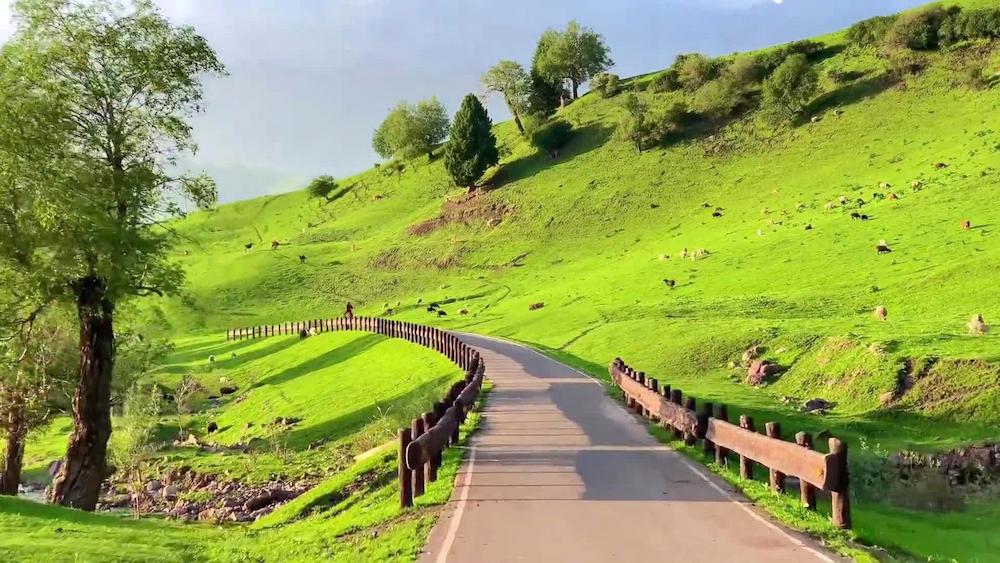
Kuerdening is the famous one — a broad valley that runs north to south instead of sideways like every other gorge in Ili, thick with old Schrenk spruce. Tourism brochures put it 88 km southeast of the seat; navigation apps measure closer to 52 km and about 70 minutes to the entrance, because they stop at the gate while the brochures count to the inner scenic core. Either way it is an easy morning drive. Our full write-up of the valley and its World Heritage status is here: Kuerdening.
Qiaxi (Chapxi) sits roughly 72 km southeast, a two-hour run on a narrowing mountain road through Jixgalang township. It is quieter and, to many locals, prettier — a forest park with a stone-gate waterfall, a “swallow bridge,” and stands of spruce the herders call “the king of the spruce.” The ticket is around 30 yuan and you can drive in.
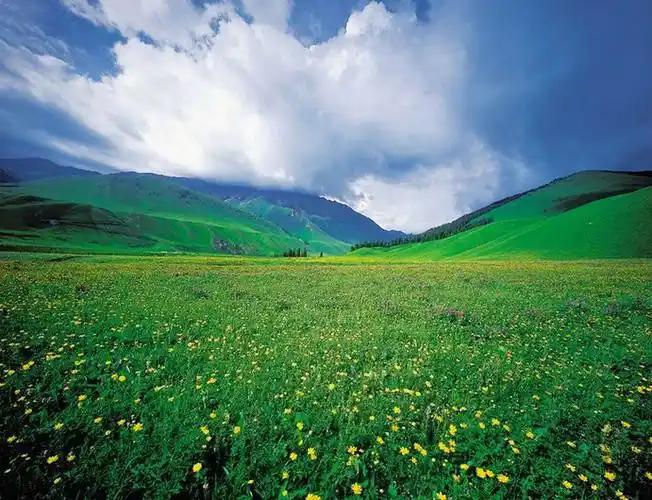
The Wild Walnut Valley is the sleeper. About 15 km from town, it protects the only wild walnut (Juglans regia) forest left on earth, and in April and May the trees throw a short, pale bloom. It is a half-day walk, not a destination, but it is the easiest “something different” you can add from the seat. We covered Gongliu’s wild apricot valleys across the county in more detail elsewhere.
Reaching the county seat from Yining
Yining is the natural arrival point, with its airport and the blue-doored Kazanqi quarter worth a night itself. From there Gongliu is about 1 hour 50 minutes by car, roughly 110 km, on good paved road. Coaches run several times a day for around 28 yuan a seat. There is no train to Gongliu, so a car or the bus is it; if you are chaining the Ili loop, most people self-drive or hire a driver in Yining. The Bagua city of Tekes lies a little further east and makes a natural add-on.
Hotels and yurts: sleeping in town versus the valleys
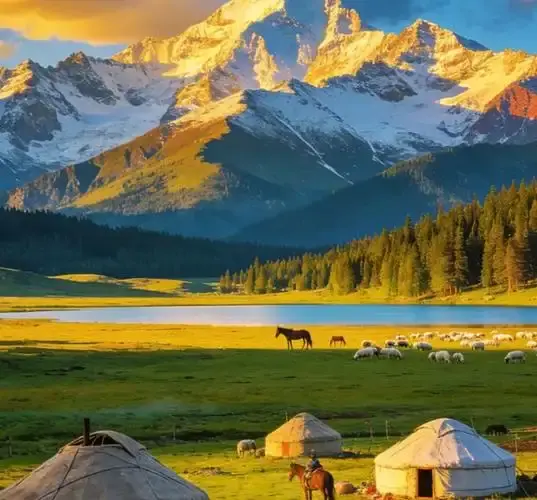
The seat has a solid set of mid-range hotels along Xinhua Road and the ring roads, the sort with parking, hot water, and a breakfast buffet, usually 200–350 yuan a night in season. That is a fraction of what a yurt inside Kuerdening or Qiaxi will run, and you get a real mattress. Inside the parks, a Kazakh yurt stay is the memorable option — wood stove, milk tea on arrival, the stream outside your door — but it books out in July and August and the walls are thin. Our pattern became: two nights in town, one night in a valley yurt if the weather looked good.
A night at the Xiujie food street
This is the part of basing in Gongliu we did not expect to enjoy this much. Xiujie is a single street of grills, noodle pots, and fruit stands that gets going after nine in the summer. We worked through it like this: start with a wild-mushroom hotpot (the county sits in mushroom country), move to naan-wrapped lamb and samsa fresh off the coals, and finish with honey-baked bread and a cup of milk tea while the evening call to prayer faded. The air-dried horse meat and naren (wide noodles under horse meat) are the local pride, and the hand-grabbed lamb was the best we had on the whole Ili trip — simply boiled, salted, and eaten with the hands.
Prices are gentle. Two people can eat very well for well under 100 yuan, and the vendors remember a face; by our third night the bread lady had our order half-made.
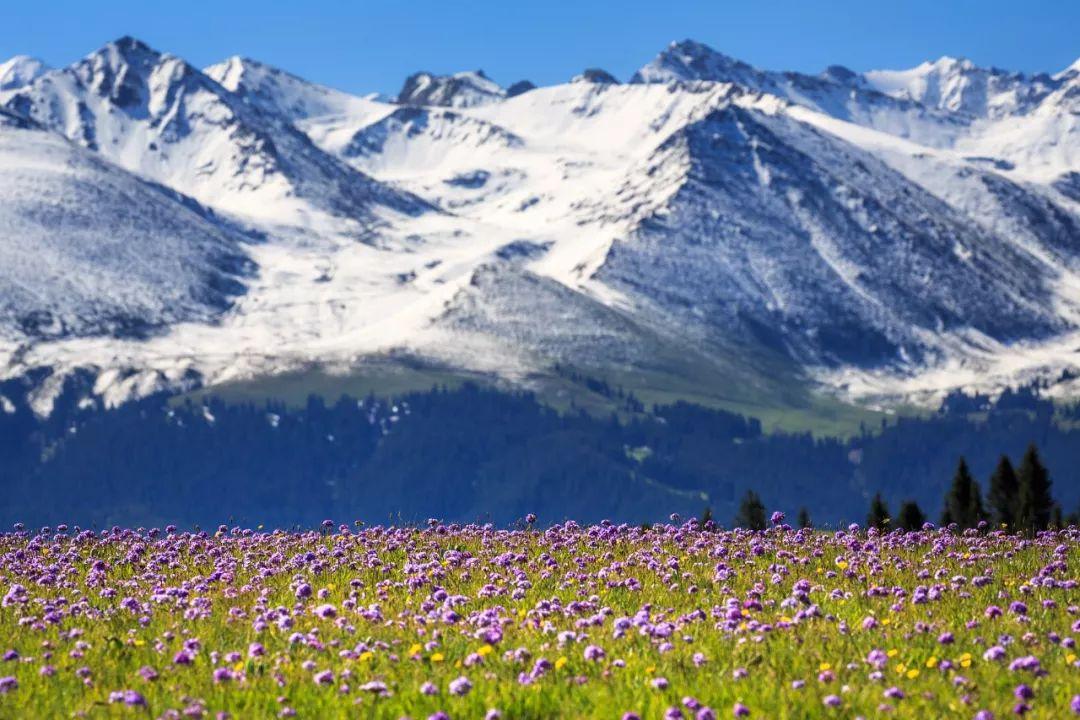
The gateway loop we drove from the county seat
Here is the drive we ran on our last visit, basing in town both nights:
Day 1. Left the seat at 8:30, reached the Kuerdening gate by 10, drove the 60 km self-drive loop (vehicles of seven seats or fewer), walked the plank trail by the creek, and were back in town for the night market by 7. Day 2. Took the Qiaxi road through Jixgalang, walked the stone-gate falls and the swallow bridge, and returned the same evening. Total driving was under 300 km and we never paid for a second hotel. If you would rather sleep in the spruce, swap the second night for a yurt and add a slow morning.
Money, fuel, and signal in a small county town
The unglamorous stuff is exactly why the town wins. There are ATMs from the big state banks on the main roads, two fuel stations (fill up here — there is no fuel inside the parks), and mobile signal is full-strength in the seat but patchy once you are up a side valley; download your maps before you leave. The county hospital and several pharmacies are on the ring road. Carry some cash for the small vendors at the markets, who may not take a phone payment. None of this is exotic, but it is the difference between a small problem and a spoiled day when you are an hour from the nearest town.
When to come, and why the town still wins in peak season
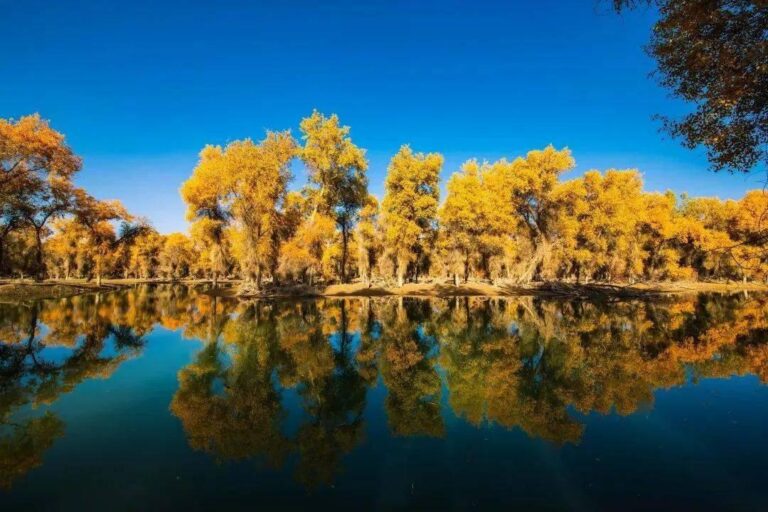
May through August is the easy answer: the meadows are green, the orchards and wildflowers are out, and the mountains are 8–10 degrees cooler than Yining. September and October turn the spruce and poplar gold and thin the crowds. April is its own thing — apricot and apple blossom across the valley — and we wrote up the April blossom route separately. The point for basing is peak season: in July and August the in-park yurts sell out and the car parks jam by ten. Sleeping in town and driving in early is the one reliable way to beat both.
Common questions about using Gongliu as a base
Is Gongliu Town worth a night on its own? Yes, as a base, not as a sight. Treat it as your logistics hub and the valley days get much easier.
Do I need a car? Effectively yes. There is no public transport from the seat into Kuerdening or Qiaxi, so self-drive or a Yining driver is the only realistic option.
Can I do Kuerdening and Qiaxi in one day? You can drive past both, but to actually walk them you need a day each. We based in town and did one per day.
Is it cold at night? The seat is mild in summer; the valleys drop 8–10 degrees after dark, so pack a layer even in July.
A few honest caveats
Distances vary by source: the county’s tourism copy cites 88 km to Kuerdening while navigation apps show about 52 km to the gate, because they measure to different points. Tickets and opening months change, and some valley roads close after heavy snow, so confirm with the scenic areas before a winter trip. This guide reflects our visits in 2024–2026; treat any price as a ballpark and check the official channels. We are travellers, not the tourism bureau, and we have noted where we are unsure rather than guess.
About this guide’s author
Karl Huang is a travel writer who has spent several seasons driving the Ili valley of Xinjiang, from the Sayram lake ring road to the southern grassland counties. He prefers a real bed in a county town and an early start over a valley yurt when the weather is uncertain, and he writes these guides from his own trips rather than from brochures. He can be reached through the Xinjiang Attractions editorial desk.