Published: November 1, 2026 | Author: Xinjiang Attractions Editorial Team
On our first week driving Xinjiang we lost count of the nights that ended the same way: a low plastic stool, a coal brazier glowing orange, and a stack of Xinjiang kebabs cooling on a paper plate between us. These are not the refined skewers of a restaurant menu. They are chunks of lamb, fat and lean threaded together, dusted with cumin and chili, and cooked over open charcoal until the edges blacken. If there is one street food that defines the region after dark, this is it, and this guide comes from the many evenings we spent watching the same grill masters work.
| Item | Detail |
|---|---|
| Local name | 烤肉 (kǎoròu), chuanr (串儿); Uyghur: kawap |
| Main meat | Lamb, cut into roughly 2 to 3 cm cubes with fat left on |
| Spice rub | Ground cumin (孜然), chili flakes, salt; sometimes a pinch of pepper |
| Typical price | 3 to 6 yuan per skewer at a city night market; less in small towns |
| How to order | By the dozen or half-dozen; say the number, not the plate |
| Best with | A piece of nang, a cold beer, and a stool close to the coals |
The numbers behind a skewer
A Xinjiang kebab looks simple and, in the right hands, it is. The table above is the cheat sheet we wish we had on night one, because the numbers tell you why this food shows up everywhere from a Turpan side street to a five-star hotel buffet.
The skewer is small by design. Three or four cubes of lamb sit on a flat metal rod, and the price stays low because the meat is local, the labor is fast, and the grill never cools. What changes from town to town is the ratio of fat to lean and how heavy the hand with cumin. We cover the spice side below, but the takeaway is that a filling evening for two rarely costs more than a mid-range cafe lunch back home.
Why we started counting skewers instead of meals
The night that turned kebabs from a snack into a habit happened in Yining, late July, in a roofless backyard behind a Hui noodle shop. A father ran the brazier while his daughter stacked skewers on a tray, and the regulars did not order so much as hold up fingers. By the time we left we had eaten nineteen between three people and nobody had looked at a menu. That is when we stopped planning dinners and started planning around the nearest grill.
What hooked us was not the meat but the rhythm. The coals crackle, the fan kicks up a spark, and ten minutes later a fresh stack lands on your paper plate still steaming. You eat, you talk, you wave for another round. In Xinjiang the kebab is less a dish than a clock that marks the end of the day.
The butcher’s math: fat, lean, and the third cube
Ask a grill master what makes a good skewer and the answer is never the spice. It is the cut. Lamb in this part of the world carries a thick layer of tail and back fat, and the cook threads it on purpose between the lean cubes. The fat renders over the coals, basting the meat and keeping it from drying out in the two minutes it takes to cook.
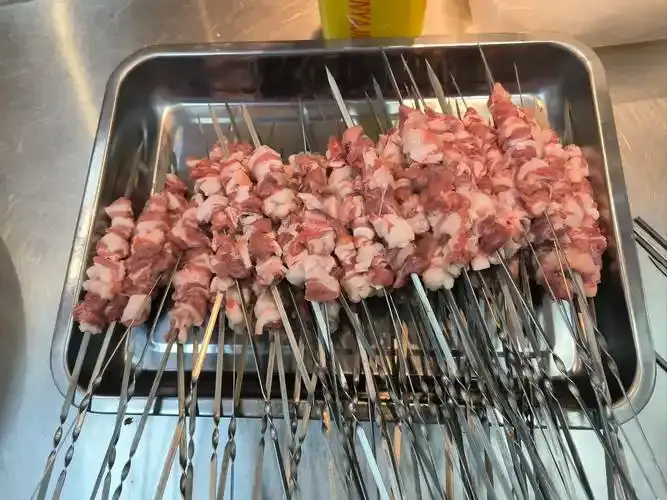
We learned to watch for the “third cube,” a generous chunk of pure fat near the top of the stick that many southern cooks add for flavor. In Ili, where the lambs graze on mountain grass, the meat is pale and mild and the fat stays light. Farther south, toward Kashgar and Hotan, the desert lambs are gamier, and the cook leans harder on cumin to round the edge. Either way, a skewer with no fat is a mistake tourists make once.
The grill master behind Xinjiang kebabs
The brazier itself is a shallow steel box filled with glowing charcoal, and the only tool the cook trusts is a flat fan. A slow wave cools the bed; a fast one sends flames up the sticks. Watch a busy station and you see the same move repeated: slide the row of skewers to the edge, turn them a quarter, fan once, slide back. The whole dance is timed to the sizzle, not a timer.
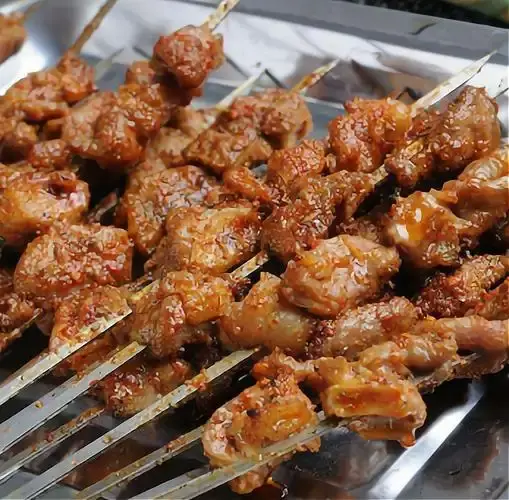
Oil drips, flares lick the meat, and that is exactly the point. The flare is what gives a Xinjiang kebab its smoky crust, the part you cannot fake in an oven. When the edges go black and the fat stops spitting, the cook knocks the stick against the grill to shed the ash and hands it over. No plate, no fork, just the stick.
Ordering by the dozen: how the count works
You do not order “a plate.” You order a count. Ten skewers is 十串 (shi chuan), twenty is 二十串, and the cook often brings them stacked in bundles of ten on a single skewer-pin through the handles. Point, hold up fingers, or just say the number; most stalls keep it that simple. Splitting a bill later is easy because everyone knows roughly how many they pulled.
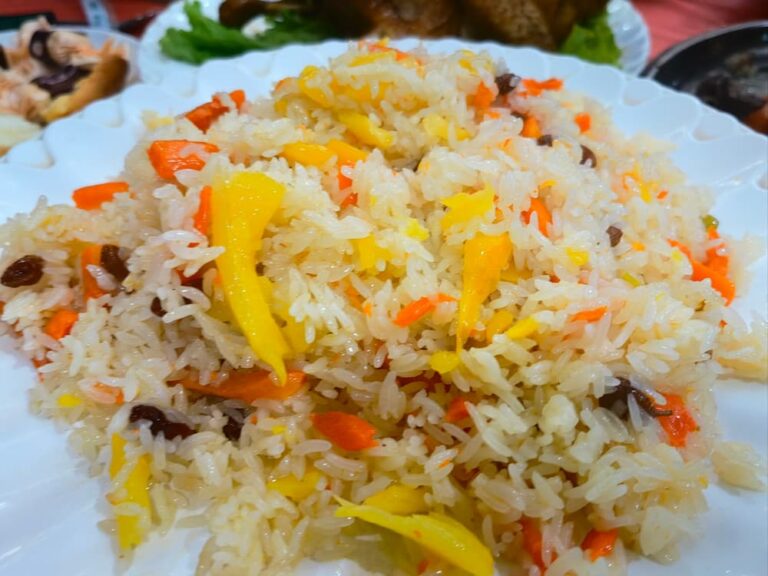
If the pile looks small for your group, ask for another ten rather than a vague “more.” We have seen travelers wait twenty minutes for a round that never came because the word “some” does not exist at a grill. For the rest of the table talk, our piece on Xinjiang polo covers the rice dish that often shares the table, and the Xinjiang banmian guide explains the noodle that fuels the days in between.
Nang on the side, beer in the hand
A kebab without nang is a missed move. The round flatbread is the utensil: tear a corner, pinch the meat off the stick, and use the bread to mop the spice and oil left on the plate. The charred bits stuck to the nang are the best part, and locals treat the bread as part of the order, not a side.
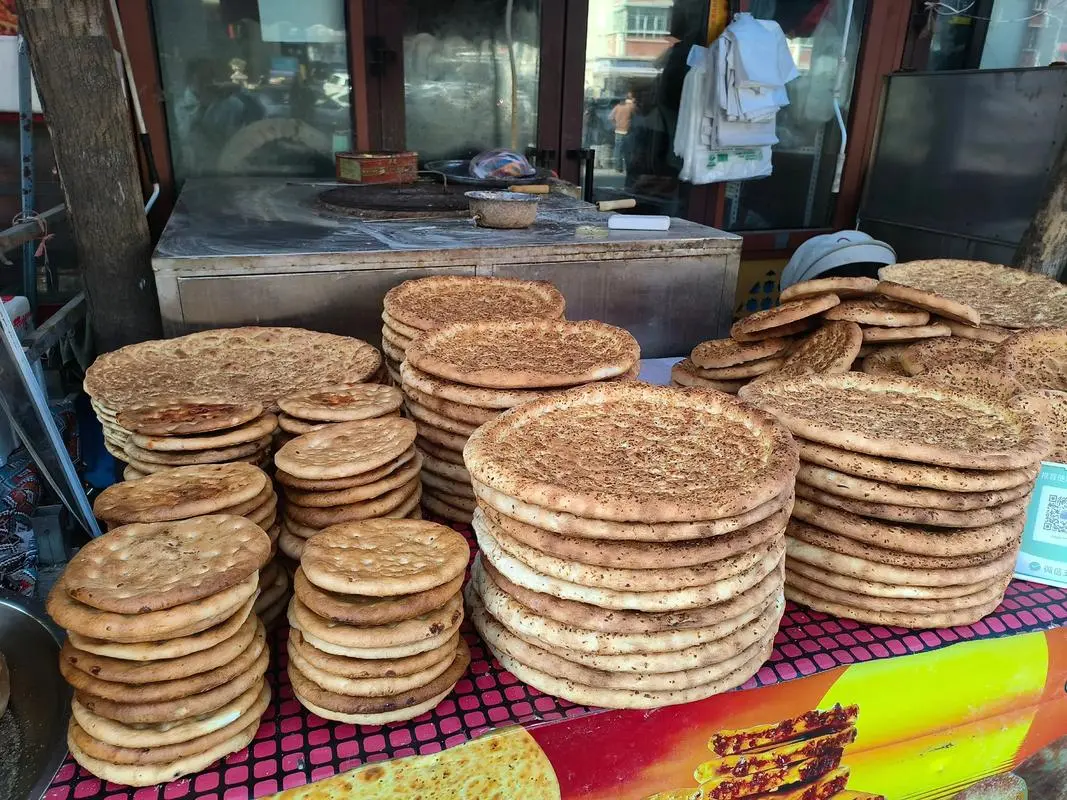
To drink, the default is a cold beer in summer and a warm one in winter, though in many Muslim-run stalls you will more often see kvass or soda. The point is the same: something fizzy and cold to cut the fat and the cumin. The nang pit roast, where meat is cooked inside the bread oven, is the close cousin of the skewer if you want to see how the two meet.
When the grill moves indoors: DIY barbecue restaurants
Not every kebab happens on the street. Across the region you will find restaurants built around a central brazier sunk into the table, where the raw skewers arrive on a tray and your group does the cooking. This is 自己烤 (grill it yourself), and it turns dinner into a two-hour project of turning sticks and arguing over doneness.
The staff lights the coals and brings marinated lamb, plus plates of vegetables, tofu, and the inevitable plate of nang to toast over the edge. It is louder and slower than a street stall, and a good pick when the wind is up or the group is large. The Xinjiang samsa guide covers the baked version of the same oven culture if you want the no-effort side of it.
Why the lamb tastes different across Xinjiang
The single biggest variable in flavor is where the lamb grew up. Ili lambs eat mountain grass and drink clean runoff, so the meat is mild and the fat almost sweet. Around Kashgar and Hotan the animals graze sparse desert pasture, the meat is darker and stronger, and cooks compensate with more cumin and chili. Up in the Altai, beef and horse skewers show up alongside lamb because that is what the herds give.
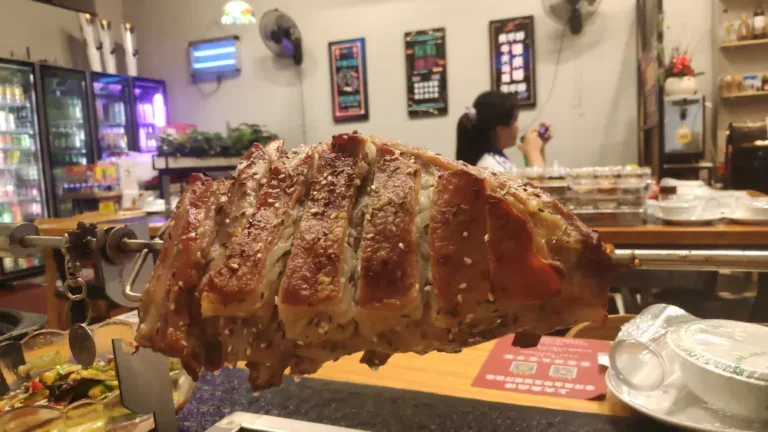
None of this is written down for the traveler, which is why the same “kawap” can taste like two different foods a thousand kilometers apart. The Xinjiang roast whole lamb tradition takes the same meat to its largest form, and it is worth seeing at least once if your trip runs long.
A simple evening plan built around the grill
You do not need a reservation or a plan beyond “find the smoke.” Our standard evening, anywhere in the region: drop the bags at the hotel, walk toward the nearest night market or busy intersection, and look for the brazier with the longest local queue. Order twenty skewers, one nang, and two drinks, then eat standing or on the low stools.
After the first round, walk a block and repeat at a second stall to compare the spice. Two stops is plenty; three is a commitment. If the night is cold, the indoor DIY spots above are the fallback, and they keep the same logic: count, sit, eat, repeat.
Notes for first-time grill watchers
A few things we wish someone had told us. Carry a little cash, because the tiny stalls with the best meat often take phone pay inconsistently or not at all. Watch the first stick for flare-ups; the oil that drips is what makes the fire jump, and a skilled cook handles it without a word. If you prefer meat well done, say 多烤一会儿 (cook it a bit longer) before the stick goes on.
Kebabs are meat, full stop, so vegetarians will be left out at the grill; fill that gap with nang, the roasted buns, or a vegetable dish elsewhere. On hygiene, the high turnover at a busy stall is your friend: the oil is fresh, the meat moves fast, and the crowd is the inspection. Use the same judgment you would at any popular open-air eatery.
Questions that come up at the counter
How much does a skewer cost? Usually 3 to 6 yuan in a city night market, often less in a small town or a campus stall; the price climbs only at tourist-front restaurants.
Can I ask for less chili? Yes. Say 微辣 (mild) or 不辣 (none), and the cook will hold back the flakes, though the cumin stays.
Is it safe to eat at a street grill? Generally yes where locals queue; the heat kills off most risk and the turnover is high. Pick the busy stall over the empty one.
Do I need to tip? No. You pay the sticker price and that is the end of it.
A straight word on what to expect
We write this from our own nights at the brazier, not from a review app or a sponsored list. Prices, spice levels, and even the habit of a free extra nang vary by town and by year, so treat the specifics above as a starting point and confirm at the stall. This is travel guidance, not an endorsement of any single cook or shop, and we are not paid by anyone we mention.
Who wrote this kebab guide
This guide was put together by the Xinjiang Attractions Editorial Team, a small group of writers who have eaten at grills from Urumqi to Hotan across multiple seasons. We count our own skewers and update pieces when the road changes. If a stall has closed or a price has moved, tell us and we will fix it.