Published: October 2, 2026 | Author: Xinjiang Attractions Editorial Team
We have stood on the shore of Sayram Lake in three different seasons, and the winter version is the one that caught us off guard. Most travellers picture Xinjiang’s largest alpine lake as a blue mirror ringed by green hills. Freeze it solid, drop the temperature to minus twenty-five, and a second feature appears under your feet: pale oval bubbles locked in clear ice, suspended like coins a few centimetres down. This guide is about that specific winter phenomenon, the ice bubbles of Sayram Lake winter, and exactly when and where you have the best chance of seeing them. It is also part of the broader case we make for winter in Xinjiang as a season worth the cold.
Why Sayram Lake Produces Ice Bubbles at All
The lake sits at about 2,070 metres in the Bortala valley, a closed basin with no outlet. Plant matter and algae on the shallow bottom keep releasing small amounts of gas through the cold months. As the surface freezes from the top down, that gas has nowhere to go and gets sealed into the ice in layers. We are not talking about a rare chemical event; it is the same basic process you see on Canadian lakes or Lake Baikal, just in a setting most visitors never associate with ice.
What makes Sayram different is clarity. Because the water is saline and low in suspended sediment, the newly formed ice stays transparent instead of turning milky white. That transparency is what lets you see the bubbles from above rather than only at the edge. On a calm, wind-free morning the floor of ice reads like a sheet of frosted glass with coins scattered underneath.
Sayram Lake Winter: Why the Bubble Window Is So Narrow
Ice bubbles are not a December sight. The lake needs a solid, thick lid first, which in most years means waiting until mid-January. Our clearest encounters were in late January and early February, when the ice was roughly 40 to 60 centimetres thick and the bubbles were caught well below the surface.
Timing also depends on wind. Bortala is one of the windiest parts of Xinjiang, and Sayram sits right in the channel that funnels those gusts. Strong wind can keep thin ice cracked and snow-scoured, which actually helps visibility but hurts your footing. The sweet spot is a still day after a cold snap, roughly two weeks into a sustained freeze. If you arrive in December you will more likely see slush and moving water than clean bubble ice. For the region as a whole, our best time to visit Xinjiang guide explains why late winter is often the quietest window.
| Factor | Best window | Our note |
|---|---|---|
| Month | Late Jan to mid Feb | Thick, transparent ice; avoid December. |
| Time of day | 09:00 to 11:00 | Low sun angle shows bubble depth; fewer footprints. |
| Wind | Calm to light | Wind scours snow but cracks thin ice. |
| Temperature | minus 15C to minus 28C | Colder gives clearer ice, but dress for it. |
| Access road | Open, icy | Ring road ploughed; check the entrance gate. |
Where on the Lake the Bubbles Show Best
The bubbles are easiest to find in shallow water, because that is where plant gas collects and where the ice is thin enough to read. We had the most luck along the eastern and southern shoreline, away from the main entrance crowds and from the windward western bay that stays churned.
A practical tip: walk out only where you can see the ice is uniformly thick and pale blue, never near inlets or where a stream enters, those stay thin longest. The scenic area’s ring road lets you drive to several pull-offs; we parked at a southern bend, walked ten metres onto the ice, and found the densest field of bubbles of the whole trip. Bring crampons; clear ice is also slick ice.
What It Actually Looks Like: Our Sub-Zero Morning
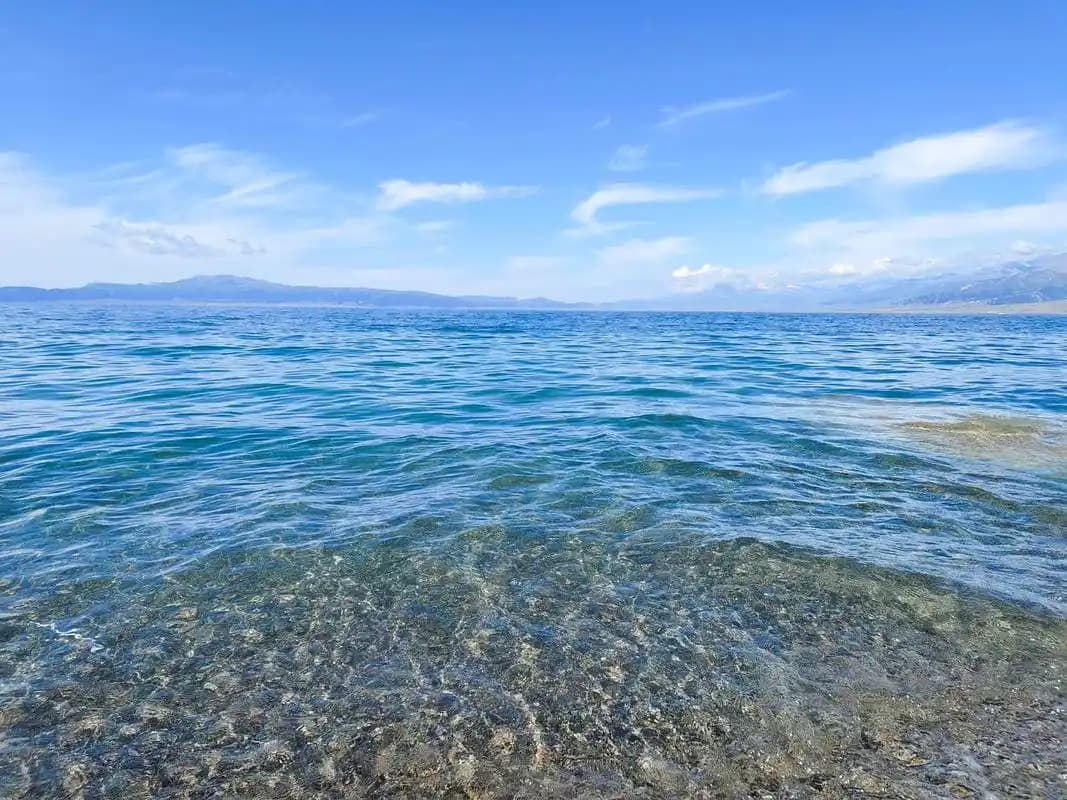
We reached the lake before eight on a February morning that read minus twenty-six on the car thermometer. The gate was open, the car park empty, and the ice stretched flat and pale under a low sun. Stepping onto it felt like standing on a badly lit aquarium floor. The bubbles ranged from the size of a pea to a thumbprint, stacked in wavy horizontal bands where each night’s freeze had trapped a new layer.
The surprise was sound. Solid lake ice creaks and pings as it shifts, and on a silent winter morning those noises carry. We spent maybe forty minutes lying on our stomachs with the camera an inch off the surface before the first wind arrived and started dusting the clear ice with blown snow. That window, the calm before the wind, is the real prize.
Winter Access: Roads, Trains and the Wind Problem
Sayram Lake is about 90 kilometres west of Yining and roughly 50 kilometres north of Bole, the prefecture seat. The G30 expressway runs past the southern shore, and the scenic-area ring road circles the lake. In winter the G30 stays ploughed and drivable; the ring road is cleared too but ices over, so a normal car with winter awareness is fine, a 4WD is not required.
Trains run to Bole and Yining year-round, and both have airports with reduced winter frequency. We usually overnight in Yining, rent a car, and make the lake a day trip, because lodging at the lake itself is limited and cold-season services thin out. The one variable you cannot control is wind: on two of our three visits a gust front rolled in by late morning and dropped visibility, so an early start is not optional, it is the plan.
Staying Warm: Lodging and Layers for a Frozen Shore
Sleep in Yining or Bole and drive in. Lakeside guesthouses exist in summer but most close by November, and even the ones that stay open are basic. We treated the lake as a dawn-to-midday excursion and kept our warm bed in the city.
Clothing is the part first-timers underestimate. At minus twenty-five you need insulated boots with grip, a windproof outer layer (the lake wind cuts through a normal jacket), and chemistry-style hand warmers for the twenty minutes you will spend lying on the ice with bare fingers working the camera. We also carried a thermos; the cold burns calories fast and a hot drink resets your judgement about how long to stay out.
Food and Fuel: Eating Around a Frozen Lake
Do not expect lakeside restaurants in February; the food scene moves to the towns. In Bole we ate well on baked buns, milk tea, and the local whitefish that comes out of Sayram itself in warmer months, here served dried or fried. Yining, half an hour further, has the fuller range of Uyghur and Kazakh cafes and a proper breakfast before a cold start.
Our habit was to eat a big hot meal the evening before, carry zero perishables onto the ice, and refuel in town right after. There is no shop at the shoreline in winter, and the car park kiosk was shut on both our visits.
Photography Notes Most Guides Forget
Bubble ice photographs best on a near-flat, overcast or low-sun day, not under harsh noon light that washes out the depth. We shot at f/8 or smaller to keep both the surface and the bubble layer in focus, and we kept the lens low, almost touching the ice, to stretch the bubbles into the frame.
A polarising filter helps cut surface glare but also kills bubble contrast, so we used it sparingly. The biggest mistake we made on trip one was arriving at noon: the ice had already been walked on, and footprints and melted puddle rings ruined the clean glass look. Go early, go quiet, and leave the ice as you found it.
A One-Day Ice-Bubble Plan from Yining
05:30 leave Yining while it is still dark and cold. 07:00 reach the lakeside gate (confirm it is open; in deep winter some side entrances stay barred). 07:30 to 10:00 walk onto the southern or eastern shore, shoot the bubbles in the low light. 10:30 retreat to the car as the wind builds; drive the ring road to a windward overlook for contrast photos. 12:00 head back to Bole or Yining for a hot lunch. This keeps you ahead of both the crowds (there are none) and the wind, which is the only thing that can end the session early.
Questions Readers Ask About Winter Ice Bubbles
Are the ice bubbles safe to walk on?
Only on thick, clear, uniform ice away from inlets, and even then with crampons and a local check. We never walked more than twenty metres out and always tested ahead with a pole.
Can I see them without a car?
Harder. Buses to the lake thin out in winter. A Yining or Bole rental gives you the early start the bubbles demand; a tour is the fallback.
Is the lake entrance open in February?
Generally yes, but the hours and which gates operate shift with weather. Confirm the morning before, because a wind or snow event can close the ring road temporarily.
Do I need special camera gear?
No. A phone works if you hold it steady and low, though a real camera with a small aperture gives the layered look. The gear that matters most is warm gloves you can peel off.
Is this the same as the frozen Baikal or Harbin bubbles?
Same physical process, different setting. Sayram’s saline clarity is the draw; just do not expect the scale of Baikal or the sculptures of Harbin.
Disclaimer: This guide is based on the editorial team’s personal winter visits to Sayram Lake. Ice thickness, gate hours, road conditions and wind patterns change from year to year and with snowfall. Always confirm critical details with the scenic-area office and local authorities before you travel, never walk onto ice you have not tested, and we are not responsible for any incident caused by outdated information.