Published: July 22, 2026 | Author: Ben Carter, travel-tech writer and long-haul backpacker
Nothing derails a trip faster than a dead phone in a place where you cannot read the road signs. I learned that on my first swing through the region back in 2018, standing in a Kashgar guesthouse with a European adapter that simply would not sit in the socket. So before you pack, it pays to understand Xinjiang power plugs, the local voltage, and how patchy or reliable the mobile signal really gets once you leave the cities. This guide is built from four separate trips, a lot of drained batteries, and notes I actually kept.
Quick reference: Xinjiang power plugs and connectivity at a glance
| Item | What you get in Xinjiang |
|---|---|
| Voltage | 220V |
| Frequency | 50Hz |
| Plug types | Type A (two flat pins), Type C (two round pins), Type I (three flat pins) |
| Adapter needed? | Yes for most non-Chinese devices; a universal adapter covers everything |
| Mobile networks | China Mobile, China Unicom, China Telecom (4G everywhere, 5G in cities) |
| Best SIM option | A China Unicom or China Mobile tourist SIM, or a China-wide eSIM |
| Reliable Wi-Fi | Hotels, cafes, airports, train stations |
| Dead zones | Mountain passes, desert stretches, some Pamir villages |
What I actually experienced with power and signal
Urumqi surprised me. My hotel room had the same three-in-one wall socket you see across the rest of the country, so my flat-pin charger, my round-pin camera brick, and a friend’s Australian laptop plug all fitted the same outlet without a single adapter between us. That convenience does not follow you everywhere, though.
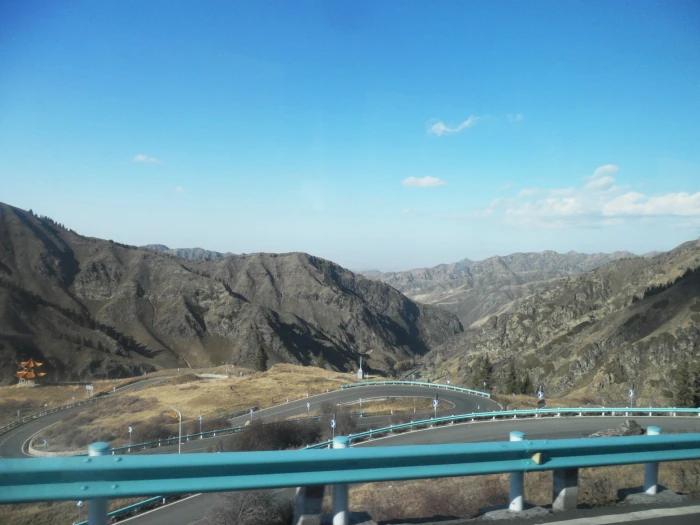
On a self-drive loop through the Pamirs in 2023, my phone showed full bars in Tashkurgan town and then dropped to nothing for long stretches on the Karakoram Highway. I had downloaded offline maps the night before, which turned out to be the smartest thing I did all week. A traveler I met near Karakul Lake had not, and he spent an anxious hour waiting for a signal to reappear so his navigation app could reload. In the far south and up on the high passes, treat connectivity as a bonus, not a given.
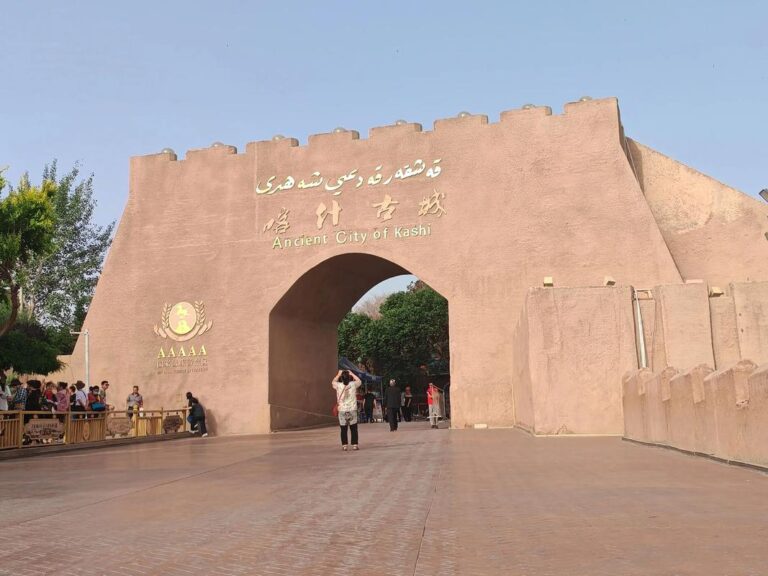
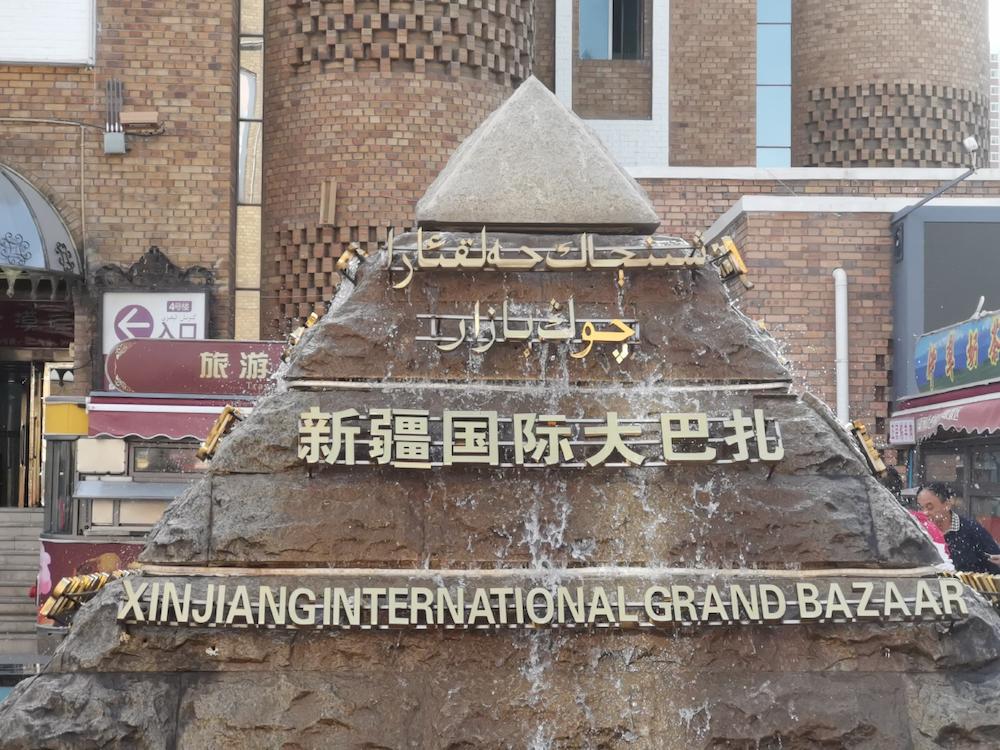
Cities are a different world. In Kashgar’s old town and along the bazaar streets of Urumqi, I streamed video, sent large photo files, and paid for everything by phone without a hiccup. If your itinerary sticks to towns and popular sights, you will rarely feel disconnected. If you head into the mountains or the Taklamakan fringe, plan for silence.
Plug types and the adapter you really need
Sockets here accept three plug shapes. Type A has two flat parallel pins, the same as North America and Japan. Type C is the two round-pin European style. Type I is the three flat pins arranged in a triangle, common in Australia and mainland China. Most modern wall plates are hybrid and swallow all three, but older guesthouses sometimes have single-standard outlets, so do not assume.
My advice after years of fumbling: carry one good universal travel adapter rather than a bag of single-country plugs. Pair it with a compact multi-USB charger so you can top up a phone, a power bank, and a camera from a single wall socket. On nights when a room had only one free outlet behind the bed, that little multi-port block saved me from choosing which device got to survive till morning.
Voltage: will your phone charger in Xinjiang survive?
The grid runs at 220V, 50Hz. Nearly every phone, laptop, and camera charger made in the last decade is dual-voltage, meaning it happily accepts anything from 100V to 240V. Check the small print on the brick; if it reads “INPUT 100-240V,” you only need a plug adapter, not a voltage converter.
Where people get burned is single-voltage gear from 110V countries, think some hair dryers, older shavers, and cheap curling irons rated only for 120V. Plug one of those straight into a 220V Xinjiang socket and you will smell it before you see the damage. Leave that kind of device at home and use what your hotel provides instead.
Mobile connectivity: SIM cards, eSIM, and coverage
Three carriers operate here. China Unicom tends to get praise from foreign visitors because its network plays nicest with international handsets, but China Mobile has the widest rural reach, which matters if you are chasing remote lakes and grasslands. China Telecom sits somewhere in between.
You have three sensible ways to get online. Buy a tourist SIM at Urumqi airport or a carrier shop in town, bring your passport, and expect a few minutes of registration. Activate a China-wide eSIM before you fly if your phone supports it, which skips the queue entirely. Or lean on a portable Wi-Fi egg if several of you are traveling together. Whatever you choose, a working local number also makes mobile payment far smoother, something I dig into more in my notes on what to expect as a first-time visitor to Xinjiang.
Wi-Fi and staying connected offline
Hotel Wi-Fi is standard, even in mid-range guesthouses, though speeds sag in the evening when everyone logs on at once. Cafes in Urumqi and Kashgar offer free connections, and both airports and the big train stations have reliable public Wi-Fi that usually asks for a Chinese phone number to log in, another reason to sort a SIM early.
Because signal vanishes in the wild, I treat offline prep as non-negotiable. Download your maps, translation packs, and any booking confirmations before you leave a city. On long drives I keep a 20,000mAh power bank charged, since a phone burns battery fast while hunting for a signal that is not there. If you are planning a big loop, my 7-day Xinjiang itinerary flags which legs run through the longest dead zones.
Charging on the move: trains, cars, and remote stays
Long-distance and high-speed trains have sockets, usually one under the window or between seat pairs, so overnight rides double as charging stations. Bring your adapter, because those outlets are the same three-pin hybrid you meet in hotels. On self-drive trips, a car USB adapter or a socket inverter keeps devices alive between towns; I burned through more battery navigating than doing anything else.
Out in yurt stays, homestays, and high-altitude guesthouses, power can be limited or run on a generator that only fires up in the evening. Charge everything fully whenever you reach reliable mains, and carry a spare battery for your camera. It is also worth reading up on travel insurance and safety preparation, since a phone that dies in a remote area is a genuine safety issue, not just an inconvenience.
Practical tips before you go
- Pack one universal adapter plus a multi-USB charging block.
- Confirm every charger reads “100-240V” so you can skip a heavy voltage converter.
- Arrange a SIM or eSIM before you leave the airport, passport in hand.
- Download offline maps, translation, and bookings while you still have signal.
- Carry a 20,000mAh power bank; keep it topped up in cities.
- Assume no signal on mountain passes, desert roads, and remote Pamir villages.
- Leave single-voltage 110V appliances at home.
A simple connectivity plan for a week
Here is roughly how I sequence it. Day one, land in Urumqi, grab a SIM at the airport, and load every offline resource over hotel Wi-Fi that night. Days two and three, explore the city and the bazaar where signal is strong and mobile payment is effortless. Days four and five, head toward the grasslands or mountains, charge fully before each departure, and rely on offline maps once the bars drop. Days six and seven, return to a city, back up your photos to the cloud, and recharge everything for the flight home. It is a rhythm that keeps you both powered and reachable without any drama.
Frequently asked questions
Do I need a voltage converter in Xinjiang? Almost never. Modern phone, laptop, and camera chargers are dual-voltage and only need a plug adapter. Single-voltage appliances are the exception.
Will my foreign SIM work? Roaming often works in cities but is expensive and unreliable in remote areas. A local SIM or a China-wide eSIM is cheaper and far more dependable.
Is there Wi-Fi in hotels? Yes, from budget guesthouses to upscale hotels, though evening speeds can drop. Public Wi-Fi at airports and stations usually needs a Chinese phone number.
Can I charge devices on the train? Yes. Sleeper and high-speed trains have sockets that fit the same hybrid plugs used in hotels.
Where does the signal disappear? Mountain passes, long desert stretches, and some high Pamir villages. Weather can worsen it too, so check my month-by-month weather guide when timing remote legs.
Disclaimer
Voltage standards, plug shapes, and carrier coverage described here are based on personal travel through the region across several trips and are accurate to the best of my knowledge at the time of writing. Networks expand and hotels upgrade their outlets, so treat this as practical guidance rather than a guarantee. Always check your own devices’ voltage ratings and confirm current SIM registration rules with the carrier before you rely on them.
About the author: Ben Carter is a travel-tech writer who has spent four separate trips crossing Xinjiang with a bag full of cameras, laptops, and far too many cables. He writes about keeping gear alive on the road, from Silk Road bazaars to Pamir mountain passes, and tests every tip on himself before recommending it.