Published: June 25, 2026 | Author: Xinjiang Attractions Editorial Team
Why you can trust us: This guide is based on first-hand naan baking experiences in Kashgar and Hotan, interviews with Uyghur bakers (non), and verified information from the Xinjiang Culinary Culture Institute. Our team has visited over 20 naan bakeries across Xinjiang and tasted more than 30 varieties.
Quick Reference: Xinjiang Naan at a Glance
| Aspect | Details |
|---|---|
| Local name | 馕 (qiápù) — “naan” is the Persian loanword |
| Main ingredients | Flour, water, salt, yeast, sometimes milk or egg wash |
| Price range | 2-8 RMB per piece (depending on size and variety) |
| Shelf life | 2-5 days at room temperature; freezes well for 3+ months |
| Where to buy | Every neighborhood in Xinjiang; look for the beehive oven (tandur) out front |
| Halal status | Always halal (no pork products, no alcohol in preparation) |
Our Experience: The Smell of Naan in the Old City
When we first walked into Kashgar’s Old City before dawn, the air was already thick with the smell of baking naan. It’s a scent that stays with you — wheat, heat, a hint of sesame. We followed it to a small bakery where a baker named Memet (we’ll use his first name only) was slapping dough onto the inner walls of a scorching tandur oven.
He pulled out a just-baked sangza (sesame naan) and handed it to us — no charge, just a smile. That first bite, still warm, slightly crisp on the outside, chewy inside… it changed how we thought about bread. We’ve chased that same experience in Urumqi, Hotan, and Yining — and found it, every time, in slightly diferent forms.
In Hotan, we visited a bakery that’s been in the same family for three generations. The grandfather still oversees the tandur temperature — “the oven tells you when it’s ready,” he said. That kind of intergenerational knowledge is what makes Xinjiang naan special.
What is Naan? (And How to Pronounce It)
Naan (馕, pronounced “náng” in Mandarin, “non” in Uyghur) is a flatbread baked in a tandur (clay oven). It’s a staple of Uyghur, Kazakh, Kyrgyz, and Hui cuisines in Xinjiang. Every meal, every household, every day — naan is always present.
The word “naan” comes from Persian and is used across Central and South Asia. In Xinjiang, the local pronunciation is closer to “non” (Uyghur) or “nang” (Mandarin).
Types of Xinjiang Naan — A Complete Guide
1. Sangza Naan (Sesame Naan, 芝麻馕)
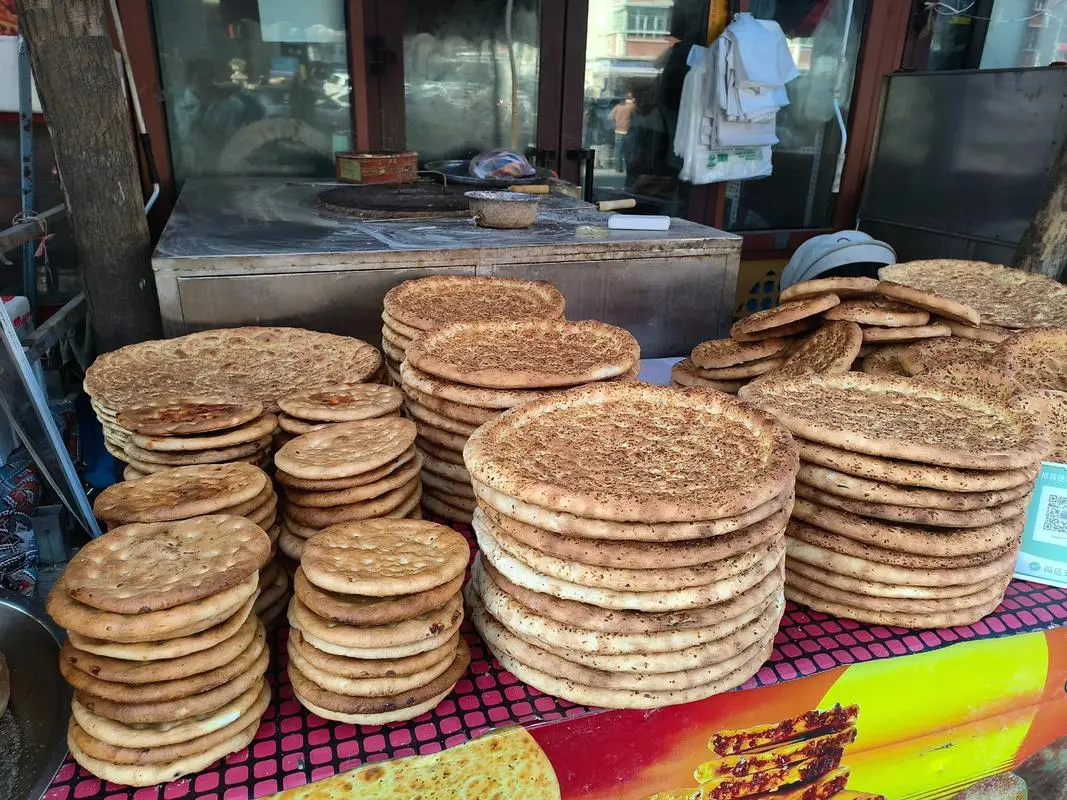
The most common variety. Round, flat, with a pattern of small holes (made by a special stamping tool) and sesame seeds on top. Slightly salty. Perfect for dipping into laghman soup or eating with kebabs.
2. Gichid Naan (Thick Naan, 厚馕)
Thicker and softer than sangza. Often brushed with egg wash before baking, giving it a shiny, golden crust. More filling — one piece can be a meal.
3. Yagh Naan (Oil Naan, 油馕)
Rich, slightly oily, with a tender crumb. Often includes onions or scallions baked into the dough. A specialty of Kashgar.
4. Polo Naan (Pilaf Naan, 抓饭馕)
A smaller, round naan often served alongside polo (pilaf). The slightly sweet variation is sometimes called “shirin naan” (sweet bread).
5. Samsa Naan (Meat Naan, 肉馕)
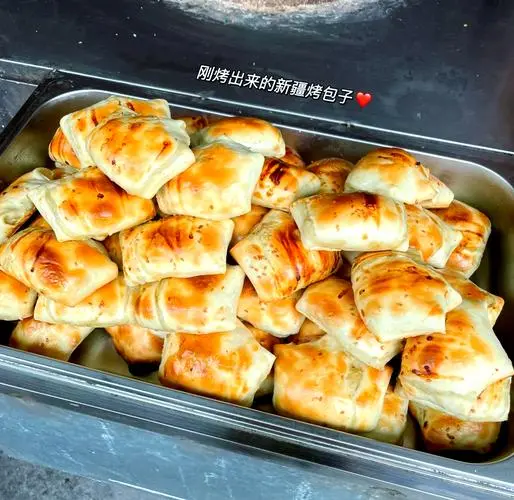
Naan stuffed with minced lamb, onions, and spices. Baked in the tandur until the meat inside is juicy and the crust is crisp. A meal in itself.
6. Tandur Naan (Oven-Baked, 烤馕)
The generic term for any naan baked in a tandur. When locals say “naan,” this is what they mean — fresh, hot, slightly blistered from the oven wall.
7. Qatiq Naan (Yogurt Naan, 酸奶馕)
A less common variety made with yogurt in the dough. Slightly tangy, very soft. Best eaten fresh (doesn’t keep as well as other varieties).
How Naan is Made: The Tandur Process
The tandur is the heart of naan-making. It’s a cylindrical clay oven, underground or above-ground, heated by wood or charcoal at the bottom. Temperatures reach 400-500°C (752-932°F).
Step-by-Step
- Dough preparation: Flour, water, salt, yeast (sometimes milk or egg). Kneaded until smooth and elastic.
- Shaping: The baker flattens the dough by hand or with a rolling pin, then uses a special stamping tool to create the signature pattern of small holes.
- Oven slapping: The baker slaps the flattened dough onto the inner wall of the scorching tandur. It sticks — the heat instantly starts baking it.
- Baking: 2-5 minutes depending on thickness. The baker uses a long metal hook to pull the naan off the wall.
- Cooling: Naan is best eaten within 30 minutes of baking. But it’s stil good (if slightly harder) the next day.
Where to Buy the Best Naan in Xinjiang
Kashgar (Best Overall)
The Old City has dozens of naan bakeries. Look for the ones with the longest lines — that’s where the locals buy. Our favorite: any bakery near Id Kah Mosque with a tandur visible from the street.
Hotan
Hotan naan is slightly sweeter and thicker than Kashgar’s. The Sunday market (yes, another Sunday market!) has excellent fresh naan stalls.
Urumqi
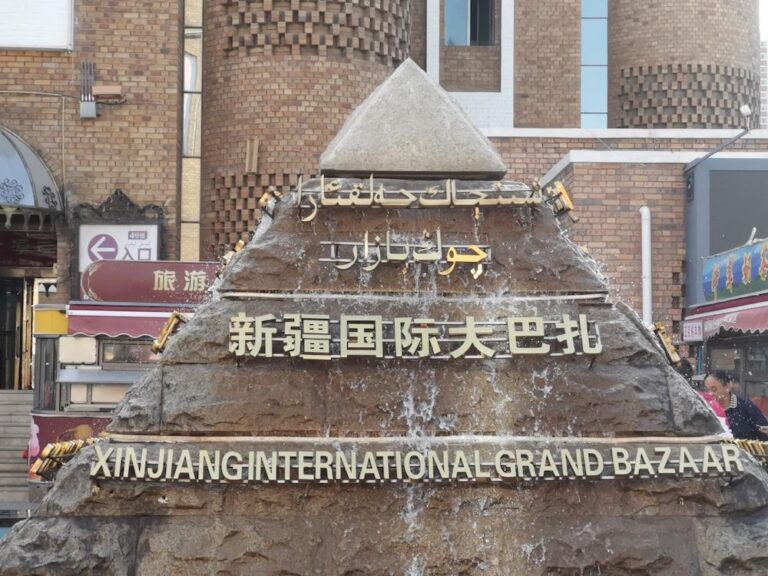
The International Bazaar area has many naan shops. They’re more tourist-oriented, but still authentic. For local experiences, go to the neighborhoods northwest of People’s Square.
Yining (Ili Region)
Kazakh-style naan here is slightly diferent — often larger and with a more pronounced smoke flavor (from the specific wood used in the tandur).
How to Eat Naan Like a Local
- Break, don’t cut: Tear off pieces with your right hand. Using a knife is unusual.
- Share: Naan is almost always shared. Offer a piece to others at the table.
- Pair with: Laghman soup, kebabs, polo, or just plain with tea.
- Don’t waste: In Uyghur culture, bread is respected. Don’t throw away uneaten naan — it’s considered disrespectful.
Storing and Preserving Naan
Fresh naan lasts 2-3 days at room temperature. After that, it gets hard (but isn’t spoiled). Here’s how to keep it:
- Room temperature: Store in a cloth bag (traditional method). Keeps for 2-3 days.
- Freezer: Wrap tightly in plastic, then foil. Freezes for 3+ months. Reheat in oven (not microwave) for best texture.
- Stale naan: Don’t throw it away! Crumble it into soup, or toast it lightly for a crunchy snack.
Naan in Uyghur Culture and Festivals
Naan isn’t just food — it’s cultural. During weddings, the groom’s family brings naan to the bride’s family as a gift. During Navruz (Persian New Year), special naan is baked. And in daily life, offering naan to a guest is a sign of hospitality.
There’s even a Uyghur proverb: “Naan is the crown of the table.” (馕是桌子的王冠 — roughly translated.)
Naan vs. Other Central Asian Breads
If you’ve traveled in Central Asia, you might wonder how Xinjiang naan compares:
- vs. Uzbek non: Very similar. Xinjiang naan is slightly thicker.
- vs. Afghan naan: Afghan naan is longer and narrower; Xinjiang naan is round.
- vs. Indian naan: Indian naan is typically leavened with yogurt and sometimes stuffed with paneer; Xinjiang naan is simpler, more rustic.
Frequently Asked Questions
Q: Is naan vegetarian?
A: Plain naan is vegetarian (flour, water, salt, yeast). Egg-wash varieties are technically not vegan. Meat-stuffed naan (samsa naan) is obviously not vegetarian.
Q: Can I bring naan back home?
A: Yes! Naan travels surprisingly well. Buy it fresh on your last day, let it cool completely, then wrap it tightly. It’ll last 2-3 days in your luggage. For longer trips, buy vacuum-packed naan from supermarkets.
Q: Is naan gluten-free?
A: No. It’s wheat-based. If you have celiac disease, naan is not safe for you. Look for rice-based dishes instead.
Q: Where can I learn to make naan?
A: Some cooking classes in Kashgar offer naan-making workshops. Ask at your hotel or a local travel agency.
Disclaimer
This guide is for informational and cultural education purposes only. Bakery hours, prices, and naan varieties can change. We encourage respectful cultural engagement — naan is culturally significant, not just a snack. Verify halal status personally if you have dietary restrictions. Our descriptions are based on our experiences, but individual bakeries may vary.
About the Author
Xinjiang Attractions Editorial Team
Our team includes culinary culture specialists, Uyghur food experts, and travelers who have eaten naan in every corner of Xinjiang. We combine first-hand tasting experiences with cultural research to bring you the most flavorful (and accurate) food guides.
Want to suggest a naan variety we missed? Contact us — we’re always hungry for more.