Published: July 20, 2026 | Author: Liam Foster
Most people who plan a southern Xinjiang route know Kashgar, and a fair number have heard of the Kizil Grottoes. But the Kuqa Grand Canyon rarely shows up on first drafts of an itinerary, which is a shame. This is a red sandstone gorge about 70 kilometers north of Kuqa city where the Tianshan throws up a wall of rust-colored rock and then cracks it open into a corridor you can walk through. We first treated it as a quick photo stop on the way to the Duku Highway and ended up staying three hours. If you are already in the Kuqa area, it is one of the easiest, cheapest, and most striking half-day trips in the region.
Why you can trust this Kuqa Grand Canyon guide
I am a travel writer who has spent several seasons in Xinjiang’s south, and the notes below come from my own visits to the canyon — most recently in late September 2025, plus an earlier trip in spring 2023. Where I give a price or a schedule, I have flagged it as a figure to confirm, because small sites like this change their ticketing and shuttle setup from one season to the next. I have also checked the geography against the official Aksu tourism introductions and the on-site signage, and I have linked related guides from this site where they help.
| Item | Detail |
|---|---|
| Where it is | ~70 km north of Kuqa city, Aksu Prefecture, at the southern foot of the Tianshan |
| Local Uyghur name | Kizilia (克孜利亚), meaning “red” |
| Also signed as | Tianshan Mysterious Canyon (天山神秘大峡谷) |
| Gorge length | about 5 km; walls up to roughly 200 m in places |
| Entrance fee | around 40 RMB (confirm at the gate) |
| Best months | April–May and September–October |
| Drive from Kuqa | about 1.5 hours by car |
| Do not visit | during or right after heavy rain — flash-flood risk in the narrows |
What it actually feels like inside
When we arrived that September afternoon, the light was already low and the western walls were glowing the color of a heating element. Our driver, Abdush, dropped us at the mouth and said he would wait in the shade of the teahouse tent — there is no shade inside, and he knew it. The floor of the gorge is sand and rounded stone, easy to walk but loose underfoot, and it narrows to a gap where I could touch both walls with my elbows out. At that point the sky becomes a thin blue ribbon.
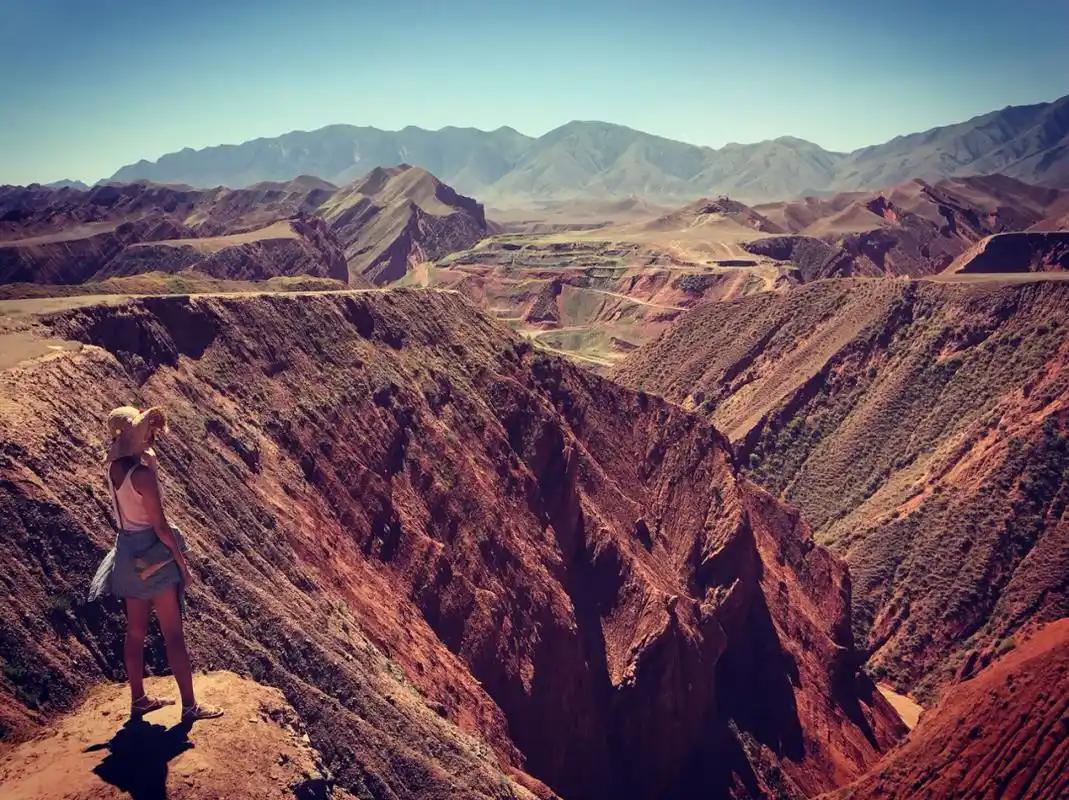
What surprised us was the sound. With the wind moving through the slots, the canyon hums and clacks in a way that makes the name “mysterious” feel less like marketing. About two-thirds in, look up on the left cliff: there is a small Buddhist grotto, the A’ai Cave (阿艾石窟), with Tang-dynasty murals, found in 1999. It is normally closed and you view it from below, but knowing a 1,000-year-old painting sits up there changes how you read the whole place. We found the walk took us just under two hours at a slow pace, with plenty of stops.
Back at the mouth, the teahouse tent sold milk tea for a few yuan and the guard told us, through Abdush, that the wind picks up after three and the sand starts to drift. We believed him only after it happened. By the time we climbed into the car the light had gone flat and the red had cooled to brick. That is the one thing no photo conveys: the canyon is warm to the eye, not just to look at.
Getting to the Kuqa Grand Canyon
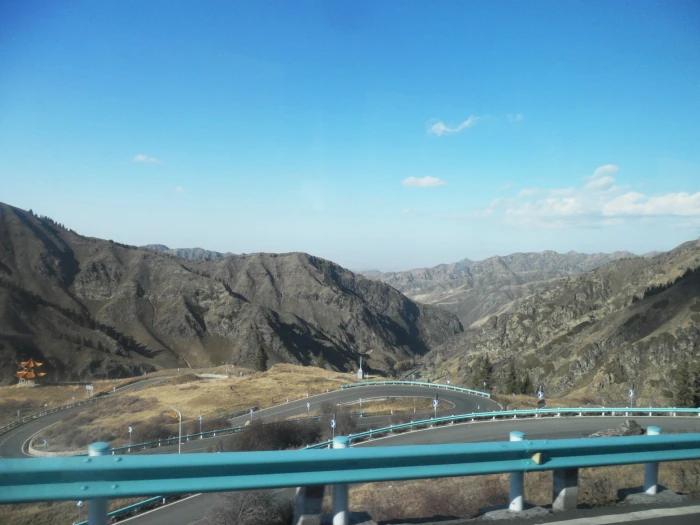
The canyon sits on the southern approach to the Duku Highway, so if you are driving that road north toward Bayanbulak, it is a natural first stop. Coming from Kuqa city itself, the practical options are:
- Hire a car or driver. This is what most visitors do. A half-day round trip from Kuqa runs roughly 200–300 RMB for the vehicle, and your hotel can usually arrange it. We paid 260 RMB in 2025 and our driver waited the whole time.
- High-speed rail to Kuqa, then a car. Kuqa is on the southern Xinjiang line, with trains from Urumqi and Kashgar. From the station it is still a car ride to the gorge, but the rail leg removes a long road haul. See our Xinjiang high-speed rail guide for the network.
- Seasonal shuttle. In peak months there are tourist shuttles from Kuqa, but the timetable is loose. If your day is tight, a private car is the safer bet.
Best time to go
Autumn and spring are the obvious winners. In September and October the air is cool, the light is long and warm, and the red rock reads at its richest. April and May are similar, with the bonus of fewer people. We went at 4 p.m. and that timing was perfect — the low sun did the work the midday sun cannot.
Summer is doable but plan around the heat. There is no shade on the canyon floor, and the rock radiates warmth, so midday is unpleasant. Arrive before 10 a.m. or after 4 p.m. Winter brings cold and occasional closures, but the red walls against snow are remarkable if the road is open. And one hard rule: do not enter during or after rain. The narrows are a funnel, and flash flooding here is a real hazard, not a footnote.
Where to stay
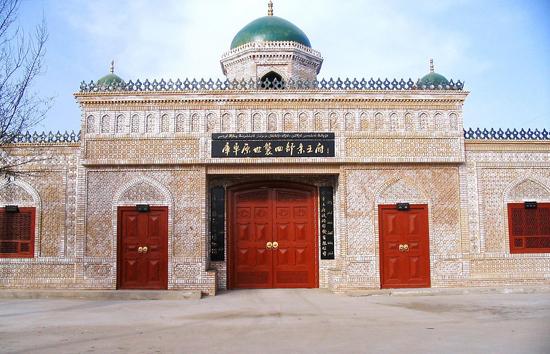
Sleep in Kuqa city and make the canyon a day trip. Kuqa (库车市) has grown fast and now has everything from budget guesthouses around 150 RMB to newer business hotels in the 300–500 RMB range. Staying in town also puts you near the Kucha Prince Palace and the old town, which are worth an evening of their own.
If you would rather push north, you can continue up the Duku Highway and overnight toward Bayanbulak, but that turns a half-day outing into a full driving day with altitude and weather to manage.
Food around the canyon
There is nothing to eat inside the gorge, so bring water and a snack. We carried two liters each and finished most of it. Back in Kuqa, eat well: the local naan is larger and softer than the version elsewhere, laghman noodles are hand-pulled in the morning at the wet market, and the evening food street does polo (pilaf) and mutton kebabs cheaply. A plate of laghman and a couple of skewers ran us under 40 RMB for two. In autumn the roadside stalls near the canyon entrance sell Hotan-style walnuts and small sweet figs, and in summer the melon trucks on the Kuqa approach are worth a stop. Buy water and fruit in Kuqa before you leave — the canyon entrance has at most a tent selling tea.
Practical tips we learned the hard way
- Wear closed shoes with grip. The floor is sand over rounded rock and it shifts.
- Bring sun protection and more water than you think. No shade, strong reflection off the rock.
- Phones lose signal deep in the narrows. Tell your driver your plan and expected return.
- For photos, side light beats overhead. Late afternoon gave us the best walls; midday was flat. Our Xinjiang photography guide covers timing across the region.
- Carry some cash. The gate took card when we went, but small tents and shuttles are cash-only.
- Pair it with the Kizil Grottoes, about 40 km further north on the same road — the two make a strong same-day loop. The Kizil Grottoes guide explains the cave art.
- Note the name confusion: this is not the Urumqi-area Tianshan Grand Canyon. They share a name but sit hundreds of kilometers apart. Keep that straight when you book transport.
A simple one-day plan from Kuqa
08:30 — Leave Kuqa after a naan-and-tea breakfast.
10:00 — Kizil Grottoes, two hours with a guide.
12:30 — Drive south toward the canyon; picnic lunch near the entrance.
14:00 — Walk Kuqa Grand Canyon, allow 2–3 hours.
17:00 — Back to Kuqa for the night market.
If you are through-driving the Duku instead, stop at the canyon on your way north and continue to Dushanzi Grand Canyon farther along the route for a second red-rock gorge of a very different shape.
FAQ
How far is the Kuqa Grand Canyon from Kuqa city?
About 70 km, roughly a 1.5-hour drive north along the Duku approach road.
Is it the same as the Tianshan Grand Canyon near Urumqi?
No. The Urumqi one is a hiking and pasture area hundreds of kilometers to the north. Kuqa’s gorge is a narrow red-rock corridor and is also signed as the Tianshan Mysterious Canyon.
Can I visit without a tour?
Yes. Hire a car in Kuqa, or take a seasonal shuttle. Independent walking inside the gorge is straightforward on the marked path.
How long should I spend?
Two to three hours covers the walk and photos at a relaxed pace.
Is it safe?
The path is safe and well used. The only serious risk is weather: avoid the gorge during or after rain because of flash-flood danger in the narrows.
What does it cost?
The entrance is around 40 RMB. Confirm the current price at the gate, as small sites adjust seasonally.
Disclaimer
This guide reflects our own visits, most recently in autumn 2025. Opening hours, entrance fees, shuttle services, and road conditions on the Duku approach can change, and the canyon may close in bad weather. Confirm details with your hotel or the official Aksu tourism channels before you travel, and check current border and permit rules if you plan to continue south toward Kashgar or the Pamir. This article is independent travel advice, not an official source.
About the author
Liam Foster is a travel writer who has spent several seasons exploring southern Xinjiang, from Kuqa and the Kizil caves to the Pamir Plateau. He writes practical, first-hand guidance for independent travelers and focuses on the small sites that rarely make the headline itineraries.