Published: July 21, 2026 | Author: Liam Foster
Why you can trust this Habahe travel guide
Any useful Habahe travel guide should come from someone who has actually stood on the riverbank at first light, not from a desk in another city. I first reached Habahe in June 2021 on a long drive up from Urumqi, and came back in October 2023 specifically for the birch forest in its autumn colour. Between those trips I logged notes with Adil, a driver from Altay City, and with Gulnur, a friend who grew up in the county and still calls it home. What follows is what we figured out together.
I don’t run tours and I don’t earn a commission from any hotel mentioned here. The numbers below, drive times, ticket prices, permit rules, are things I paid for or confirmed on the ground. Border regions change fast, so read the disclaimer at the end and check the current situation before you go.
Habahe at a glance
| Item | Detail |
|---|---|
| Where it is | Altay Prefecture, far northern Xinjiang, on the Kazakhstan border |
| Best time | Late September to early October for the birch; July to August for green |
| Nearest airport | Altay (AAT), about 75 km east of the county town |
| Birch Forest entry | Around 40 RMB (confirmed 2023; verify before you go) |
| Habahe to Baihaba | About 110 km on the G219, roughly 3 hours by car |
| Suggested time | 2 to 3 days, or a half day if you only want the birch forest |
The birch forest: silver trunks along a cold river
The Habahe Birch Forest sits roughly four kilometres from the county town, spread along both banks of the Habahe River where it runs down out of the Altai. On my October trip Adil let me off at the south gate just after seven and said, “Walk east and you’ll beat the buses.” He was right. By the time the first tour coaches arrived at nine, I had already reached a quiet stretch where the only sound was water moving over stone.
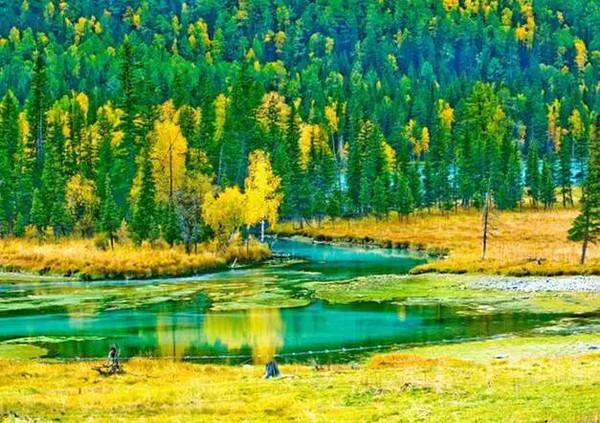
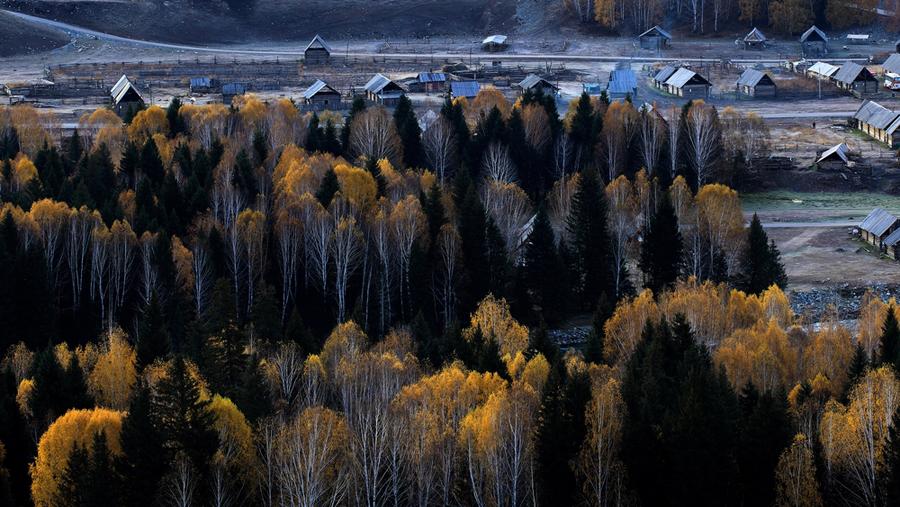
The trees are old. Some trunks are as wide as a dinner plate, and the bark has that papery white look you only get from mature birch. In autumn the leaves go the colour of strong tea, and because the Altai ridge behind already carried snow on my visit, you see three bands at once: gold, dark spruce green, and white peaks. A wooden walkway runs along the river now, but most people stay near the entrance, so keep walking and you’ll find yourself alone.
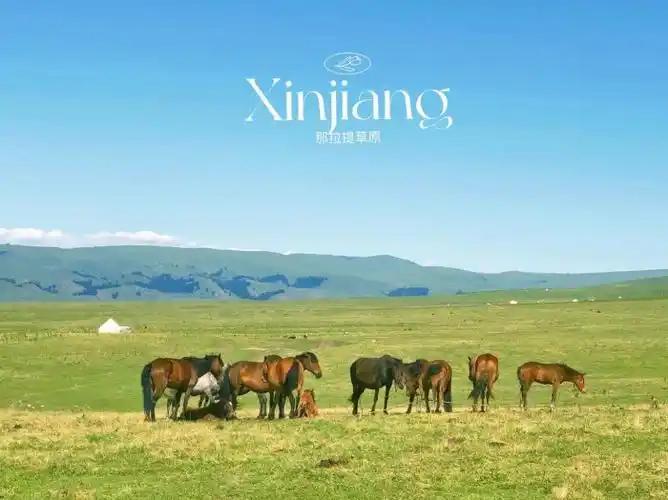
My June 2021 visit looked nothing like that. The leaves were green, the river ran high from snowmelt, and a Kazakh herder was leading a small horse herd down to the water. He waved me over, poured a cup of black tea from a thermos, and laughed when I burned my lip on it. That hour taught me more about the place than any brochure: this is working country, not a staged scene. The forest is the edge of a working river valley, and the town depends on both.
If you want the wider picture of the lake country this forest feeds into, our Kanas Lake travel guide covers the big scenic area an hour or two south of here.
Getting to Habahe
There is no airport inside Habahe county. Most visitors fly to Altay Airport (AAT), which has daily flights from Urumqi that take about an hour, then drive west roughly 75 km on the G216 to the county town. That leg took us about ninety minutes in good weather and closer to two hours when a sudden October snow slowed the pass.
Train is possible too. The railway now reaches Altay Prefecture, and you can ride from Urumqi to Beitun or Altay and transfer by road. It is slower than flying but the Xinjiang high-speed rail guide explains the current lines and where they stop. From Altay City a private car or shared van covers the last stretch to Habahe.
If you are already in the Kanas area, the northern approach runs Habahe to Baihaba and then into Kanas on the G219. That road is rough in places and closed by snow from late autumn into spring, so check conditions. I’ve written more on the Hemu Village guide for the wooden settlements that sit inside the scenic zone.
Best time to visit
The birch turns in late September and holds for maybe two weeks, depending on the first hard frost. In 2023 the colour peaked around October 5, and by October 12 the leaves were already coming down. If golden forest is your goal, aim for the first week of October and book lodging early, because the county’s rooms fill fast during that short window.
Summer, July and August, is green and mild, with long daylight that lets you drive the border road comfortably. The river is full and the grasslands above town are good for a picnic. Winter is harsh and quiet, with temperatures that drop well below zero, but the snow scenes draw a small crowd of photographers, and the wider Altay region is where China’s skiing story begins. Spring, May and June, brings meltwater and wildflowers but also muddy tracks.
For planning around light and colour, the Xinjiang photography guide has a month-by-month breakdown that includes this part of the north.
Where to stay
The county town has a workable range of hotels, from basic guesthouses to a couple of newer mid-range places with heating that actually works. I stayed once at a small place near the main street where the radiator clicked all night but the shower was hot, which mattered more than I expected after a cold day on the river.
If you are combining Habahe with Kanas or Baihaba, sleep inside the scenic zone instead. Hemu and Kanas have wooden cabins and yurt guesthouses, and Baihaba has a handful of family-run rooms. They book out in October, so reserve ahead. Staying in the zone also means you reach the morning mist before the day-trippers from Burqin arrive.
What to eat
This is Kazakh country, and the food shows it. At a roadside stop between Altay and Habahe I had laghman, hand-pulled noodles under a tomato and lamb sauce, for 18 RMB, and it was the best I ate that week. In town, look for baursak (fried dough squares), smoked horse sausage, and milk tea served salty the way local families drink it. Kumis, fermented mare’s milk, is an acquired taste; I tried it once and politely stopped at half a bowl.
The Habahe morning market was the real education. Before eight the stalls fill with rounds of nan, stacks of cheese, and buckets of thick yogurt. One vendor pressed me to try her dried curd, the sour milk疙瘩 that Kazakhs carry on long drives, and sold me a bag for 10 RMB. The river yields cold-water fish that show up grilled at small restaurants, and the county’s honey is a decent souvenir. If your stomach is unsure about unfamiliar food, skim our 20 things to know before you go for a few plain-food tips.
Practical tips
- Bring layers even in summer. The Altai cools fast after dark, and an October morning by the river sat near freezing on my visit.
- Cash helps. The birch forest gate took card, but small roadside stands and some guesthouses in the zone were cash only.
- Baihaba sits in a border defense zone. You need a permit, which you can sort in Burqin or at the Kanas entry; carry your passport.
- Fill the tank in Habahe town. Fuel is sparse on the G219 toward Baihaba, and there is no guarantee of a working pump up there.
- Network coverage thins out past the forest. Download offline maps before you leave the county.
A 3-day sample plan
Day 1. Fly or ride to Altay, transfer to Habahe (about 90 minutes), check in, and walk the birch forest at dusk when the light goes soft.
Day 2. Drive the G219 southwest to Baihaba, the frontier village near the Kazakhstan line, then continue into Kanas. Sleep in Hemu or Kanas.
Day 3. Morning mist at the lake, a slow drive back through Habahe, and an afternoon transfer to Altay for your departure.
Frequently asked questions
Do I need a visa or any special permit for Habahe itself?
Foreign visitors need the usual China entry documents. The county town is open. Only Baihaba, which sits in the border zone, requires the local defense permit mentioned above.
Can I see the birch forest without going into Kanas?
Yes. The forest is separate from the Kanas scenic area and makes an easy half-day trip from town. Most people pair the two, but you don’t have to.
Is Habahe worth it if I’ve already been to Kanas?
They are different. Kanas is a lake and mountain show; Habahe is the quiet river-and-birch stretch on the way in, with far fewer crowds. I’d call it the calmer half of the same trip.
How many days should I plan?
Two nights lets you catch the forest at both light windows. Add a third if you want Baihaba and Kanas without rushing.
Disclaimer
This guide reflects conditions I observed on trips in 2021 and 2023, plus details confirmed with locals. Border rules, road status, ticket prices, and flight schedules in Altay change without notice, especially through the snow season. Always check the current situation with official sources and your accommodation before you travel, and carry proper identification at all times in this frontier region. Nothing here is formal travel advice, and I take no responsibility for changes beyond my knowledge.
About the author
Liam Foster is a travel writer who has covered Xinjiang for eight years, with a soft spot for its northern forests. He has crossed the Altay by bus, train, and borrowed pickup, and prefers the empty hour before the coaches arrive. He last walked the Habahe birch forest in October 2023.