Published: July 21, 2026 | Author: Liam Foster
Why you can trust this Beiting Ancient City guide
When our driver Ablimit turned off the G216 highway about three hours north of Urumqi, I expected another roadside stop. The GPS said Beiting Ancient City, but all we could see was flat Gobi and a low earthen wall swallowed by grey-green scrub. Forty minutes later I was standing inside the footprint of a Tang dynasty frontier capital, running my hand along rammed-earth foundations that had once held a garrison of thousands. I have now walked Beiting twice, once in cool late September and again in early June, and everything below comes from those trips rather than a tourism leaflet.
Where I repeat a figure I could not confirm with my own eyes, I say so plainly. The aim is a guide you can actually use, not a stack of superlatives.
Beiting Ancient City at a glance
| Fact | Detail |
|---|---|
| Where | Jimsar County, Changji Hui Prefecture, roughly 180 km northeast of Urumqi |
| Founded | Tang Beiting Protectorate (Beiting Duhufu), set up in 702 AD |
| Why it mattered | One of the two supreme Tang commands in the west, paired with the Anxi Protectorate at Kucha |
| Layout | Outer wall about 1.6 km square, inner city close to 1 km, built from rammed earth |
| UNESCO | Listed in 2014 as part of the Silk Roads: Chang’an–Tianshan Corridor |
| Cost | Western Temple museum around ¥40–60; the open outer ruins are free to view from the perimeter path |
| Best months | May through October |
| Time on site | 2 to 3 hours |
Our visit: walking the silent capital of the frontier
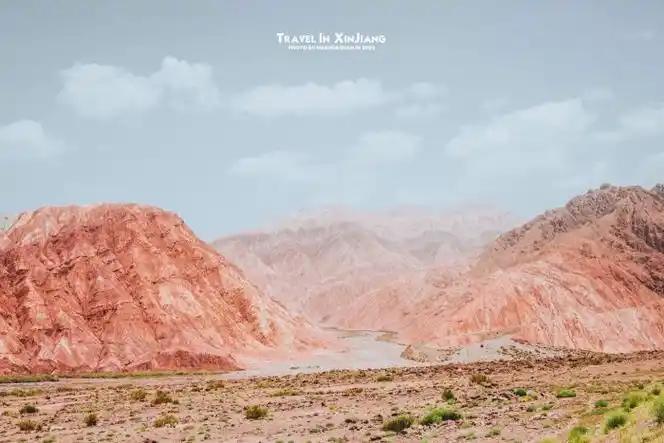
The first thing that hits you at Beiting is the scale. From the parking strip the ruins look like a low rectangle of dirt, but as you walk the southern wall the ground keeps going. The outer rampart runs close to 1.6 kilometres on each side, and in places the surviving wall still stands two to three metres high, its horizontal lines of packed earth clearly visible. Our companion Imin, a Jimsar local who grew up hearing stories about the site, pointed out the faint gate openings on the south and east sides and explained that the Tang builders used a wooden frame filled with layered clay, the same technique you see in older village houses across the region.
Inside the outer wall sits the smaller inner city, where the protectorate administration would have worked. There is little left above ground except foundations and a raised central platform, but the geometry is intact enough that you can picture the grid of streets. We spent about forty minutes circling the outer wall before the wind picked up and drove us toward the shade of the Western Temple.
Getting to Beiting Ancient City
Most visitors approach Beiting from Urumqi. The drive is about 180 kilometres and takes two and a half to three hours on good highway, mainly the G216 north or the newer expressway link toward Jimsar. If you are arriving by air or train, the Xinjiang high-speed rail network gets you to Urumqi efficiently, and from there you will need a car or a private driver because public transport to the site itself is thin. We hired Ablimit for the day, which cost roughly ¥500 including waiting time, and he handled the Jimsar county roads without fuss.
Long-distance buses also run from Urumqi to Jimsar town; from the Jimsar bus station it is another 15 kilometres to the ruins, best covered by taxi or didi. There is no airport closer than Urumqi Diwopu, and no train station at the site, so plan the final leg by road.
Best time to visit
Beiting is an open-air site, so weather decides your experience. From May to October the days are warm and the light is good for photography. We went once in late September, when the Gobi grasses had turned gold and the temperature sat around a comfortable 20°C, and once in early June, when everything was green and the mosquitoes near the irrigation ditches were annoying. Summer afternoons can push past 30°C with no shade on the walls, so morning visits are kinder.
Winter is cold and some facilities close, and a snow-covered ruin is harder to read, so I would skip the November to March window unless you are already in the area. The Xinjiang photography guide has more on timing light across the region if you want to pair this stop with others.
Where to stay
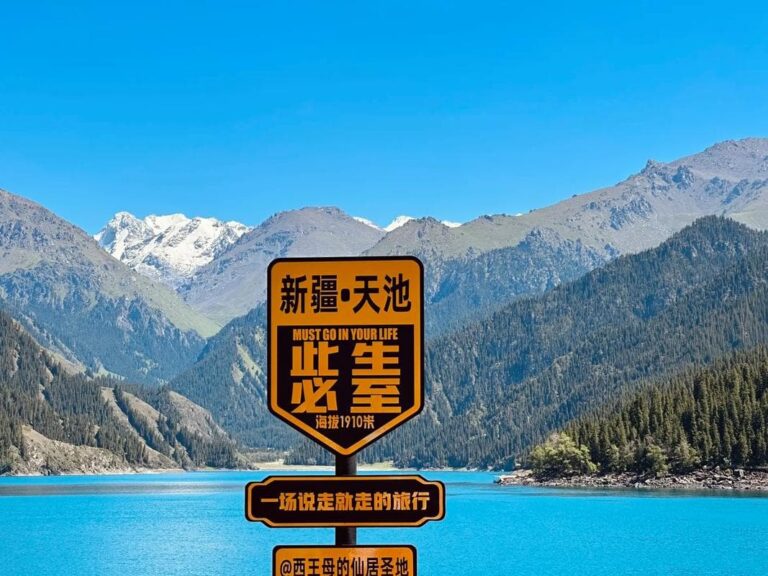
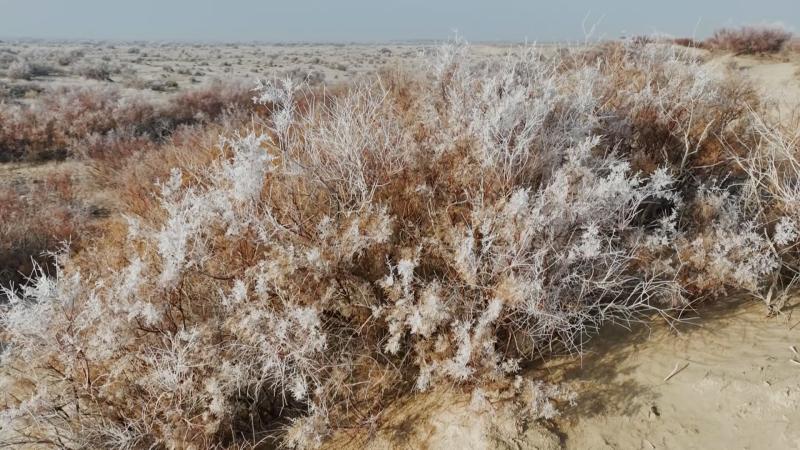
The practical base is Jimsar county town, fifteen minutes from the ruins, where you will find mid-range hotels in the ¥150 to ¥300 range and a handful of small guesthouses. We stayed one night in Jimsar after the September visit and ate well within walking distance of the hotel. If you would rather be in a bigger city, Urumqi is an easy three-hour return drive, and the Tianchi Lake scenic area near Fukang makes a natural pairing on the same northern-Tianshan corridor, letting you sleep closer to the mountains.
Camping at the ruins is not something I would recommend; there is no formal campground and the wind at night is serious. Book a roof instead.
Food to try near Jimsar
Jimsar sits on plain cooking rather than fancy restaurants, which is exactly what you want after a morning on the walls. We ate laghman (hand-pulled noodles with stir-fried vegetables and a little meat) at a corner spot for about ¥18, and later tried the local mutton cooked with onions and cumin, tender and not greasy. The county is known for its safflower (hong hua), and you can buy safflower tea in the market; it tastes mild and makes a decent souvenir. Cold-stream trout from the Tianshan feeders also shows up on some menus, usually grilled. Wash it down with milk tea or a cold bottle of the local soda, and save room for naan hot off the tandemur.
What to see on site
The outer city is the free, walkable part, but the real treasure is the Beiting Western Temple (Beiting Xi Da Si), a large Buddhist monastery about a kilometre west of the city walls. A protective hall now covers the excavated temple, and a raised walkway lets you look down on the preserved murals: flying figures, seated Buddhas, and decorative bands that scholars link to the Gaochang Uyghur period of the 10th to 13th centuries. The colours have faded but the linework is still sharp, and standing above it gives you a real sense of how grand the complex once was.
The whole property belongs to the 2014 UNESCO inscription covering the Silk Roads corridor, and the Silk Road history guide explains how Beiting fitted into the wider Tang and later Uyghur network. If murals interest you, the Xinjiang Museum in Urumqi holds Beiting-related artefacts that round out what you see on the ground.
Practical tips before you go
Bring more water than you think you need, a hat, and sunscreen; there is almost no shade on the outer walls and the Gobi sun is unforgiving by late morning. Sturdy shoes help because the ground is uneven and the perimeter path is loose gravel in places. The Western Temple hall is cooler and has a ticket desk, so keep small cash or a payment app ready for the ¥40–60 entry. Drones are restricted over the ruins, so ask before flying.
For the broader picture, our 20 things to know before visiting Xinjiang covers permits, payment apps, and road conditions that apply across the region.
A suggested one-day itinerary
Leave Urumqi by 8:30 and reach Jimsar around 11:00. Have laghman in town, then drive to Beiting Ancient City for a 13:00 entry. Spend an hour on the outer walls, an hour in the Western Temple hall, and thirty minutes at the small on-site museum. Roll back to Jimsar for an early dinner of mutton and naan, or push on to Fukang and Tianchi if you are staying near the mountains. Total driving is about six hours round trip, so a driver saves the day.
Beiting Ancient City FAQ
Is Beiting Ancient City worth visiting if I have limited time?
If you care about Tang history or Silk Road ruins, yes. It is less dramatic than a lake or a glacier, but it is a genuine UNESCO site you can walk freely, and it pairs well with Tianchi or a Urumqi stop.
How long does the visit take?
Plan two to three hours: one on the walls, one in the Western Temple, plus a short museum look.
Can I visit Beiting and Tianchi in one day?
Yes, with a driver. They sit on the same northern-Tianshan corridor and are about two hours apart by road.
Is the site accessible for older travellers?
The Western Temple hall has a flat walkway, but the outer-wall path is uneven gravel. Take it slow and wear good shoes.
For a frontier site that was abandoned rather than rebuilt, compare Beiting with Subashi Ruins near Kuqa, where the monastery walls were left to the wind.
Disclaimer
This article is based on personal visits in 2023 and 2024 and publicly available information. Opening hours, ticket prices, and road conditions in Xinjiang change, and the figures above (such as the ¥40–60 Western Temple entry and the ¥500 day-driver rate) reflect what we paid or were quoted at the time of writing. Confirm current details with the site or your hotel before you travel, and check any permit or border rules that may apply to your route. This is not official travel advice.
About the author
Liam Foster is a travel writer who has spent the last six years covering China’s western regions, with a focus on Xinjiang’s Silk Road heritage. He has driven more than 20,000 kilometres across the region, from the Pamir plateau to the Gobi edge, and prefers slow, first-hand reporting over resort lists. His work has appeared in regional guidebooks and on tourism blogs. When he is not on the road, he lives in Chengdu and complains about the humidity.