Published: July 26, 2026 | Author: Sofia Marchetti, travel writer and former natural-history museum guide
Most people who reach Jimsar come for one thing and leave the same afternoon. They drive out to the Beiting ruins, walk the crumbled Tang-dynasty walls, take their photos, and head back to Urumqi before dinner. I did exactly that on my first trip in May 2024. Then I came back in September 2025 and stayed four nights, and this Jimsar travel guide is the article I wish someone had handed me the first time. The county has a Jurassic dinosaur geopark, a stretch of coloured desert hills, and a mountain trekking route that predates the Silk Road, and almost none of it fits into a half-day stop.
I spent years guiding visitors through a natural-history collection in Bologna before I started writing about the places those fossils actually came from, so I will be honest about what is worth your time here and what is not. Jimsar (Jimusaer) rewards slow travel, but only if you know what you are looking at.
Quick reference: Jimsar travel guide at a glance
| Item | Detail |
|---|---|
| Location | Changji Prefecture, north foot of the eastern Tianshan, about 150 km east of Urumqi |
| Main draws | Beiting ruins, Silicified Wood and Dinosaur Geopark, Wucaiwan coloured hills, Cheshi Ancient Road |
| Time needed | 2 to 4 days if you want more than Beiting |
| Best season | Late May to early June, and September to mid-October |
| Getting there | Bus or hired car from Urumqi (about 2.5 hours) |
| Rough daily budget | 300 to 550 CNY per person with a shared car |
What Jimsar actually looks like on the ground
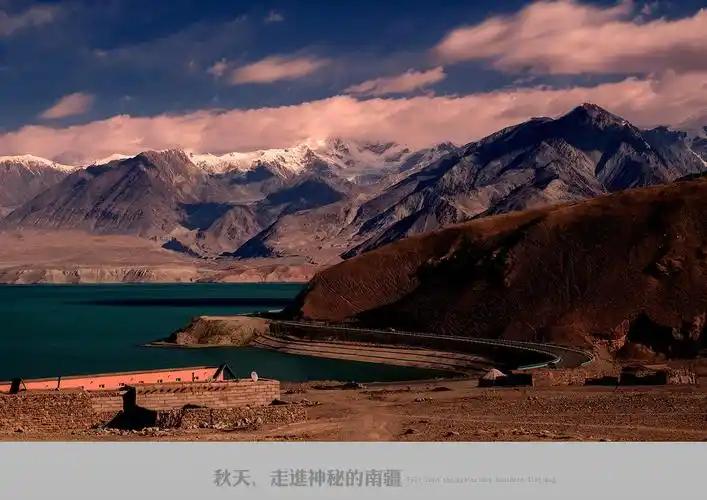
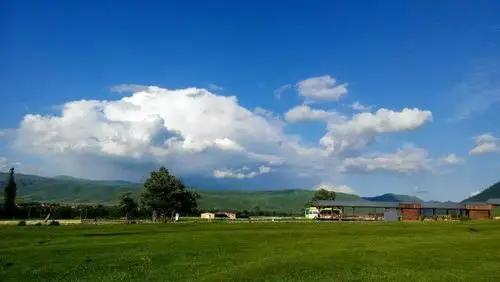
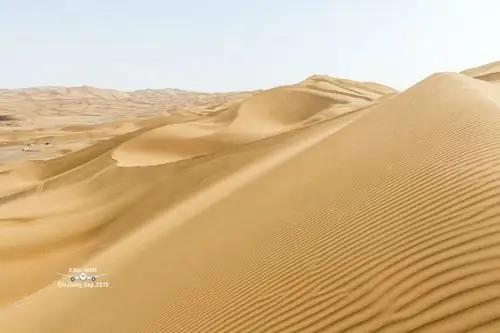
The county town itself is small and functional. Wide streets, a couple of decent hotels, a night market that gets going around eight. You are not here for the town. You are here because Jimsar sits in a rare spot where three landscapes meet: the grassy foothills of the Tianshan to the south, the coloured badlands to the north, and the sand of the Gurbantunggut Desert beyond that.
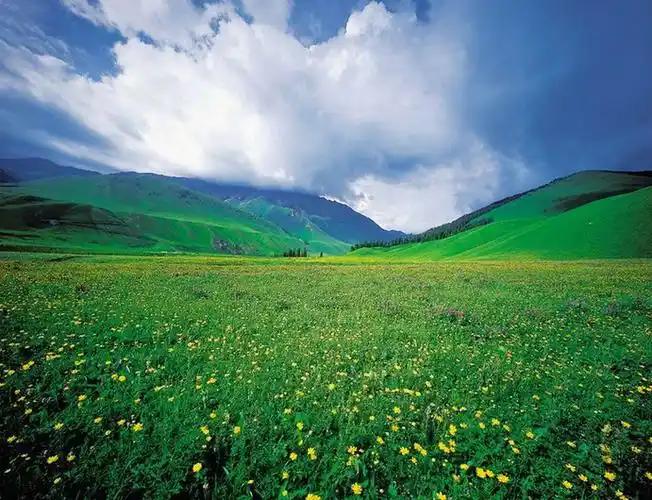
On my second visit my driver, a Kazakh man named Nurlan who farms wheat outside town in the off-season, put it plainly. In spring the foothills go green and the herders move up; in autumn the poplars turn and the light on the badlands gets strange and warm around five in the afternoon. He was right about the light. I have the photos to prove it, and none of them needed editing.
The dinosaur geopark most visitors skip
The Jimsar Silicified Wood and Dinosaur National Geopark is the reason I came back. This part of the Junggar Basin holds Jurassic fossil beds, and the visitor centre displays casts and real petrified logs that are around 160 million years old. As a former museum guide I went in ready to be disappointed by the usual plastic dioramas. I was not. The petrified wood field, where you walk among fossilised trunks lying where they weathered out, is the real draw, and it is quiet enough that on a weekday morning I had a whole trail to myself.
Entry was 40 CNY when I visited, though I would treat any price I quote as a starting point rather than a promise. Bring water and a hat. There is very little shade, and the exhibition hall is the only air-conditioned building for some distance. If you have children who like dinosaurs, this single stop justifies the trip out from Urumqi on its own.
Wucaiwan and the coloured hills
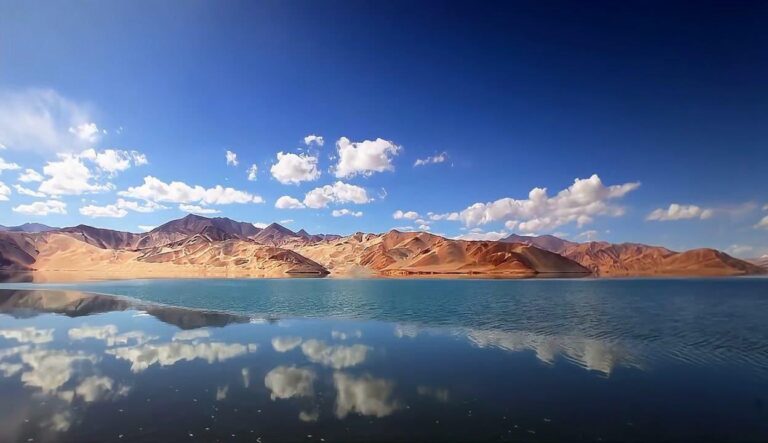
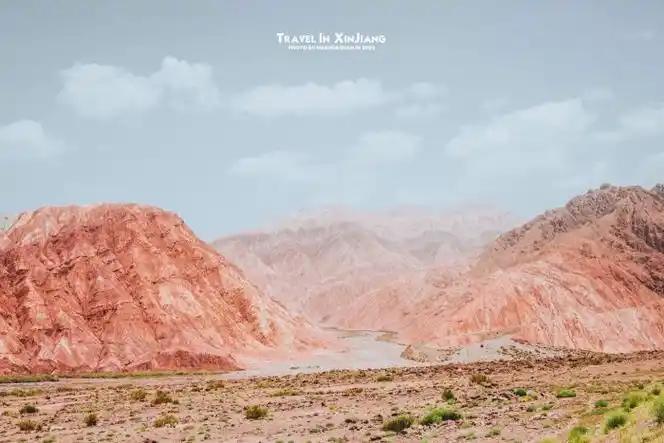
North of the geopark the ground breaks into ridges of ochre, rust, grey and pale green. This is Wucaiwan, the coloured bay, part of the same eroded basin that produces the fossils. It is often confused online with the more famous coloured beach up in Burqin, so to be clear: this is a separate place, closer to Jimsar and much less crowded. Go at either end of the day. Midday sun flattens the colour and the heat off the bare rock is genuinely punishing in summer.
There are no fences and no marked paths in much of it, which is part of the appeal and also the risk. I kept my car in sight the whole time and did not wander far, because the ridges look identical once you are among them and the ground is loose. If you are planning a wider self-drive across Xinjiang, Wucaiwan pairs naturally with the desert scenery further east.
The Cheshi Ancient Road
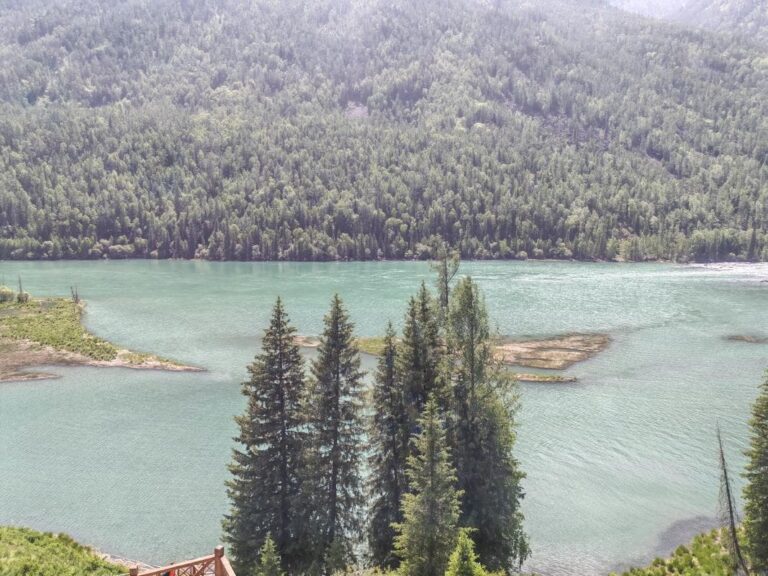
South of town, an old track climbs into the Tianshan toward Turpan on the far side. This is the Cheshi Ancient Road, a route used by the Cheshi people and later Silk Road traffic long before modern highways. Serious hikers walk it over two to three days with a guide and pack support. I only did a day section from the northern trailhead, following a stream up through spruce and past a Kazakh summer camp where a woman sold me a bowl of milk tea and would not take money for the second cup.
Do not attempt the full crossing casually. There is no phone signal for long stretches, weather turns fast at altitude, and river levels change with the day’s snowmelt. If you want the mountains without the commitment, the foothill day hikes give you most of the scenery with far less risk, and Jiangbulake in nearby Qitai offers a gentler alpine-meadow experience if you have a car.
Getting to Jimsar
From Urumqi’s main bus stations there are regular services to Jimsar that take roughly two and a half hours and cost around 45 to 60 CNY. It is straightforward, but buses drop you in town and everything worth seeing is spread out well beyond it, so you will still need local transport. On both trips I hired a car with driver for the day, which ran about 400 to 500 CNY and saved a lot of standing by empty roads. Splitting that between three or four people makes it reasonable.
If you are already basing yourself at Fukang and Tianchi Lake for Tianchi Lake, Jimsar makes an easy add-on to the east rather than a separate trip. Deciding whether to weight your itinerary here at all comes down to the wider question of north or south Xinjiang, since Jimsar is firmly a northern, grassland-and-desert experience.
Best time to visit
Two windows work. Late May into early June brings green foothills and wildflowers, with comfortable daytime temperatures. September to mid-October gives you golden poplars, warm low light on the badlands, and cooler air, which is my preferred season. July and August are hot, and the badlands and desert become hard going by late morning. Winter is cold and most outlying sites effectively close. Check Urumqi weather patterns before you lock in dates, since the region shares that climate rhythm.
Where to stay and what to eat
Jimsar town has a handful of business hotels in the 150 to 260 CNY range. On my second visit I paid 220 CNY for a clean twin room with reliable hot water. Be aware that not every small hotel is set up to register foreign guests; I was turned away from one and waved in at another two streets over, so it helps to call ahead or arrive with daylight to spare. During the summer months you can also stay in a Kazakh yurt up in the foothills, which I did for one night at around 180 CNY including breakfast.
The food is solid northern Xinjiang cooking. The night market does hand-pulled laghman around 22 CNY, lamb skewers at 4 to 5 CNY each, and big-plate chicken to share. I ate a lot of grilled lamb leg, and the local naan is good and cheap. Bring some cash even though most stalls take mobile payment, because my phone’s QR scanner failed twice in a row one evening and only cash got me fed.
Sample 3-day itinerary
Day 1: Morning bus from Urumqi, check in, afternoon at the Beiting ruins, evening at the Jimsar night market.
Day 2: Full day at the Silicified Wood and Dinosaur Geopark, then Wucaiwan for late-afternoon light.
Day 3: Day hike on the northern section of the Cheshi Ancient Road, or a foothill drive, then return to Urumqi in the evening.
Practical tips
- Carry your passport at all times; there are checkpoints on some roads out of town.
- Take at least three litres of water per person for the geopark and Wucaiwan. Shade is scarce.
- Do not rely on phone signal near the badlands or in the mountains.
- Prices for entry and cars change with season and demand; treat my figures as a guide, not a quote.
- If dinosaurs and fossils are the draw, prioritise the geopark early in the day before the heat.
Frequently asked questions
Is Jimsar worth visiting beyond Beiting? Yes, if you have two or more days. The dinosaur geopark and Wucaiwan are the reasons to stay, and they are what most day-trippers never see.
Can I visit Jimsar as a day trip from Urumqi? You can, but you will only manage Beiting and maybe a quick look at the geopark. Two nights lets you do the county justice.
Do I need a guide for the Cheshi Ancient Road? For the full multi-day crossing, absolutely. For a day section from the trailhead, no, but tell someone your plan and turn back in bad weather.
Is Wucaiwan the same as the coloured beach in Burqin? No. They are different places. Wucaiwan is near Jimsar and far less crowded.
Disclaimer
Prices, entry fees, transport schedules and access rules in Xinjiang change frequently and can vary by season and current regulations. The figures and conditions in this article reflect my visits in 2024 and 2025 and are shared in good faith as a general guide, not a guarantee. Please confirm current details locally and follow any checkpoint or protected-area instructions before you travel.
About the author
Sofia Marchetti is a travel writer and former natural-history museum guide based in Bologna, Italy. She has travelled independently across northern Xinjiang and visited Jimsar twice, in May 2024 and September 2025, drawn by its Jurassic fossil beds and quiet coloured badlands. She writes about geology, deep history and slow travel, and pays her own way on the trips she covers.