Published: October 20, 2026 | Author: Karl Huang
The Loulan Museum Ruoqiang is the one place in southern Xinjiang where you can stand face to face with the Loulan civilization without applying for a permit you will almost certainly never receive. The real Loulan Ancient City sits inside a closed military and archaeological control zone east of Lop Nur, and independent travelers are simply not admitted. What most visitors do instead is drive into Ruoqiang County, the dusty oasis town that administers that forbidden ground, and spend a morning inside its museum. We did exactly that in late autumn, and the visit reshaped how we understood the Taklamakan’s lost kingdoms.
What the Loulan Museum Ruoqiang actually holds
The museum opened in May 2011 and calls itself China’s first institution built entirely around Loulan culture. It stands on Shengli Road in the county seat, a low, pale building whose roofline borrows from the Milan stupa and old Loulan mud-brick forms. One wing even carries a date-culture exhibit, a nod to the jujube crop that now defines the county’s economy as much as its archaeology. Inside, the county has gathered more than 5,000 artifacts recovered from Loulan, the Miran ruins, and the Xiaohe cemetery, ranked across 6 first-class, 17 second-class, and 64 third-class pieces. Stone tools, wooden documents, woolen cloth, Han dynasty woven brocade, official seals, and coarse pottery fill the cases.
Before heading down to the remains, we spent time on the ground floor, where the early story is told with stone tools, jade axes, and the kind of small, worn objects that make a lost world feel inhabited. A side hall on local natural resources explains why this corner of the Tarim stays so dry, and why that very dryness is exactly what kept the bodies intact for thousands of years.
The headline object is the “Loulan Beauty” (楼虍美女), a woman’s body preserved by the desert for roughly 3,800 years. Archaeologist Mu Shunying found her in 1980 near the Loulan site. She is tall for her era, with the light hair and facial structure of the region’s early Caucasoid population. She lies on the lower floor alongside other dried remains from Xiaohe, and the quiet in that room is something you feel before you read a single label.
Planning your visit: the essentials
| Detail | What to expect |
|---|---|
| Location | Ruoqiang county seat, Shengli Road, Bayingolin Mongol Autonomous Prefecture |
| Admission | Free. Bring a valid ID card; foreign visitors should confirm document rules before arrival |
| Hours | Tuesday to Sunday 10:00 to 18:30, last entry 18:00. Closed Mondays |
| Guided talks | Two free guided tours daily at 10:15 and 15:30 |
| Time needed | About 1.5 to 2.5 hours for the full loop |
| Photography | Allowed without flash; tripods are not permitted |
| Nearby | Miran ruins roughly 70 km out; the Loulan site itself stays off limits |
These details come from the Ruoqiang county government visitor notice, which also confirms the free admission and the Monday closure. Hours and ID rules can shift, so treat the table as a planning baseline rather than a guarantee.
Walking the halls: what we saw on the lower floor
We arrived just before the 10:15 talk and let the guide lead us down to the negative-first floor, where the human remains are kept. The lighting is low on purpose. The Loulan Beauty lies in a glass case, her features softened by four millennia but unmistakably present. Around her are bundled textiles from Xiaohe, some of the earliest woolen weaves found anywhere in the region, and a row of smaller cases holding wooden combs, grain, and leather.
Upstairs, the second floor lays out the trade story. There is a reconstructed model of the ancient city grid, a copy of the Li Bai document (a Jin dynasty letter recovered near Loulan), and Han-era brocade with patterns that still read clearly. What stuck with us was not any single object but the sheer distance these things had traveled: silk from the east, wool from the steppe, coins whose faces mixed scripts. Loulan sat where those streams crossed.

Reaching Charklik and the museum
Ruoqiang (Charklik) is the launch town for this corner of the Taklamakan, and our Ruoqiang travel guide covers the wider county in more depth. Most people reach it from Korla, the regional capital, which is roughly 470 km north on the G218 highway. The drive runs through open Gobi and takes a full day if you stop, so an overnight in Korla first makes sense.
If you would rather not drive, trains such as the K9755 and K9756 run to Ruoqiang station, and Ruoqiang Loulan Airport has flights routed through Urumqi and Korla. From the station or the airport, the museum is a short taxi ride into the county center. We traveled by car and found the road good but fuel and food options thin between Korla and the county, so we topped up the tank before leaving. Carry your passport or ID at all times, because the southern Tarim has occasional checkpoints where every traveler is logged.
Choosing the season for a southern Tarim stop
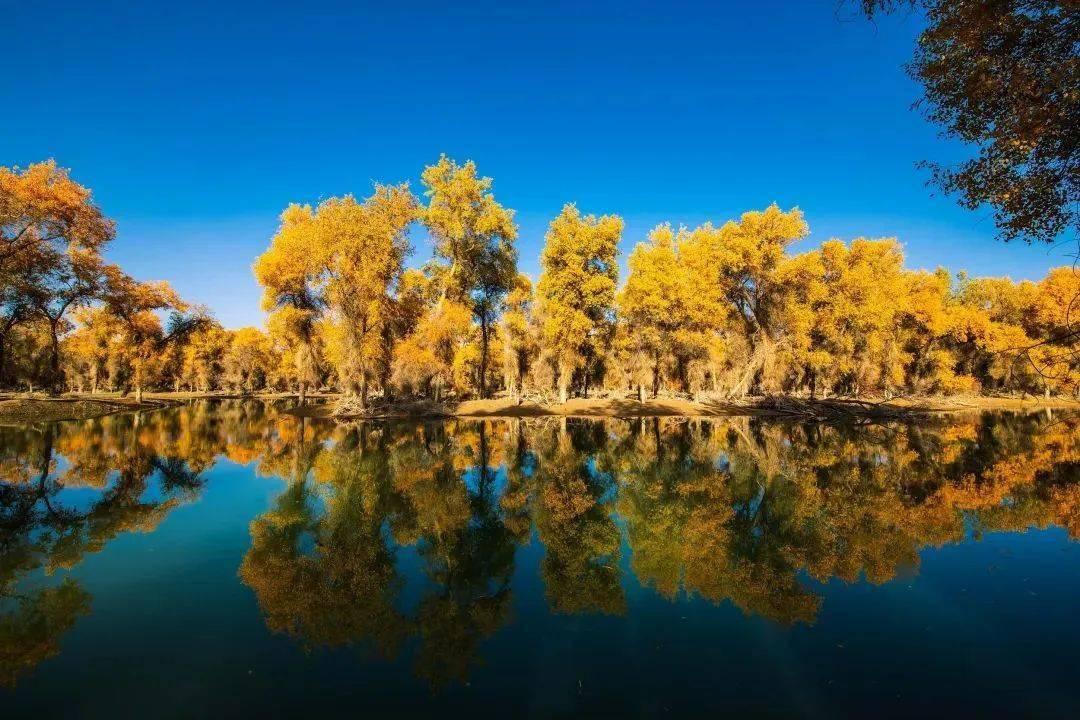
The museum itself is indoor, so the weather matters less than it would for the ruins. Still, the town and the drive are far more pleasant in autumn, from September through November, when the heat drops and the light turns clean. Summer in the Tarim basin can push past 40 degrees Celsius, and spring brings dust storms that close roads without warning. Winter is cold and very quiet, which some travelers actually prefer for an empty hall and a cheap room. If you time it for the autumn date festival, the town gets busy and the bazaars overflow with fresh jujubes, but the museum itself stays calm.
Where we slept in Charklik
We booked a mid-range hotel within walking distance of the cultural square, which put the museum ten minutes away on foot. Ruoqiang is not a big tourist town, so rooms are modest but clean, and prices stay low outside festival weeks. If you come during the autumn date harvest, when the jujube trade fills the bazaars, book ahead because the better hotels sell out first.
The plates worth ordering in Charklik
Ruoqiang is better known for its dates than its restaurants, but the food is honest and filling. We ate hand-pulled noodles with lamb, a plate of cumin skewers, and a bowl of pilaf studded with raisins. The county’s jujubes show up everywhere, eaten straight or stewed into a sweet tea. In season, the local melons are sweet enough to close a meal on their own, and a glass of warm milk tea cuts the dust from the drive. The bazaar by the square is the place to buy dried dates, walnuts, and melon seeds to take home, and the sellers will let you taste before you buy.
A few things we wish we’d known
Bring your ID, because entry is tied to it and there is no ticket desk to fall back on. Foreign passport holders should confirm the current entry rules before traveling, since counties near restricted zones sometimes add checks. The museum closes on Mondays, so never plan a Monday arrival. Flash photography is banned, and the lower-floor remains deserve a quiet voice. If you have a car, pair the visit with the Miran ruins, where a 25 yuan ticket and a 10 yuan shuttle open a Han dynasty settlement about 70 km out.
A half-day loop built around the museum
We built our day like this. Arrive in Ruoqiang by late morning, join the 10:15 guided tour, and spend another hour wandering on your own. Walk to the bazaar for lunch and a date tasting, then either rest at the hotel or, if driving, head out to Miran for the late-afternoon light. By 17:00 we were back in the county seat with the whole lost-kingdom story sitting in our heads. It is a small town, and a half day is enough to do it properly.
Questions we hear about the Loulan Museum
Can I visit the real Loulan Ancient City?
No. The site is a national-level cultural relics control zone and does not admit independent travelers. The museum in Ruoqiang is the accessible way to meet the civilization.
Is the museum really free?
Yes. Admission is free and tied to a valid ID. There is no paid ticket.
How much time should I allow?
Plan for one and a half to two and a half hours if you want to read the labels and catch a guided talk.
Is the Loulan Beauty genuine?
Yes. It is a roughly 3,800-year-old body preserved by the dry desert climate, recovered by archaeologists in 1980.
Will foreign visitors be allowed in?
Usually, with a passport, but confirm ahead, because nearby restricted zones can change local entry rules without notice.
The honest limits of what the museum shows
We should be straight about this. The museum is a curated collection, not the city itself. Some displays use replicas and models to fill gaps the desert has not preserved, and a few artifact labels are sparse or only in Chinese. Pieces rotate, so what we saw in autumn may not all be on view when you go. We write from our own visit and are not affiliated with the institution; check the county government notice for the latest hours and ID requirements before you set out.
About this guide’s writer
Karl Huang is a Xinjiang-based travel writer who has spent the last several years driving the southern Tarim circuit, from Korla down through Ruoqiang and out toward the Lop Nur edge. He focuses on practical, first-hand accounts of places that are hard to reach and harder to get right. When he is not on the road, he maintains this site’s guides to the region’s museums, deserts, and oasis towns.