Published: July 26, 2026 | Author: Marta Nowak, steppe-travel writer
Most people who fly into the Altai head straight for Kanas and never look east. I did the opposite. This Qinghe travel guide is built from two trips to the far northeastern corner of Xinjiang, where the Qinggil River drains off the mountains and the road eventually runs into the Mongolian frontier. I first came in July 2024 chasing a Bronze Age stone mound I had read about in an archaeology paper, and returned in September 2025 when the larches turned gold. Qinghe (Chingil in Kazakh) rewards patience more than it rewards a checklist, and I want to set expectations honestly before you commit two long driving days to reach it.
Why trust this over a listicle? I paid my own way both times, hired local Kazakh and Mongol drivers, slept in county-town guesthouses, and cross-checked road and site details with the drivers and a ranger I met near the lakes. Where I am unsure, I say so. Prices are what I paid in 2024 and 2025 and will drift.
Quick reference: Qinghe Xinjiang at a glance
| Detail | What to know |
|---|---|
| Location | Far northeast Altay Prefecture, on the Mongolia border |
| Getting there | Drive from Fuyun/Koktokay (about 2.5 hrs) or Altay City (about 4 hrs) |
| Star sight | Sandaohaizi stone mounds and deer stones (approx. 2,600 m) |
| Best months | Mid-June to late September; peak color early October |
| Who lives here | Kazakh majority, Mongol and Han communities |
| Nights needed | 1 in town, plus a full day for the high lakes |
| Rough budget | 250 to 450 CNY per day with a shared car |
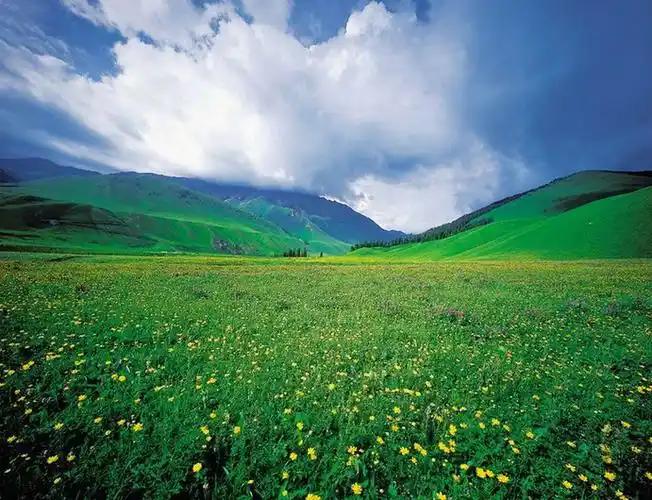
What Qinghe actually feels like
The county town is small and functional, laid out along a couple of wide streets that empty out by nine in the evening. On my first night I walked from the bus drop to a guesthouse in under ten minutes and passed maybe four open shops. That is the point of coming here. When we visited the Sandaohaizi plateau the next morning, our driver Erlan counted six other vehicles the entire day, and two of them belonged to herders moving sheep.
Sandaohaizi means “three lakes,” and the reason to make the climb is not really the water. It is the stone. At Huahaizi, the westernmost lake, there is a huge circular mound of piled rock roughly 210 metres across, ringed by smaller cairns and standing deer stones carved with animal figures. Archaeologists link the site to early nomads of around three thousand years ago, possibly connected to the Saka world. I am not an archaeologist, so I will not pretend to date it myself, but standing beside a wall of stone that old, at that altitude, in that silence, reframed the whole trip for me. Bring a windproof layer even in July; the wind up there does not stop.
Getting to Qinghe (and why it takes planning)
There is no airport in Qinghe, so you arrive by road. The two sensible bases are Fuyun (the county that holds Koktokay) and Altay City. From Fuyun it was about two and a half hours of good highway; from Altay closer to four. If you are already exploring the Altai, the natural loop is Kanas, then Altay City, then east to Koktokay, and finally Qinghe as the last stop before you turn back. Long-distance buses run from Altay and Urumqi, but they are slow and drop you in town without onward transport to the lakes.
For the Sandaohaizi road you need a private car or a shared arrangement, and you need to confirm the road is open, because it is snowbound most of the year and can close for weather even in summer. In 2025 I paid 400 CNY to hire a driver for the round trip and the wait time at the site. If you want the freedom to stop for photos, a self-drive across Xinjiang is the better tool here, though the last stretch is rough and I was glad someone local was at the wheel.
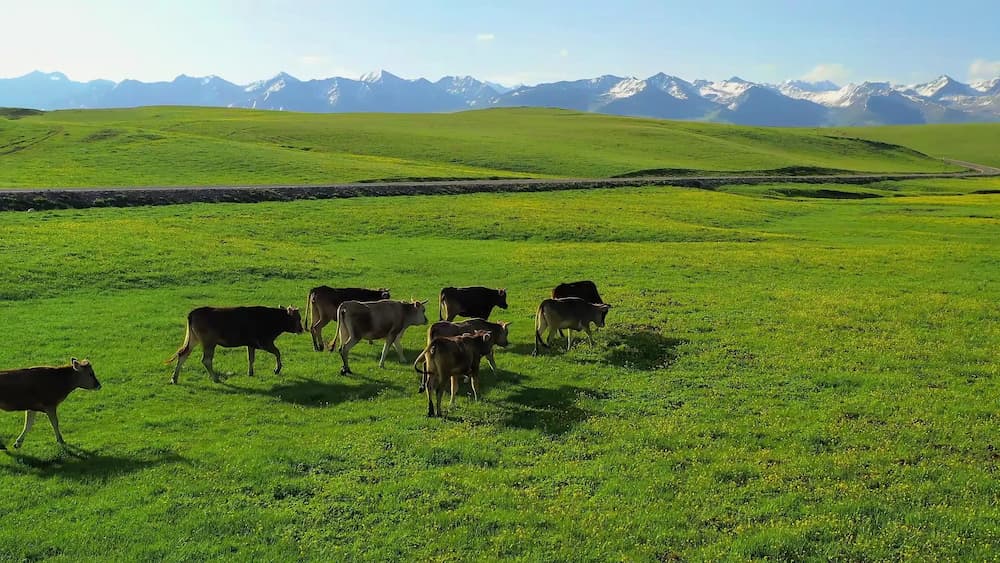
Best time to visit
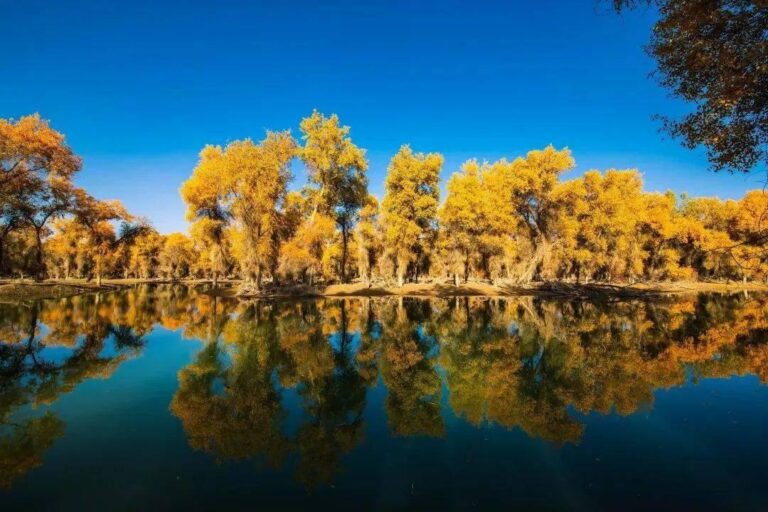
The usable window is short. The high road to Sandaohaizi typically opens in mid-June and closes again with the first serious snow, often by mid-October. July and August give you green pasture and the warmest nights, but also the most mosquitoes near the water. My favourite window was late September into the first days of October, when the larch and birch turn and the herders start bringing flocks down to winter ground. If you want a month-by-month sense of the wider region, the Xinjiang weather guide lines up with what I saw: cold nights year round, and real winter arriving early up here.
Where to stay
Do not expect resorts. In the county town I stayed twice in plain guesthouses that cost 140 to 180 CNY for a twin room. One accepted foreign passports without fuss; the other sent me down the street to a hotel that was registered to take overseas guests, which is a common situation in small Xinjiang towns, so build in a little extra time on arrival. If you want the steppe experience, ask your driver about a yurt stay with a Kazakh family in the summer pastures. I did one night in 2024 for around 200 CNY including dinner and breakfast, slept under thick felt, and woke to the family already milking. It was the best night of the trip.
What to eat
Food here is Kazakh and generous. The dish to seek out is beshbarmak, boiled meat over wide flat noodles, traditionally shared from one platter. I also ate a lot of horse-meat sausage called chuchuk, which is smoky and rich, and kurt, the hard dried cheese balls that travel well in a pocket for the drive. Milk tea with salt appears at every meal, and the flat naan is baked fresh in the mornings. In town a bowl of laghman ran about 22 CNY and skewers were 4 to 5 CNY each. If you are curious how these tables differ across the region, the piece on north versus south Xinjiang covers the split well; up here the meat is mutton and horse, not the lamb-and-rice south.
Practical tips from two trips
- Carry cash. Mobile pay worked in town most of the time, but my QR scan failed twice near the pastures and I paid the herder in notes.
- Fuel up in Fuyun or Altay. Stations thin out fast once you head east.
- This is a border county, so keep your passport on you and follow any signs near the frontier. Do not wander toward Mongolia off the marked areas.
- Layers, not bulk. I wore a t-shirt at midday and a down jacket at the lakes on the same July day.
- Signal drops on the Sandaohaizi road. Tell your guesthouse your plan before you leave.
- Pack water. There is no reliable shop between town and the lakes; I carried four litres per person.
A workable two-day itinerary
Day 1: Arrive from Koktokay by early afternoon, settle into a guesthouse, walk the town, and eat beshbarmak. If there is time, drive out to the nearest pasture for sunset and, if you arranged it, stay overnight in a yurt.
Day 2: Early start for Sandaohaizi. Spend the morning at the Huahaizi stone mound and deer stones, picnic by the lake, and be back in town by late afternoon. From here you can push on to Fuhai and Ulungur Lake the next day, or loop back west toward the birch country around Habahe. Anyone with more time and stamina can pair this with the trails in the Xinjiang hiking guide.
Frequently asked questions
Is Qinghe worth the detour? If you like archaeology, quiet, and open steppe more than famous scenery, yes. If you want a single blockbuster view, Kanas or Koktokay will satisfy you faster.
Do I need a permit for Sandaohaizi? When I went there was a modest site entry and I registered my details, but rules near the border change. Confirm current requirements with your driver or guesthouse before setting out.
Can I do it without a car? You can reach the town by bus, but the lakes really need a hired vehicle. Ask your accommodation to help arrange one the evening before.
Is the altitude a problem? Sandaohaizi sits around 2,600 metres. I felt short of breath walking uphill but had no real symptoms. Go slowly and drink water.
How many days should I budget? Two nights is comfortable: one for the town and one built around the lakes.
A note before you go
Disclaimer: This account reflects my personal experience in July 2024 and September 2025. Prices, road access, opening times, and border rules change often in remote Xinjiang, and the Sandaohaizi road is seasonal. Please verify current conditions locally before you travel. I am an independent writer and received no payment or free services for this guide.
About the author: Marta Nowak is a Kraków-based travel writer who focuses on nomadic cultures and archaeology across the Eurasian steppe. She has spent parts of six summers in western China and the Altai and always travels at her own expense so she can write plainly about what works and what does not.