Published: July 21, 2026 | Author: Liam Foster
Most travelers who look up a Tacheng travel guide expect another dusty stop on the old Silk Road. I did too, the night I boarded the westbound train out of Urumqi. What I stepped into instead was a town of peeling wooden cottages, a pale blue Orthodox church, and the smell of sourdough rising from a basement bakery whose owner’s great-grandmother had come from Siberia in 1913. Tacheng sits in the far northwest corner of Xinjiang, almost leaning against the Kazakhstan border, and it keeps a Russian accent you won’t hear anywhere else in the region.
Why you can trust this Tacheng travel guide
I’m not a tour operator and nobody in Tacheng paid me to write this. I’ve just been there twice and walked it slowly: a frozen week in February 2024, and a warmer return at the end of May 2025 when the safflower was pushing up around Yumin county. Everything below is from those trips, from people I met, and from numbers I actually saw on price tags and timetables. Treat the figures as a baseline and confirm them when you book.
Quick reference: Tacheng at a glance
| Region | Tacheng Prefecture, part of the Ili Kazakh Autonomous Prefecture, far NW Xinjiang |
|---|---|
| Border | Kazakhstan, via the Baktu port (北克图口峰), about 17 km from the city center |
| Elevation | ~540 m in the Tacheng Basin |
| Best season | Late May to September for wildflowers and mild weather; December to February for deep snow |
| Airport | Tacheng Airport (TCG), roughly a 1-hour flight from Urumqi |
| Train | Kuitun–Tacheng railway; regular service, about 10–12 hours from Urumqi via Kuitun |
| Signature sights | Red Mansion Museum, the Orthodox church, the Accordion Museum, the Barluk Mountains |
| Best known for | Russian-style architecture, safflower oil, Bashibai lamb, and heavy winter snow |
What Tacheng actually feels like
When we visited in February, the temperature had dropped to minus 22 at night and the whole town seemed to move at half speed. I stayed with a friend, Yelena, whose family has baked lieba (Russian sourdough) in the same brick oven for three generations. Mornings started with her father stoking the stove and a pot of milk tea that was more salt than sugar. We walked the quiet streets past timber houses with carved eaves and faded green shutters, the kind of buildings you’d expect in a village outside Kazan rather than in China.
The centerpiece is the Red Mansion (红桥), a two-story Russian-brick trading house built by a tsarist-era merchant in the 1910s, now a museum of local history. A few blocks away stands the Eastern Orthodox church, its pale walls and narrow steeple still used by the small Russian-descended community. On my second trip, in May, the same streets were loud with market stalls selling early strawberries and bundles of wild garlic, and the accordion museum near the park had its doors open with an old man playing a Soviet-era instrument in the courtyard. That museum holds well over a thousand accordions, a quiet record of how deep the Russian musical habit runs here.
Tacheng is also one of the most ethnically mixed towns in Xinjiang. Alongside the Han and the Russian families, you’ll hear Kazakh, Hui, Uyghur, Mongol, Xibe, and Daur spoken in the bazaars. That mix shows up directly on the plate, which is the best part of visiting, and it shapes the rhythm of the day in a way a bigger city has lost.
Getting to Tacheng
There is no high-speed rail this far northwest, so the two realistic options are flying or taking the regular train. Xinjiang’s high-speed network will get you as far as Urumqi or Kuitun; from there you connect onward.
Flying is simplest. Tacheng Airport runs daily flights to Urumqi that take about an hour and usually cost between 400 and 700 RMB one way, depending on season. The airport is a short taxi ride (20–30 RMB) from the center. If you are already up in the Altai country, our Altay city guide explains the northern approach.
The train is slower but cheaper and more scenic. The Kuitun–Tacheng line, which opened in 2019, links Tacheng into the national grid; a sleeper from Urumqi runs roughly 10 to 12 hours and costs from about 180 RMB for a hard berth. If you have time, the slow ride across the Junggar Basin at dawn, when the light goes flat and gold over the scrub, is worth the lost sleep.
From Kazakhstan, the Baktu port handles cross-border trade and some organized tourism. Independent travelers should check current visa and permit rules before counting on walking across, because the port’s opening hours and entry policy shift with the season and with no notice.
Best time to visit Tacheng
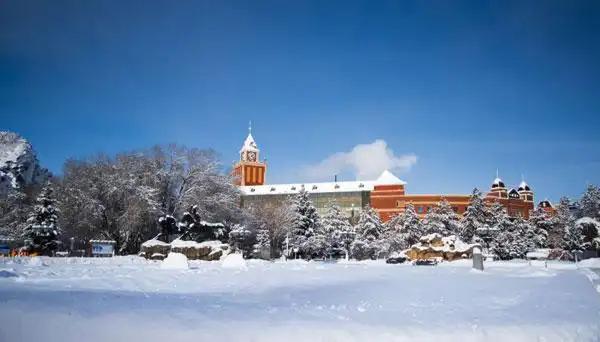
Tacheng gets some of the heaviest snowfall in Xinjiang, and the winter version of the town is its most photogenic. From December through February the streets fill with packed snow, the church steeple wears a white cap, and the frozen river becomes a local skating ground. If you come for snow, pack real insulation: I went through two pairs of wool socks and still lost feeling in my toes by midafternoon.
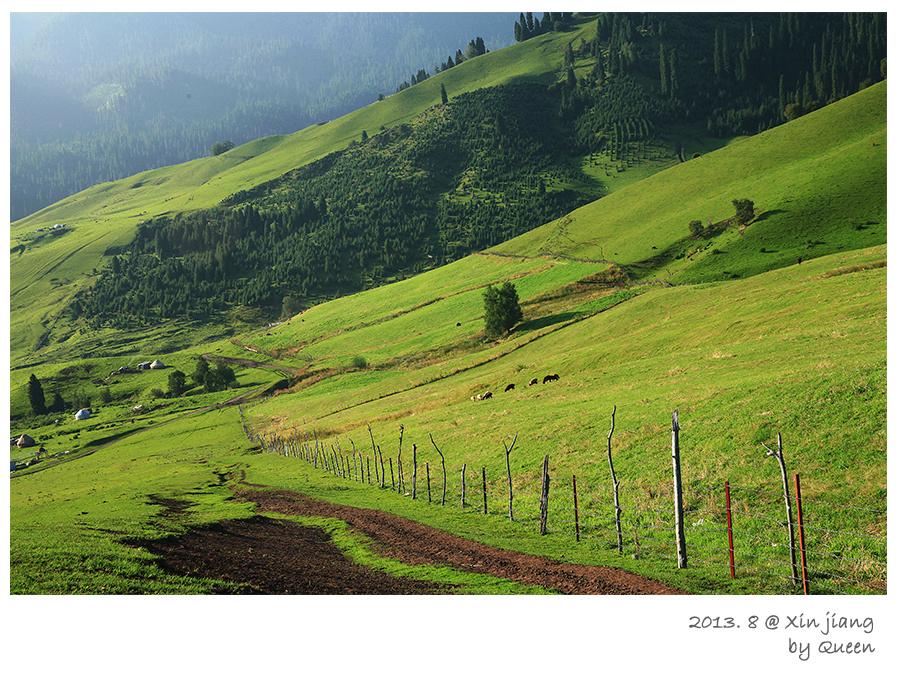
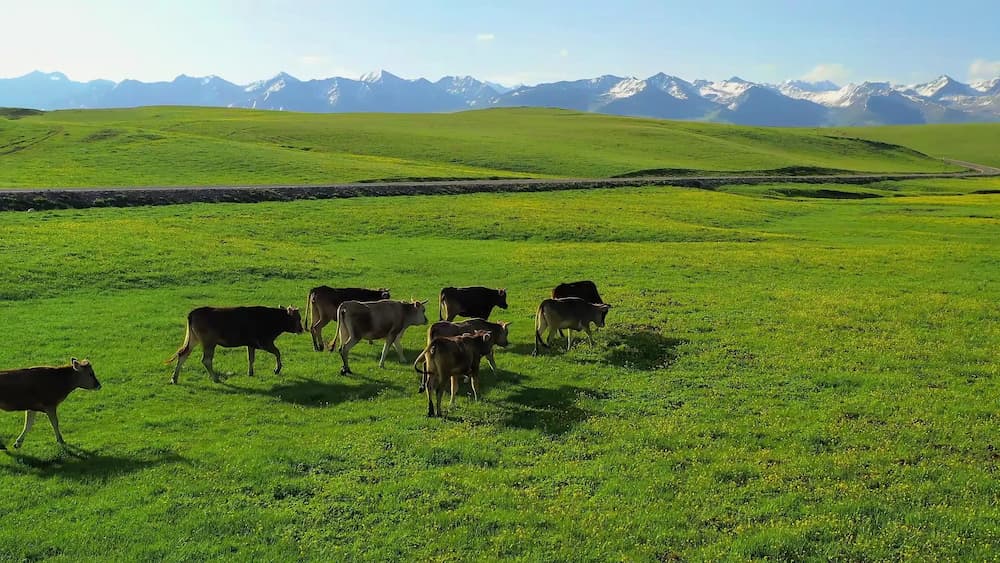
Late May to early June is my favorite window. That’s when the wild tulips (the small, drooping Xinjiang tulip) carpet the lower slopes of the Barluk Mountains south of Yumin county, and the safflower seedlings turn the fields a faint green before the summer bloom. The Barluk range also hides the Xiaobaiyang border post, the lonely outpost made famous by a Chinese folk song, if you want a reason to drive past the orchards. Summer is warm and calm, good for the Baktu road and the high pastures. Autumn brings golden steppe grass and the safflower harvest in August.
If you want a broader picture of the region’s cold months, our piece on traveling in Xinjiang in winter covers what the snow demands across the whole region.
Where to stay
Tacheng is a small city, so lodging is modest but clean. The two or three mid-range hotels near the main square (Culture Square / 文化广场) run from about 220 to 380 RMB a night and put you within walking distance of the museums and the church. I stayed once in a family-run guesthouse a few streets back from the center for 160 RMB; the host lent me oversized boots for the snow and fed me breakfast without being asked.
Book ahead if you come during the safflower festival in Yumin (usually August) or the winter holiday period, when rooms tighten up. For a more rural feel, the villages below the Barluk Mountains have homestays run by Kazakh families, where you sleep in a heated room and eat straight from the pot. Our Yining and Ili Valley guide is a natural add-on if you continue south into the prefecture.
What to eat in Tacheng
Food is the real reason to slow down here. Start with Yelena’s lieba, a dense sourdough loaf baked dark and eaten with thick cream cheese and a spoon of local honey. Russian influence also shows up in kvass (a faintly fizzy bread drink), smoked sausage, and layered honey cakes sold at the corner bakeries.
The Kazakh and Hui side of the table is just as strong. Bashibai lamb (布巢挤羊) is the local pride: a breed raised on the steppe north of the city, known for meat so tender you can cut it with a spoon. I paid about 70 RMB for a plate of hand-pulled laghman topped with lamb at a corner canteen, and 90 RMB for a share of boiled Bashibai with onions and flatbread. Kumis (fermented mare’s milk) and salty milk tea are on every table in the herding villages.
For something sweet, the safflower-honey candies and the dried-fruit stalls at the morning market are cheap and easy to carry home. If you want the wider context before you eat your way across the region, our 20 things to know before visiting Xinjiang explains halal customs and how to order without awkwardness.
Practical tips before you go
- Bring serious cold-weather gear in winter. Minus 20 is normal, and the wind off the steppe cuts through a light jacket.
- Cash still helps at small bakeries and village stalls, though Alipay and WeChat Pay work in the city.
- The Orthodox church and the Russian homes are working places of worship or private property; ask before photographing people inside.
- If you plan to reach the Barluk Mountains or the Baktu road, a local driver saves time. Distances are short but buses are thin.
- Border zones near Baktu can close without notice. Carry your passport and check the day’s status at your hotel.
A 3-day Tacheng itinerary
Day 1 — The town. Land, drop bags at a square-side hotel, then walk the Russian quarter: the Red Mansion Museum, the Orthodox church, and the Accordion Museum. End at a bakery for lieba and kvass.
Day 2 — The steppe. Hire a driver south to the Barluk Mountains and the wild-tulip slopes (spring) or the safflower fields (summer). Stop in Yumin for lunch, then return via the Baktu port road for a look at the Kazakhstan border marker.
Day 3 — The markets and out. Spend the morning at the bazaar for honey, dried fruit, and safflower oil, then fly or take the train back toward Urumqi. If you have extra days, the nearby Ili valley is an easy extension south.
Frequently asked questions
Is Tacheng safe for foreigners? I found it quiet and welcoming. As with anywhere remote, keep your passport on you near the border and follow local advice.
Do I need a special permit? The city itself is open. The Baktu port and the border strip can require checks, so confirm the day’s rules at your hotel before driving out.
How many days do I need? Two full days covers the town and one steppe trip. Three lets you breathe and catch the markets.
Can I cross into Kazakhstan here? The Baktu port handles trade and some group tours. Independent walking crossings depend on current policy, so verify before you plan around it.
Disclaimer
This guide reflects my personal visits in February 2024 and May 2025. Prices, flight times, train schedules, port hours, and festival dates change, and border rules in particular shift without warning. Confirm everything with your hotel, the airline, or the relevant authority before you travel. This article is for information only and is not official advice.
About the author
Liam Foster is a travel writer who has spent eight years documenting China’s western regions on foot and by rail. He focuses on places most guidebooks skip, and he pays his own way. He last traveled through Tacheng in May 2025.