Published: August 4, 2026 | Author: Karl Huang, Xinjiang Attractions editorial team
Flying is how most international visitors first touch down in Xinjiang, and the airport experience here is not quite like Beijing or Shanghai. Terminals are smaller, English signage is patchy outside Urumqi, and the distance from the gate to the city can be longer than the flight itself. I have flown into Urumqi five times, Kashgar twice, Yining once and Hotan once since 2019, and the little details — which terminal, which exit, which airport bus line — matter far more than the airline choice. This Xinjiang airport guide is written from those arrivals, not from a booking engine.
Xinjiang airports at a glance
| Airport | Code | City served | Main domestic hubs | Typical transfer to downtown |
|---|---|---|---|---|
| Urumqi Diwopu International | URC | Urumqi | Beijing, Shanghai, Xi’an, Chengdu, Guangzhou | Airport bus 20–40 min; metro 40–50 min; taxi 30–50 min |
| Kashgar Laining International | KHG | Kashgar | Urumqi, Xi’an, Chengdu, Beijing | Airport bus 25 min; taxi 20–30 min |
| Yining | YIN | Yining (Ili) | Urumqi, Chengdu, Xi’an | Taxi 20 min; airport bus 30 min |
| Hotan | HTN | Hotan | Urumqi, Xi’an, Chengdu | Taxi 25 min; airport bus 35 min |
| Aksu | AKU | Aksu | Urumqi, Chengdu, Xi’an | Taxi 30 min; shuttle bus 40 min |
| Korla | KRL | Korla | Urumqi, Beijing, Chengdu | Taxi 25 min; shuttle bus 40 min |
| Altay | AAT | Altay | Urumqi, Xi’an | Taxi 30 min; shuttle bus seasonal |
What it feels like to land at a Xinjiang airport
On our most recent arrival at Urumqi, the captain came on the intercom twenty minutes before landing and asked passengers to lower window shades. It was not a safety drill; it was a hot July afternoon and the tarmac heat was already climbing. That small moment sums up Xinjiang flying: practical, heat-aware, and a little different from coastal China.
Security is tighter than elsewhere in the country. Expect your bag to go through X-ray twice at some terminals, a ID check at the terminal door before you even reach check-in, and occasional extra screening for electronics and power banks. We always keep passports and boarding passes within easy reach because staff ask for them at multiple checkpoints. The process is thorough but not hostile; patience and a smile move things along faster than arguing.
Once airside, the terminals are clean, bright and usually quiet after 10 p.m. Most flights into Urumqi arrive in the late afternoon or evening, which means immigration and domestic transfer halls can fill up quickly between 7 p.m. and 10 p.m. If you are connecting from an international flight to a domestic one, give yourself at least three hours. We missed a tight two-hour connection once because the secondary security queue for transfer passengers was longer than expected.
Urumqi Diwopu International Airport (URC)
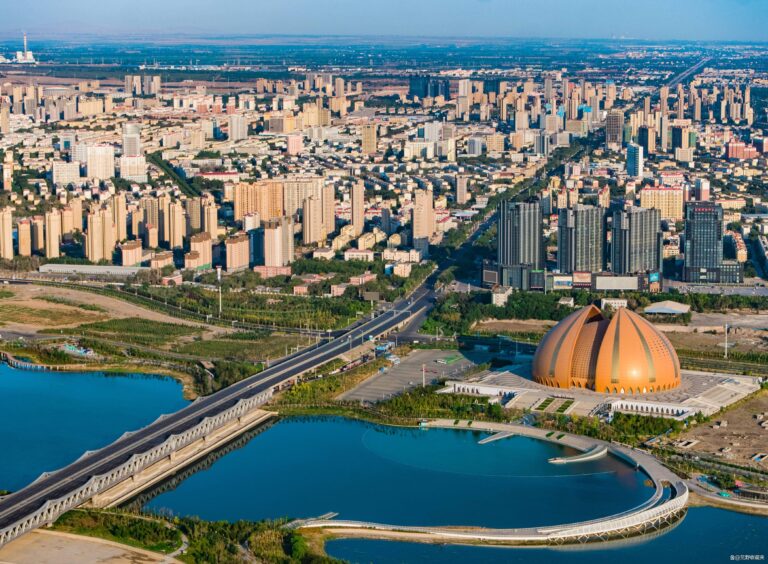
Urumqi is the region’s main air hub and the airport most visitors will use. It has two terminal buildings: T3 handles most domestic flights, while T2 and the older T1 serve some regional and low-cost carriers. The terminals are connected by covered walkways, but the walk can take ten to fifteen minutes with luggage, so check your terminal before arrival.
After collecting bags, the ground transport choices are straightforward. The airport metro line runs to downtown Urumqi and is the cheapest option at a few yuan, but it stops before midnight and can be crowded at peak hours. Airport buses cover several downtown hotels and the railway station; tickets are sold at counters just outside the arrivals hall. Taxis use meters and the ride to the city center usually takes thirty to fifty minutes depending on traffic. We prefer the airport bus when arriving late because the metro is often closed and taxi queues can be long.
For international arrivals, Urumqi offers the most direct flights from Central Asia, Russia and some Middle Eastern hubs. If you are using the 144-hour visa-free transit policy, make sure your paperwork is in order before you reach immigration; officers are polite but precise, and vague answers slow the line down. Our guide on how to get to Xinjiang covers the broader arrival options if you are still deciding between flying, rail and road.
Kashgar Laining International Airport (KHG)
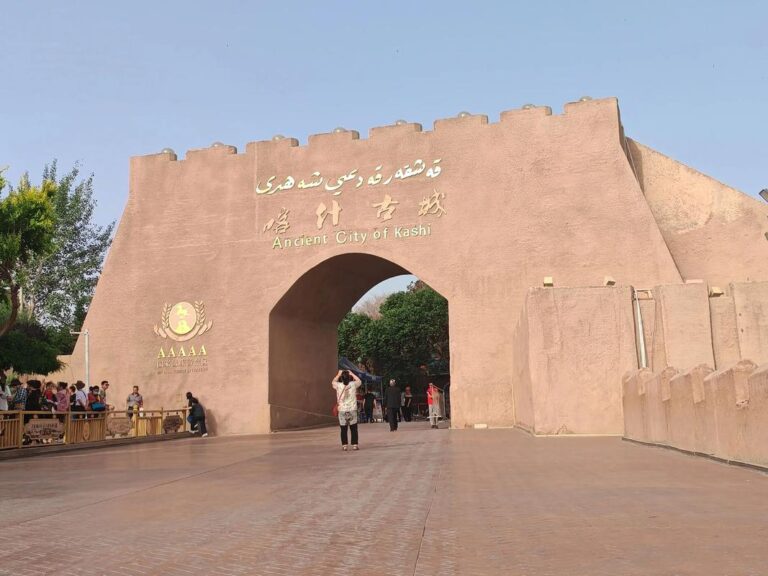
Kashgar airport sits only about ten kilometres from the Old City, which makes it one of the most convenient gateways in Xinjiang. The terminal is compact; from the aircraft door to the exit rarely takes more than twenty minutes. On our last trip we collected bags, passed security and were outside in eighteen minutes, even though the flight was full.
The arrivals area is small but functional. A taxi dispatcher stand is directly outside the terminal and prices to the Old City are usually fixed or metered around CNY 30–50. Airport buses run to a few central stops, but schedules are limited, so if you arrive after 9 p.m. a taxi is the safer bet. Do not be surprised if the driver wants to confirm the destination by pointing at a map; pronunciation of street names varies, and written addresses in Chinese characters help.
Kashgar is the obvious choice if your itinerary focuses on southern Xinjiang, the Karakoram Highway or the Pamir regions. The flight from Urumqi takes roughly two hours, and on clear days the aerial views over the Taklamakan Desert and the Kunlun range are reason enough to choose a window seat.
Yining, Hotan and the regional airports
Yining airport is tiny. There is one luggage carousel, a single arrivals exit and a small parking area. That simplicity is part of its charm. We flew in from Chengdu on a clear evening and were in a taxi within ten minutes of landing. The city centre is close, the roads are wide, and the Ili Valley opens up almost immediately once you leave town.
Hotan feels even more remote. The terminal is modern but quiet, with flights mostly to Urumqi and a handful of eastern Chinese cities. If you are coming for jade, Silk Road ruins or the desert edge, Hotan saves a long overland crossing from Kashgar. Just be aware that sandstorms can delay flights here more often than at mountain or oasis airports.
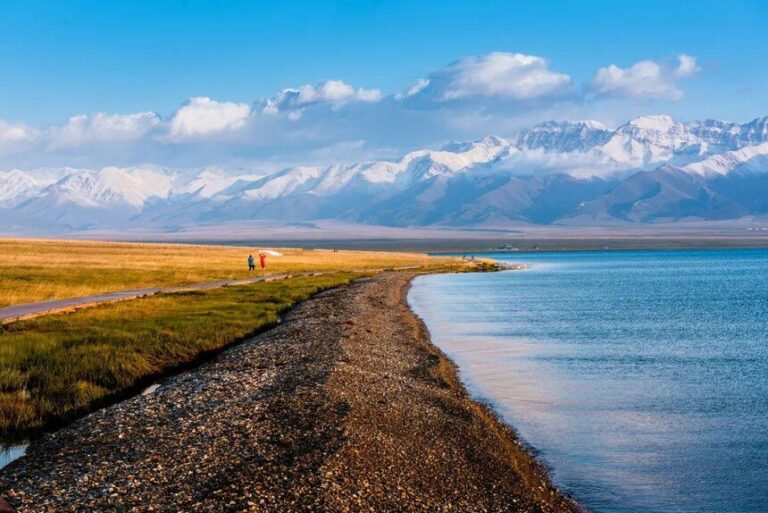
Aksu, Korla and Altay airports mainly serve domestic travellers and seasonal tourists. Aksu and Korla are useful for travellers working their way along the northern or southern rims of the Tarim Basin. Altay is the jumping-off point for Kanas and the autumn colour routes; flights fill up fast in late September and early October, so book well ahead.
Booking flights to and within Xinjiang
Most visitors book a domestic flight into Urumqi from a major Chinese city. Prices fluctuate sharply with the seasons: June through September and the October Golden Week are the most expensive windows. We have found that booking six to eight weeks ahead usually secures the best fares for summer, while winter flights can be cheaper even two weeks out.
For multi-stop itineraries, consider open-jaw tickets: fly into Urumqi and out of Kashgar, or vice versa. This saves a full day of backtracking. We did this on a three-week trip and gained an extra day in the Pamirs. Domestic carriers such as China Southern, China Eastern and Urumqi Air operate most routes, and punctuality is generally good outside winter weather events.
If you are weighing train against plane, our Xinjiang train vs flight comparison breaks down the real time and cost differences for the same routes.
Airport security and practical tips
- Arrive two hours early for domestic flights and three hours for international departures. Security lines move steadily but thoroughly.
- Keep power banks, drones and large camera lenses in your carry-on; lithium batteries are restricted in checked luggage.
- Download offline maps and translation tools before arrival. English is limited outside Urumqi airport.
- Have your hotel address written in Chinese characters. It speeds up taxi and bus conversations.
- Carry cash for airport buses and taxis in smaller airports; mobile payment is common but not universal at rural counters.
- Expect weather delays in winter around Urumqi and during sandstorm season in Hotan and southern oasis cities.
Airport-to-city transfer options
Urumqi has the most developed transfer network. The metro is clean and cheap but stops short of some hotels. Airport buses run until the last flight lands and cover major districts. Taxis are plentiful but can be slow during rush hour on the airport expressway.
In Kashgar, taxis are the most practical option for first-time visitors because the Old City is close and fares are low. In Yining and Hotan, the choice is usually between a taxi and a pre-arranged hotel pickup. Pre-arranged pickup is worth the small extra cost if you arrive late or do not speak Chinese.
For onward travel from any airport, long-distance buses and trains connect the major cities. Our Xinjiang transportation guide explains how to stitch these segments together.
Sample arrival plan: Urumqi to Kashgar by air
- Land at Urumqi Diwopu, clear security and collect luggage.
- Take the airport bus or metro to your downtown hotel; rest and adjust to the time zone.
- Spend one or two days in Urumqi visiting the museum and bazaar.
- Fly Urumqi to Kashgar in the morning; arrive before noon.
- Taxi to the Old City; check in and explore on foot.
This sequence gives your body a day to adjust to Xinjiang time, which runs on Beijing time but feels two hours later in solar terms. It also lets you sort out any permit paperwork in Urumqi before heading south.
FAQ
Do I need a visa to fly into Xinjiang?
Yes, unless you qualify for a transit exemption. Policies change, so check the latest rules before booking.
Can I fly directly to Kashgar from outside China?
Direct international flights are limited. Most visitors connect through Urumqi or another major Chinese city.
Are Xinjiang airports safe?
Yes. Security is visibly strict, terminals are well maintained, and staff are generally helpful.
Should I book a taxi in advance?
In Urumqi and Kashgar, taxis at the rank are fine. In smaller airports, a pre-booked transfer reduces hassle, especially for late arrivals.
What is the best airport for Kanas Lake?
Altay Airport is the closest commercial option, followed by a long bus or car ride to the lake.
Disclaimer
Airport schedules, security rules and visa policies change frequently. The information here reflects our experience through mid-2026 and is intended as practical guidance, not legal or official travel advice. Always confirm current rules with your airline and Chinese immigration authorities before departure.
About the author
Karl Huang is the founder of Xinjiang Attractions and has been travelling the region since 2019. He writes from first-hand trips to Urumqi, Kashgar, Yining, Hotan and the Pamir Plateau, with a focus on practical, up-to-date travel logistics.