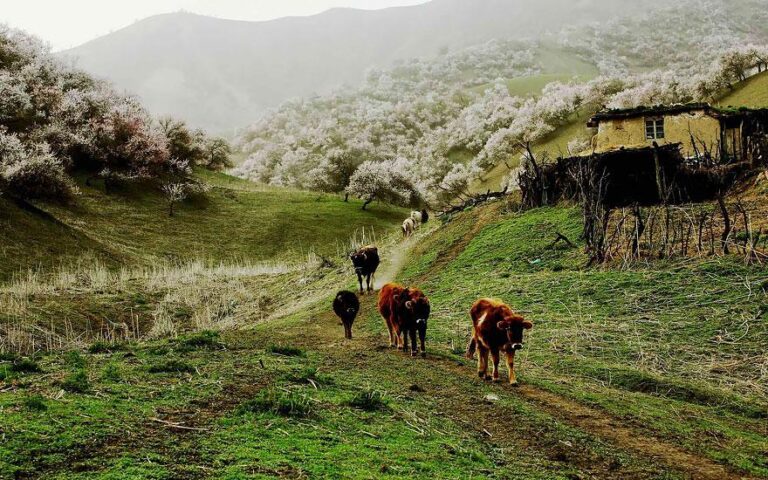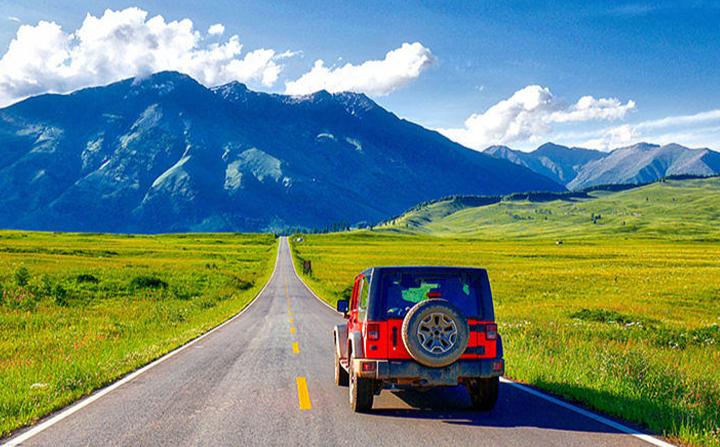
Published: August 6, 2026 | Author: Marta Reinholm, landscape photographer, three autumn trips to northern and southern Xinjiang since 2019
Xinjiang autumn photography is a subject where the location advice is everywhere and the technical advice is almost nowhere. Any search will tell you Kanas in late September and the Tarim poplars around mid October. Very few pages tell you what to do once you are actually standing there at eight in the morning, looking at a hillside of gold, and getting files back that look like weak brown.
I have shot three autumns in the region. The first, in 2019, was five days and produced perhaps four frames I still keep. The second was two weeks in 2023. The third was October 2026, planned properly, and the only one where I came home with a set rather than a handful. Almost everything below comes from the distance between the first trip and the last.
One thing this page deliberately does not do is tell you when to go or where to stand. Which week each forest turns is covered in our autumn foliage calendar, and the hour-by-hour side of shooting is in the day-by-day light schedule. I will point at both rather than repeat them.
Xinjiang autumn photography settings at a glance
| Decision | What worked for me |
|---|---|
| White balance | Manual, 5400 to 6500K. Never auto |
| Exposure bias in sun | Minus a third to minus two thirds, protecting leaf highlights |
| Polarizer | Quarter to half rotation. Full is too strong above 2000m |
| Light for glow | Backlight, sun low and behind the canopy |
| Light for texture | Sidelight, first ninety minutes after sunrise |
| Lens that earned its place | 70-200mm, by a wide margin |
| Overcast days | Excellent for close work, poor for wide views |
| Snow above gold | Expose for the snow, recover shadows later |
| Filter to leave at home | Anything warming. The scene is already warm |
Why auto white balance quietly removes the gold
This is the single largest cause of disappointing autumn files, and it took me an embarrassing amount of time to work out. Automatic white balance is designed to find a neutral grey and correct towards it. Point it at a frame that is eighty percent yellow foliage and it reads that dominance as a colour cast, then cools the whole image to cancel it. The camera is behaving exactly as designed. It is simply the wrong design for this scene.
Set it by hand. I use around 5400K for birch under direct morning sun, 5800K for larch, and I push to 6300K or higher when the subject sits in shade, because open shade under a blue Xinjiang sky is genuinely blue and needs the warmth added back. If you are unsure, err warm. Cool autumn foliage looks dead in a way that warm foliage never does.
Raw shooters sometimes tell me this does not matter because white balance is adjustable afterwards. Technically true, practically wrong. You compose and expose based on what the back of the camera shows you, and a washed-out preview leads to worse decisions all morning. On a phone, where files are baked, locking it is not optional at all.
The polarizer problem above two thousand metres
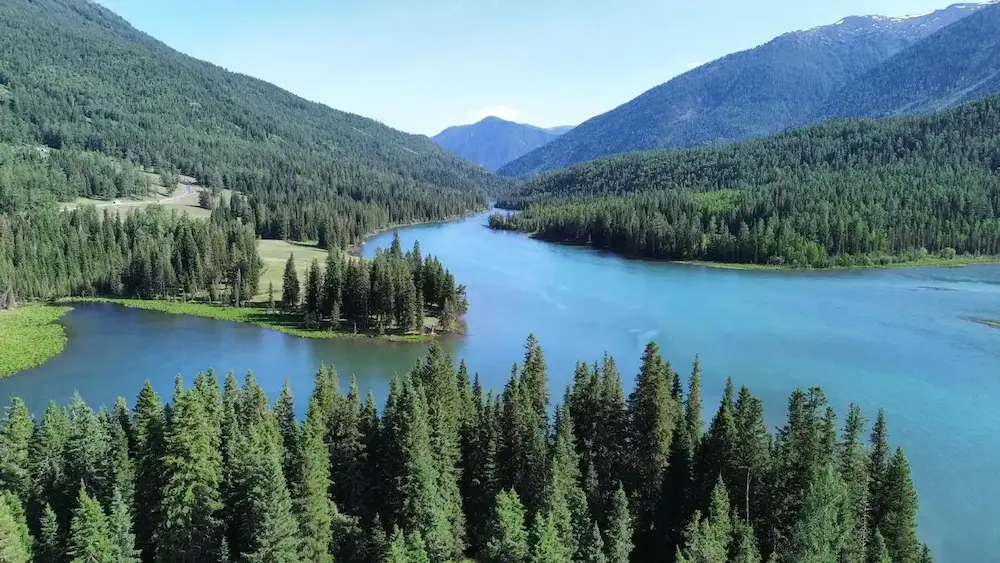
A circular polarizer is still the most useful piece of glass for this work. It cuts the sheen off wet leaves, deepens water, and lets you see through the surface of a lake. The mistake, and I made it repeatedly in 2019, is treating it as a switch rather than a dial.
At the altitudes you shoot in the Altay and Tianshan, the sky is already deep and the air already clean. Rotate to maximum and the sky can go almost navy, with a visible gradient across a wide frame where one corner darkens more than the other. Worse, full effect strips the reflection off the water, which is often what carried the gold across your foreground.
I now rotate to about a quarter or a third of full effect, watching the water rather than the sky. When a reflection of a yellow hillside is the point of the picture, I sometimes take the filter off completely.
Backlight for glow, sidelight for texture
Autumn leaves are thin and partly translucent, which is why they behave differently from summer foliage. Put the sun behind them and they light up from within. Put it behind you and they turn into flat yellow paper.
For glow, I work with the sun low and directly behind the canopy, usually hiding the disc itself behind a trunk to control flare, and I meter for the leaves rather than the sky. The background will go dark and the foliage will look lit from inside. This is the effect people associate with autumn photographs and it is almost entirely a matter of standing in the right place.
For texture, cross light in the first ninety minutes does something different. It rakes across birch bark, frosted grass and the ridges of ploughed ground, and it separates one row of trees from the next. The birch forests around Habahe are the best place I know to see this, because the trunks are pale and evenly spaced and the low sun draws every one of them.
Front lighting, sun over your shoulder, is what most casual photographs get. It is the weakest of the three and flattens exactly the depth you travelled for.
Building the blue and gold frame
The regional advantage here is colour opposition. Yellow larch and birch sit against water and sky that are unusually saturated, and yellow against blue is the strongest complementary pair there is. Snow adds a third value rather than a fourth colour, which is why these frames hold together so easily.
Two habits help. First, gain a little height so water fills the lower third rather than a thin strip, giving the blue enough area to balance the gold. Second, expose slightly under: a third of a stop down deepens the blue noticeably while bright foliage has headroom to survive it. Overexposure washes the water pale and pushes yellow towards white.
When snow and gold share the frame
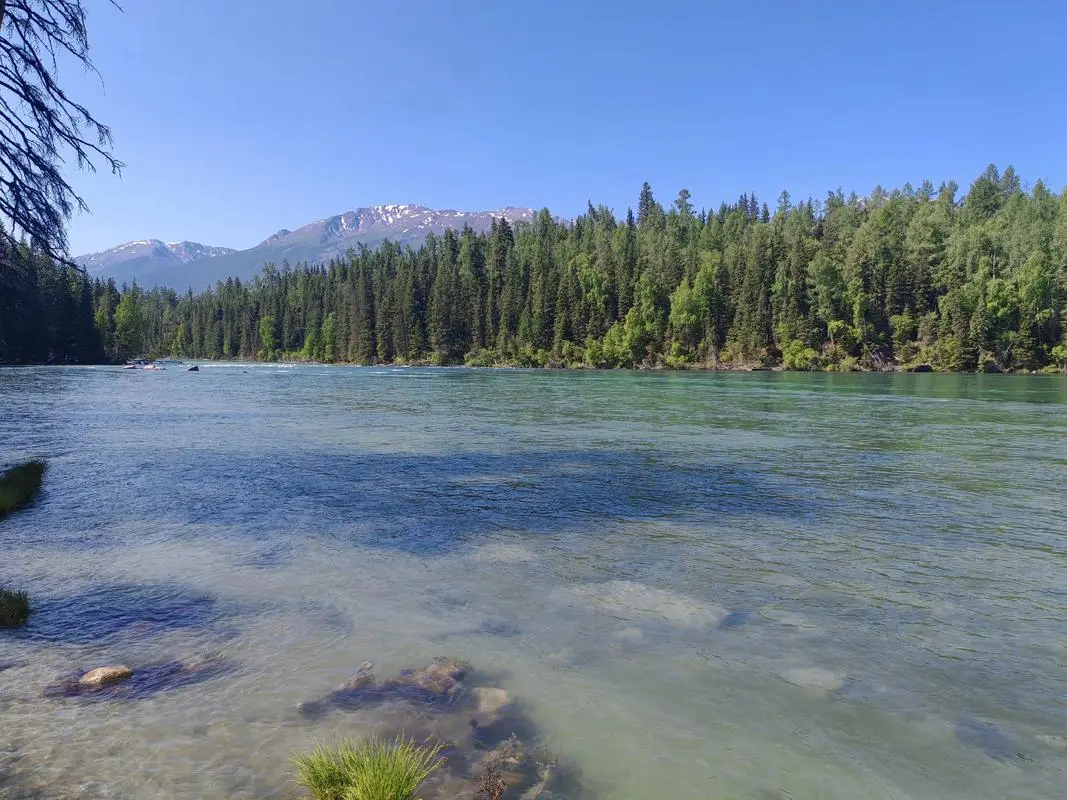
In the Altay, snow arrives on the peaks long before the leaves have finished. The combination is the best thing on offer up there and also the hardest exposure of the trip, because a sunlit snowfield and a shaded forest can sit five or six stops apart.
Expose for the snow. Highlight clipping in snow cannot be recovered and looks like a hole in the picture, whereas the forest, if it is a stop or two dark, lifts cleanly in processing on any modern sensor. I check the highlight warning rather than the histogram, because the snow may only occupy a small corner and will not show as a spike. On overcast days the rule flips: snow under grey cloud needs about two thirds of a stop of positive compensation or it renders as dirty grey.
Overcast days and the hour after rain
Grey mornings send a lot of people back to the guesthouse, and that is a mistake I no longer make. Diffused light removes the contrast problem, wet bark goes dark and saturated, and colour separation between species becomes obvious in a way it never is at noon.
The condition for using these days is simple: keep the white sky out of the frame. Shoot into the hillside, not across it. Work at 100mm and longer, isolate a stand of trees, use a reflection instead of the sky for your bright area. Some of my favourite frames from 2026 were made in weather I would once have written off.
Telephoto compression, and why the wide lens stayed in the bag
My rough count from the 2026 trip: seventy percent of the images I kept came from a 70-200mm, fifteen from a 100-400mm, the rest from a 16-35mm used almost entirely for foreground water.
The reason is that autumn in this region arranges itself in bands. A meadow, then a line of yellow larch, then dark spruce, then a bare ridge, then snow. A wide lens spreads those bands apart and makes each one small. A long lens stacks them, and the picture becomes about the layering rather than about the space. Once I understood that, my keeper rate roughly doubled.
Gear beyond that is a different subject, and our general Xinjiang photography guide covers bodies, tripods and the spot list in detail.
Two autumn mornings I got wrong
Hemu, October 2019. Perfect mist, perfect light, and I was shooting JPEG with automatic white balance because I had not thought about it. Every file came back muted and slightly green. I lost a genuinely rare morning to a menu setting, and it is the reason the white balance section sits at the top of this page rather than further down.
Luntai, October 2023. I drove in from Korla and reached the Tarim poplar forest at Luntai at around eleven, which in retrospect was the whole problem. Desert poplars in flat overhead light are a mess of tangled branches with no modelling at all, and there is no shade to wait in. I sat in the car for five hours. From about half past five the trunks began to separate and the last hour was superb, but I had burned most of a day because I planned the drive without planning the light.
A working sequence for one autumn location
This is how I now use a single site over a full day, and it has been more useful to me than any list of viewpoints.
Arrive the afternoon before and walk the site without a camera, noting which way the slope faces. Return before dawn for the blue hour, when water is stillest. Take first light as backlight if the terrain allows, then work cross light for texture for ninety minutes. Stop by mid morning and use the middle of the day for close detail or for driving. Come back two hours before sunset, when the light direction has reversed and the same subject reads as a different picture, and stay through dusk.
Practical notes that change the pictures
Cold drains batteries faster than most people expect. I carry four and keep two inside my jacket. Condensation is the related trap: a cold camera brought into a heated car fogs its internal elements, so leave it sealed in the bag until it warms.
Dust in the southern basin gets everywhere. I change lenses inside the vehicle with the engine off and the doors shut, and clean sensors far more often on southern trips than northern ones.
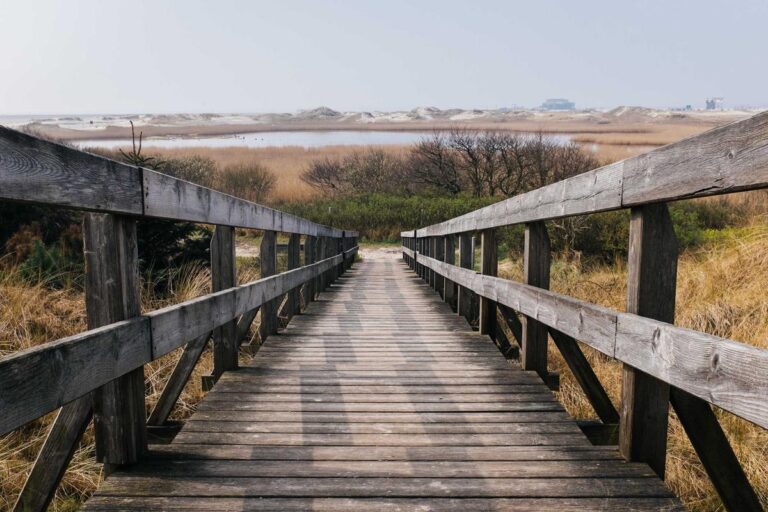
Boardwalks at popular viewpoints transmit every footstep into a tripod. If a tour group arrives during a dawn long exposure, step off onto solid ground or accept the frame is gone. Plan around the national holiday in the first week of October too, when the northern sites are busiest.
One regional quirk: clocks officially run on Beijing time, but daily life in the west often runs two hours behind it. Sunrise in Kashgar in mid October is close to eight forty by the phone. Work from actual sun times, not habit.
Frequently asked questions
Do I need a full-frame camera? No. Every technique here works on a crop sensor, and a crop body makes the long end cheaper to reach. Lens choice matters far more than sensor size.
Can I get good results on a phone? Yes, with two changes. Lock the white balance rather than letting it drift between frames, and use the telephoto camera instead of the main one so you get some compression. Phone ultrawide lenses are the worst possible choice for this subject.
Is a tripod necessary? For blue hour and dusk, yes. Between mid morning and mid afternoon it mostly slows you down. I carry one and use it for perhaps two hours a day.
What about graduated neutral density filters? Rarely useful here. The bright area is usually the foliage in the middle of the frame rather than a clean sky along the top, so a grad darkens the wrong part of the picture.
Disclaimer
Everything above reflects my own shooting and the equipment I happened to be carrying. Colour timing shifts by a week or more year to year, Altay weather changes fast, and access rules at ticketed scenic areas are revised without notice. Treat these settings as starting points to test against your own camera, and confirm opening times and entry conditions with the operators before travelling.
About the author
Marta Reinholm is a landscape photographer based in Tallinn, working on mountain and forest subjects across Central Asia since 2014. She photographed autumn in Xinjiang in 2019, 2023 and 2026, in the Kanas and Habahe areas of the Altay and in the poplar forests of the Tarim basin. She writes from field records rather than press material and accepts no sponsored equipment.