Published: August 20, 2026 | Author: Karl Huang
Most travellers who plan a Xinjiang trip never put Jeminay on the map. It sits in the far northwest of Altay Prefecture, a thin county pressed up against the Kazakhstan line, and it has none of the postcard pull of Kanas Lake or the Tian Shan. We went anyway in late August, partly out of stubbornness and partly because a Kazakh friend in Burqin kept saying “you have not seen the real border until you stand at 185.” What we found was a place that runs on wind, sheep, and a kind of quiet that bigger towns have lost. Guidebooks skip Jeminay because there is no station and no famous lake, which is exactly why it stayed calm while busier towns filled with coaches. This guide is built from that trip, plus the official notes from the regional tourism site and the port authority, so you can decide whether the detour is worth your fuel.
Jeminay at a glance
| Item | Detail |
|---|---|
| Where | Jeminay County, Altay Prefecture, Xinjiang Uyghur Autonomous Region |
| Border | Kazakhstan to the north and northwest |
| Population | around 38,000, majority Kazakh |
| Main port | Jeminay Port (吉木乃口岸) |
| Best months | June to September for grassland; January to February for hard winter scenery |
| Getting there | Fly or take the train to Altay, then drive about 2.5 to 3 hours |
| Language | Mandarin and Kazakh; very little English |
| Clock | Beijing time (UTC+8), so summer light lasts past 10 p.m. |
The morning the wind would not quit
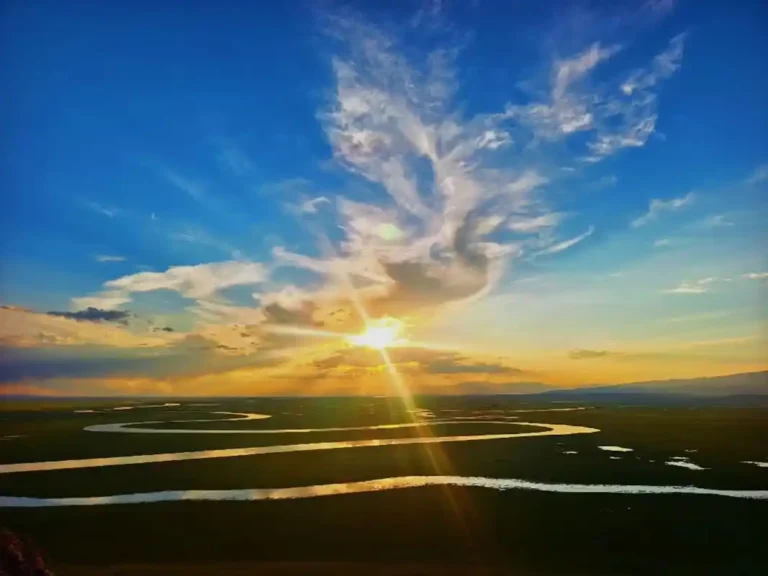
We rolled into Jeminay Town after a long drive from Altay City, and the first thing that hit us was not the view but the air moving across the Saur steppe. The wind here is not a breeze you notice and forget; it pushes the car door back when you open it. A herder we met outside the county seat laughed and said the wind paid the electricity bills, and he was not wrong. The hills behind town are lined with wind turbines, and on a grey morning they turn slow and patient like a field of giants waking up.
That afternoon we drove out to a Kazakh family’s winter compound, accepted the mandatory bowl of milk tea (suutei tsai, salty and warm), and watched the women stack cheese to dry on the roof. The grandfather showed us a photograph of the 185 boundary marker, the concrete post at the edge of the cultivation that everyone in the county seems to treat as a local monument. You do not cross there. You stand, you look north, and you understand that the line on the map is also a line in the grass.
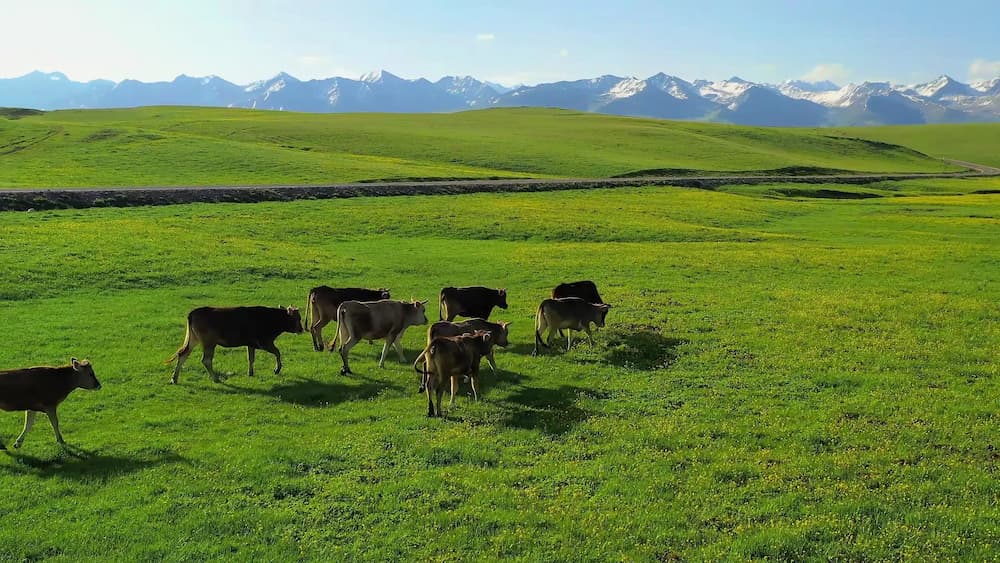
What surprised me most was how little the place performed for visitors. There is no ticket gate at the grassland, no branded viewpoint, no queue. You simply drive, stop where a track allows, and walk. That is exactly the appeal, and also the catch: you are responsible for your own judgment out there.
How to get to Jeminay
Jeminay has no airport of its own. The practical entry point is Altay City, which has flights from Urumqi and a rail connection that keeps improving. From Altay it is roughly 150 kilometres west to the county seat, a drive of two and a half to three hours on mixed highway and provincial road. We rented a car and were glad we did, because the spacing between services out here is real.
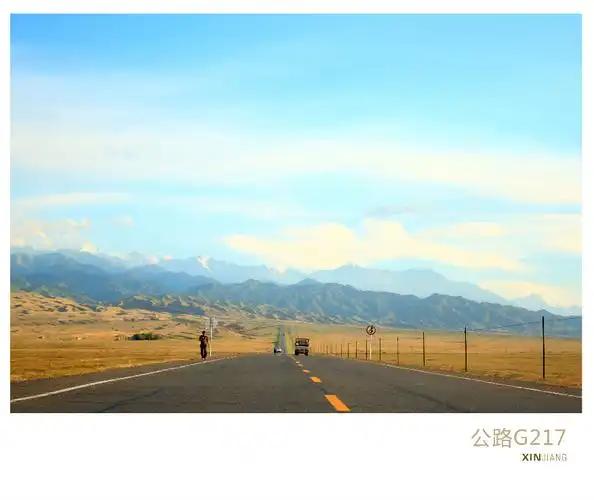
If you are already doing the northern loop, Burqin makes a natural jumping-off point, and you can fold Jeminay into a longer swing that also reaches Koktokay to the east. Buses run, but they are slow and timed for locals, not for a tight itinerary. Self-driving gives you the freedom to stop at the grassland without missing the only ride back.
Best time to visit Jeminay
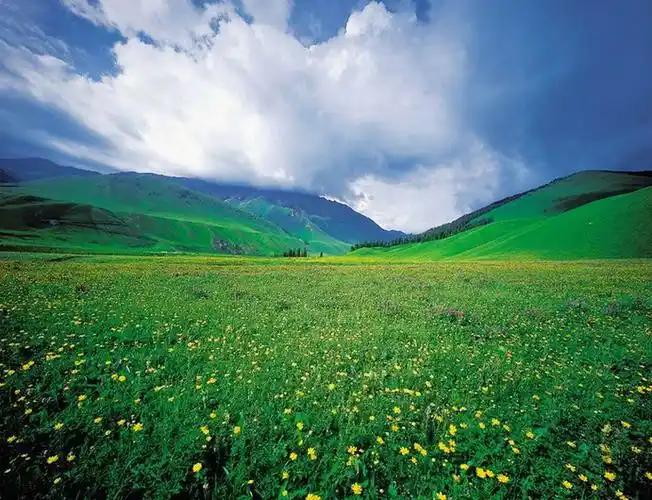
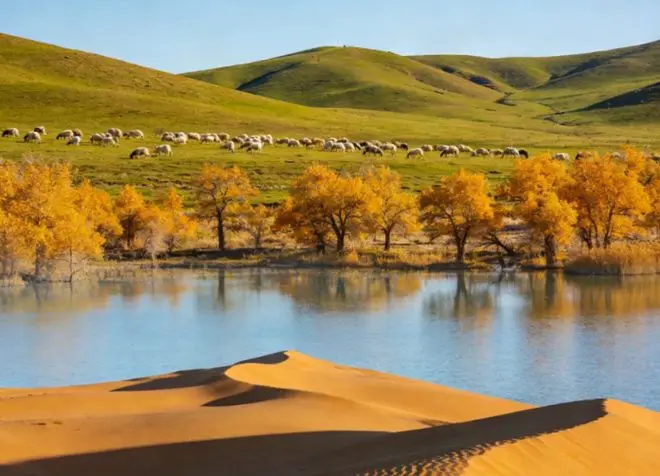
Late June through September is the window most people want. The Saur Mountain slopes turn green, wildflowers show up in July, and the Kazakh herds are out with their sheep and horses. Days are warm, but bring a real jacket: even in August the evening temperature drops fast once the sun goes down, and the wind cuts through a thin shirt.
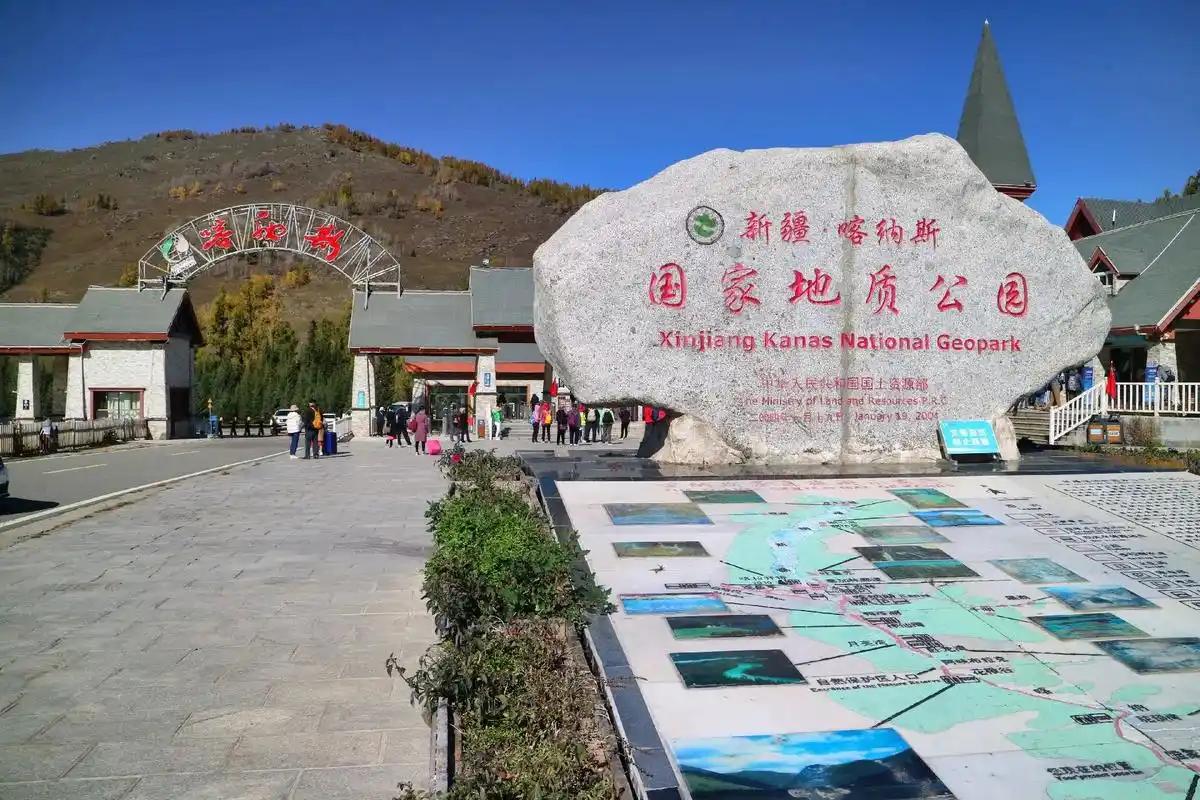
Winter is a different proposition. Jeminay is one of the colder inhabited corners of China, and the thermometer can sit at minus thirty or lower in January. That is its own draw if you want snow without the resort markup, but roads ice over, the port area tightens access, and you need to be honest with yourself about cold-weather driving. We would not send a first-time winter visitor here without a local contact.
Where to stay
The county seat has a handful of mid-range hotels and a few guesthouses. Do not expect international chains or spa levels of comfort. What you get is clean, warm, and cheap, and the staff are used to travellers who arrived because they read something online. The hotels cluster around the main road, a short walk from the market, so you are never far from a bowl of laghman at midnight. In summer, book a day ahead rather than rolling in at midnight.
For something closer to the land, ask around about a Kazakh homestay on the steppe. We slept in a yurt one night, woke to frost on the felt, and ate bread pulled straight from a pan. It is basic, and the toilet will be a squat a short walk away, but it is the version of Jeminay you will actually remember. Read up on Kazakh nomad culture before you go so you know the etiquette around entering a home and handling the food.
What to eat in Jeminay
The food is Kazakh first and Han second, with a faint Russian trading influence from the border. Order beshbarmak if you see it: boiled meat with wide noodles, eaten with your hands, built for cold weather. There is laghman, manty steamed dumplings, and a dense dried cheese called kurt that travels well in a pocket. Milk tea is the constant, served salty, and you will drink a lot of it because refusing a refill reads as rude.
The small restaurants near the central street do the job. Prices are low. The border trade means you may also find imported sweets and biscuits from Kazakhstan on the shelves, which makes for an odd but pleasant souvenir. If you are invited to a home meal, accept; the hospitality here is the real attraction, not the menu.
Practical tips before you go
- Carry your passport at all times. The border zone is restricted, and while the county town is open, checkpoints appear without warning on roads near the line.
- Do not photograph the port, the fence, or military installations. Locals will tell you when a spot is off limits; listen to them.
- Fuel up in Altay or Burqin. The stretch to Jeminay has long empty runs, and a half tank is a bad gamble.
- Pack layers even in summer. The wind plus the evening drop will fool a light packer every time.
- Mobile payment works in town, but carry some cash for roadside herders and small stalls.
- Network coverage is fine in the town but spotty out on the steppe. Tell someone your route.
A three-day Jeminay plan
Day 1. Arrive in Altay City, pick up the car, and drive west to Jeminay Town. Settle into the hotel, walk the central street, and eat something with milk tea before an early night.
Day 2. Head out to the Saur grassland and a Kazakh homestay. Visit the 185 boundary area from a respectful distance, then the rock formations locals call the stone city. Bring water and a full tank.
Day 3. Morning market for dried cheese and biscuits, then drive back via Burqin or loop east toward Koktokay depending on where your trip goes next.
Frequently asked questions
Can I actually cross into Kazakhstan at Jeminay Port?
The port is a working trade crossing, not a casual tourist walk-across. Crossing rules change, and most visitors treat it as a viewpoint, not a border to step over. Check the current status in our Xinjiang border crossings overview before you build a plan around it.
Do I need a special permit?
The county itself is open to domestic travellers. The immediate border strip has restrictions, so keep your ID and passport on you and follow any signage or officer instruction.
Is Jeminay worth it if I am already going to Kanas?
They are different trips. Kanas is alpine lake and forest; Jeminay is open steppe and a hard border. If you want the quiet end of Altay rather than the busy one, it earns a day or two.
How cold does it really get?
Winter lows around minus thirty are normal, and the wind makes it feel worse. Even August nights can fall into single digits Celsius, so pack for cold regardless of season.
A note on accuracy
This guide is based on a personal visit and on official information from the Xinjiang regional tourism site and the port authority at the time of writing. Border rules, port hours, road conditions, and what is open in the county change without much notice. Treat the details here as a planning starting point, not as a guarantee, and confirm the current situation through official channels before you travel. Nothing on this page is official government advice.
Karl Huang is a travel writer focused on northwest China. He has driven most of the Xinjiang border roads himself and prefers the quiet counties over the crowded lakes. He writes from first-hand trips and checks his facts against official sources.