Published: August 25, 2026 | Author: Karl Huang, Xinjiang Attractions
The Urumqi metro is one line with 21 stations, and that single fact shapes every car-free day you will spend in the capital of Xinjiang. Line 1 runs roughly north to south, from the airport down to Santunbei at the foot of the southern hills, and it costs 2 yuan to board. Whatever the line misses, and it misses a fair amount, you cover with city buses, the BRT, or a short taxi hop.
What follows comes from fare notices and timetables published by Urumqi City Rail Group and the municipal transport bureau, checked against what we paid at the gates on four trips since 2023, most recently in July 2026. Two things changed recently: bus and BRT fares were revised on 1 December 2025, and Line 1 switched to a peak-season timetable on 1 July 2026. Most English-language advice on this city predates both. Where a detail is uncertain, such as when Line 2 opens, we say so instead of guessing.
Quick reference: Urumqi metro and bus basics
| Item | Detail (as of August 2026) |
|---|---|
| Metro lines open | Line 1 only |
| Line 1 route | Santunbei to International Airport, 21 stations |
| Operating hours | 07:40 to 23:30, extended by one hour under the 1 July to 7 October peak timetable |
| Train frequency | About 6 minutes; 10 minutes late evening |
| Metro fare | 2 yuan for the first 5 km, tapering upward; 7 yuan end to end |
| Time limit inside gates | 120 minutes |
| Regular bus | 1 yuan older buses; 2 yuan new-energy air-conditioned buses (routes 30 km or under) |
| BRT | 2 yuan flat |
| Community shuttle | 1 yuan |
| Transfer discount | Hongshan Yikatong card, within 90 minutes: 0.5 yuan off bus to bus, 1 yuan off bus to metro |
| Airport connection | Free people mover, 07:52 to 23:20, every 10 minutes |
| Railway stations | Not served by Line 1; use bus or taxi |
| Taxi | 10 yuan for the first 3 km, then 1.3 yuan/km (1.9 yuan at night) |
| Help lines | Metro 96266; Hongshan Yikatong 0991-4640423 (10:30 to 19:00) |
What riding Line 1 is actually like
Our first ride was a mistake in the best way. We had budgeted forty minutes and a taxi to reach the airport from a hotel near Nanhu Square, then noticed the metro entrance almost under the hotel door. The trip took twenty-six minutes and cost 5 yuan for two of us, including the free shuttle at the far end. That was when the city stopped feeling like a place you needed a driver for.
The trains are wide A-type stock and cleaner than we expected given how dusty the streets get in spring. Announcements run in Chinese, Uyghur and English, in that order, giving you time to check the station name against your phone. Bags go through an X-ray scanner at the entrance, standard for every metro in China, and the queue has never cost us more than two minutes outside a weekday morning.
What we did not expect was how quiet the early trains are. Urumqi keeps Beijing time, but daily life runs about two hours behind it and government offices open at 10:30, so a 07:40 first train is locally the middle of the night. We have had a six-car train nearly to ourselves at eight in the morning.
Where the line goes, and where it does not
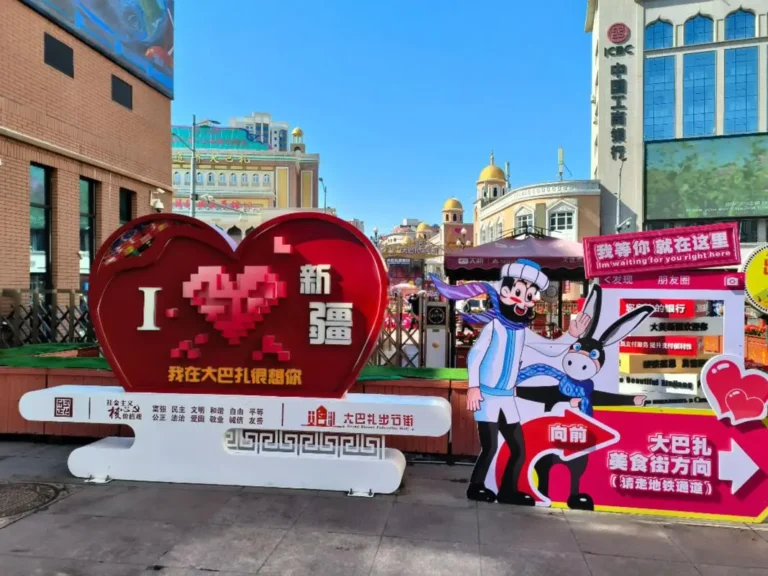
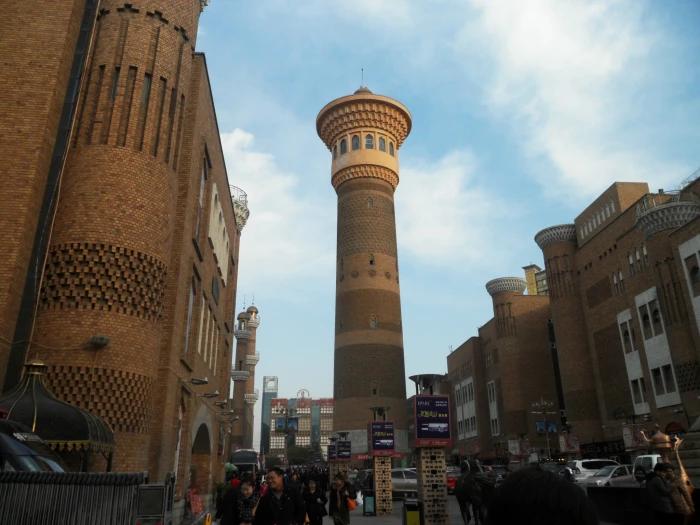
Four stations matter most to a visitor. Erdaoqiao puts you a short walk from the International Grand Bazaar, and our guide to the Urumqi International Bazaar covers what is worth buying there and what is not. Nanmen sits at the northern edge of the old commercial centre and will become the interchange with Line 2. Xinjiang University station is handy for cheap food. International Airport is the northern terminus.
Balou station carries local weight that is easy to miss. The name means “the eighth floor” and refers to the Kunlun Hotel, once the tallest building in the city, which Dao Lang’s 2002 hit about the No. 2 bus made a small landmark in Chinese pop culture. There is nothing to see. We mention it because Xinjiang drivers still hum that song.
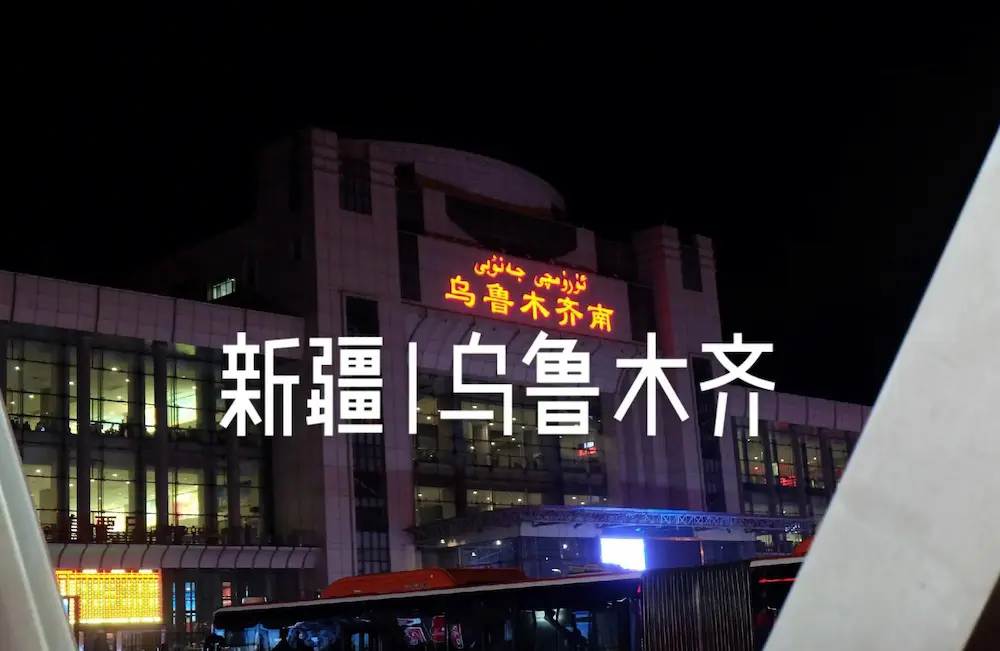
Now the gaps, and they are real. Line 1 reaches neither of the city’s railway stations. Arrive on the high-speed network and you land at Urumqi Station in the west, needing a bus or taxi to reach the metro spine; our notes on Xinjiang high-speed rail explain that arrival layout. Hongshan Park, the Xinjiang Museum and the Youhao shopping district all sit off the line by a bus ride or a 15 yuan taxi. And with only one line, every east-west movement in a city that sprawls east and west happens on the surface.
Line 2 will fix part of this. Its northern section, ten stations from Nanmen up to Huashan Street and including Urumqi Station, finished train commissioning in mid-2026 and entered simulated timetable running. The municipal target is completion by December 2026, though local reporting openly allows for a slip into early 2027. Treat any opening date you read, including that one, as provisional until the operator publishes it. Lines 3 and 4 are on hold, so plan around one metro line and you will not be disappointed.
Buses, BRT and the small shuttles
The bus network is where Urumqi actually moves. Fares were reset on 1 December 2025 and the structure is unusually easy to read. Older buses on routes of 30 km or less charge 1 yuan, newer air-conditioned electric buses charge 2 yuan on the same routes, anything beyond 30 km on a new bus is 3 yuan, BRT is a flat 2 yuan, and the little community shuttles looping through residential blocks are 1 yuan. You can choose your price by letting one bus go and taking the next.
The BRT is the part we use most. Lanes are segregated, you pay at the station rather than on board, and the stops are enclosed, which matters in February. BRT 5 runs 10.2 km from Nanhu East Road west to Qimashan Road, passing the city government, the Youhao Road junction and both Beiyuanchun markets, covering several places the metro cannot reach. Regular buses crawl at rush hour but move well at ten in the evening, and they reach the northern suburbs where the metro stops existing.
Paying for it without a Chinese bank account
This is the part that trips up foreign visitors. Five payment tools are recognised: a physical Hongshan Yikatong card, its virtual version, a locally issued national interoperable transport card, the Hongshan QR code inside a WeChat mini program, and the QR code in the Urumqi Metro app. Alipay also carries metro ticketing in its transport section. Discounts only accumulate if you keep using the same tool, and they do not pool across tools.
Our advice after trying most of them: buy the physical card. Station customer service centres sell and top up Hongshan Yikatong cards over the counter, it needs no app registration or verified Chinese ID, it works on buses, BRT and the metro, and it is the only clean way to collect the transfer discount. Tap within 90 minutes and a bus-to-bus transfer takes 0.5 yuan off the second fare, while a bus-to-metro transfer takes 1 yuan off, on top of a 10 percent card discount from your first ride. The steeper monthly tiers that cut fares further after 100 and 150 yuan of spending are aimed at commuters, and no visitor will reach them.
Without a card, metro ticket machines accept cash as well as WeChat and Alipay and issue single-journey tokens. On buses, cash goes into the farebox and no change is given, so keep 1 and 2 yuan notes. Foreign cards linked to Alipay or WeChat sometimes fail inside transit mini programs even when they work in shops, which is why we stopped relying on them. Our guide to ride-hailing and taxis in Xinjiang covers the apps that accept overseas payment.
Hours, seasons and timing your day
Line 1 normally runs 07:40 to 23:30. Under the peak-season timetable in force from 1 July to 7 October 2026, both the metro and the free airport people mover run an hour later, and evening frequency eases to ten minutes between 20:30 and 22:00 on weekdays or 19:00 and 21:00 at weekends. Summer daylight here stretches past ten in the evening, so that extra hour genuinely helps.
Two timing notes we learned the hard way. The 120-minute limit inside the paid area is enforced, and overstaying means paying the minimum single fare again on exit. And do not cut an airport departure fine: the metro terminus connects to the terminal by a free people mover running 07:52 to 23:20 every ten minutes, which adds a transfer plus up to ten minutes of waiting. Build in half an hour more than the journey planner suggests, and check terminal assignments in our Xinjiang airport guide first.
Where to stay if you want to stay car-free
Nanhu Square and Nanhu North Road sit in a mid-range hotel cluster with supermarkets and late food nearby, and that is where we have based ourselves most often. Nanmen and Erdaoqiao put you closer to the older streets and the bazaar, louder and thinner on hotels that accept foreign passports. Whatever you book, check that it is within about 600 metres of a station entrance rather than of the line, because those are not the same thing on a road grid this wide. More on neighbourhoods sits in our Urumqi city guide.
Eating along the line
Around Erdaoqiao the lanes behind the bazaar do grilled lamb, samsa baked against a clay oven wall, and nan bread sold by weight. Near Xinjiang University the student streets run to laghman pulled to order and cold noodles in summer, usually under 25 yuan. Because of the local clock, many small places close between roughly 15:00 and 18:00, then stay busy until midnight. If a street looks shut at four in the afternoon, come back at seven.
Practical notes worth knowing in advance
Download an offline map before you land, because station exits are numbered and the wrong choice can mean a 400-metre correction across a road you cannot cross. Keep water with you; the air is dry enough that a two-hour outing without it leaves you with a headache. English transit apps are incomplete here, so the paper route map on the platform wall is worth photographing.
A car-free day in Urumqi
Start around nine, while the trains are still empty, and ride to Erdaoqiao for the bazaar before the tour groups arrive. Give it two hours. Take the metro three stops north to Nanmen, walk the older commercial streets for an hour and eat lunch there. Early afternoon, take a bus or short taxi west to the Xinjiang Museum, the single best indoor use of two hours in the city and not on the metro. Late afternoon, return to the line and ride south to Xinjiang University for cheap food, or north to the sports centre area if you want space to breathe. Be back at your hotel station by 23:00, or a little later in summer.
Transit for two of us on that itinerary, with cards and one taxi leg, has come to under 40 yuan. To leave the city without renting a car, the Nanshan Pasture day trip needs a bus or chartered ride rather than the metro.
Frequently asked questions
How many metro lines does Urumqi have?
One. Line 1, with 21 stations, between Santunbei and International Airport. The northern section of Line 2 is in testing with a target of December 2026, and that date may move.
Can I reach the city from the airport by metro?
Yes. Take the free people mover from the terminal to International Airport station, then Line 1 south. Allow around 40 minutes to the central stations including the transfer, and note that the people mover stops at 23:20.
Does the metro reach the high-speed railway station?
Not yet. Urumqi Station is on the unopened Line 2, so for now it is a bus or taxi connection from the Line 1 corridor.
How much should I budget per day for transport?
Between 10 and 20 yuan per person covers a full day of metro and bus travel, plus roughly 15 to 30 yuan for each taxi leg used to plug a gap.
Disclaimer
Fares, operating hours and construction timelines change. The figures above reflect notices from Urumqi’s development and reform commission, transport bureau and city rail group as of August 2026, plus our own trips through July 2026. The peak timetable is seasonal by design, and the Line 2 opening target is an official goal, not a confirmed date. Confirm details before travelling: metro hotline 96266, Hongshan Yikatong 0991-4640423. Nothing here is sponsored.
About the author
Karl Huang writes about travel in Xinjiang for Xinjiang Attractions, focusing on the practical mechanics of getting around a region the size of Western Europe. He has travelled here since 2023, including four stays in Urumqi, and covered the city deliberately without a car to test what public transport can and cannot do. Reader corrections are welcome and are checked against operator notices before publication.