Published: 15 September 2026 | Author: Karl Huang
Most travelers who look up Taghraq Xinjiang find almost nothing written about this poplar-named village west of Kashgar, and that silence is exactly what pulled us back. The Karakoram Highway, the G314, is usually described as the fast lane to Tashkurgan and the Pakistan border, and travelers blow past the small oasis communities strung along it without slowing down. We made that mistake on our first drive, then returned two springs later on purpose. The two stops that changed our minds were Taghraq and Karaterek, two ordinary farming settlements in Akto County that almost nobody writes about. This is a straight account of what we found, why we stopped, and how you can do the same without expecting a ticket office.
| Item | Detail |
|---|---|
| Where | Taghraq village (Pilale Township) and Karakeqik township, Akto County, Kizilsu Kirghiz Prefecture |
| Distance from Kashgar | Karakeqik about 37 km; both on or near the G314 corridor |
| Best season | Late April to early June for green wheat and fresh poplars |
| Highlights | Poplar lanes, Zhang Qian Spring, Binamu Lake, oasis food |
| Entry fee | None, these are working villages, not a managed scenic area |
| Time needed | Half-day loop from Kashgar, or a morning stop en route to the Pamir |
Why we pulled off the highway at all
We had been asked to scout a slower version of the Kashgar to Pamir route for a small group, and the brief was simple: skip the postcard stops, find where local life actually happens. That search took us into Akto County, the Kizilsu Kirghiz prefecture district that sits southwest of Kashgar and acts as the antechamber to the Pamir. Akto itself is worth a separate read, but the two places that stuck with us were smaller than the county name suggests.
Neither is a destination in the brochure sense. There is no entrance gate, no parking lot built for tour buses, no English signage promising a viewpoint. What they offer instead is the kind of working oasis the old caravan routes depended on: shade, water, and a reason to stop moving.
Taghraq Xinjiang: the poplar-shaded village that names itself after a tree
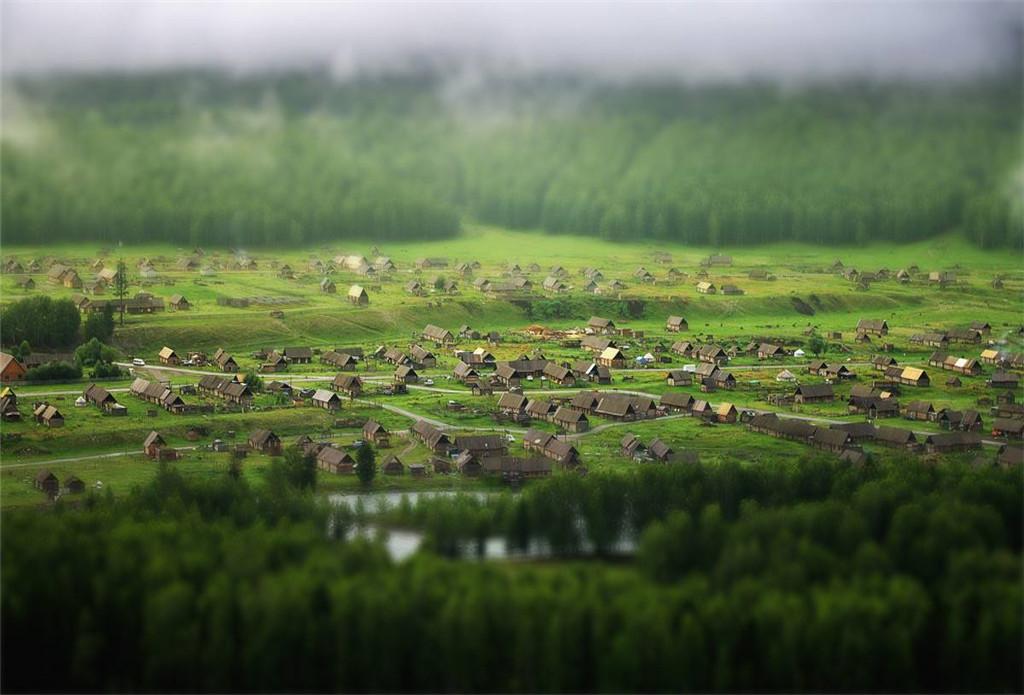
Taghraq (托格拉克) is a village inside Pilale Township (皮拉勒乡) in Akto County. The name is the giveaway. In Uyghur, “toğraq” means the poplar, the cottonwood that tolerates desert soil and alkaline water better than almost anything else people plant. The village was formally set up in 2017 when it was split off from a neighboring settlement, and today it is populated almost entirely by Uyghur farming families who speak Uyghur at home and work the irrigation belt fed by the Gez River system.
When we visited, the thing you notice first is not a monument but the trees. Rows of old poplars line the village channels, their roots down in the same water that feeds the wheat and corn. We parked by a mud-brick wall, bought a stack of warm naan from a roadside stall, and sat in the shade while a man repaired a bicycle in the dust. Nobody asked us for money or for a photo. That, more than any viewpoint, is the stop.
Karakeqik: the spring-water township under the Pamir
A short run west along the corridor brings you to Karakeqik (喀热克其克乡, also written 喀热开其克乡). The name tells you the geography again: in Uyghur it means “spring-water rivulet,” and the township sits on the alluvial fan of the Gez River (盖孜河) in the northwest of Akto. Its seat is Bostan Village (博斯坦村), and it administers four villages. It is close enough to Kashgar that the distance to the city is only about 37 kilometers, with the county seat a little farther at roughly 43.
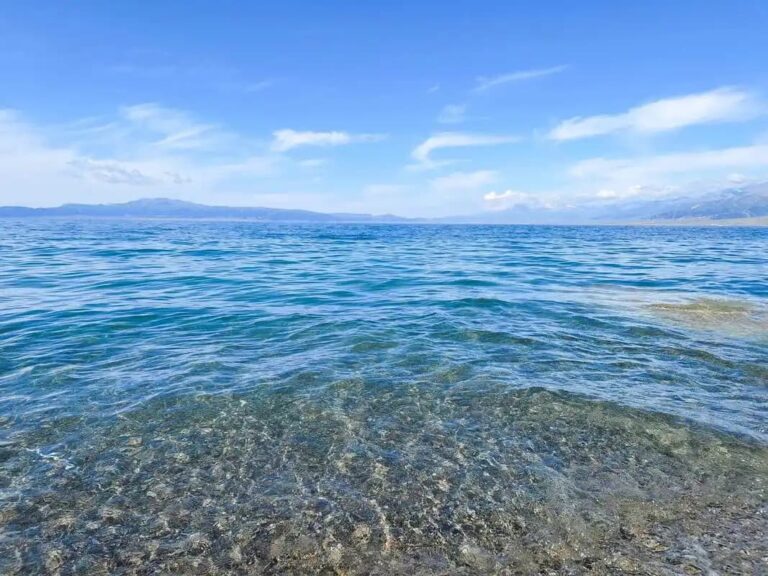
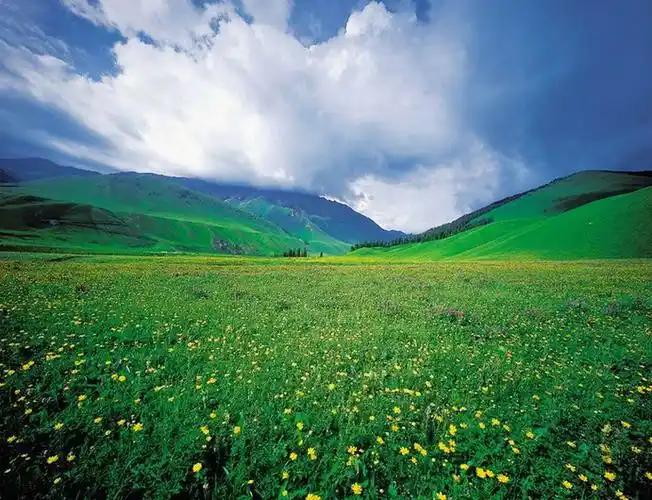
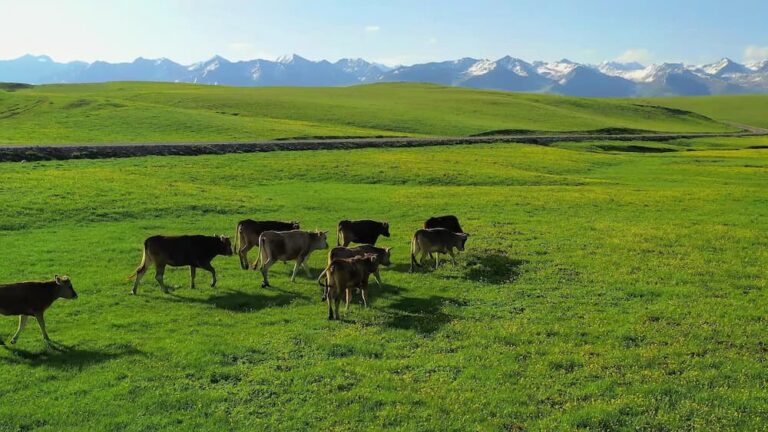
Karakeqik is wheat country. The flat fields here are part of the same oasis agriculture that has pushed Akto’s winter-wheat yields to the top of the county, and in late spring the green is almost loud after the grey winter. The spot locals point visitors toward is Zhang Qian Spring (张骞泉), a clear spring with a legend attached: the story says the Han envoy Zhang Qian, crossing the region on his westward mission, found water here during a sandstorm and drank. Whether or not you believe the tale, the spring is real, and so is the small lake nearby called Binamu (比纳木湖).
We spent an hour at the spring, watched a boy fill bottles for his family, and walked the field margins where tractors were already working the soil. The township is also nudging toward low-key rural tourism, using the X398 road and the spring-and-lake pair as a small stopover, but as of our last visit it was still more farm than attraction.
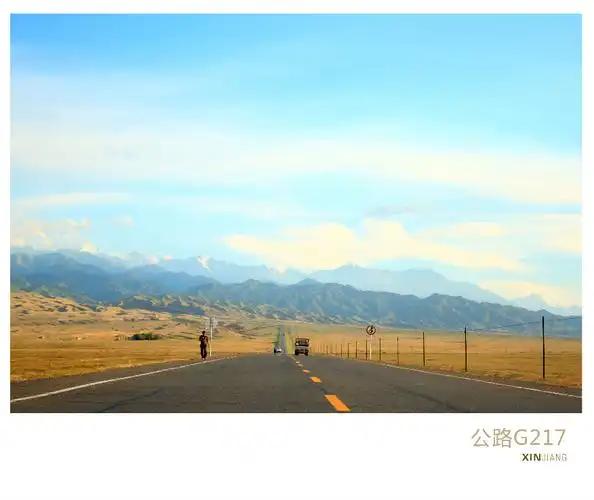
The drive west from Kashgar on the G314 corridor
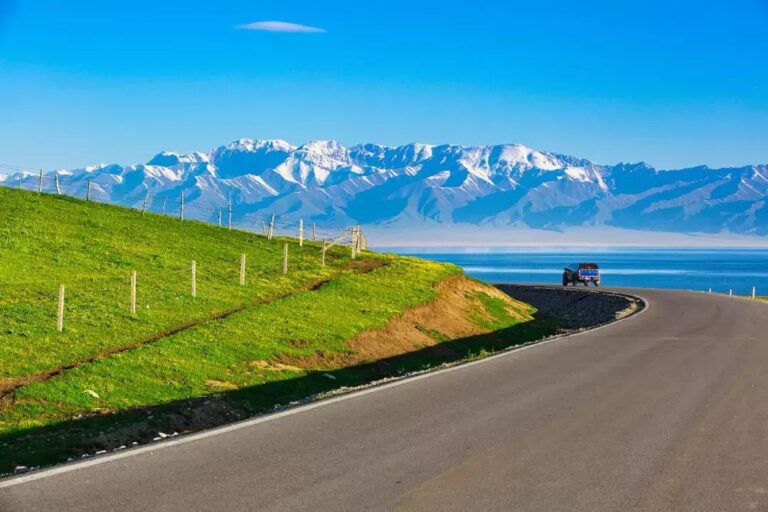
Both villages sit on or just off the G314, the national highway that runs from Urumqi all the way to the Khunjerab Pass on the Pakistan border, a line about 1,948 kilometers long. The stretch from Kashgar south toward the border is the Chinese portion of the Karakoram Highway, and it is the same corridor the old caravans used to reach the Pamir and beyond. You can read the full Karakoram Highway driving guide for the long haul, but for these two stops you only need the first hour out of Kashgar.
From Kashgar city, head southwest through Shufu County (疏附县). The poplar village of Taghraq lies in the Pilale area before you reach the main Akto county seat, and Karakeqik is a little farther, tucked under the rising foothills. A normal car or a hired driver covers the loop in a relaxed half day if you start in the morning.
When the oasis is at its best
We have now been in this pocket of Akto in late April and again in early June, and the difference is large. Late April is the safer bet if you want the wheat young and green and the poplars just leafing out, with cool, clear days good for walking. Early June is hotter and the fields are taller, but the markets are fuller and the apricot trees (Akto is known for its Baren apricots, 巴仁杏) are heavy with fruit. We would avoid the deep winter months: the oasis goes grey, the spring is less inviting, and many small stalls close.
If you are continuing to the high Pamir, plan the two stops as a warm-up. Our longer Tashkurgan travel guide covers the altitude and the border-town logistics further south.
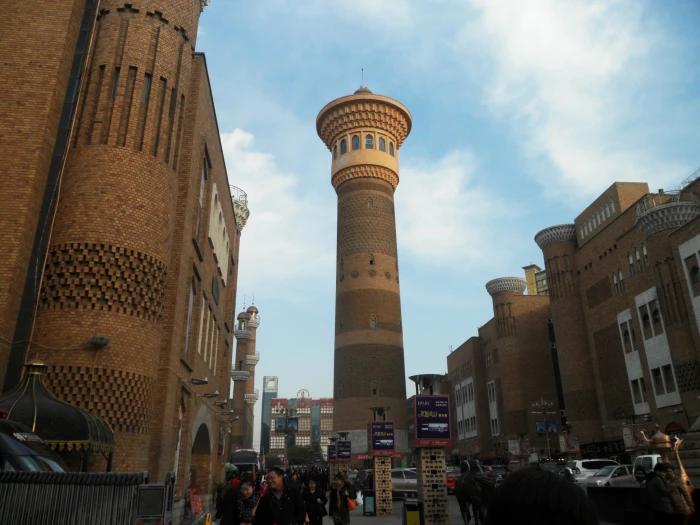
What we ate and saw with the villagers
Food here is the standard southern Xinjiang oasis table, and that is exactly the point. At a roadside spot in the Karakeqik area we had laghman noodles pulled to order, a plate of skewered lamb, and rounds of naan still warm from the tandir. A vendor sold us dried Baren apricots by the half-kilo, and a grandmother pressed a cup of black tea on us without a word of English between us.
We also saw, without any arrangement, the rhythm of irrigation life: channels running from the Gez system, wheat being tended by hand, poplars dropping their fluff in the wind. None of it is staged, which is why it stays with you after the Pamir’s big scenery has blurred.
Where to pause for the night
Do not expect boutique hotels in either settlement. The realistic options are simple: a basic guesthouse in the Akto county seat, or, more comfortably, to treat these two stops as a day loop and sleep back in Kashgar or push on to a larger Pamir town. We chose the loop-and-return option on both trips and were glad of it, because it kept the driving in daylight and left the evenings for Kashgar’s old city.
If you do want to stay closer, ask at the county seat rather than in the villages, and confirm heating or cooling by season. Rural guesthouses in this belt are clean and cheap but basic, and English is rare.
A half-day or overnight stopover plan
Our preferred version, done from Kashgar:
- 08:30 – leave Kashgar, drive southwest through Shufu.
- 09:30 – reach Taghraq, walk the poplar lanes, buy naan, talk to whoever is around.
- 10:30 – continue to Karakeqik, visit Zhang Qian Spring and Binamu Lake, walk the field margins.
- 12:00 – late lunch of laghman and skewers at a roadside stall.
- 13:30 – loop back toward Kashgar, or continue south if the Pamir is your next night.
If you are headed to the high plateau, slot Baisha Lake (白沙湖) in as the next logical stop; our Baisha Lake guide explains the timing and the pull-off.
Notes for independent travelers
A few practical points from the two trips. Carry cash in small bills; village stalls often cannot take international cards, though Alipay and WeChat Pay work for most Chinese travelers. A hired car with a driver solves the language gap and the navigation in one move, and we recommend it over self-driving if your Chinese is limited. Respect the working fields and private yards; ask before photographing people. The prefecture has border sensitivity, so keep your passport and, if heading further south, your Pamir travel permit in order.
One more thing: these are living villages, not museums. The best behavior is to buy something, say hello, and leave the place as you found it.
FAQ
Are Taghraq and Karakeqik real towns? Yes. Both are administrative communities in Akto County, Kizilsu Kirghiz Autonomous Prefecture, southwest of Kashgar. Taghraq is a village in Pilale Township; Karakeqik is a township on the Gez River fan.
Do I need a guide? Not formally for the villages themselves, but a driver-guide makes the language and navigation far easier, and is close to essential if you continue to the Pamir.
Is there an entrance fee? No. There is no ticket office. You are visiting working farmland and a spring, not a managed scenic area.
Can I combine this with the Karakoram Highway? Easily. The two stops sit on the G314 corridor, so they fit naturally as the first oasis break on a Kashgar to Pamir drive.
Disclaimer
This account is based on our own two visits in spring 2024 and 2025 and on publicly available information from the Akto County government. Schedules, road conditions, and local services change, and border-area rules can shift without notice. Confirm current travel and permit requirements with official sources before you go, and treat the descriptions here as a traveler’s notes rather than a guarantee.
About the author
Karl Huang is a Xinjiang-based travel writer who has driven the southern and western corridors of the region for several years. He focuses on the small, working places that sit between the famous landmarks, and writes from first-hand visits rather than second-hand summaries. His other Xinjiang routes and guides are published across this site.