Published: September 22, 2026 | Author: Karl Huang, travel writer based in Urumqi since 2017
The first time we rolled up to Karakul on the Pamir Highway, our plan was a quick photo stop and a straight run back to Kashgar. That changed the moment a Kyrgyz woman named Gulzat waved us toward her yurt and pressed a bowl of salted milk tea into my cold hands. Karakul Pamir Xinjiang is usually written up as a lake with a famous reflection, but the part that stayed with me was the evening we spent inside a felt yurt at 3,600 metres, listening to wind come off the glacier. This guide is built from two overnight stays in 2023 and 2024, and it is about the people and the stay rather than the postcard view. I will tell you what the yurt is actually like, who runs it, what you eat, and how to handle the permit and the four-hour drive without the usual confusion.
Karakul Pamir Xinjiang: The Numbers
| Item | Details |
|---|---|
| Location | Akto County, Kizilsu Kyrgyz Autonomous Prefecture, on the Pamir Plateau |
| Elevation | About 3,600 m (11,800 ft) above sea level |
| Distance from Kashgar | Roughly 190 km south on the G314, the Chinese stretch of the Karakoram Highway |
| Backdrop peaks | Muztagh Ata (7,509 m), Kongur Tagh (7,719 m), Kongur Tiube (7,530 m) |
| Who lives there | Kyrgyz herding families in summer yurt camps along the western shore |
| Drive time | About 4 hours from Kashgar with photo stops |
| Yurt price | Around 80 to 150 yuan per person with a simple dinner and breakfast in peak season |
| Best window | May to October; camps close and the lake freezes from November to April |
Why We Chose to Sleep in a Yurt, Not Drive Back
Most visitors treat Karakul as a two-hour photo stop on the way to Tashkurgan, and there is a case for that if your time is short. We did the day trip first, in 2023, and it left us with a folder of nice pictures and almost no memory of the place. The lake is at its best in the first hour after sunrise, when the water goes still and Muztagh Ata prints itself upside down on the surface. That hour happens before any tour bus reaches the shore, which means you either sleep nearby or you miss it. The second time, in 2024, we let our Kashgar driver drop us at the camp and continued to Tashkurgan two days later. The difference was night and day. We watched the peak turn pink at dusk, ate by a stove that smelled of boiled mutton, and woke to frost on the felt wall. If you are altitude sensitive, sleeping low in Kashgar the night before helps; do not try to arrive, hike hard, and drive the winding highway back in the dark on the same day.
Inside a Kyrgyz Yurt at 3,600 Metres
A yurt on this shore is not a hotel room with a theme. It is a circular felt tent on a wooden lattice frame, maybe five metres across, with a small stove in the middle and mattresses laid around the edge. Ours had a wool rug, a stack of sheepskin coats for guests, and a single dim bulb running off a car battery. There is no running water inside and no heating beyond the stove, which the family lights after dark and lets die down around midnight. The floor is packed earth covered with felt, and you sleep in a sleeping bag on top of the mattress. It is basic, and it is also warm enough once the stove has been going an hour, provided you keep your hat on. The toilet is a pit behind a low stone wall a short walk from the camp, and there is no shower. I am not going to pretend this is comfortable by any normal standard. What it gives you instead is the lake to yourself at the two hours of the day when it is worth having.
The Family Who Runs the Camp
The camps along the western shore are run by Kyrgyz families who move up from lower villages for the summer pasture season. Gulzat’s family keeps yaks, a few horses, and a flock of sheep, and the yurt camp is how they earn cash during the brief tourist window. Her father still speaks almost no Mandarin and negotiates everything with a grin and a calculator; her teenage son runs the booking by waving at passing drivers. This is the part of Karakul that the lake-only write-ups miss. The Kyrgyz here are not performers put on for visitors. They are herders who happen to have a world-class view out the door, and if you sit still and accept the tea, you will hear about the bad winter of 2022, the price of a yak calf, and why the glacier has pulled back in their lifetime. Our guide to Kyrgyz culture on the Pamir goes deeper into where these families fit in the wider plateau.
Meals by the Stove: Milk Tea, Noodles and Mutton
Dinner at the camp is simple and repeats across every yurt we tried. You get a bowl of salty milk tea made with brick tea and sheep butter, a plate of hand-pulled noodles with a little mutton, and sometimes a round of flatbread toasted on the stove. Breakfast is milk tea again, with bread and a boiled egg if you are lucky. There are no restaurants at the lake and no menu; you eat what the family eats. Vegetarians will struggle, and anyone expecting a clean dining setup should lower expectations before arriving. Carry snacks and water from Kashgar, because the camp takes no cards and the nearest ATM is hours away. The food is not the point. The point is that you are sharing a stove with a family whose grandparents crossed these passes with the same herds, and that is a different kind of travel memory than a car window photo of a mountain.
Horses, Yaks and a Walk to the Shore
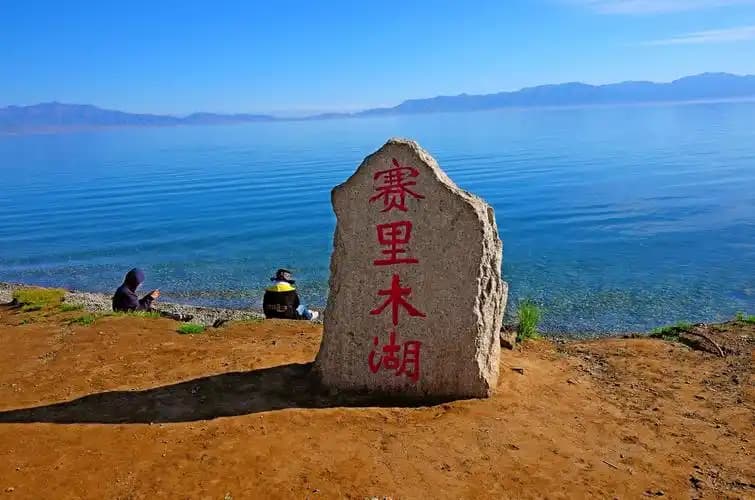
The shoreline is a ten-minute walk from the yurt camp, flat and easy, and the best light is along the eastern bank where the peaks reflect without the tour-bus crowd. For a few yuan the family will lend you a horse, and a slow walk toward the Subashi pasture gives you the classic postcard angle with Muztagh Ata centred. Yaks graze near the inlet and barely look up; the herders’ dogs, on the other hand, will announce your every move. We spent one afternoon just walking the shore and watching the colour of the water shift from slate to a clear mineral blue as the clouds moved. If you want to photograph the reflection, go at dawn and hope for no wind; afternoons on the Pamir pick up a hard wind that chops the surface within minutes. Do not walk on the frozen lake in late autumn unless a local tells you it is safe, because the ice near the inlets is thin and the water is deep and very cold.
Getting the Overnight Permit Sorted in Kashgar
Here is where most people get confused, so read carefully. Karakul itself sits in Akto County, before the main checkpoint into Tashkurgan Tajik Autonomous County. For a simple day trip, many domestic travellers pass without paperwork. For a foreign passport holder intending to stay overnight, or anyone continuing south to Tashkurgan, you need a border-area permit, and it is checked at the police station near the lake and again at the county line. We arranged ours through a Kashgar travel agency the morning we left; it took a few hours and a copy of our passport and Chinese visa. Do not trust an agent who says a day trip requires a permit, and do not trust one who says an overnight stay never does. The rule is enforced unevenly, and being turned back at the lake after a four-hour drive is a bad outcome. Pick up the permit in Kashgar before you head south, and keep it with your passport the whole way. Our Kashgar travel guide explains where the permit office sits and what to bring.
One Night, Two Days: A Pamir Itinerary
This is the loop we actually ran in 2024. Day one: leave Kashgar after an early breakfast, climb past Baisha Lake (the white-sand lake that most people shoot from the road) and stop there for thirty minutes, then continue to Karakul and check in at the yurt camp by mid-afternoon. Walk the shore before dinner, eat by the stove, and sleep. Day two: be at the eastern shore by first light for the reflection, have breakfast, then either drive back to Kashgar (another four hours) or push south toward Tashkurgan and the Khunjerab Pass, which is the natural next leg on the China-Pakistan Highway. If you go south, your border permit is already in hand. Either way, do not plan to photograph the lake, eat, and reach Kashgar before dark on the same day. The highway is sealed but slow, and the last hour out of the mountains is the kind of road you want to drive in daylight.
What to Pack for a Yurt Night
The single most common mistake at Karakul is dressing for the daytime photo and forgetting the night. Even in July the temperature drops below freezing after dark, and the wind off the glacier goes straight through a cotton shirt. Bring a proper sleeping bag rated to zero, a warm hat, and a layer you can wear inside the yurt. A small headlamp is useful because the camp goes dark with the stove. Carry cash, snacks, and at least two litres of water per person, since the camp sells little and takes no cards. A power bank matters because the single bulb runs off a battery that may not reach your mattress. If you are coming straight from sea-level cities, spend a night in Kashgar at 1,300 m first, and read our altitude sickness guide before committing to a night at 3,600 m. Sunglasses and sunscreen are not optional at this elevation; the UV on the Pamir is punishing even on a cool day.
Frequently Asked Questions
Can I visit Karakul without joining a tour?
Domestic travellers can hire a car or share a ride from Kashgar and do it independently. Foreign visitors generally need a permit arranged through an agency, and many agencies only handle the lake as part of a group, so confirm this before you leave Kashgar.
Is the yurt stay safe for solo travellers?
Yes. The camps are family run and the shore is busy with tour buses during the day. At night it is quiet and cold, not dangerous. Keep your permit and passport on you, and tell your Kashgar contact which camp you are at.
Do I need to book the yurt ahead?
In July and August the better camps fill by midday as buses pass through, so book through your driver or an app. In May, June, September and October you can usually walk in, though the family may not speak your language.
What about the lake entrance fee?
There is a small ticketed area on part of the west bank, but most visitors simply stop at the shore or the camp and skip it. The yurt stay is separate from any ticket.
Can I fly or take a train to Karakul?
No. The lake has no airport and no railway. Every visitor arrives by road from Kashgar on the G314, which is the Chinese stretch of the Karakoram Highway. The white-sand lake on the way is worth a stop, and Tashkurgan beyond is covered in our Tashkurgan gateway guide.
Disclaimer
This article reflects conditions as of September 2026 and the author’s overnight stays in 2023 and 2024. Permit rules, camp openings, road works, prices and weather on the Pamir change without notice, and enforcement at the border checkpoint varies by season and by officer. Confirm the current permit requirement with a Kashgar agency before you travel, and verify road and weather conditions locally. Distances and peak elevations are drawn from Kizilsu Prefecture and regional tourism sources, and any errors are the author’s own. This site accepts no liability for travel decisions made on the basis of this guide.
About the Author
Karl Huang has travelled and photographed Xinjiang full time since 2017 and has crossed the Pamir Highway in three different seasons. He writes practical, field-checked guides for foreign visitors, with an emphasis on the small cultural experiences that the big travel sites leave out.