Published: September 25, 2026 | Author: Liam Foster
Why I’m writing Tacheng as a border capital
Most travel pages treat Tacheng city Xinjiang as a footnote: a far-north town near the Kazakhstan line where you might change buses. I first passed through in February 2024 on a frozen overnight train from Urumqi, and I went back at the end of May 2025 when the steppe around Yumin was turning red with safflower. What stuck with me was not the famous wooden cottages (our other guide covers that side of town) but the role Tacheng actually plays: it is the administrative seat of Tacheng Prefecture and, for practical purposes, the quiet capital of China’s northwestern border belt. This article looks at the city as a working gateway, a railway hub and a base for the frontier, rather than as a heritage postcard.
Tacheng by the numbers: a northern-border briefing
| Item | Detail |
|---|---|
| Full name | Tacheng City (Qoqek / Chochek), seat of Tacheng Prefecture, Ili Kazakh Autonomous Prefecture |
| Position | Dzungarian Basin, about 10 to 17 km from the Kazakhstan border |
| Border port | Baktu (Bakhtu) port, 17 km from the city; Kazakh side is Bakhty, 60 km from Makanchi |
| Rail | Karamay-Tacheng railway, opened 30 May 2019; about 9 hours to Urumqi |
| Air | Tacheng Qianquan Airport (TCG), roughly a one-hour flight to Urumqi |
| Best window | Late May to September for steppe green and safflower; December to February for deep snow |
Use those figures as a planning baseline. Distances, timetables and port rules shift, so confirm the live numbers when you book.
How Tacheng city Xinjiang became the seat of the northwest
The name itself tells the story. “Tacheng” is a short form of Tarbagatay, after the Tarbagatai mountain range that walls off the basin to the north. On 19th-century European maps you will see Chuguchak, and Kazakh and Uyghur speakers still call the place Qoqek or Chochek. For a long stretch of the Qing period this was the most important trading town in western China after Ghulja (today’s Yining), a hub where tea and livestock moved between China and Russia. Two Qing ambans kept residence inside an earthen wall, and the town rode the swings of Central Asian commerce until the unrest of 1865. In 1962, during the Yi-Ta incident, tens of thousands crossed the nearby border, and the crossing stayed closed for decades before reopening in 1990. Today Tacheng is calm, leafy and unmistakably a government town.
The Baktu (Bakhtu) crossing: stepping toward Kazakhstan
The Baktu port sits about 17 km north of the city center. On the other side, 60 km past the line, is the Kazakh checkpoint of Bakhty, nearest to the town of Makanchi in East Kazakhstan region. Baktu was designated a first-class port of entry in 1994, reopened to traffic in 1990 and opened to third-country nationals in 1995, so in principle it can handle foreign travelers, not just freight. In practice the crossing is freight-heavy, and independent tourists should treat entry rules as changeable: you need a valid Kazakhstan visa, and you should confirm with both Chinese and Kazakh authorities whether pedestrian or vehicle passage is running on your dates. If your goal is simply to stand near the frontier, the port approach road and the trade market on the Chinese side are open without crossing. For the bigger picture, our border crossings overview maps every option, and the Khorgos crossing further south carries far more volume if you want a busier comparison.
Tacheng as a transport hub: rail, air and the road north
For most of its history Tacheng was a dead end on the rail map. That changed on 30 May 2019 when the Karamay-Tacheng railway opened, linking the city to Baikouquan on the Kuytun-Beitun line and putting Urumqi about nine hours away by train. The Xinjiang rail network now reaches the doorstep, which is the single biggest reason the city is easier to visit than it was a decade ago. In the air, Tacheng Qianquan Airport (IATA: TCG) runs flights to Urumqi and a handful of other regional cities, with the hop taking about an hour. On the road, most people arrive from Karamay and its Ghost City, passing the famous Laofengkou (the “Old Wind Gap”), one of the windiest corridors in the region where winter gusts have toppled trains and where long windbreak forests now line the highway.
Sleeping in the garden city: where to base yourself
Tacheng carries the official title of a National Garden City, and it shows: broad tree belts, low-rise blocks and a pace that feels closer to a provincial county seat than to a frontier outpost. I stayed within walking distance of the central square both times, and I would do it again, because the core is where the bazaar, the museum and the older streets cluster. Expect clean, modest mid-range hotels and a few guesthouses rather than international chains; prices are gentle compared with Urumqi or Kashgar. Book ahead only if you travel during a local festival or the peak summer weeks, when government and trade visitors fill rooms.
Eating at the crossroads: Kazakh, Russian and Han on one plate
If any place in Xinjiang demonstrates how border towns cook, it is here. At the morning bazaar you will find Kazakh baursak and fried dough, laghman pulled by hand, and flat naan stacked like wheels, sitting a few stalls away from Russian-style sourdough, smoked river fish and the legacy of a long baking tradition brought west from Siberia generations ago. Han-run noodle houses fill the gaps. A local specialty worth seeking is safflower (honghua) oil from nearby Yumin County. Pressed from thornless safflower petals and seeds, it shows up in dressings and as a souvenir. The bazaar is the easiest place to taste the blend in one morning.
What to do inside Tacheng city
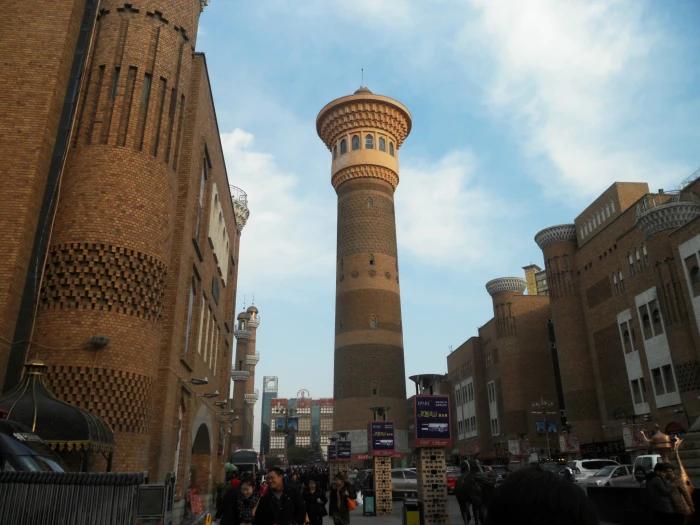
You do not need a car to fill a day. The Tacheng Prefecture Museum gives the history above a physical form, with artefacts from the Tarbagatai frontier and the trade era. The central bazaar is a half-day by itself if you like watching a working market rather than a staged one. The Russian-era wooden architecture is patchy but real; our companion guide to Tacheng’s Russian heritage walks the specific streets. Around the city, a greenbelt along the river and a handful of small parks make cycling or an evening stroll pleasant, and the border-trade market on the northern edge shows what the frontier economy actually sells.
Day trips out of the capital: Yumin, Emin and the wind gap
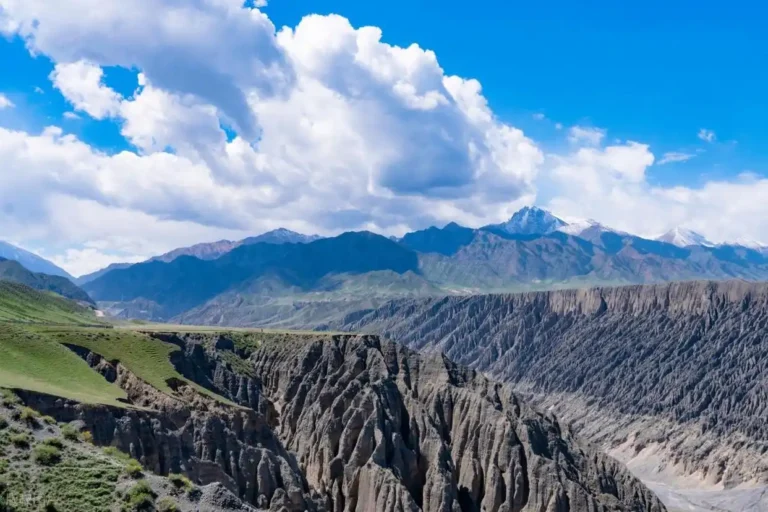
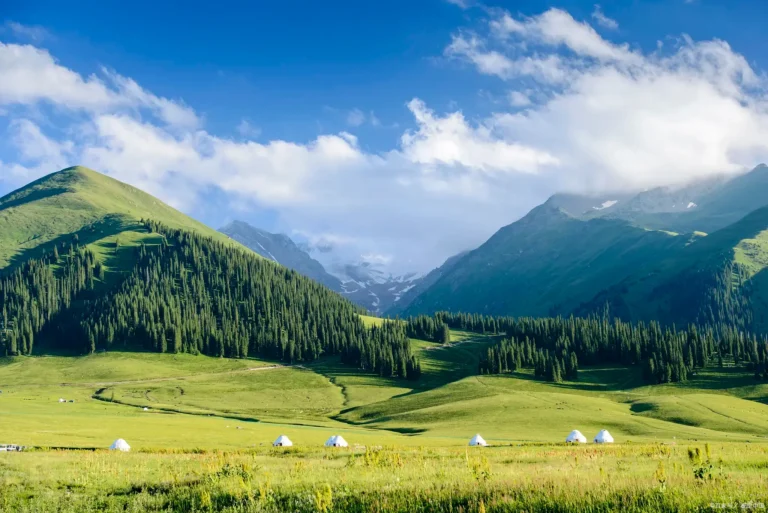
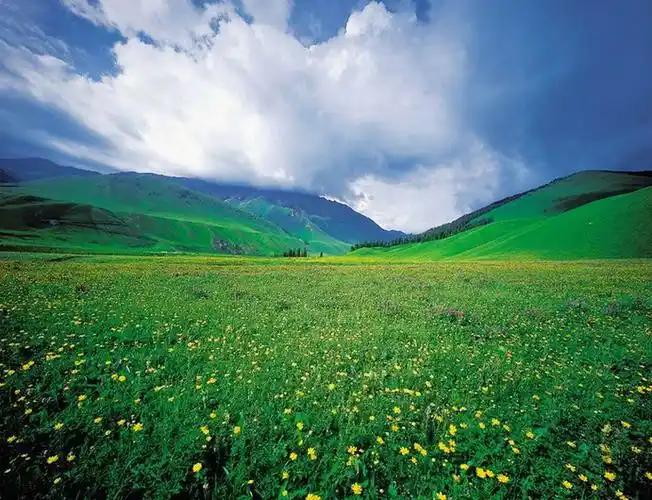
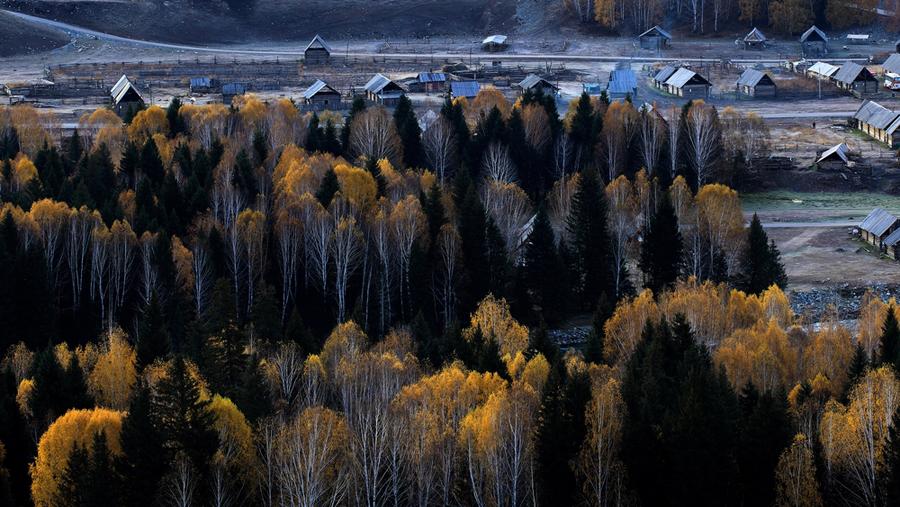
Tacheng works best as a base. Yumin County, an hour or so southwest, is the safflower capital of the region; in late May and June the fields turn a startling red, and the annual bloom draws domestic photographers. The Laofengkou wind gap is worth a stop for the windbreak forests and the sheer force of the place if you visit in winter. Eastward, Emin (Dorbiljin) sits on the plain our Emin County guide describes in detail. And if you have a spare day, the run south to Karamay’s Ghost City is a strange, beautiful half-day among wind-carved clay towers. The Altai scenery to the northeast, toward the mountain villages, is the greenest, coldest corner of the province.
Border-region practicalities
A few things are different this close to the line. Carry your passport at all times; there are routine checks on roads near the border, and hotels will need it for registration regardless. Mobile coverage and Alipay work as they do elsewhere in Xinjiang, but keep some cash for small bazaar stalls. If you plan to cross at Baktu, sort your Kazakhstan visa well before you travel and verify the crossing is open. Weather-wise, because Tacheng sits on the windward side of the Altai, it gets more winter snow than almost anywhere else in Xinjiang and some of the coldest nights; pack accordingly even in shoulder seasons. Finally, the wind at Laofengkou is not a joke, and road closures there are common in winter.
A two-day Tacheng city plan
Day 1. Land, drop bags near the central square, then walk the museum, the bazaar and the Russian-era streets, ending with an evening stroll along the river greenbelt. Day 2. Take a morning run out to the Baktu port approach and the border-trade market, then spend the afternoon in Yumin’s safflower country if the season is right, or double back via Karamay’s Ghost City if you are driving south. Two days is enough to feel the city without rushing the frontier.
Frequently asked questions
Can I cross from Tacheng into Kazakhstan as a tourist? In principle yes, via the Baktu port, but you need a Kazakhstan visa and must confirm the crossing is operating for passengers on your dates. Most visitors treat the port as a day-trip viewpoint rather than an exit.
Is Tacheng worth visiting on its own? If you like quiet border towns, trade history and steppe scenery, yes. If you want big sights, treat it as a base for Yumin, Emin and the Altai fringe rather than a destination with landmarks.
When is the best time to go? Late May to September for green steppe and the Yumin safflower bloom; December to February for snow and the frontier winter, if you can handle the cold and wind.
How do I get there? Fly to Tacheng Qianquan Airport from Urumqi in about an hour, or take the Karamay-Tacheng train (around nine hours) from Urumqi via the Kuytun-Beitun line.
Is it safe? The city is calm and low-crime. The only real hazards are winter weather and the Laofengkou wind gap, which can close roads.
Disclaimer
This guide is based on the author’s two personal visits in 2024 and 2025 and on publicly available sources at the time of writing. Border rules, train timetables, flight schedules and port opening hours change, and the Baktu crossing in particular operates under conditions that shift year to year. Always confirm current regulations with Chinese and Kazakh authorities, and verify prices and times before you travel. Nothing here is official advice.
About the author
Liam Foster is a travel writer who has spent several seasons moving through Xinjiang’s border regions, from the Pamir in the south to the Altai in the north. He prefers slow, independent trips and writes from what he actually saw, ate and paid for. He has no commercial relationship with any hotel, operator or shop mentioned in this article.