Published: November 10, 2026 | Author: Karl Huang, editor of Xinjiang Attractions. I have crossed Xinjiang by train, rented car and shared minibus across four seasons, and twice ended up in a Chinese hospital waiting room, once for myself and once for a traveling companion. This guide is built from those visits and from the doctors who treated us.
Why this guide comes from the road, not a brochure
Most travel-health pages stop at “bring insurance and wash your hands.” That advice is correct and almost useless once you are standing in a Urumqi hospital lobby at ten at night with a fever and a phrasebook. Xinjiang travel health is a practical problem: the care exists, it is good, but the system runs on its own logic, and a foreign visitor who does not know that logic loses an hour at the worst possible moment. I wrote this after learning the hard way so you do not have to.
Everything below is from direct experience in the region between 2023 and 2026, cross-checked with staff at two tertiary hospitals and with the British and American government travel pages. Where I am guessing, I say so plainly.
Xinjiang travel health in five numbers
| What | The short version |
|---|---|
| Emergency ambulance | Dial 120. English is not guaranteed; keep your hotel number and a translation app ready. |
| Police and local help | Dial 110 for police; 12345 is the local government service line for directions and referrals. |
| Top hospital tier | 三甲医院 (tertiary Grade A) is the highest grade; Urumqi has the most of them. |
| Outpatient registration | 挂号 (guahao): a desk or kiosk, pick a department, pay 5 to 25 RMB. |
| Pharmacies | 药店 sell over-the-counter items; antibiotics require a doctor’s prescription. |
The night a Urumqi ER taught us the system
On a March trip my companion came down with a kidney infection somewhere between Turpan and Urumqi. By the time we reached the city she had a 39-degree fever. We walked into the emergency entrance of a large Urumqi hospital expecting a long queue and a form in a language neither of us read. What we got instead was a triage nurse, a ten-minute wait, and a doctor who spoke enough English to ask the right questions. The bill, after antibiotics and fluids, came to about 240 RMB, paid by scanning a QR code at the desk.
The part that confused us was the registration. In a Western clinic you walk to the desk and say your name. Here we had to pick a department first, 急诊 (emergency) in our case, then register at a kiosk that printed a ticket with a number, then wait for that number to flash on a screen above the seats. Nobody explained it; we copied the family ahead of us. Once we understood the shape of it, the rest was straightforward.
How a Chinese hospital is organized: 门诊, 急诊, and the 挂号 screen
Chinese hospitals sort patients before they ever see a doctor. The two gates you need to know are 门诊 (menzhen, outpatient, for things that can wait until morning) and 急诊 (jizhen, emergency, open around the clock). Inside, care is split into departments by body system, 内科 (internal medicine), 外科 (surgery), 骨科 (orthopedics), 儿科 (pediatrics), 皮肤科 (dermatology), rather than by a single “general practice” desk. If you are unsure which door fits your problem, the triage nurse at the entrance will point you.
The grading matters for travel planning. China rates hospitals in three tiers, each with three grades; 三甲 (tertiary Grade A) is the top. These are the places with the most specialists, the best equipment, and, importantly for foreigners, the highest chance of finding an English-speaking doctor. Outside Urumqi, the prefecture capitals, Kashgar, Yining, Korla, Hotan and Aksu, each have at least one 三甲 hospital, but county towns usually do not. The Urumqi travel guide on this site shows where the capital’s main facilities sit.
Getting to care: taxis, 120, and the front desk
For anything urgent, 120 is the ambulance number; the operator may not speak English, so keep your hotel’s address saved and do not hesitate to ask the front desk to make the call for you. For non-emergencies, a taxi gets you to a hospital faster than you might expect in the cities. Urumqi, Kashgar and Yining all have major hospitals within a short drive of the tourist core. In smaller towns, your hotel or guesthouse is the right first call; the staff know which clinic is open and can translate.
The British government’s foreign travel advice for China and the US CDC travel health pages both recommend knowing your nearest major hospital before you need it. That is sound advice dressed up as a chore; do it on your first afternoon, not your worst night.
Treating common travel ailments: which door to knock on
Most foreign visitors in Xinjiang end up needing care for boring reasons: food-borne stomach trouble, a respiratory bug picked up in a long train carriage, sunburn, or a sprain on uneven paths. Stomach and gut issues usually route to 内科 or a digestive department; skin problems to 皮肤科; bones and joints to 骨科. For mild diarrhea or a cold, a pharmacy is faster and cheaper than a hospital, but remember that Chinese pharmacies will not sell antibiotics over the counter, so if you actually need them, the hospital is the only route.
If symptoms look like altitude sickness, headache, breathlessness and nausea above 2,500 meters, treat it as time-sensitive. Descend and get to a hospital; the high plateau counties carry oxygen and the bigger cities stock the drugs.
When to seek care and when to wait it out
A useful rule from the doctors we spoke with: if it is getting worse, or it has not improved in 48 hours, go. A single loose stool or a sniffle is not a hospital trip. A fever above 38.5 that will not drop, signs of dehydration, chest pain, a wound that will not stop bleeding, or any breathing difficulty belongs at the emergency entrance, not a pharmacy. Trust the trend more than the single reading.
Paying the bill: cash, WeChat, and your insurance app
Hospital payment in China is mostly cashless. At the desk you will be offered WeChat Pay, Alipay, bank card, or cash, and the QR code on the counter is the fast lane. If you have not set up Chinese mobile payment yet, read our guide to paying with WeChat Pay and Alipay before you travel; a working app saves you a detour to an ATM. Keep every receipt, because your travel insurance will want them for any claim, and evacuation cover is the line that matters most in remote areas.
Language at the counter: getting understood without Chinese
You do not need Mandarin to be seen, but a few words close the gap. 挂号 (guahao, register), 内科 (internal medicine), 疼 (teng, pain), 发烧 (fashao, fever) and 药 (yao, medicine) carried us through two visits. Beyond that, translation apps with a camera function read the department signs, and a note from your hotel describing your symptoms in Chinese removes the worst of the guesswork. The triage nurses we met were patient with our pointing.
International and bilingual clinics in Urumqi
Urumqi’s largest tertiary hospitals are used to foreign patients and several run international or VIP clinics with more English-capable staff and shorter waits, at a higher price. I will not name specific departments here because staffing changes; instead, ask your hotel concierge or call 12345, the local government service line, and they will point you to the current option. For routine matters, the standard emergency and outpatient departments handled us fine without the premium route.
Where you stay changes your care options
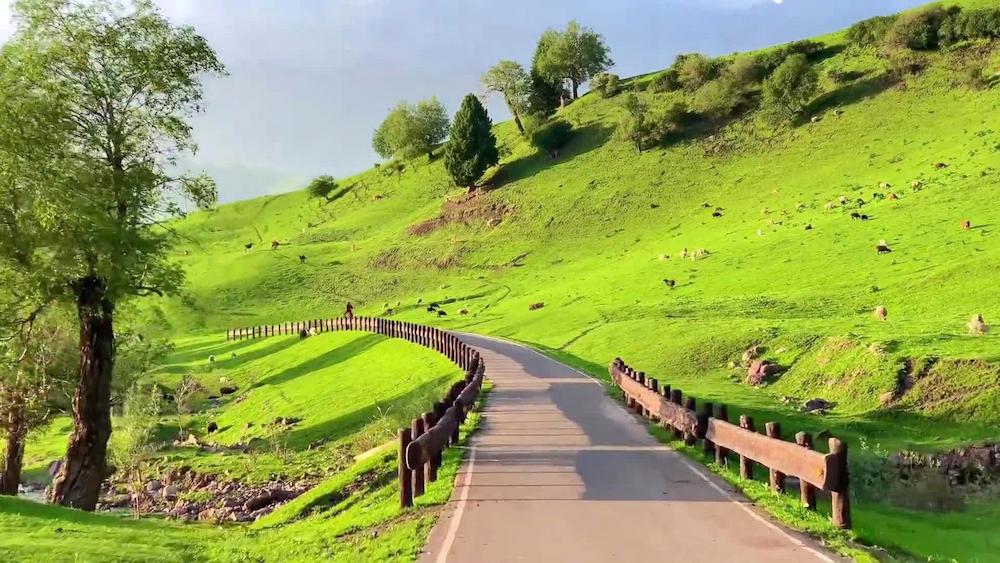
This is the part guidebooks skip. In Urumqi, Kashgar or Yining you are never far from a 三甲 hospital. In a county town or a grassland yurt stay, the nearest real hospital might be an hour or two of driving, and the local clinic handles only minor cases. Our where to stay guide explains how to pick overnight stops that keep you within reach of care when you are building a long loop through the south or the plateau.
What to eat so the clinic stays optional
The single biggest cause of a ruined Xinjiang trip is a stomach bug from food handled one step warmer than it should be. We eat at busy stalls where the turnover is high, skip the creamy salads that have sat out, and drink bottled water away from the big cities. None of this is exotic caution; it is what locals do. A day of bland rice and boiled water fixes most mild trouble before it becomes a hospital trip.
Small habits that save a hospital trip
A short list from our own mistakes: carry a basic kit of rehydration salts, ibuprofen and a bandage; keep the 120 number and your hotel contact in your phone’s emergency list; photograph your passport data page so you are not fumbling it at a registration desk; and start any remote drive with a full water bottle and a charged phone. The China National Health Commission publishes hospital-grading and public-health information if you want the official framing, and the World Health Organization’s international travel health guidance is a useful pre-trip read.
A walk-through: a morning at the 三甲医院
Picture the sequence so it is not new when you need it. You arrive, find the 挂号 kiosk or desk, show your passport, choose a department, and pay the registration fee, usually 5 to 25 RMB, more for a senior specialist. You get a numbered ticket. You wait until your number appears, then see the doctor, who examines you and may order tests, blood work or imaging, paid for separately at the same counter. You collect results, return to the doctor, and if needed collect medicine from the hospital pharmacy on the ground floor. Total time for a simple case is often under two hours on a quiet morning, longer in the afternoon rush.
Questions travelers ask us about Xinjiang healthcare
Is hospital care in Xinjiang safe for foreigners? Yes. The tertiary hospitals in the main cities meet international standards for equipment and sterile practice; the gap is language, not quality.
Will my foreign insurance be accepted directly? Almost never at point of care. Pay, keep receipts, and claim later through your policy.
Can I buy antibiotics without a doctor? No. A prescription from a hospital is required, which is its own reason to see a doctor for anything that looks like an infection.
What if I am far from a city? County clinics handle minor issues; for anything serious, get to the prefecture capital. Plan remote drives with that in mind.
A note on accuracy and your own responsibility
This guide reflects our visits between 2023 and 2026 and public information available at the time of writing. Hospital procedures, staff language ability, and prices change; the details above are a map, not a guarantee. For anything life-threatening, call 120 and follow the dispatcher. Nothing here is medical advice specific to your condition. When in doubt, see a doctor. We are travel writers, not physicians.
About the writer behind this guide
Karl Huang edits Xinjiang Attractions and has spent the better part of three years driving, riding and writing across the region. He has published field guides to more than forty Xinjiang destinations and prefers learning a place by getting slightly lost in it, including, on occasion, in its hospitals. His companion piece on building a travel medical kit pairs with this one if you are packing before you fly.