Published: 5 November 2026 | Author: Karl Huang
Huocheng County sits at the western end of Xinjiang’s Ili Valley, a short drive from the Kazakh border, and it grows more lavender than anywhere else in China. We first rolled into the county seat one June evening after a long day on the G30, and within ten minutes we understood why travellers keep coming back: the whole valley smells faintly of it in early summer. This guide is built from those trips and from talking to growers in the 65th Regiment, not from a brochure. If you are planning an Ili loop, Huocheng is worth a night, not just a photo stop.
Why a county named for its purple crop deserves a night
Most visitors treat Huocheng as a lavender roadside attraction on the way to Sayram Lake or Khorgos. That undersells it. The county is a real place with a Qing-era garrison town, a river that gives the valley its name, and a working agricultural economy that happens to smell wonderful for three weeks a year. Spending the night lets you catch the fields at sunrise, eat where the growers eat, and use the town as a calm base while the bigger Ili sights fill with day-trippers.
Huocheng County in brief
If you like numbers before narrative, this is the sheet we wish we had before our first visit.
| Item | Detail |
|---|---|
| Location | Western Ili Valley, Xinjiang, around 44°N |
| County seat | Huocheng town (Shuiding) |
| Administered by | Ili Kazakh Autonomous Prefecture |
| Population | About 200,000 |
| Elevation of the seat | Roughly 600–700 m |
| Lavender bloom | Mid-June to mid-July |
| Share of China’s lavender | Roughly 95 percent |
| Nearest airport | Yining (IATA: YIN), about 45 km |
| Border crossing | Khorgos, about 40 km north |
How a French plant turned a border county purple
The story starts in the 1960s, when the Xinjiang Production and Construction Corps planted lavender cuttings brought from Provence in the fields of the 4th Division, especially the 65th Regiment. The bet worked because Huocheng sits at almost exactly the same latitude as southern France, with the same long, dry, sunny summers that the plant needs to make oil. Decades later the county supplies roughly 95 percent of all the lavender grown in China. The best-known local name is the Jieyou Princess brand, a nod to the Han-dynasty princess who was married into the Wusun kingdom that once ruled this valley. We visited a small distillery where the air was thick with the raw scent; the growers told us the harvest window is brutally short and the whole crop is cut within a fortnight of peak bloom.
Our first evening in Huocheng town
We arrived around seven, when the light goes long and gold over the valley. The town itself is compact and quiet, the kind of place where the main drag empties by ten. We walked to a corner restaurant, ordered a plate of jiaoma chicken and a bowl of banmian, and watched a family load freshly cut lavender stems into the back of a tractor. Nobody was performing for tourists; this was just June in an farming county. The next morning we drove out to the regiment fields before eight, and the rows of purple stretched further than we expected, with bees loud enough to hear from the road. That calm, unplanned evening is the part of Huocheng we tell people not to skip.
What else the county hides beyond the blooms
Lavender is the headline, but the county has older bones. A few kilometres east is Huiyuan, the old Qing garrison town that once housed the Ili General, the highest imperial authority in the northwest. We wrote up Huiyuan and its Qing-era walls separately, and it is an easy half-day from the seat. The Ili River, which names the whole valley, runs along the county’s northern edge, and just south of it sits the small Tuhai Desert, a odd patch of dunes that appears almost next to green farmland. Across the river, the new city of Kokdala has grown up on reclaimed land. None of this shows up on the lavender posters, and all of it is within a short drive.
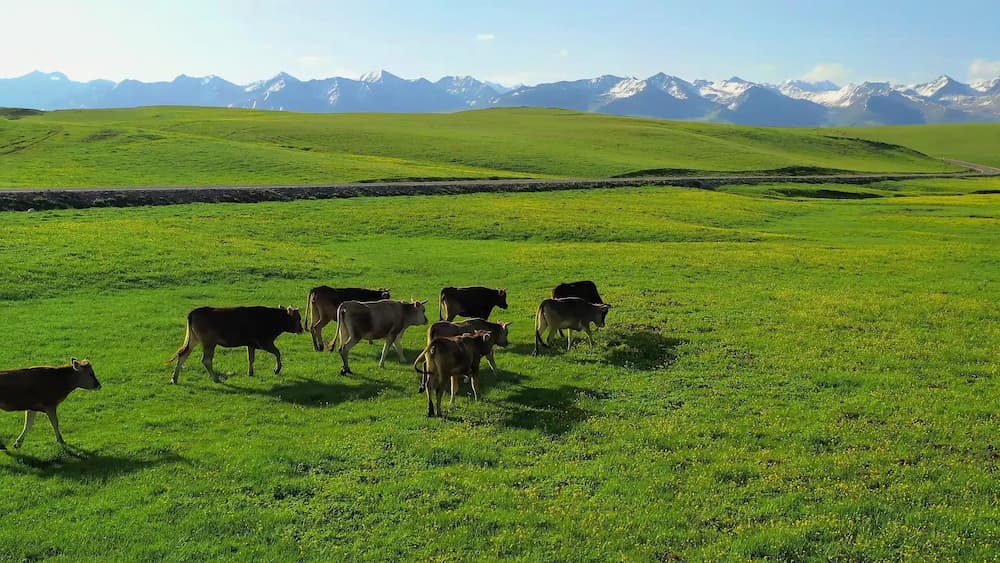
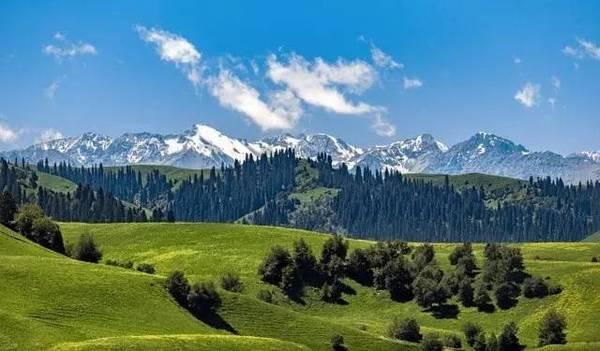
If you want a photograph that is not a purple field, the meadowland west of the seat in late spring, before the lavender opens, is the honest alternative.
Getting to Huocheng: Yining, the airport and the road in
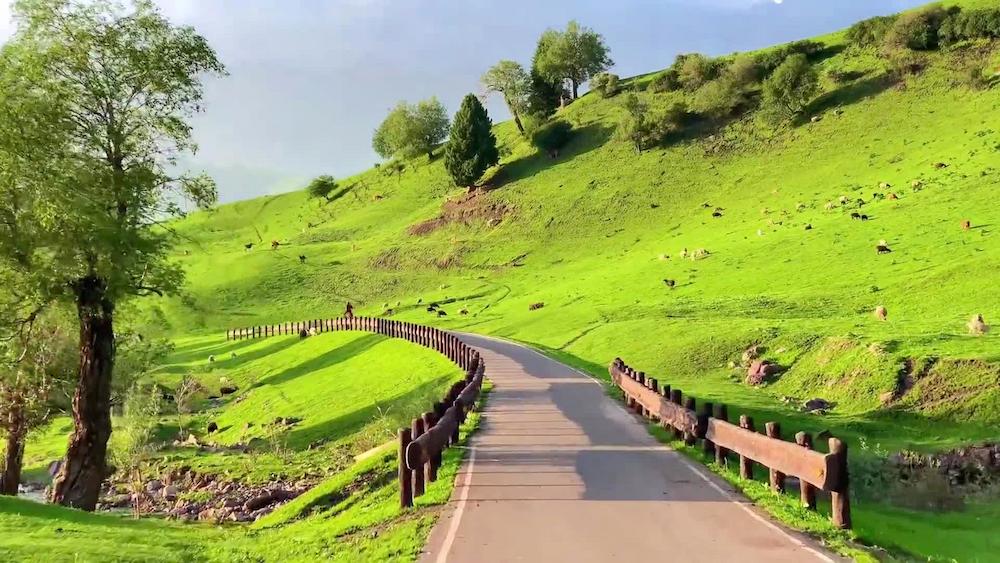
The practical gateway is Yining, the valley’s main city, about 40 km east, with a domestic airport and a train station. From Urumqi you can fly to Yining in just over an hour, or take an overnight train. Most people drive, and the approach through the Guozigou gorge on the G30 is one of the better mountain roads in the region. Once you are on the flat valley floor the county is signed clearly, and a car or a hired driver gets you to the fields in under an hour from Yining. Buses run too, but they are timed for commuters, not sightseers, so a private car gives you the freedom to stop at a roadside plot.
When the fields are at their best (and when to skip them)
The bloom runs from roughly mid-June to mid-July, with the densest colour in the last week of June. That is also when the local lavender festival fills the roads, so if you want photographs without crowds, aim for the first week of the season or go on a weekday at sunrise. We cover the wider timing in our season-by-season guide to Xinjiang. Outside the bloom the county is still pleasant but loses its signature look; autumn here is about the poplars turning along the irrigation canals, not the purple. If your trip is fixed for August or September, treat Huocheng as a transit stop rather than a destination.
For the dedicated field experience, our standalone piece on the Huocheng lavender fields goes deeper on the distilleries and the two-day plan.
Sleeping in Huocheng: the county seat as your base
The seat has a normal spread of Chinese mid-range hotels, the kind you would find in any county town, plus a few lavender-themed guesthouses on the edge of the regiment fields. We stayed in a standard business hotel in town for about 200 yuan a night and ate better than we expected. If you want to be inside the purple, book a guesthouse out by the 65th Regiment and you can step out of your door into the rows at first light. Book ahead in late June, when the festival brings busloads from Urumqi and the rooms tighten. For a quieter, better-fed option, base in Yining and make Huocheng a day trip.
Eating in Huocheng: lavender on the plate, and off it
The valley’s food is its own reward. At the table you will find jiaoma chicken with its numbing Sichuan-pepper oil, hand-pulled banmian, and polo with raisins and carrot. The Ili River yields a mild local fish worth ordering if the restaurant has it fresh. The lavender shows up as honey, as a scoop of ice cream, and as a syrup over yoghurt; try the honey from a roadside stand rather than the gift-shop jars, which taste the same but cost three times as much. We bought a jar from a grower who let us taste three before we chose, and it is still the one we compare others against.
Things the lavender brochures leave out
A few honest notes. The fields are working farms, not a managed garden, so there is no single ticket gate; you park at the road and walk the verge, and some plots charge a small fee while others are free. Midday sun in June is fierce, and there is almost no shade, so a hat and water are not optional. The scent is lovely but the bees are real, so don’t wave at the rows. Mobile signal is fine in town and patchy in the plots. And the lavender itself is harvested fast, so a field that was purple on Monday can be stubble by the next weekend if the growers move early.
A one-day loop that uses Huocheng as the hub
If you have a car and one free day, start at the 65th Regiment fields at sunrise for photographs and the cool air. Late morning, drive east to Huiyuan to walk the old garrison walls and have lunch in Yining. In the afternoon loop back west through the valley floor, stopping at a roadside honey stand, and finish at the Tuhai Desert for a short dune walk as the light drops. That loop keeps Huocheng as the anchor and still touches the valley’s older layers without a second hotel change. If you are short on time, cut Huiyuan and spend the extra hour among the rows.
Questions travellers ask about Huocheng
Is Huocheng the same as the lavender fields? No. The fields are mostly in the 65th Regiment northwest of the seat; the county also includes Huiyuan, the Ili River frontage, and the road to Khorgos.
Do I need a guide? Not for the fields, which you can reach by car or taxi from Yining. A guide helps if you want the distillery visits and the older sites explained.
Can I cross into Kazakhstan from here? The Khorgos crossing is in the county, but border rules change and most visitors need the right visa or transit paperwork; check current requirements before you plan around it.
How long is the bloom? About three to four weeks from mid-June, but the peak colour is closer to ten days, so timing matters more than the brochures admit.
Before you rely on this: a disclaimer
This article is based on our own visits and on conversations with local growers, not on an official tourism board. Opening dates, festival timing, and border rules shift from year to year, and lavender harvest depends on the weather. Confirm the current bloom and any crossing requirements close to your travel dates. We are not responsible for changes to prices, access, or schedules after publication.
Who wrote this and why it’s trustworthy
This guide was written by Karl Huang, who has travelled and driven extensively through Xinjiang’s Ili Valley, including multiple June visits to Huocheng County and its lavender regiments. The practical details come from first-hand stops, not copied text. Where we point you to a deeper read, such as the Huiyuan garrison town or the wider Xinjiang season guide, those are separate pieces written to the same on-the-ground standard.