Published: October 7, 2026 | Author: Karl Huang, Xinjiang travel writer
The first time we flew into Kashgar we came in from Urumqi at six in the morning and the old town
was still being woken up by tea being poured downstairs on the square. The first time we flew into
Urumqi we walked out of a terminal the size of a small town, rode a driverless train to the metro,
and still needed half an hour before we saw anything worth looking at. Kashgar vs Urumqi flights are
not two versions of the same arrival. They land you in different halves of the region, a thousand
kilometres apart, and the choice you make at the ticket stage decides which trip you end up having.
This page is the comparison we wanted before booking and could not find: how far each airport is
from the old town, what documents you need, what an arrival costs in time and money, and the part
most guides skip, which is that neither airport gives you a different visa position from the other.
Where a figure comes from an airport notice or an immigration notice rather than from our own walking
around, we say so.
Kashgar vs Urumqi flights: two doors, two halves of the region
Urumqi is the capital and the only real hub. Kashgar is the western end of the old Silk Road and
the door to the Pamirs. Both airports serve the same country, but they sit at opposite corners of a
region larger than Spain, and the road between them takes a full day even when the plane does it in
two hours.
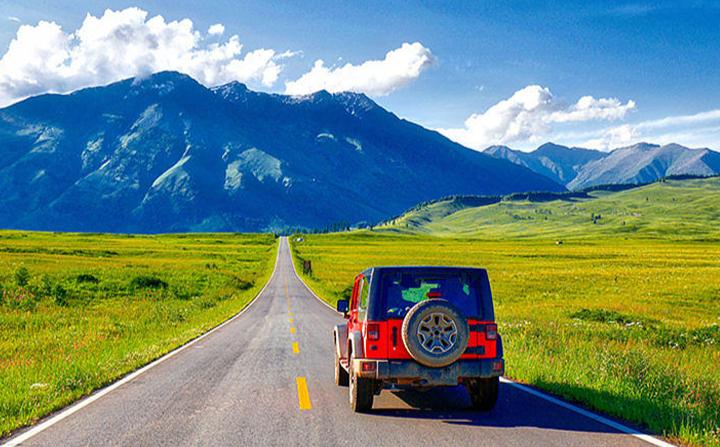
The consequence is simple. Land in Urumqi and your next three days run north: the Tianshan
canyons, Sayram Lake, the Duku Highway, the grasslands. Land in Kashgar and they run west and south:
the old town, the Sunday bazaar, Karakol, Muztagh Ata, Tashkurgan. You can do both. What you should
not do is book a Kanas itinerary, fly into Kashgar because the fare was cheaper, and then spend two
days in a taxi heading back across the range.
| Item | Kashgar (KHG) | Urumqi (URC) |
|---|---|---|
| Full name | Kashgar Laining International Airport | Urumqi Tianshan International Airport |
| Distance into town | Under 10 km north of the old town | Far outside the centre, about 30 minutes by people-mover to Erdaoqiao |
| Way into the centre | Two city bus routes and an airport express, plus taxis | Free maglev to Metro Line 1, roughly 5 to 7 yuan |
| Terminal situation | Military-civilian field, refurbished T1 and newer T2 | One passenger terminal, T4, everything through it |
| Onward flights | Urumqi to Kashgar express, about 40 departures a day | National and international connections of every kind |
| What it puts you near | Old town, Sunday market, the Pamirs, Tashkurgan | Tianshan, Kanas, Sayram Lake, the Duku Highway |
| Visa treatment | Same regime as the rest of Xinjiang | Same regime as the rest of Xinjiang |
The visa question, which is the part that changes the answer
Read this even if you are only choosing between flights, because it decides whether a visa-free
connection is possible at all.
China runs a 24-hour transit arrangement at every open port. Continue to a third country within
a day and, if you stay inside the restricted airport area, you pass without a visa. Want to see the
city and you apply at the border for a temporary entry permit. Both airports handle it and neither
is more generous than the other.
The 240-hour transit policy many travellers have heard of does not reach Xinjiang. The national
list of participating provinces covers twenty-four units and excludes Xinjiang, alongside Inner
Mongolia, Gansu, Tibet, Qinghai and Ningxia. The eligible-country list has grown to fifty-seven
nationalities, but the map has not. So the ordinary route applies: the unilateral visa-free list,
the mutual visa-exemption agreements, or a tourist visa in advance. The arrival card can be filled
in online before you fly, which saves five minutes at either desk.
Arriving at Kashgar: under ten kilometres and three ways down
Kashgar Laining sits just north of the city, close enough that the bus ride is the shortest
transfer of any airport we use in the region. Two city bus routes run from the arrivals hall into
town for about two yuan a ride, every eight minutes through the day, and a dedicated airport express
runs to the main hotels for around fifteen. Taxis queue outside doors two and three of the arrivals
hall at thirty to fifty yuan. Check-in closes thirty minutes before departure, which is not much on
a field you share with the air force.
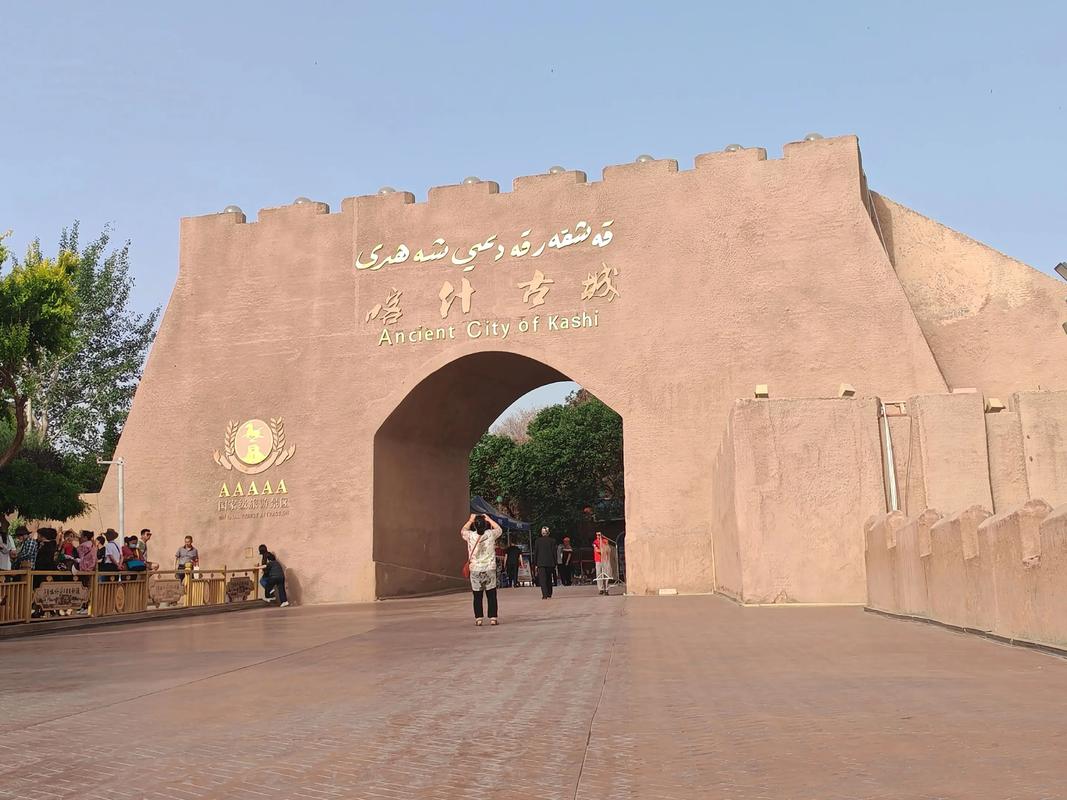
The terminal is small by national standards, which explains the queue discipline and the loud
three-language announcements. Throughput passed five million passengers in December 2025, past the
design figure for the two terminals, with a third terminal and a second runway still only planned.
The building works. The shuttle buses and the taxi rank do not, in the two hours after the early
arrivals bank lands.
Arriving at Urumqi: T4, and a long ride in
Urumqi rearranged its arrivals in April 2025. The airport took the name Urumqi Tianshan
International Airport, the older passenger terminals closed and now handle freight only, and every
passenger flight moved into a single new terminal. Good for signage, awkward for the twenty-five
minutes you now spend before you are out of the structure.
The way in is a driverless people-mover that takes you free of charge to the metro station, where
Line 1 runs towards the centre, to Erdaoqiao and the bazaar in about half an hour, for a fare
closer to five than ten yuan, with the service ending in the early evening. It is the cheapest
transfer in the province and it runs on a clock, not on your flight. Land after the last train and
you are paying for a taxi whatever the budget said.
Flying between the two: about two hours, forty times a day
Scheduled times on the Kashgar to Urumqi route run at a touch over two hours gate to gate. The
two cities carry enough traffic that carriers run a dense express shuttle between them, roughly
forty departures a day across the route. For us the plane was the obvious choice and also the least
interesting hour of the trip.
The alternative is the overnight sleeper, which we took once. Eleven and a half hours to Kashgar,
a full berth, a dining car, and the Gobi at four in the morning, which you never see from two
thousand metres up. Only the train saves a hotel night; the plane saves the afternoon.
What each airport puts you near
From Kashgar you can be standing in a lane of the old town within the hour, and you can also
reach Karakol Lake or the foot of Muztagh Ata the same afternoon, then push on to Tashkurgan, which
sits above three thousand metres and wants a night or two of settling first. That is the argument
for flying into the west.
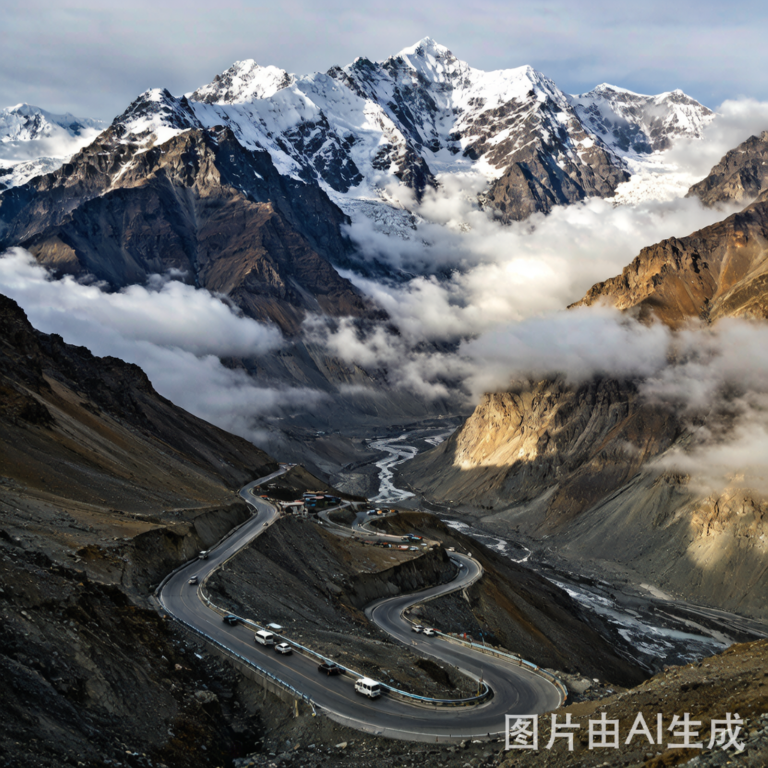
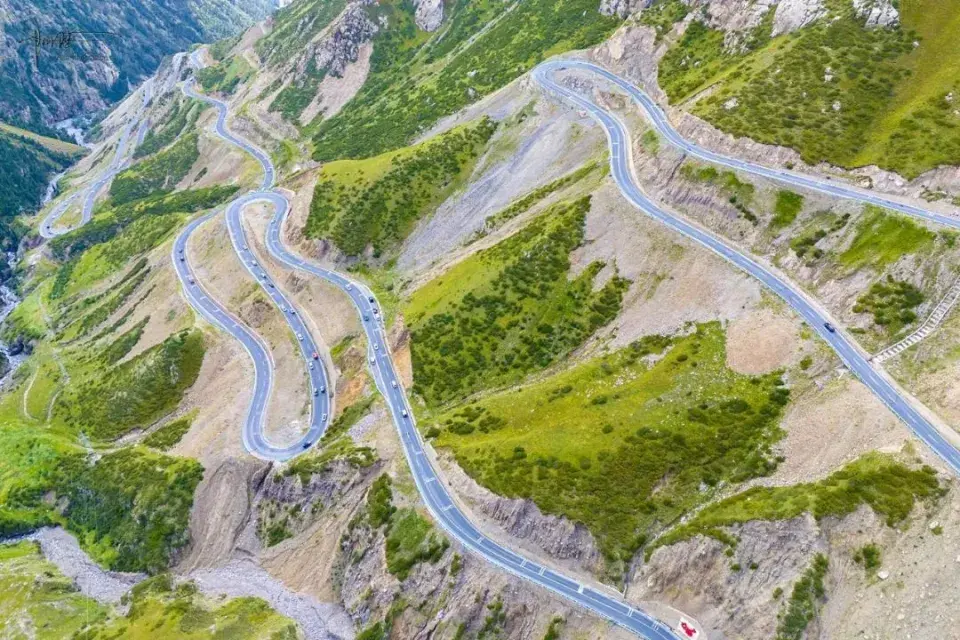
From Urumqi the same logic runs the other way. The north and centre of the region, the canyons,
the grasslands, Sayram Lake and the northern lakes are all reachable inside a day, and the network
out of URC has no equivalent in the south. This is the road that makes that true.
When Kashgar is the right door
Your first night is in the old town and your days run to the Pamirs. You are coming from or
heading to Pakistan, Tajikistan, Kyrgyzstan or Uzbekistan, and you want to start at the western end
rather than fly two hours inland and then drive back west. Your whole trip is under six days and you
would rather not spend it between two airports.
Two things to plan for. The road towards Tashkurgan goes high, and the border paperwork for that
stretch is its own errand, started before you land rather than after.
When Urumqi is the only sensible answer
Your itinerary is northern. You connect onward to a domestic city outside Xinjiang. You arrive in
deep winter, when Urumqi fog is a real scheduling problem but the mountain passes out of Kashgar are
the ones you would be closed out of anyway.
Eating in the first hour
At Kashgar the first meal is the same at any hour: roast pastry wrapped around spiced mince, rice
with carrot and mutton, a bowl of soup with hand-pulled noodles. The old town teahouse is a better
first stop than any hotel restaurant. At Urumqi the same cuisine exists, but the default is fried
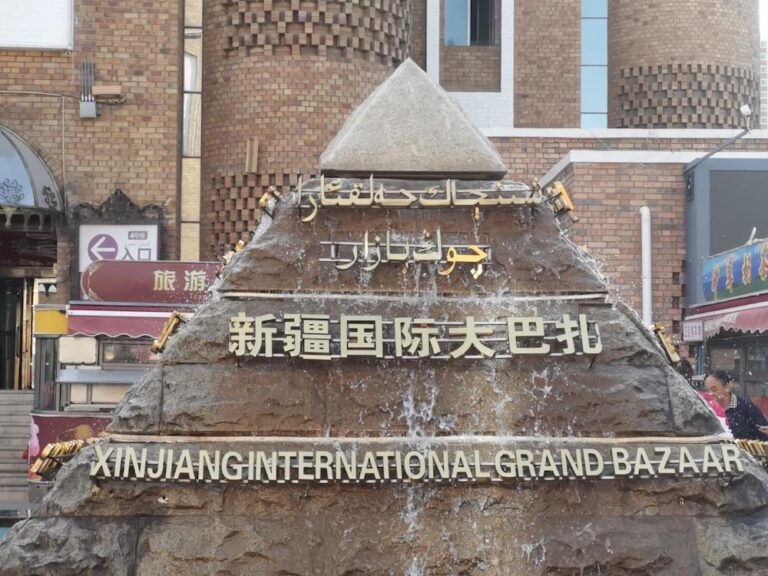
noodles and skewers, and the bazaar at Erdaoqiao is where you go if the flight has already cost you
two meals.
A first trip built around one arrival airport
Into Kashgar, five days: the old town and the teahouse, nothing ambitious. The Sunday market, or
the livestock market and the carpet workshops instead. Karakol and the foot of Muztagh Ata, then
overnight in Tashkurgan. Tashkurgan and the standing stones. The road towards the pass, or a flight
south out of the valley.
Into Urumqi, five days: the bazaar and the hill for the view over the city. The Tianshan canyon
road. Sayram Lake and the pass north. East towards the flaming mountains. Then the train or the
plane out. Both skeletons only hold if the second day does not turn into a four-hour drive to catch
a flight you should have booked from the other end.
What we could not confirm
Airport distances and bus fares come from the airport’s transfer notes and the city timetable,
not from our own rides on both. The five-million figure and the international route list come from
civil aviation reporting. Forty departures a day is a carrier’s annual summary rather than a live
schedule check. The exclusion of Xinjiang from the transit list is from the immigration authority,
and its participating-port list has been amended before, so confirm the current notice before you
rely on it.
Frequently asked questions
Is there a 240-hour visa-free transit option at either airport? No. The policy
covers twenty-four provincial units and Xinjiang is not among them. The 24-hour option does apply at
both, provided you stay inside the airport’s restricted area and leave the country within a day; to
go into the city you need a temporary entry permit from the immigration desk.
How long is the flight between the two airports? A little over two hours
scheduled. Trains take eleven to twelve hours, and the slowest services more than twenty-five.
Either works. Only the train saves a hotel night.
Which airport should I use if the main goal is the Pamirs? Kashgar, and not by a
small margin. From Urumqi you would fly an hour towards the Pamirs after flying an hour away from
them, and the road west from Kashgar is the one that leads there.
Disclaimer
Airport layouts, terminal names, transfer fares, road closures and visa rules in Xinjiang change
with the season and with notices that we cannot track in real time. Schedules here are
representative rather than live, and fares are the ranges we paid or the figures published by the
operators. Nothing here is immigration advice; check your own status with the authority that issues
it. Winter arrivals at either airport can be re-routed by fog or snow, and flights into Kashgar depend
on weather at a shared military airfield.
About the author
Karl Huang writes about Xinjiang for visiting travellers, focused on the transport decisions that
quietly shape a trip. He has flown into both airports and got the arrival day wrong once in each
city.
Related reading:
the Xinjiang airport guide,
what to do on a Urumqi layover,
Urumqi to Kashgar by train,
Kashgar to Islamabad on the Karakoram Highway, and
Karakol Lake above Kashgar.
References:
China transit visa-free policy, National Immigration Administration ·
Kashgar Laining Airport throughput, Civil Aviation News