Published: 24 August 2026 | Author: Karl Huang
Qitai Silicified Wood and Dinosaur Geopark is the one stop in northern Xinjiang where 150 million years of geology and a 35-metre dinosaur share the same stretch of empty Gobi. Most travellers blow past Qitai county on the way to somewhere else, which is exactly why the place feels untouched once you finally turn north off the highway and onto the desert track.
I wrote this guide from a real trip, not a brochure. In September 2023 we drove from Urumqi to Qitai town, spent the night, and pushed north the next morning into the Jiangjun Gobi to reach the park. The distances, the museum hours, and the size of the petrified trunks below were checked against the interpretive signs on site and the regional forestry bureau’s own descriptions of the geopark. Where something shifts season to season, I say so.
Quick reference: Qitai Silicified Wood and Dinosaur Geopark at a glance
| Item | Detail |
|---|---|
| Location | Qitai County, Changji Hui Autonomous Prefecture, about 155 km north of the county town in the Jiangjun Gobi |
| Park area | 492 square kilometres, approved as a national geopark in 2004 |
| Petrified wood | Nearly 1,000 exposed trunks in the Shishugou belt; longest 26 m, widest 2.8 m |
| Star fossil | Mamenchisaurus, the “Asia’s No.1 dragon”, around 35 m long with a 15 m neck |
| Best window | May to June and September to October |
| Getting there | Self-drive or charter from Qitai town; no public bus reaches the gate |
What we found in the petrified forest
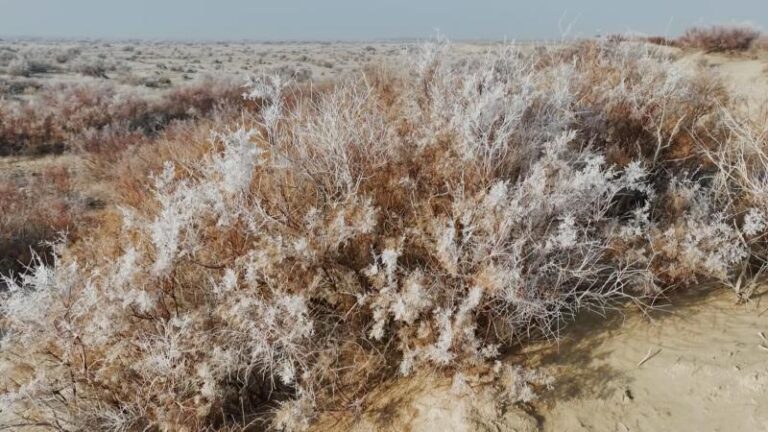
The petrified wood garden sits in a flat basin ringed by low hills. What hits you first is the silence. There is no windbreak, no shade, no sound except your own footsteps on the gravel. Then you notice the wood. Some trunks lie where they fell 150 million years ago, turned to stone but still showing growth rings and bark grain. The largest single piece we paced out against the fence was easily the length of a city bus, and the on-site board said the record is 26 metres.
The trunks are not a tidy display. They scatter across the basin, some half-buried, some standing upright as they were buried by ancient river sediment. A 3,600 square metre stone-wood square at the centre shelters the most impressive specimens, and the geological museum next to it holds more than a hundred fossil items pulled from the surrounding rock. We spent about ninety minutes just walking the open forest, which is plenty while the heat stays down.
How to get to Qitai Silicified Wood and Dinosaur Geopark
Start from Urumqi. The drive to Qitai county town is straightforward on the Beijing to Urumqi expressway (G7), roughly 270 kilometres and three and a half to four hours with stops. Qitai is a real town with hotels, fuel, and food, so it makes a sensible overnight base.
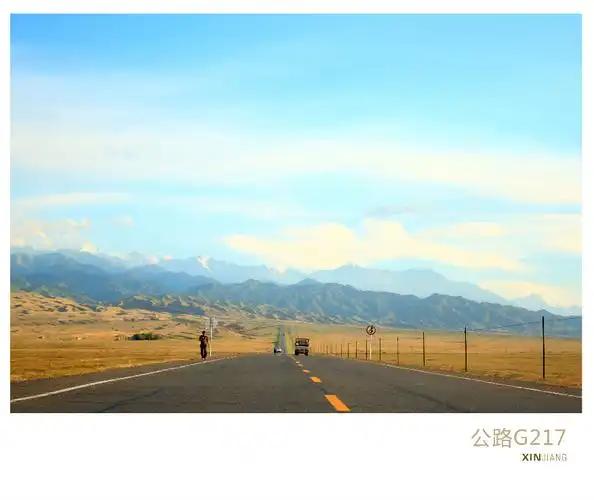
From Qitai town the geopark is another 155 kilometres north. The first part is paved, but the final stretch into the Jiangjun Gobi is a desert track where the surface turns to washboard gravel and there is no fuel, no shop, and almost no phone signal. We ran it in a raised SUV and were glad we had one. If you are used to self-drive Xinjiang trips on the big highways, treat this as a different tier: hire a local driver who knows the track, or join a charter from Qitai. There is no public bus that reaches the gate.
If you would rather not drive at all, the high-speed rail gets you to a station in the region, but the last 155 kilometres to the park still needs a vehicle you arrange on the ground. Plan the remote leg as the hard part, not the train ride.
Best time to visit the geopark
Late spring and early autumn are the comfortable windows. In May and June the Gobi warms without baking, and the Kalamaili reserve to the north puts on a brief green flush you will not see in summer. September and October are crisp, with clear light that makes the red and grey stone pop in photos. We went in mid-September and the temperature sat around a pleasant 20 degrees at midday.
Skip the depth of summer if you can. From mid-July to August the basin regularly tops 35 degrees, the open forest has no shade, and the walk gets punishing by noon. Winter closes nothing officially but the track can ice over and the museums keep short hours. For colour and crowds alike, autumn in Xinjiang is the safer bet across the whole region, and this corner is no exception.
Where to stay
Sleep in Qitai county town. The town has a working range of hotels from basic to mid-range, plus the practical services you want before a desert run: a full tank, water by the crate, and a decent breakfast. We stayed one night, left at first light, and were back in town by late afternoon with the whole visit done.
There is no lodging inside the geopark. It is protected wilderness inside the larger Kalamaili area, home to Mongolian wild ass and other steppe wildlife, so the only structures are the museum, the shelter over the stone-wood square, and ranger posts. Do not count on camping at the gate either; the wind and the lack of water make that a poor idea.
What to eat in Qitai
Qitai town earns its own food reputation, and you should use the overnight to eat well. The local specialty is Qitai huangmian, a yellow wheat noodle served cold with a garlic-vinegar dressing and a smear of sesame paste, nothing like the hot laghman you get elsewhere. We ate a plate at a corner shop near the bus station and it was the kind of plain, filling, slightly addictive dish you remember months later.
Around it you will find the usual northern Xinjiang staples: guo rou ban mian (flash-fried meat noodles), samsa from the oven, and shou zhua rou (boiled lamb on the bone) if you find a halal grill with a lamb ready. Camel milk yoghurt turns up in the morning markets. None of it is fancy, and that is the point after a day in the dust.
Practical tips before you go
- Fill the tank and carry water in Qitai town. The last 155 km has nothing, so top up and bring at least two litres per person.
- The petrified wood is protected. Taking even a chip is forbidden and patrolled; the shelter specimens are the ones you may photograph up close.
- Phone signal drops to nothing north of the paved road. Download offline maps and tell someone your plan before you leave town.
- Wear closed shoes. The basin floor is gravel with sharp edges, and summer sun will cook open sandals.
- Wind is the wildcard. The Gobi throws dust fronts that cut visibility; if the sky goes orange, turn back rather than push on.
- Check current opening and any guide requirements at the Qitai visitor centre, because remote sites in Xinjiang change access rules without much notice.
A sample two-day plan
This is the rhythm we used, and it fits most travellers who are already in the north.
Day 1. Leave Urumqi after breakfast, reach Qitai town around midday, eat huangmian, walk the town, sleep there.
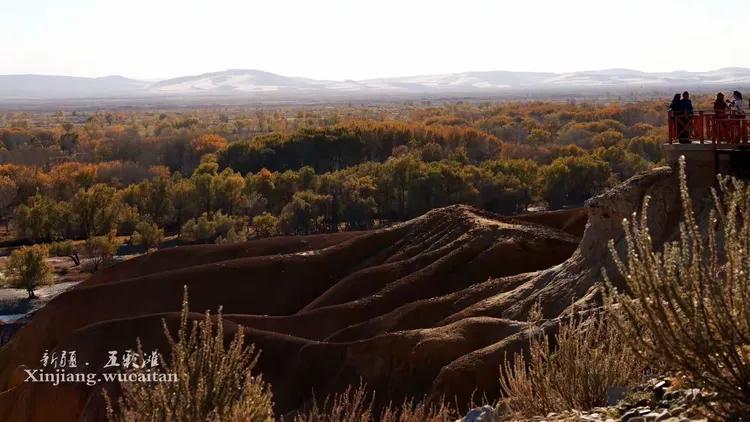
Day 2. Depart at first light for the 155 km run north. Spend the cool morning in the petrified wood garden and the museum, drive the short hop east to Dinosaur Valley to see the excavation pits, then loop back through the Devil City yardang formations if time allows. Roll back into Qitai for a late lunch and the drive south.
If you are working out how many days the whole region needs, treat this as a one-night add-on to a northern Xinjiang loop, not a standalone destination.
FAQ
Can I visit the geopark on my own?
Technically yes if you have a capable vehicle, but most people charter from Qitai town. The desert track and the lack of services make a local driver the easier call.
How long does the visit take?
Half a day at the park itself: about ninety minutes for the petrified forest and museum, plus the drive to Dinosaur Valley. A full day from Qitai town covers everything with margin.
Where are the actual dinosaur bones?
The biggest finds, including the 35-metre Mamenchisaurus, are in museums (the Changji Dinosaur Museum holds the “Asia’s No.1 dragon”). At the site you see the excavation pits, the shelter specimens, and the on-site fossil museum.
Is it good for children?
Yes. The petrified wood is giant and tangible, and the dinosaur story lands well with kids who have outgrown picture books. Bring shade and water and keep the walk to the cool hours.
What does it cost?
The open-air petrified forest is free to walk. The museum may carry a small ticket. Confirm the current rate at the Qitai visitor centre, because remote-site pricing shifts.
Disclaimer
This guide reflects a visit in September 2023 and official descriptions current at the time of writing. Distances, opening hours, access rules, and fees at remote Xinjiang sites change without warning. Confirm details with the Qitai visitor centre or the geopark’s official channel before you travel, and assess desert driving conditions for yourself. Nothing here is a substitute for official guidance or local advice.
About the author
Karl Huang is a travel writer who has driven the Xinjiang circuit more times than he can count, from the G7 corridor to the Pamir Highway. He prefers the quiet county stops most guides skip, and writes from the seat of the car rather than the desk. His other Xinjiang notes cover self-drive routes, city bases, and seasonal planning across the region.