Published: August 7, 2026 | Author: Ewan Baird, travel writer based in Chengdu who has reported from Kazakh and Kyrgyz horse country since 2017 | Last checked: August 2026
Zhaosu is the one county in Xinjiang where the calendar is still set by animals rather than by tour buses. Foaling, branding, the summer move to high pasture and the July races all happen in a fixed order, and everything a visitor might want to see hangs off that order. I have been twice, once at the wrong time of year and once at the right one, and the gap between those two trips is most of what this page is about. Prices, road times and festival practice below come from those visits plus a follow-up call to a Zhaosu guesthouse owner in July 2026.
The numbers that matter before you commit
| Item | Detail |
|---|---|
| Where | Southwest corner of Ili Kazakh Autonomous Prefecture, upper Tekes River basin |
| Size | About 11,200 sq km — larger than Qatar |
| Elevation | County average around 2,000 m; the town itself sits lower, near 1,800 m |
| Peak season | Mid-July to early August (races plus rapeseed) |
| Summer temperature | Daytime averages near 20°C; nights can drop under 10°C |
| Airport / railway | Neither. Yining is the nearest of both, roughly 200 km away |
| Drive from Yining | 2.5–3 hours on the S237 Yizhao highway |
| Minimum useful stay | Two nights; three if Xiata is on the list |
Zhaosu is a county, not a viewpoint
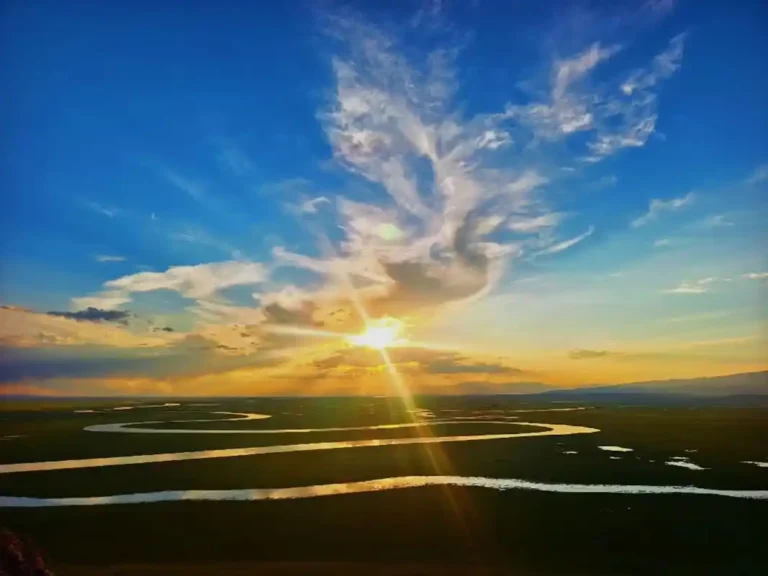
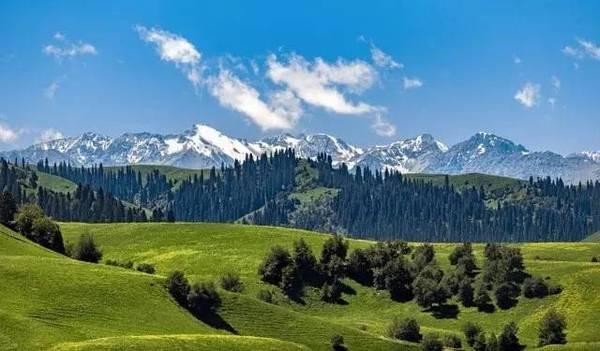
This trips up people who arrive with a single pin dropped on a map. Zhaosu covers roughly 11,200 square kilometres of the upper Tekes basin, closed in by Tianshan ridges on three sides. The county town is small and functional. Everything worth the drive is spread across an hour or more of grassland road beyond it, and there is no loop road that strings the sights together neatly. You pick two or three targets a day and accept the backtracking.
The elevation is the second thing people underestimate. Most of the county sits around 2,000 m, high enough that July afternoons top out near 20°C while the same night falls into single digits. I packed for a Xinjiang summer on my first trip and spent the evenings wearing everything I owned.
Why the horses are the whole point
The Wusun confederation grazed this basin more than two thousand years ago, and the horses they sent east are the ones Han-dynasty court poetry called tianma, heavenly horses. That is not a marketing line invented for a ticket office; it is the reason a modern breeding industry sits here rather than somewhere more convenient. Zhaosu remains a core production area for the Ili horse, and the county brands itself as the Home of Heavenly Horses.
What this means on the ground is that horses are not staged for you. Herds move between pastures on their own schedule, riders use them for work, and the animals you see grazing beside the road at seven in the morning belong to someone. If you want the choreographed version — hundreds of horses released across open grass at once — that happens during the festival and essentially only then.
The Tianma Festival date problem
The Heavenly Horse Culture and Tourism Festival is the anchor event of the Zhaosu year. It generally lands in the second half of July, and in practice the county government has scheduled it somewhere between roughly 15 July and 10 August depending on the year. The exact dates are announced by the county, not fixed in advance, and they are often confirmed only a few weeks out.
Plan around that rather than against it. Book refundable accommodation, keep a two-day buffer either side, and check the county announcement before you lock in flights to Yining. If the festival is not the reason you are coming, aim for the last week of July anyway — you get the flowers without the crowd peak. Our Xinjiang festivals calendar tracks the wider season.
Festival programming runs well beyond racing. Expect speed, amble and endurance heats, the mounted chase game Kazakhs call kyz kuu, buzkashi, picking cloth from the ground at a gallop, mounted archery, plus a craft market heavy on saddles, whips and smoked horse sausage. Evenings usually bring akyn sung poetry and a bonfire.
What a million mu of rapeseed actually looks like
Zhaosu is one of China’s largest rapeseed-growing areas, and the local shorthand is a million mu — around 667 square kilometres when the bloom is on. Photographs make it look like one continuous yellow sheet running to the snowline. It is not. It is a patchwork of fields separated by pasture, irrigation channels and villages, and the effect depends entirely on where you stand and how high you are.
The bloom is short. July is the window, and a hot spell can shorten it further. Roadside viewing platforms exist along the main routes out of town, but the better frames come from any low rise you can legally reach — the yellow reads properly only when you are above it.
One road in, from Yining
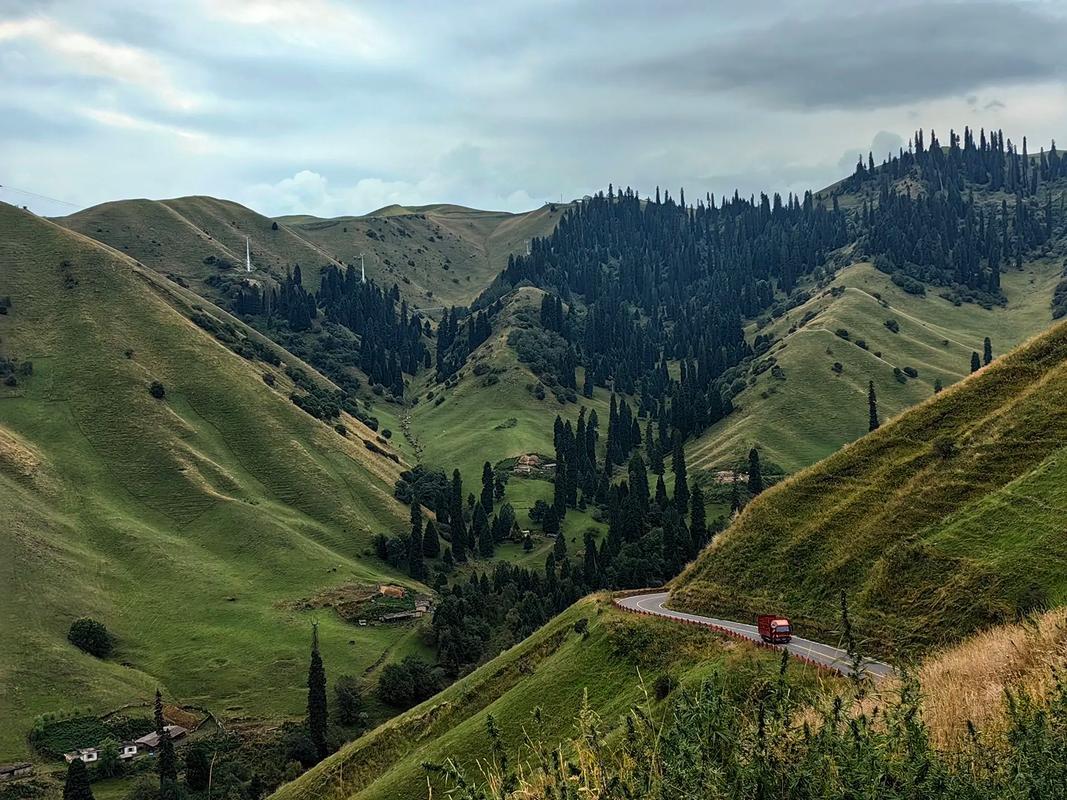
There is no civil airport and no railway station in Zhaosu. Almost everyone comes through Yining, roughly 200 km away, which has both. The usual drive is the S237 Yizhao highway and takes two and a half to three hours in good conditions; the alternative G218 and G577 routing is longer but sometimes clearer of traffic in festival week. From Urumqi, budget six to seven hours of driving in total, which realistically means an overnight in Yining first.
Scheduled coaches run from Yining to the Zhaosu bus station, and extra services are added during the festival. Inside the county, coaches will not get you where you want to go. A car, a hired driver or a guesthouse-arranged pickup is the practical answer, and it is worth negotiating a day rate rather than paying per leg.
Where the racing and riding actually happen
The main venue is the Tianma Culture Park, out on the Kaerkante grassland west of the county town. Sources disagree on the distance — some say about 10 km, others closer to 20 — so give a driver the Chinese name rather than a figure. The park has a full-size turf track, roughly 2,000 m around and 28 m wide, with grandstand capacity in the thousands, plus an indoor equestrian hall used when weather closes in.
Zhaosu Wetland Park, a separate site with a ticket around 60 yuan, is where the postcard image of horses crossing water is made. Herds are watered there and the light works early. It is a quieter, less organised place than the culture park and, for my money, the more interesting of the two.
Booking a ride without getting fleeced
Riding is easy to arrange and easy to get wrong. Go through your guesthouse or a registered stable at the culture park rather than someone who approaches you in a car park. Agree three things before you mount: the route, the duration in minutes, and whether a handler leads the horse or you ride independently. Prices during festival week climb sharply, and a vague verbal deal at the start becomes an argument at the end.
If you have not ridden before, ask for a led walk on flat ground. Ili horses are working animals with real forward gears, and an unled trot on a slope is not the place to discover you cannot stop one.
The quiet half: a Mongolian temple and stone men
Not everything here has hooves. Shengyou Temple, in the county town, is one of the better-preserved Tibetan Buddhist temples in Xinjiang and takes twenty minutes to see properly. Scattered across the surrounding grassland are Turkic stone figures — carved human forms, most of them facing east, standing where they were placed more than a thousand years ago. They are unglamorous, poorly signposted, and the most affecting thing I saw in the county.
The Dengta museum, which documents the sent-down youth who worked these state farms in the 1960s and 1970s, fills a rainy hour and explains a lot about why the villages look the way they do.
Xiata deserves its own trip
Xiata sits about 75 km southwest of the county town, and it is a full day minimum — a forest park and hot-spring area at the mouth of an old Tianshan crossing that was named one of China’s most beautiful ancient roads in 2010. Do not try to bolt it onto a horse day. We cover the pass, the springs and the trekking access separately in our Xiata Ancient Pass guide.
What I got wrong the first time
Two mistakes, both avoidable. I came in the first week of June expecting yellow fields and found ankle-high green ones; the rapeseed had not started and would not for another month. And I assumed festival dates were published far in advance the way European events are. They were not, I booked the wrong week, and I paid festival-rate prices for a town with nothing on.
A third, smaller one: I brought a 70–200 mm lens and left the wide angle in the car. For horses that was fine. For the grassland it was the wrong call every single time.
Beds and meals in a county that fills up
The county town has a reasonable spread of hotels and guesthouses, adequate rather than characterful. Kazakh family stays out on the grassland are the better experience if you can handle shared facilities and no reliable signal. There is a hot-spring hotel inside the Xiata area for anyone basing out there. During festival week rooms sell out and rates roughly double, so book early or sleep in Tekes and drive in.
Eat the lamb. Zhaosu’s flocks graze high summer pasture and the meat has no gaminess to hide, which is why the default preparations here are the plainest ones — hand-pulled boiled lamb, clear-stewed lamb. Beyond that, horse-meat naren over hand-cut noodles is the local dish worth ordering once, kumis is an acquired taste that most people acquire around glass two, and kurt, the dried yoghurt curd sold in bags at every market, is the best trail food in the region.
Two days, three days
Two days: arrive from Yining before lunch, spend the afternoon at the wetland park while the light is long, sleep in town. Day two is the culture park in the morning, a ride, then rapeseed fields on the drive back out. It works, and it is tight.
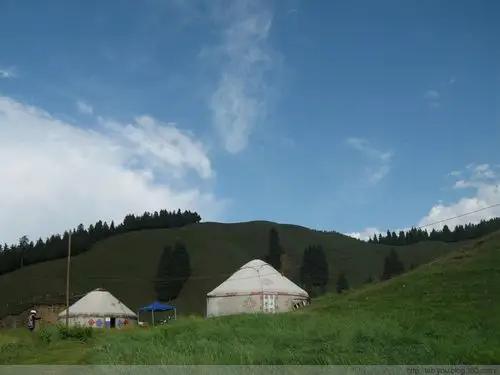
Three days adds either Xiata or a slow day on the Balekesu grassland with a family stay. If you are looping the wider valley, Tekes is the obvious next stop an hour away, and Kalajun Grassland sits just beyond it.
Questions people actually ask
Do I need a permit for Zhaosu? No special border permit is required for the county town, the culture park or the wetland park. Some routes toward the frontier do sit in restricted zones, so confirm with your driver before heading southwest.
Is it worth going outside July? Late June gets you green grassland without flowers or crowds. September turns the pasture gold and is genuinely pleasant. November to April is cold and most tourist infrastructure shuts, though the county does run a ski area and the sight of horses in snow has its own following.
Can I do Zhaosu as a day trip from Yining? Technically yes, and you will spend five to six hours in a car to see one site badly. Stay the night.
Is altitude a problem? At around 2,000 m, rarely. Expect mild breathlessness on climbs and colder nights than you planned for.
Disclaimer
Festival dates, ticket prices and road conditions in Zhaosu change year to year and are set locally. Everything here reflects conditions as of August 2026 and is offered as a planning starting point, not a guarantee. Confirm dates with the county tourism office and check road status with your driver before travelling. We receive no commission from any operator, stable or hotel mentioned.
About the author
Ewan Baird is a travel writer based in Chengdu who has been reporting from Central Asian and Xinjiang horse country since 2017. He visited Zhaosu in June 2024 and again during the July 2025 festival period. Corrections and updates are welcome through our contact page.